Sommaire
The trouser is the piece that decides everything
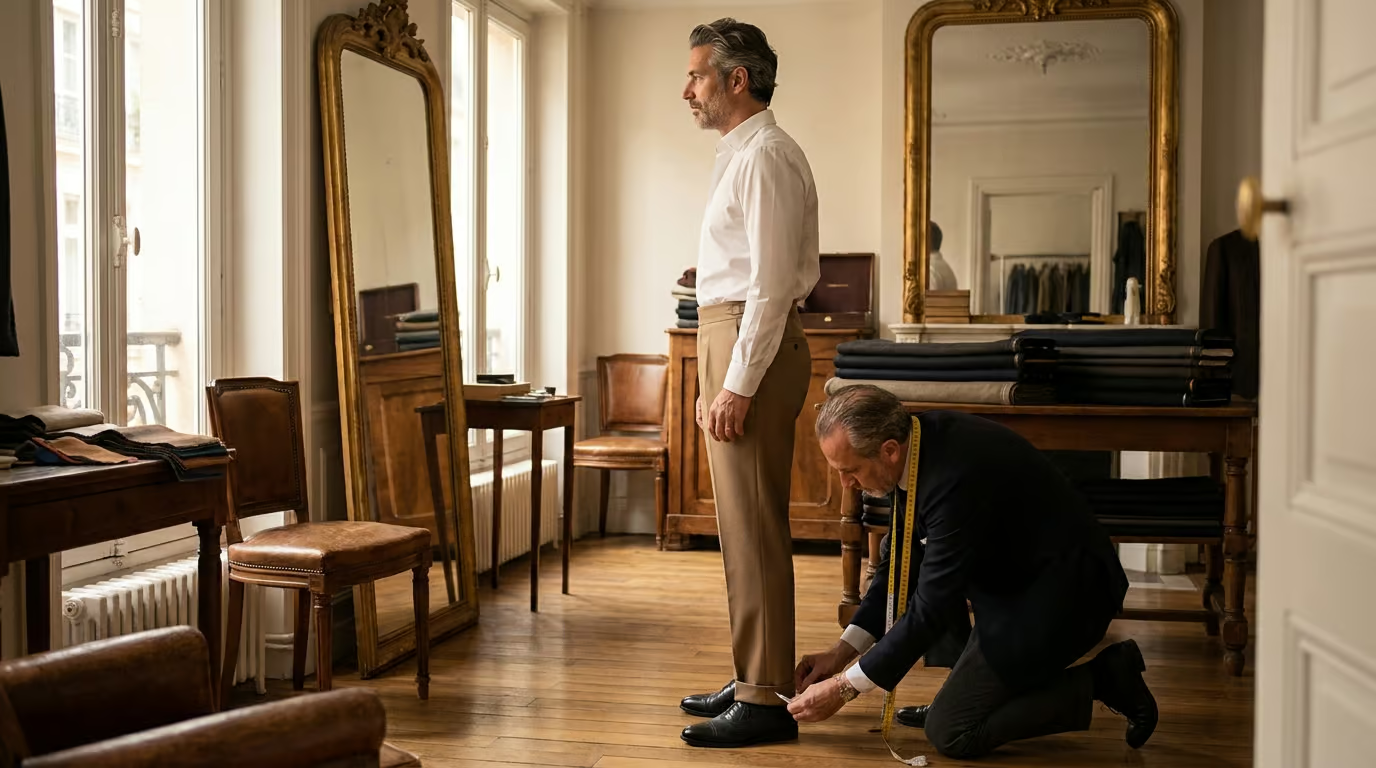
You can own the best blazer on the market, a perfectly cut shirt, the most expensive shoes in the room. If the trouser is wrong, the silhouette is wrong. The trouser carries 60% of the visual weight of an outfit. It determines perceived leg length, governs posture, and controls how the jacket sits at the seat. Everything above the trouser reads differently depending on what the trouser is doing.
And it is precisely the piece that most professional men understand the least.
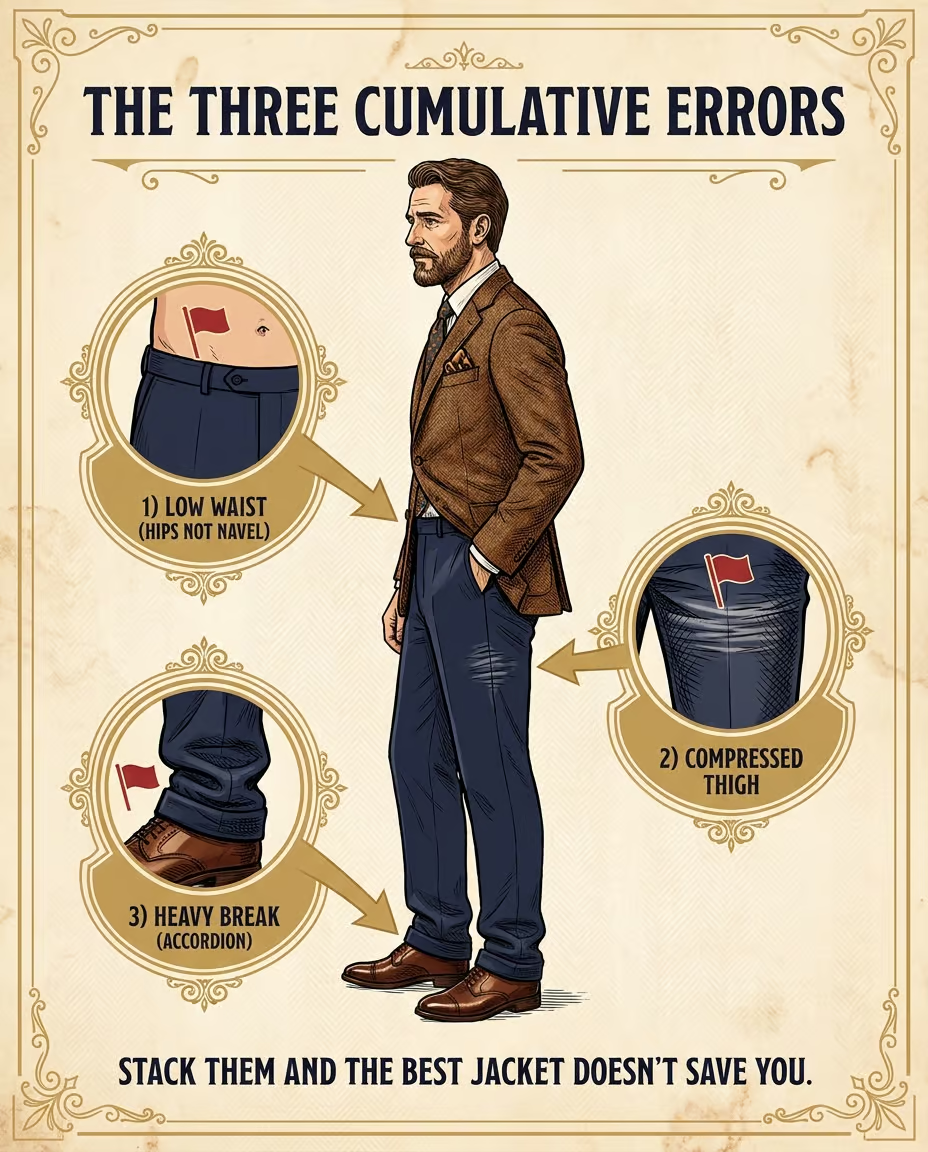
Statistically, 90% of the men I observe in boardrooms and client meetings are wearing trousers that sit too low at the waist, too tight through the thigh, and break too heavily onto the shoe. Three simultaneous errors that steal five centimetres of perceived leg and a measurable degree of visual authority. None of them know it. None has ever been corrected. All of them believe their trousers « fit fine. »
They are not wrong because they have poor taste. They are wrong because nobody taught them the one standard that applies to every trouser, in every context, regardless of price point. The entire ready-to-wear market has spent twenty years pointing them in the wrong direction, and the correction is simpler than most men expect.
This article is the single rule that rescues the 90%. It is not a tailoring course. Three criteria, checked once on any trouser, and the entire silhouette shifts.
The three errors that compound each other
To understand the rule, you need to identify what you are actually looking at most of the time.
The low rise. Since roughly 2003, the majority of men’s ready-to-wear has dropped five to seven centimetres at the waistband. The trouser no longer closes at the natural waist, as traditional cutting required, but rides across the hips. This drop visually shortens the leg (the visual centre of the body moves lower), elongates the torso, and destroys the transition between jacket and trouser. When the waistband sits below the jacket’s bottom button, there is no clean line connecting the two pieces. The eye reads it as two separate garments sitting on the same body rather than one coherent outfit. It is the first error, and the one nobody questions, because the entire RTW market manufactures it as the default.
The compressed thigh. The slim silhouette (2008 to 2018, and not as dead as the magazines would have you believe) left a generation of men wearing trousers that grip the leg. That compression reads as a second skin, which, on a man past his mid-twenties without a sample-size physique, produces the effect of someone stuffed into the wrong size. Worse, it makes the transition from standing to seated genuinely uncomfortable, and it shows. Fabric under tension creases in predictable places: horizontal lines at the crotch, diagonal pulls from the hip to the knee, stress marks at the pocket entry. These are not signs of a slim silhouette. They are signs of a trouser that does not fit.
The excessive break. The trouser breaks on the shoe when it is too long. A single, clean break is acceptable. A double break, a triple break, or an accordion fold transforms an 800-euro cap-toe oxford into a child’s shoe borrowed from a larger man. It is the most visible error and the easiest to correct. It is also, paradoxically, the one most men leave unaddressed for years, either because they bought the trouser unaltered and never returned to a tailor, or because they have stopped noticing it entirely.
Combine all three and you get the silhouette visible every morning outside Bank station at 8am: low rise, compressed thigh, fabric pooling on the shoe. No jacket, however well cut, rescues that foundation.
The three-criteria rule
Here is the rule. On any trouser, you check three things, in this order.
The waistband sits at the natural waist
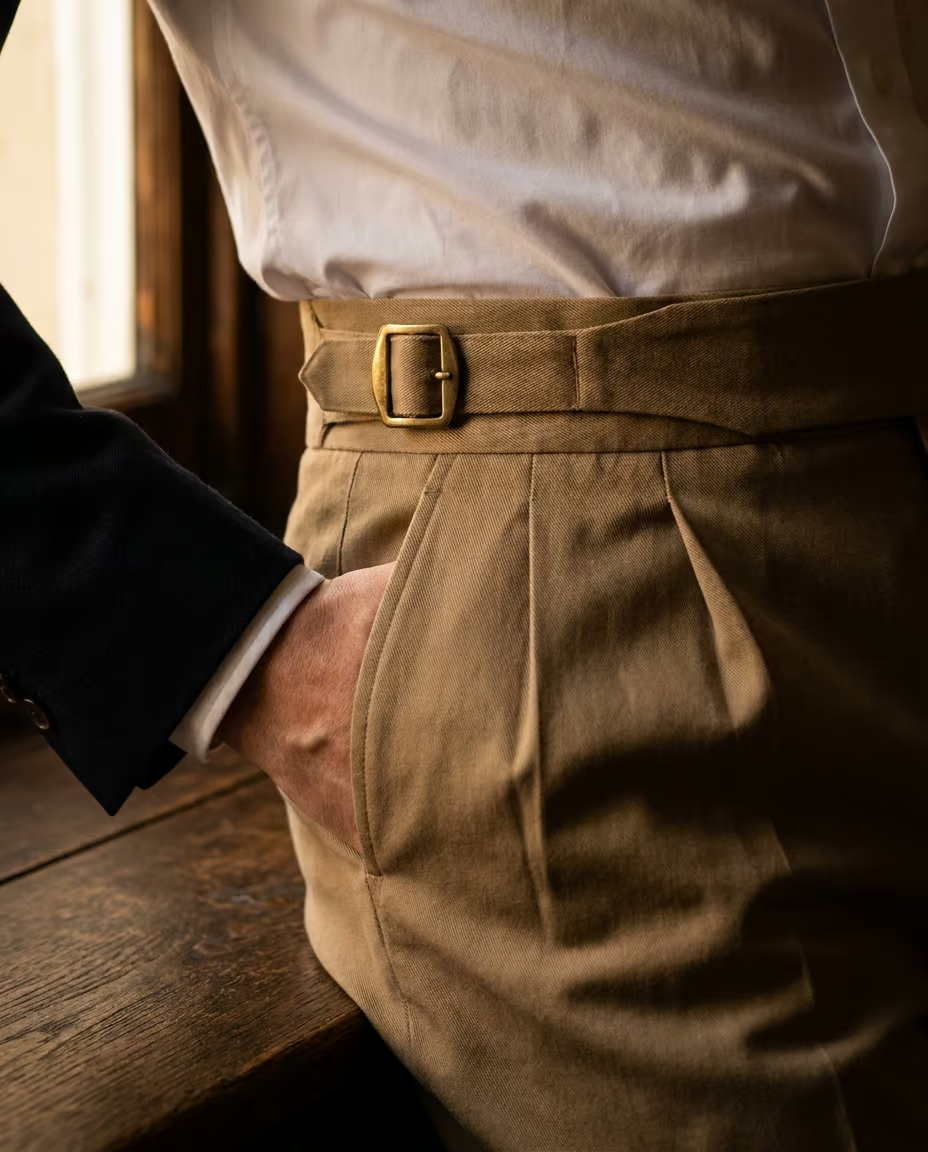
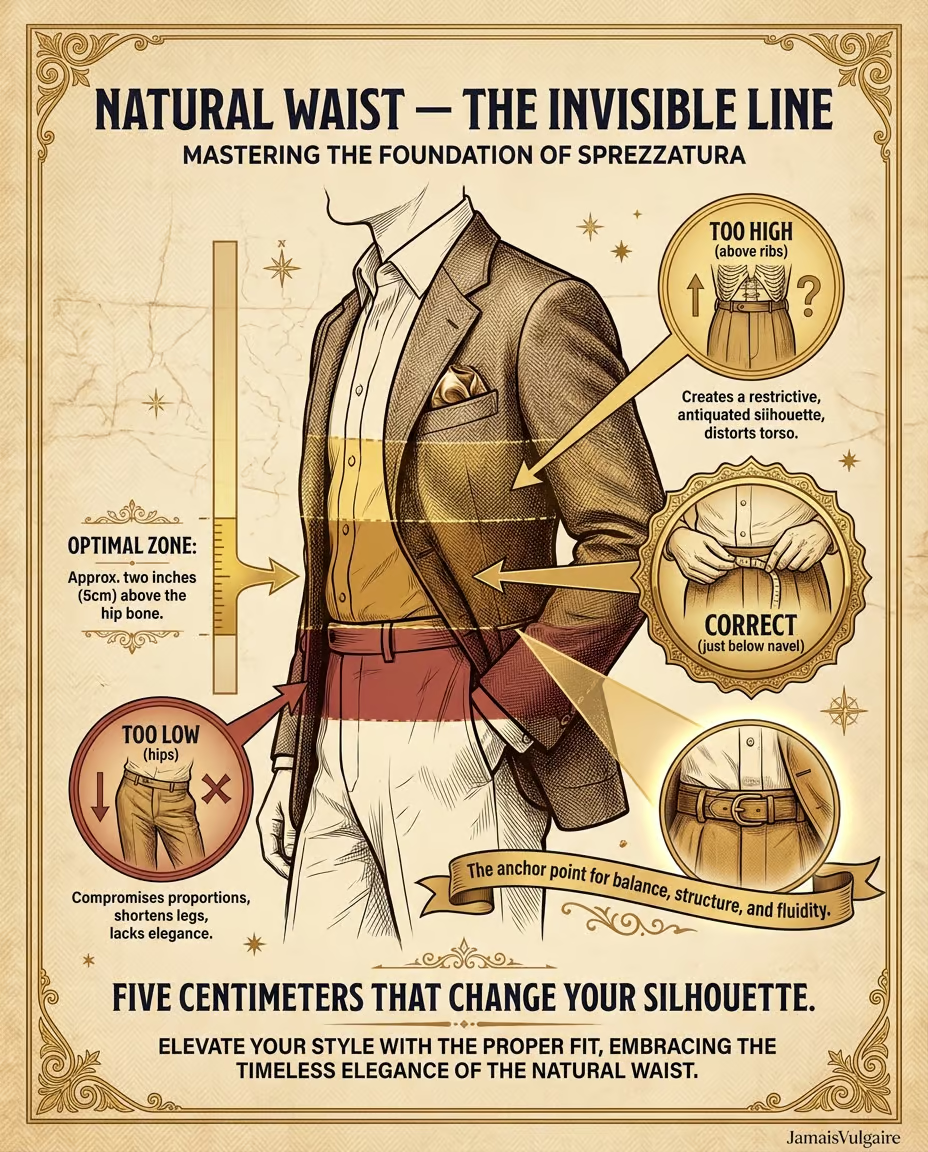
The natural waist is the narrowest point of your torso, just below the ribcage. For most men, this sits approximately two centimetres above the navel. The upper edge of the waistband should rest there. Not lower.
To check: remove the belt, put the trousers on without pulling them in any direction, and look at where the waistband lands. If it sits across the hips, the trouser is low-rise and you are losing five centimetres of perceived leg. If it lands just above the navel, correct. If it rises above the lower ribs, too high.
The visual consequence of getting this right is immediate. A trouser worn at the natural waist lengthens the leg visually, shortens the apparent torso, and creates a clean horizontal line that the jacket can connect to. It also distributes the weight of the trouser correctly: at the hips, not on the seat seam. This is why traditionally cut trousers with a higher rise are more comfortable to wear all day than low-rise equivalents in the same fabric. The structure works with the body rather than against it.
This criterion eliminates 90% of chinos sold in retail chains. That is simply the cost of accuracy. You buy from brands that offer standard or high rise (Bryceland’s, Anglo-Italian, Husbands, Yorkshire-Goldsmith, and the majority of Neapolitan bespoke houses). Most of these are available online, and most of them will alter to your specific measurements on request.
The thigh allows two fingers laid flat
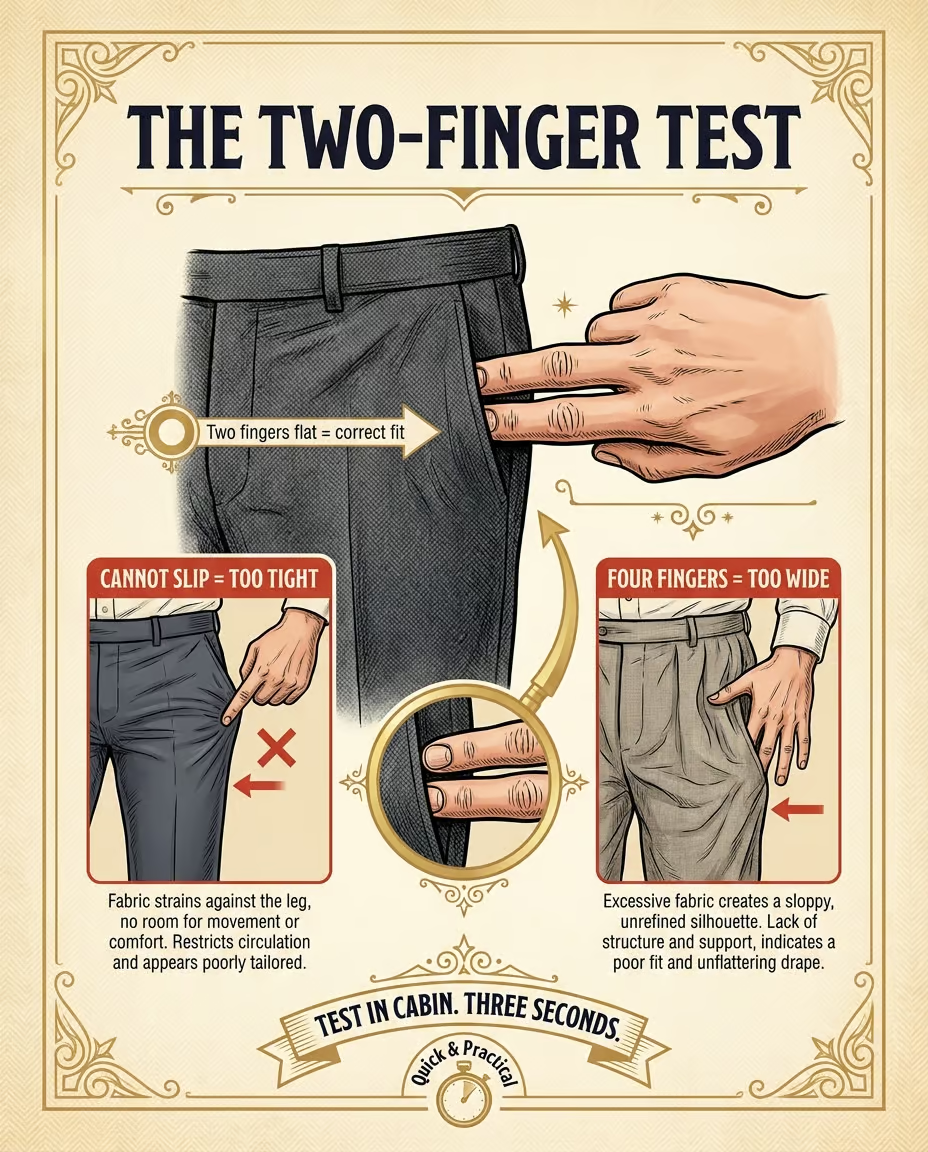
Without forcing. Put the trousers on, fasten the button, and test: can you slide two fingers flat (palm facing the leg) between the fabric and the mid-thigh?
If yes: the cut is sound. You have the ease to sit, climb stairs, and move without the fabric distorting.
If no: too tight. The trousers will compress and produce horizontal creases at the crotch and behind the knee within minutes of sitting down in a meeting. The silhouette degrades as the day progresses. By 3pm in a long day of client meetings, a trouser with insufficient thigh room looks visibly worse than when you put it on at 8am. That degradation is the fabric communicating that the cut is wrong for your proportions.
If you can fit four fingers or more: too wide. You cross into the other territory to avoid, which is the 1990s banker in a white shirt and pleated trousers that have lost all structure. Width without taper is not a traditional cut. It is simply the wrong size.
The two-finger test is so simple it is almost never performed. Run it the next time you try on a pair. You will immediately see how many trousers currently in your wardrobe fail it. The threshold is not generous: two fingers flat, not two fingers vertical, not one finger jammed in. If the fabric resists before you reach full insertion, the cut is too tight for functional wear.
The break is single or absent
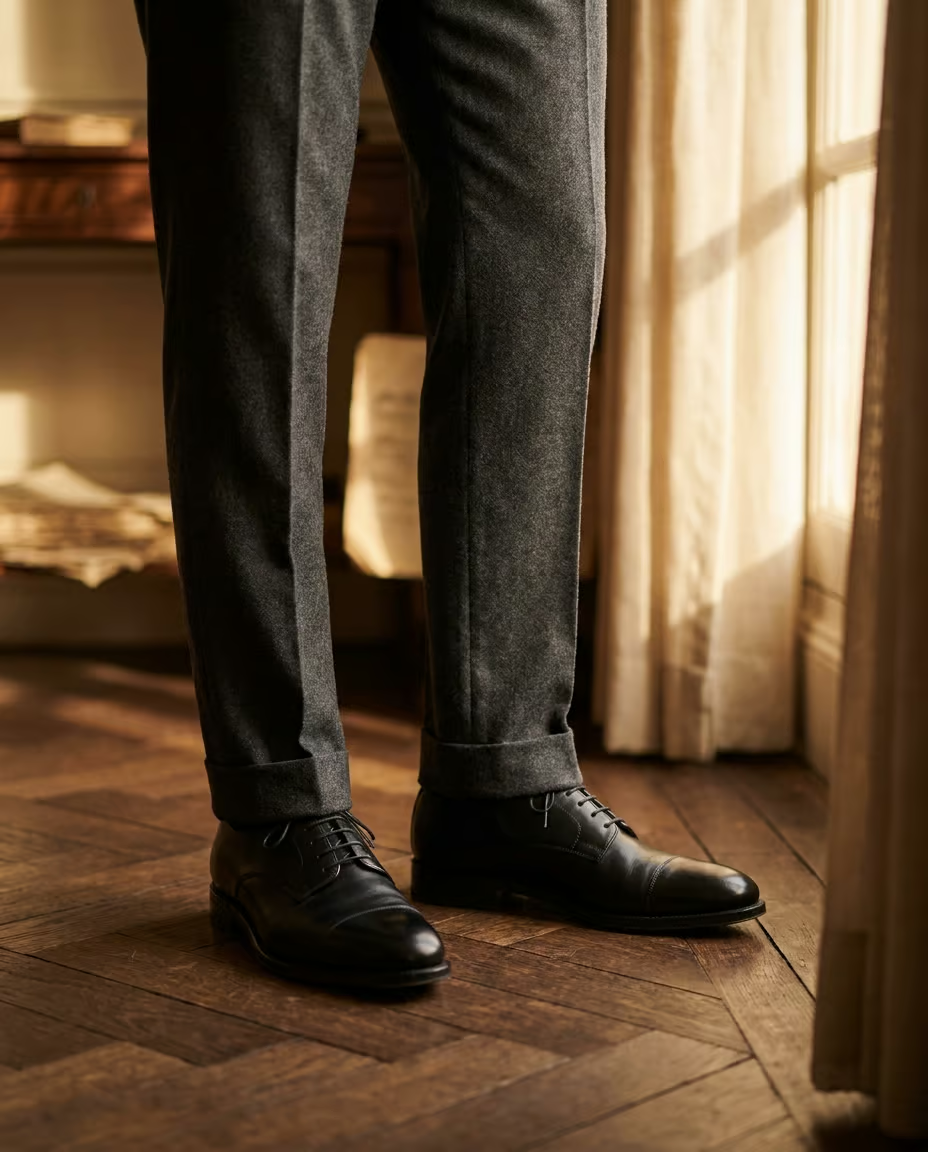
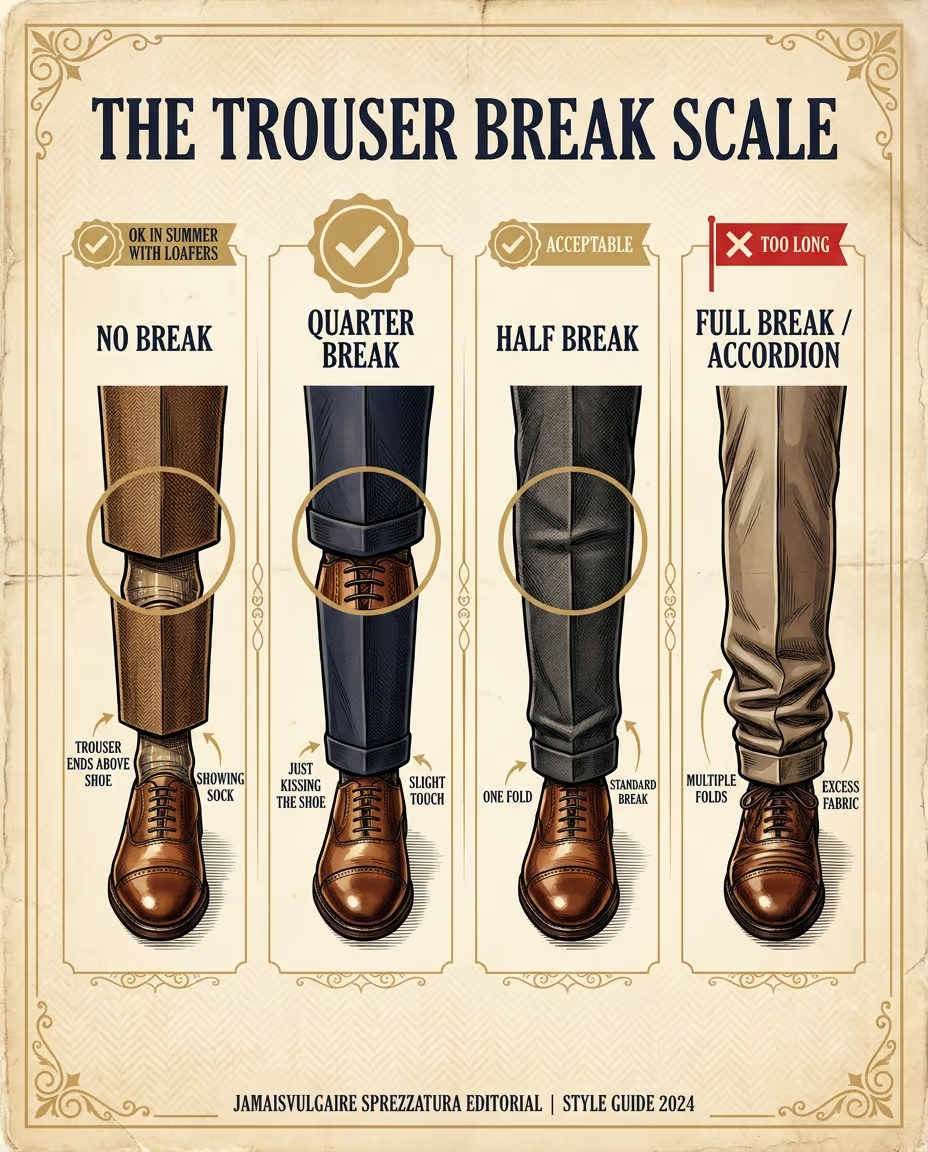
The trouser should land on the shoe with barely a touch across the vamp, creating one clean, slight depression in the fabric. That is the single break.
Visible shoe with nothing resting on it: too short. Acceptable only with loafers in summer, and only intentionally.
Single clean fold across the shoe: correct. The shoe silhouette remains fully legible. The trouser front falls in a straight line from knee to contact point.
Double break or more: too long. The effect is a man who has borrowed trousers from someone taller. The shoe loses its shape entirely below the ankle. Take them to a tailor. Shorten by one to two centimetres, immediately.
The operating rule: the shoe must retain its silhouette. The trouser must not bury it. An 800-euro cap-toe deserves to be read. More broadly, a trouser that obscures the shoe is a trouser that has surrendered the bottom third of the outfit to visual noise. That noise propagates upward. The eye that cannot resolve the foot cannot cleanly read the rest of the silhouette either.
How to correct without replacing everything
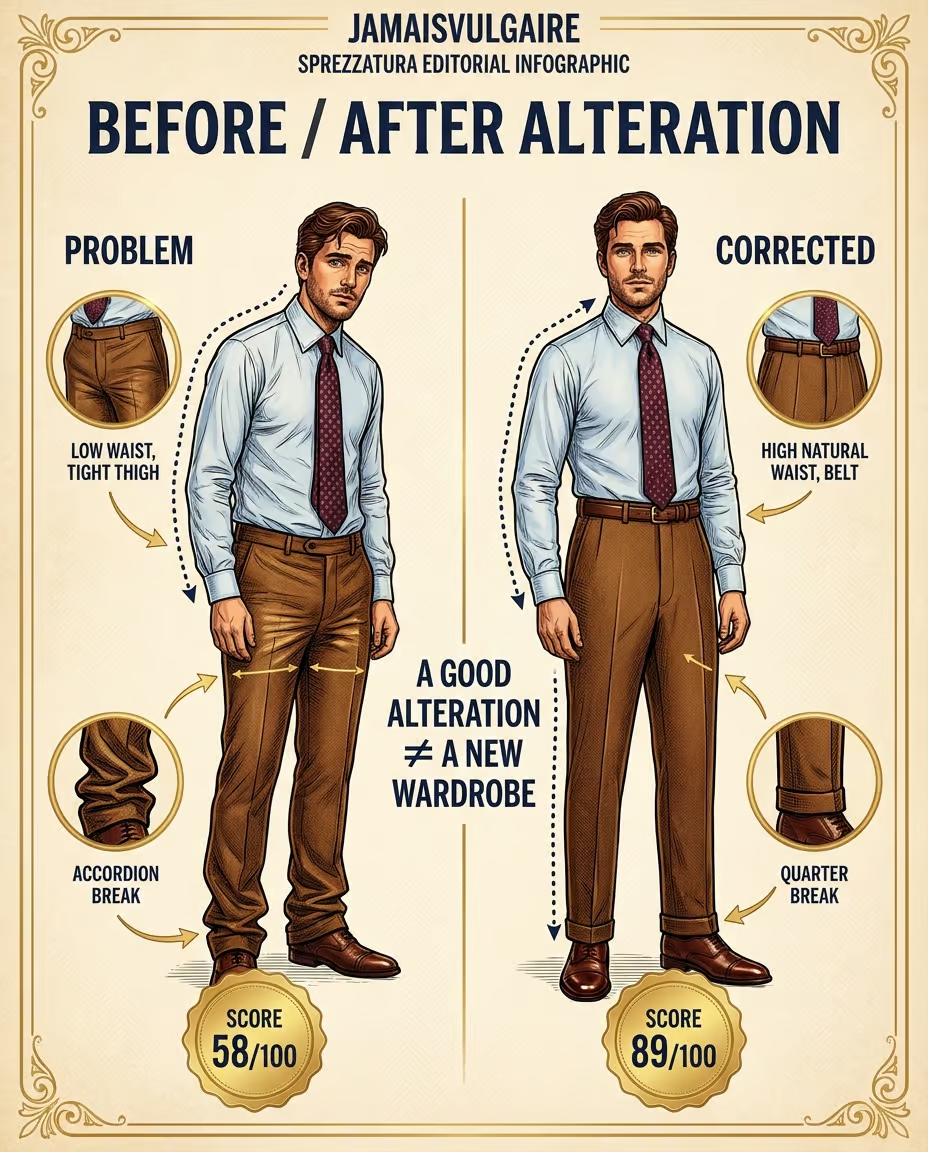
If you audit your wardrobe against these three criteria and 70% of your trousers fail at least one, you do not need to start over. You need a competent tailor and a clear priority order for what gets addressed first.
Three alterations that work on existing trousers.
Raising the waist. An experienced tailor can raise the rise by two to three centimetres by reworking the interior waistband. Cost: 40 to 70 euros per pair. If your trousers sit within five centimetres of the ideal, this is achievable. Beyond five centimetres, the trouser cannot be rehabilitated: the fabric will not have enough seam allowance in the seat and the silhouette will distort after alteration. In that case, the trouser is functionally dead for your wardrobe regardless of what it cost.
Widening the thigh. Not possible in most cases. If the cut is too tight through the thigh, the trouser cannot be let out without dismantling the seat seam and front rise entirely. You have two options: wear the compression and accept the limitation, or pass the trousers on. There is no good third option here. This is why buying a trouser that fails the two-finger test is rarely salvageable, no matter how much you spent on it. Fit in the thigh is non-negotiable at purchase.
Shortening the length. The easiest and most impactful alteration available. Any competent tailor can shorten a trouser in twenty minutes for 15 to 25 euros. If you pick one alteration to run through your entire wardrobe today, this is it. Moving from a double break to a single break resolves 60% of the visible problem immediately. The shoe becomes legible, the front crease sharpens, and the leg reads as longer. It costs less than a tie and it works on every trouser in the wardrobe in a single afternoon.
For future purchases: accept spending 250 to 400 euros on a trouser that is genuinely well cut. It costs less than a suit jacket, and it is the single piece that makes every other sartorial investment you make visible and coherent. A poorly cut trouser does not just fail on its own terms. It actively diminishes the shirt, jacket, and shoes attached to it.
The brands that actually cut trousers properly
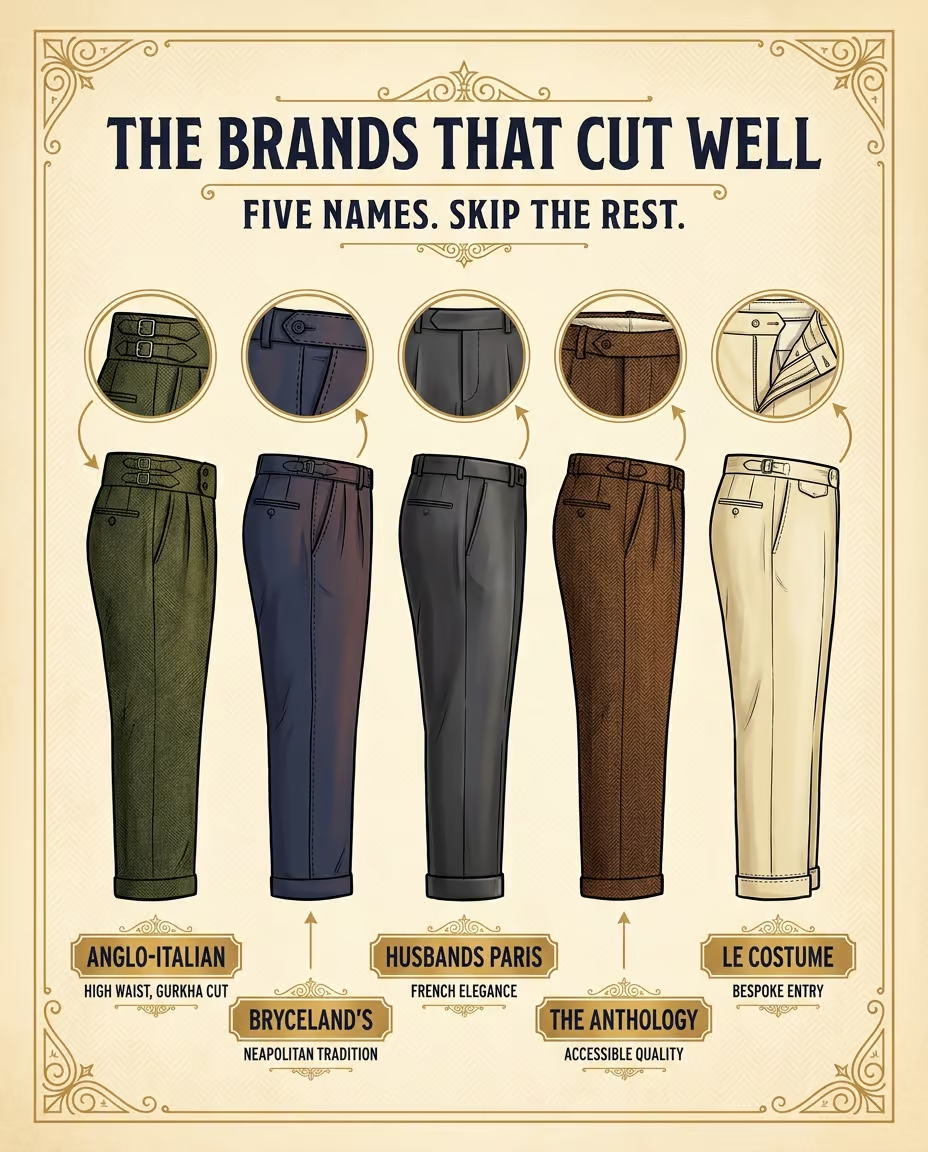
A short list, validated against the proportions of the standard senior professional build. Not a comprehensive directory. The brands below are listed because they reliably pass all three criteria out of the box, or require only minor alteration to do so.
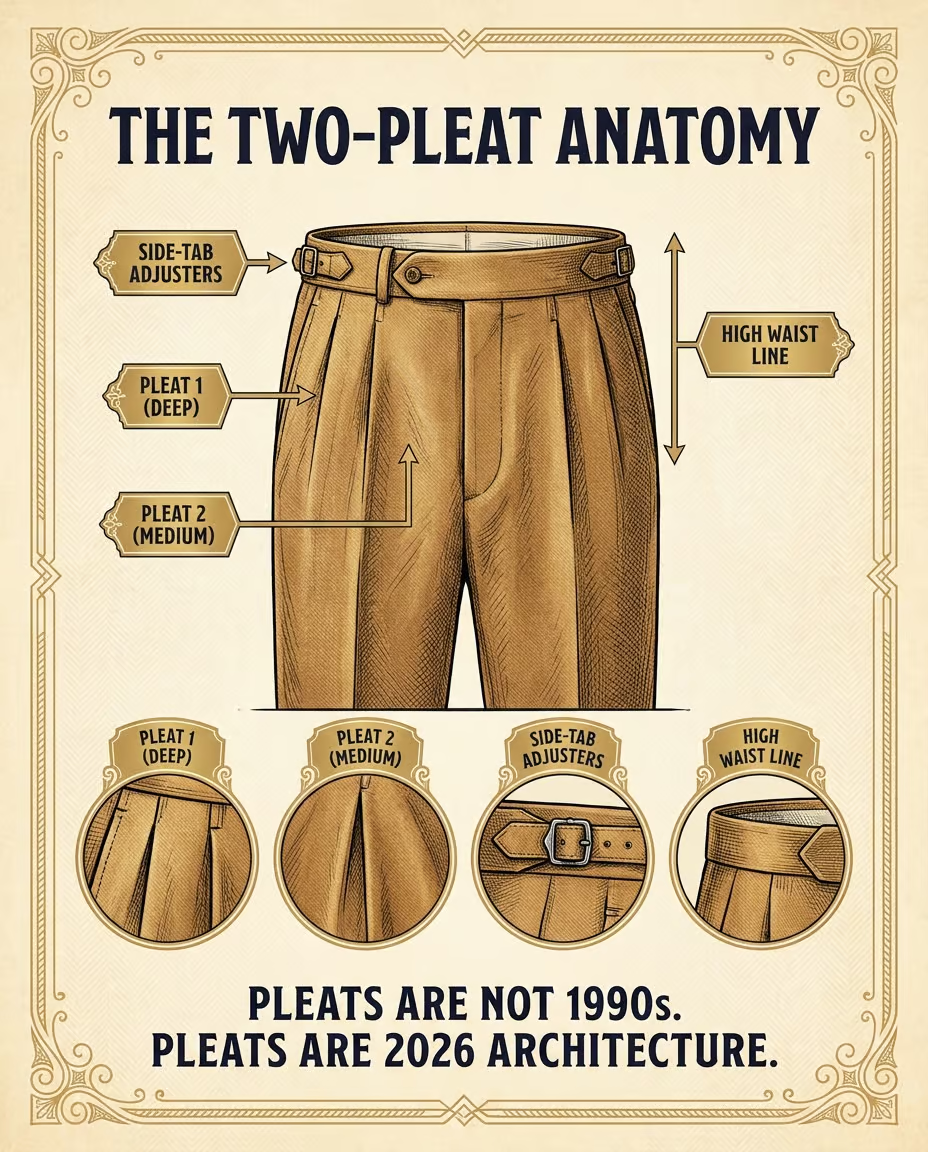
Anglo-Italian (London). Gurkha-waist trousers, high rise, double forward pleat, a full leg that tapers cleanly below the knee. The reference point for anyone leaving slim-cut RTW behind. The gurkha waistband eliminates the need for a belt entirely, which is a structural choice as much as an aesthetic one. 350 to 450 euros.
Bryceland’s (Tokyo, online). Same Neapolitan-traditional register: high rise, serious cloth, a cut that assumes the trouser will be worn with braces. The fabrics are heavy-duty for trousers (fresco, flannel, VBC hopsack), which means they hold their crease over a long day in a way that lighter RTW cloth does not. 400 to 550 euros.
Husbands (Paris). Elegant French cut, medium-high rise, moderate leg width, hand-finished details. The entry point is lower than Bryceland’s and the house has an easier relationship with contemporary tailoring, which makes it accessible without being compromised. 320 to 450 euros. The most accessible entry point with serious credentials.
The Anthology (Hong Kong, online). Strong value-to-cut ratio on the high-rise silhouette. Slower alteration process given the remote purchase model, but the cut ships closer to correct than most comparable price-point options. 250 to 350 euros.
LE COSTUME (Paris). For affordable bespoke. Budget 600 to 800 euros for a trouser measured and cut to your specific proportions. At that price point, all three criteria are addressed to your body rather than a generic block. It is the correct answer if you have tried the RTW options and found that none of them address your specific proportions cleanly.
Brands to avoid in this category: all Uniqlo chinos (standardised low rise, thin fabric with no recovery), Suitsupply trousers in most cuts (consistently too slim through the thigh for any man above a 38 chest), and the entirety of mass-market RTW without exception. The issue with mass-market is not the price. The issue is that the block was optimised for a body that does not correspond to the senior professional build after forty, and no amount of alteration corrects a fundamentally wrong starting point.
Why cut matters more than you are accounting for
The trouser is the highest-leverage piece for changing a man’s dressed silhouette. Higher-leverage than exercise, for the dressed body. Higher-leverage than the jacket, which cannot correct a bad foundation. Higher-leverage than footwear, which amplifies what already exists but does not create structure.
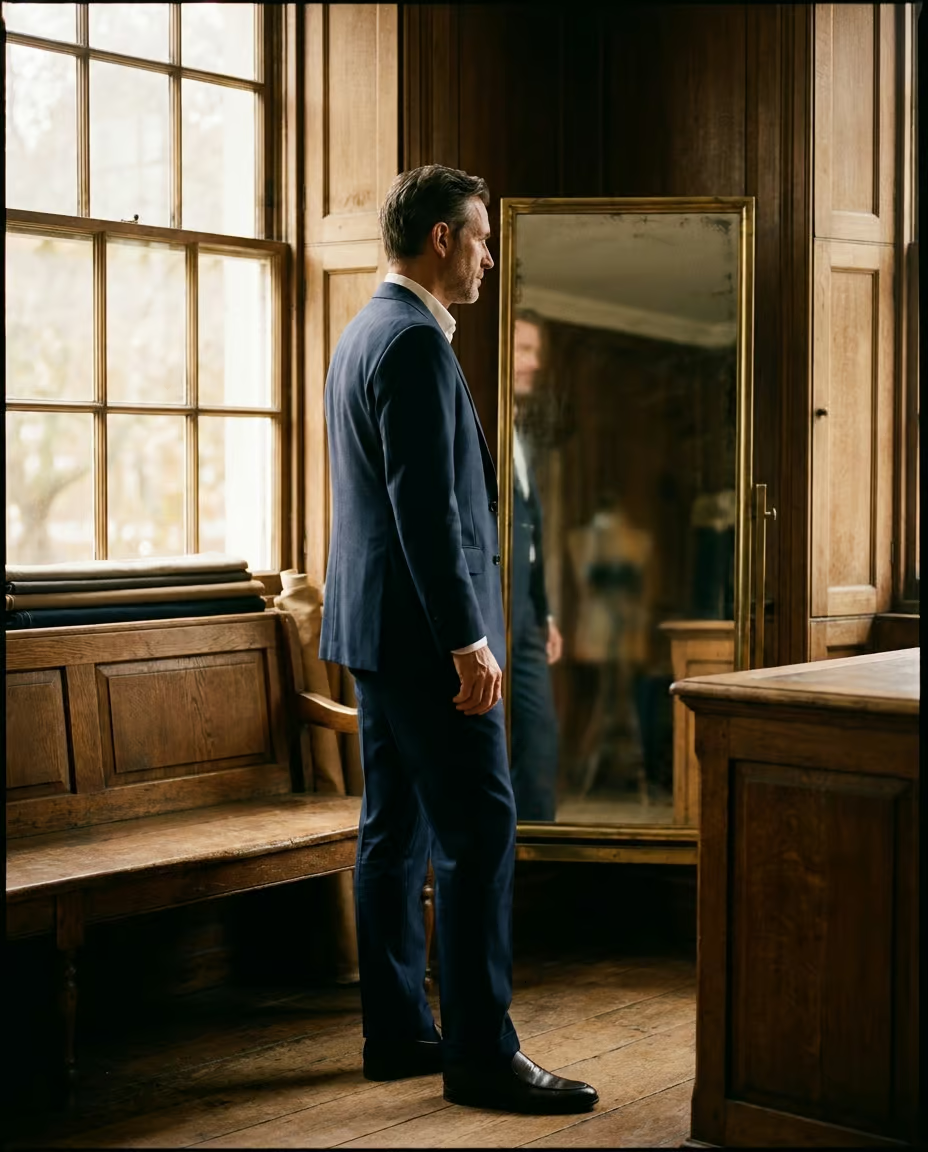
A man who is uncomfortable in his own proportions, who switches to a trouser cut correctly at the natural waist, gains posture almost immediately. The trouser mechanics shift the pelvis into alignment and force the spine upright. The back straightens because the garment structure is no longer working against the body. He also gains something harder to quantify: the mirror shows him a more structured version of himself than he was accustomed to seeing. That adjustment is not trivial in a professional context where how you carry yourself in a room is part of the work.
The return on investment calculation is straightforward. A trouser at 350 euros, correctly cut, worn three days a week for two years, costs less per wearing than a shirt from the same budget stretched across twelve months. The trouser is not a luxury purchase. It is the infrastructure purchase that makes everything else work.
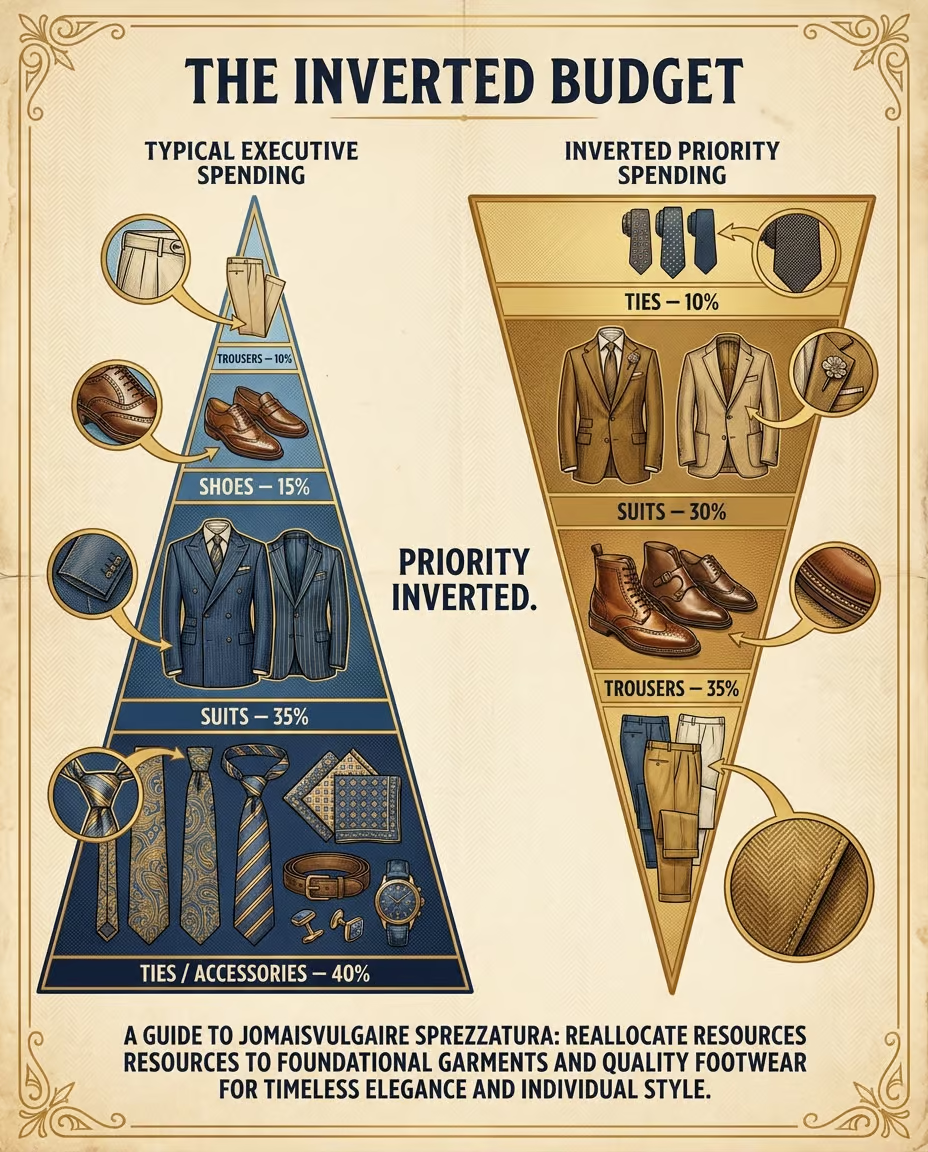
It is the most undervalued item in the professional wardrobe. Most men in senior roles spend more on ties in a given year than on trousers. The priority is inverted. Ties are decoration. Trousers are architecture. You do not address the decoration before the architecture is sound.
The morphological diagnostic to stop guessing
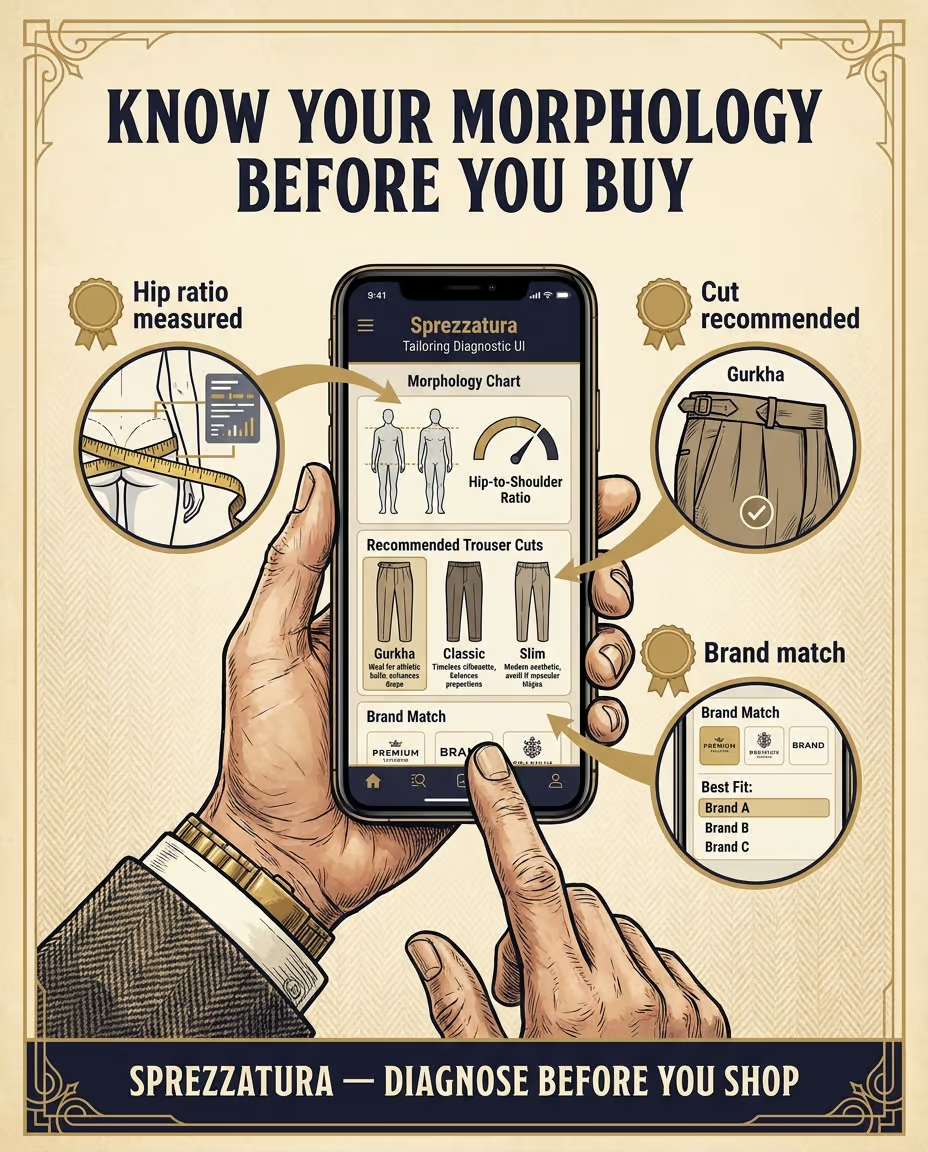
The three-criteria rule identifies a bad trouser. It does not tell you which trouser is right for your specific proportions. For that, you need to know your morphology: thigh volume relative to seat, hip rotation, torso-to-leg ratio, and how those variables interact with specific cut choices. Two men who pass the same three-criteria check on the same trouser may still find that the trouser works better for one than the other, because the cut has been optimised for a different distribution of volume than either of them has.
The difference between a trouser that fits and a trouser that is right for your body is the difference between functional and authoritative. The first passes the test. The second makes the test redundant.
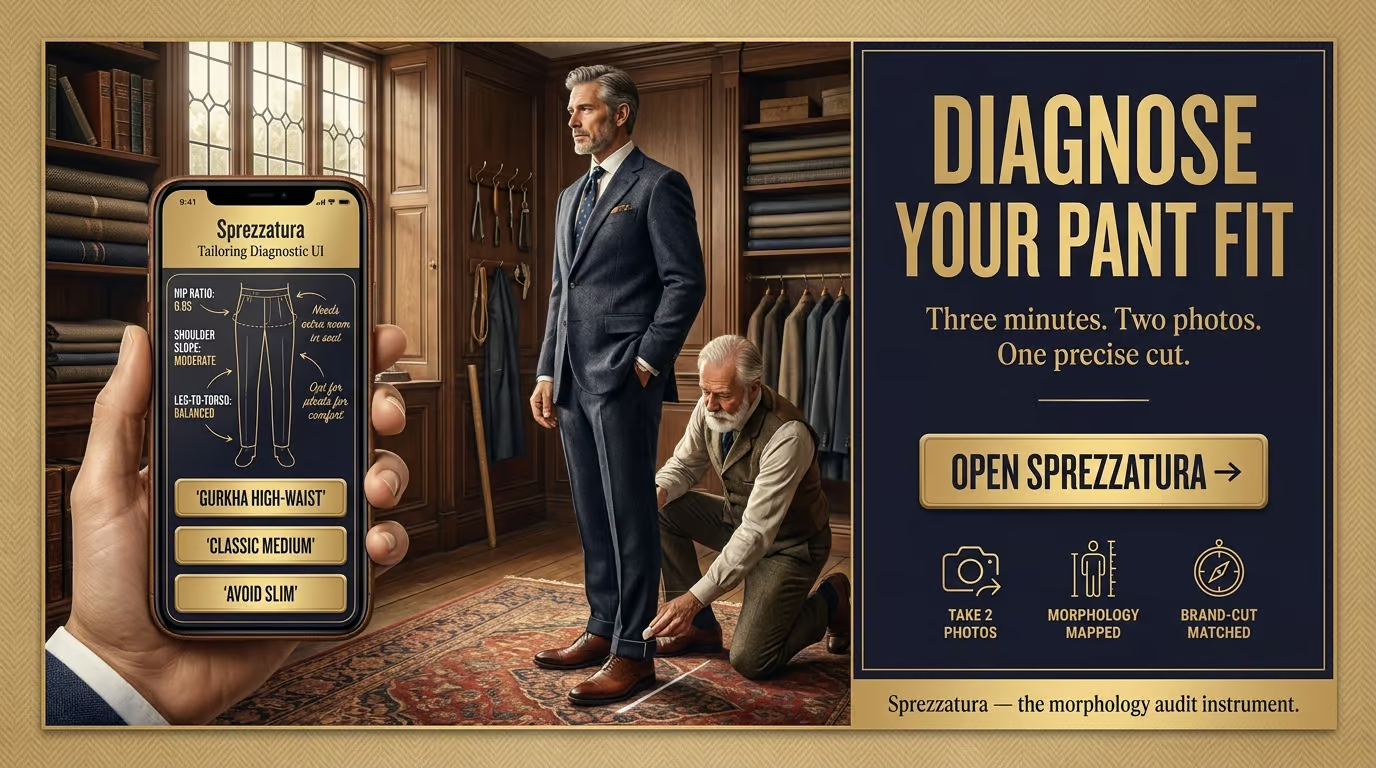
Sprezzatura runs a complete morphological diagnostic from a few photos. The output identifies your optimal trouser configuration (leg width, rise, fabric weight), the brands and cuts that match your build, and the specific traps to avoid given your proportions. It is the tool to use before your next trouser purchase, not after. Most men in this situation are working from pattern recognition built on a sequence of purchases that were all slightly wrong. Breaking that cycle requires an external reference point, not another fitting room session on intuition.
You stop guessing with no reference frame. You arrive knowing what you are looking for. You stop paying for the 70% of trouser purchases that professional men consistently regret in this category, and you stop carrying those regrets in your wardrobe indefinitely because the alteration cost felt like too much to justify after the original purchase.
Pour bien s'habiller, il faut comprendre le vêtement, mais aussi la marque et sa stratégie.
- Seiko Prospex PADI 60th Anniversary HBB002 : la plongeuse anniversaire reste sous les 800 $ - 08/06/2026
- Seiko Prospex PADI 60th Anniversary HBB002: Der Jubiläumstaucher bleibt unter 800 $ - 08/06/2026
- Seiko Prospex PADI 60th Anniversary HBB002: el buzo del aniversario se queda por debajo de los 800 dólares - 08/06/2026