
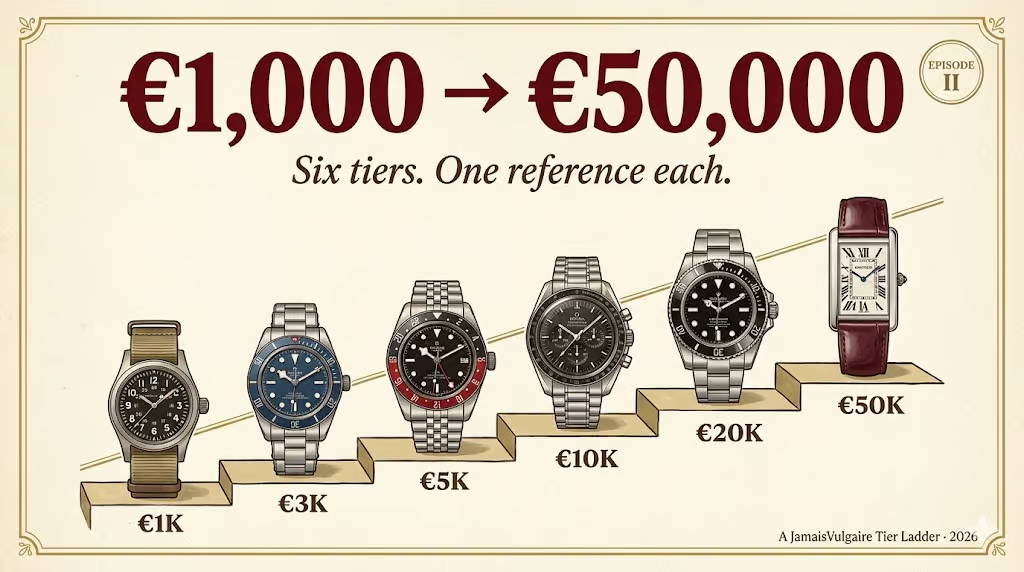
A price tier is not a suggestion; it is a test. At €1,000, the Hamilton Khaki Field delivers 80 hours of hand-wound power reserve for €540. At €20,000, the Submariner 126610LN trades between €13,000 and €16,100 against an official retail price of €11,400, a 38% structural premium. At €50,000, the Daytona 126500LN lists at €16,300, with secondary-market pricing starting at €28,000. The market has corrected by 6.1% over five years, and only one tier allows for a negative net TCO. Here is the only defensible reference for each bracket.
Some links in this article may generate a small commission, at no extra cost to you, to support our independent guides.
Table of contents
The rule that makes this guide different: a single reference per tier, and why the tier is non-negotiable
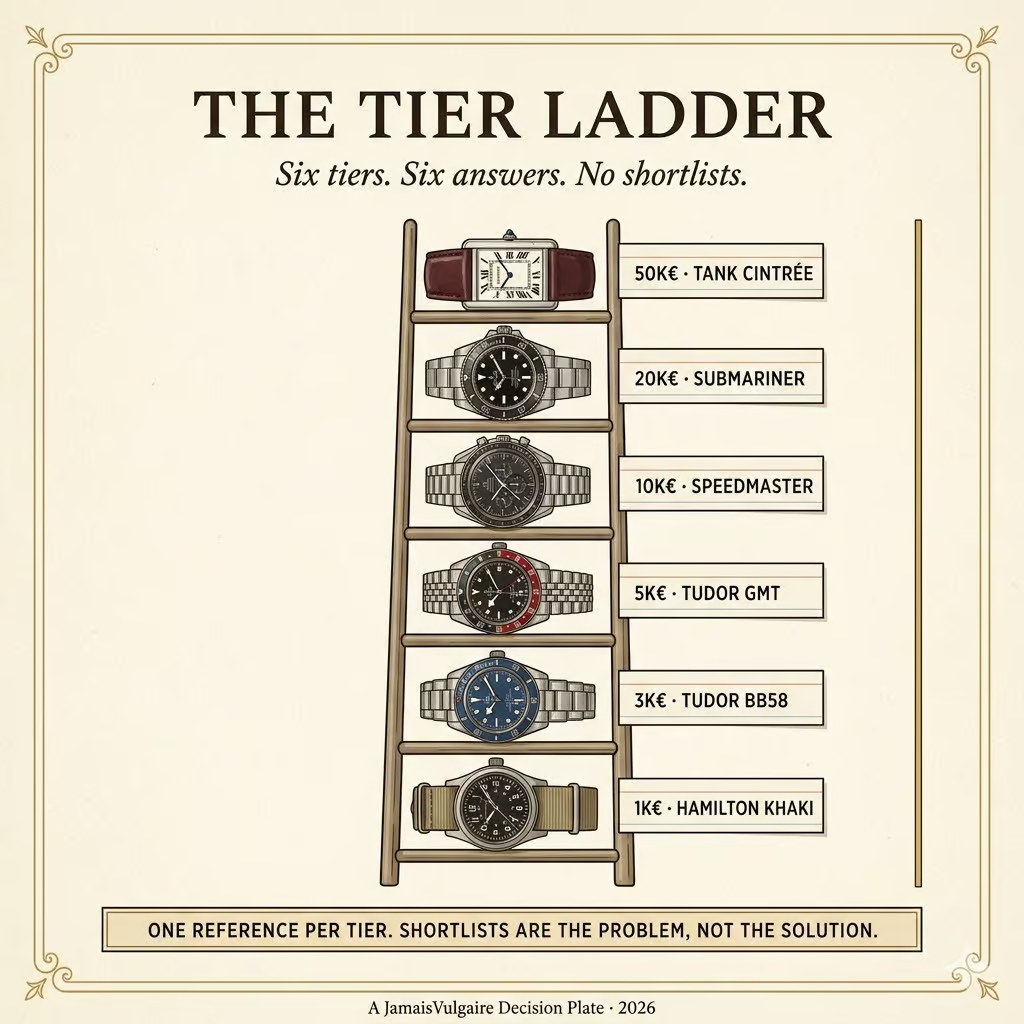
The market offers you ten candidates in each price bracket. This guide keeps one. Not three finalists, not a podium. A single reference per tier, defensible in front of a buyer who knows how to read a movement, a WatchCharts balance sheet, and a secondary-market price. That is the difference between a buying guide and a catalogue of options.
The rule is not an editorial stance. It is a discipline imposed by the market itself. The global watch market has corrected by -6.1% over 5 years (WatchCharts, March 2026) after the speculative peak of Q1 2022, with a +6 to +14% rebound over the rolling 2025-2026 year. In this context, multiplying “alternatives” amounts to diluting the responsibility of the advice. Making a call is the only way to sustain a thesis.
The four criteria of defensibility
Each selected reference passes four filters simultaneously. Not three, not five. Four, because that is the minimum for a watch to stand up to a clear-eyed buyer.
1. The story. The Hamilton Khaki Field Mechanical holds its own against the Tissot PRX at €1,000 because the US military contracts are documented. 2. The calibre. The Tudor Black Bay 58 Master Chronometer holds its own at €3,000 because the METAS certification (±0/+5 sec/day, 15,000-gauss anti-magnetism) is verifiable, not a marketing argument. 3. Secondary-market liquidity. The Submariner 126610LN holds its own at €20,000 because its €12,000-16,100 price range is verified in a median 25 days on Chrono24. 4. The 5-year TCO. Purchase plus service plus insurance minus resale. It is the only figure that tells the truth.
Why the tier is non-negotiable
Influencer guides slide a €1,000 budget toward a “sport-chic” Tissot PRX, then a €3,000 budget toward the same PRX in a higher-end version. That is flattening. Each tier follows a distinct economic logic, and confusing the tiers destroys the coherence of the purchase.
| Tier | Dominant logic | 5-year TCO |
|---|---|---|
| €1,000 | Pure use, accepted depreciation | ~43% of the price |
| €3-5,000 | Manufacture calibre, story | ~26% of the price |
| €10-20,000 | Rolex steel sport liquidity | ~8% of the price |
| €50,000 | Patek Seal, market price 2x retail | ~27% of the price |
At €1,000, depreciation is mechanical: -30 to -50% over 5 years, service costs 50% of the new price, and the purchase is a cost of use. At €20,000, the Submariner resells for +38% above retail thanks to its structural premium. The tier determines whether the watch is an expense, an asset, or an object of transmission. Mixing that up means buying blind.
The framework for reading this guide
Each tier that follows opens with the selected reference, followed by three fixed columns. 2026 retail sourced from official Tudor, Rolex, Cartier, and Patek price lists. Secondary-market price drawn from Chrono24 and WatchCharts (low-high range in euros, median 25-45 days). 5-year ROI calculated over the 2021-2026 window with correction for the Q1 2022 peak. 5-year TCO including service (according to Hometime category), insurance (home extension to dedicated Hiscox depending on tier), depreciation or premium.
The rejection of influencer benchmarking is explicit. No Tissot PRX as a universal “sport-chic” watch: it is a quartz-born model that became Powermatic 80, not a Genta. No Seiko 5 as a “mechanical entry point”: 5-year depreciation kills the economic argument. The guide names the models that were rejected and explains why. That is the only intellectual honesty available when advising on a €1,000 object as much as a €50,000 one.
€1,000 tier: Hamilton Khaki Field Mechanical, the only serious mechanical watch you can defend
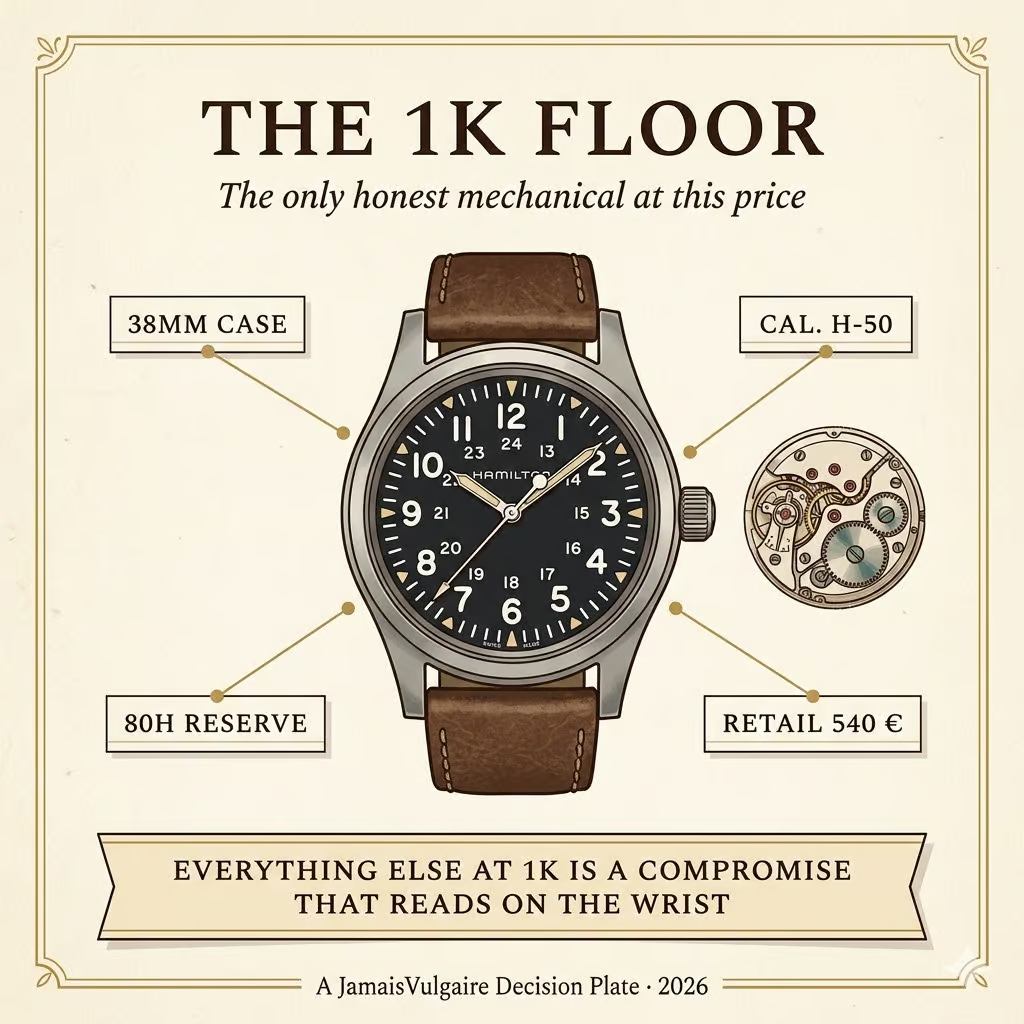
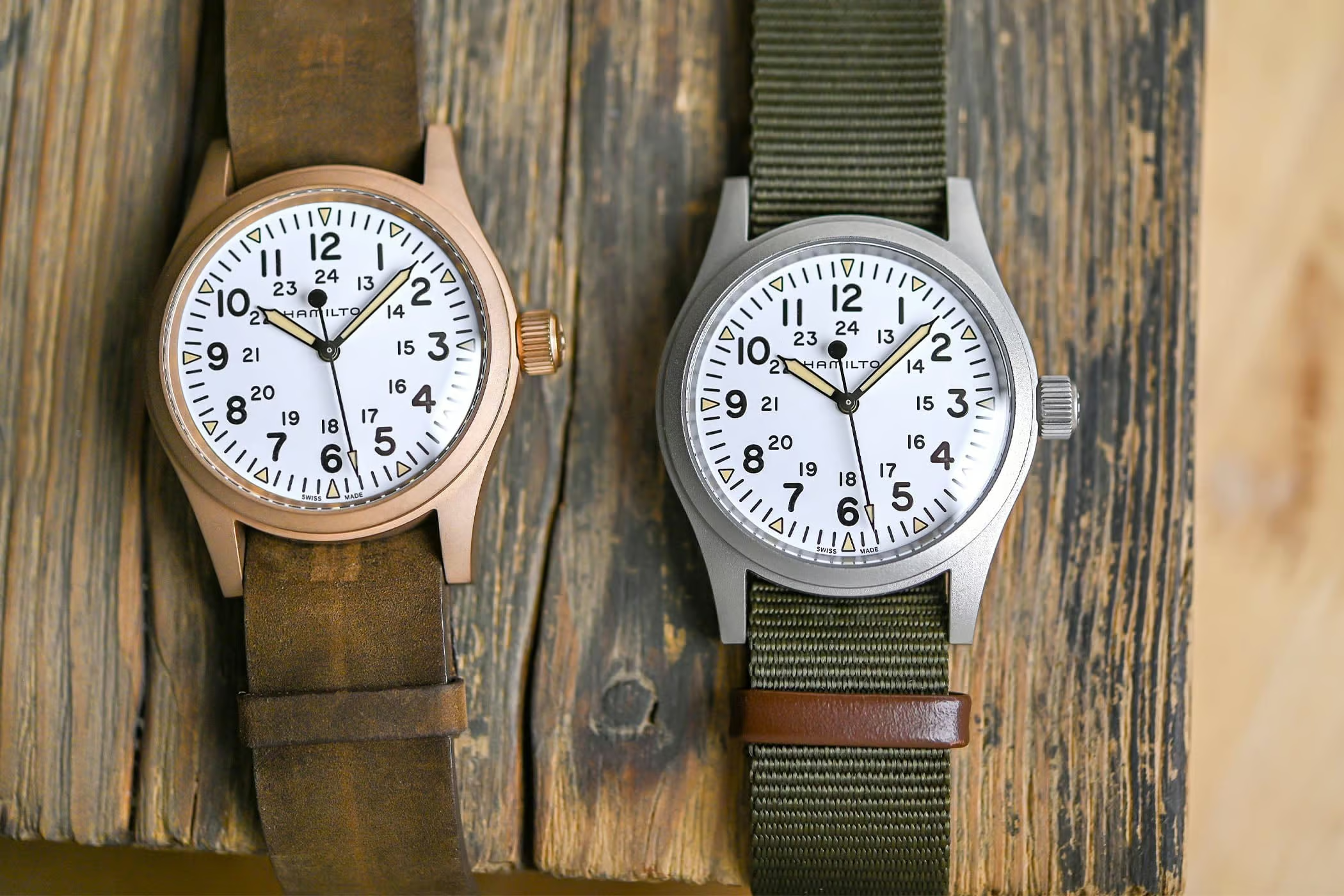
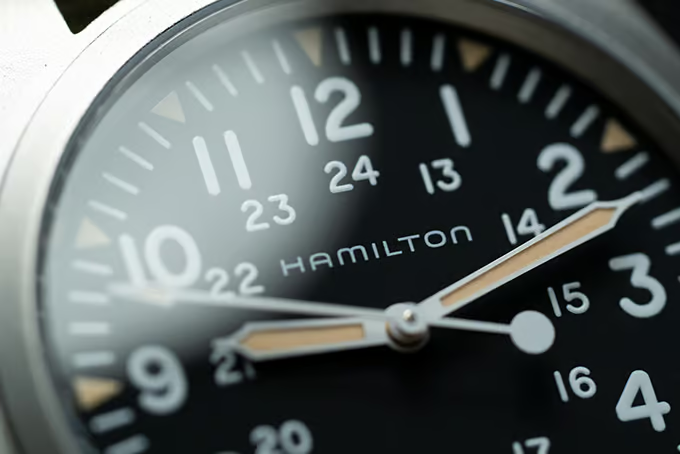
Blunt verdict. In the €1,000 tier, only one piece withstands technical scrutiny without marketing compromise: the Hamilton Khaki Field Mechanical, reference H69439931, at €540 retail. Manual H-50 calibre, ETA 2801 base, 80-hour power reserve. 38 mm case, matte black dial with white Arabic numerals, direct heritage from US military contracts of the 1960s. Everything else in the tier is a compromise you can see.
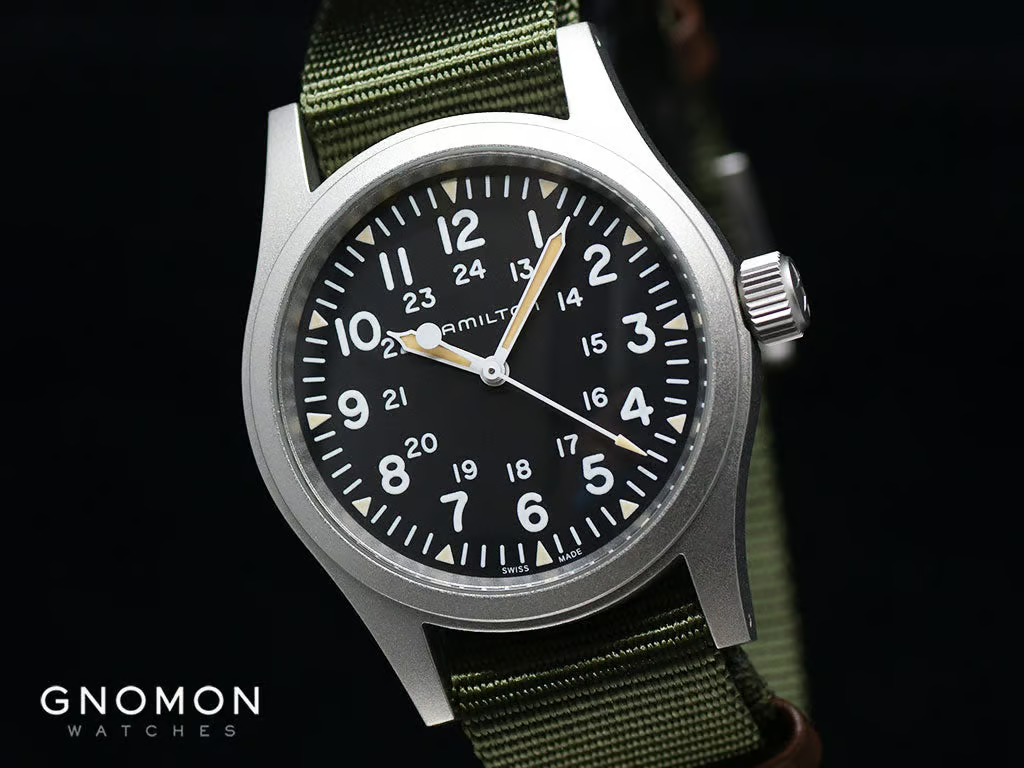
The decisive argument is not the price; it is the reserve. 80 hours on a manual movement at €540: no other player in the tier matches it. The H-50 is an ETA variant specifically modified for Hamilton, with an extended mainspring and a 21,600 vph frequency. You wind it on Friday evening, and the watch runs until Monday morning without intervention. That is a real-world argument, not a spec-sheet one.
Why it crushes the rest of the tier
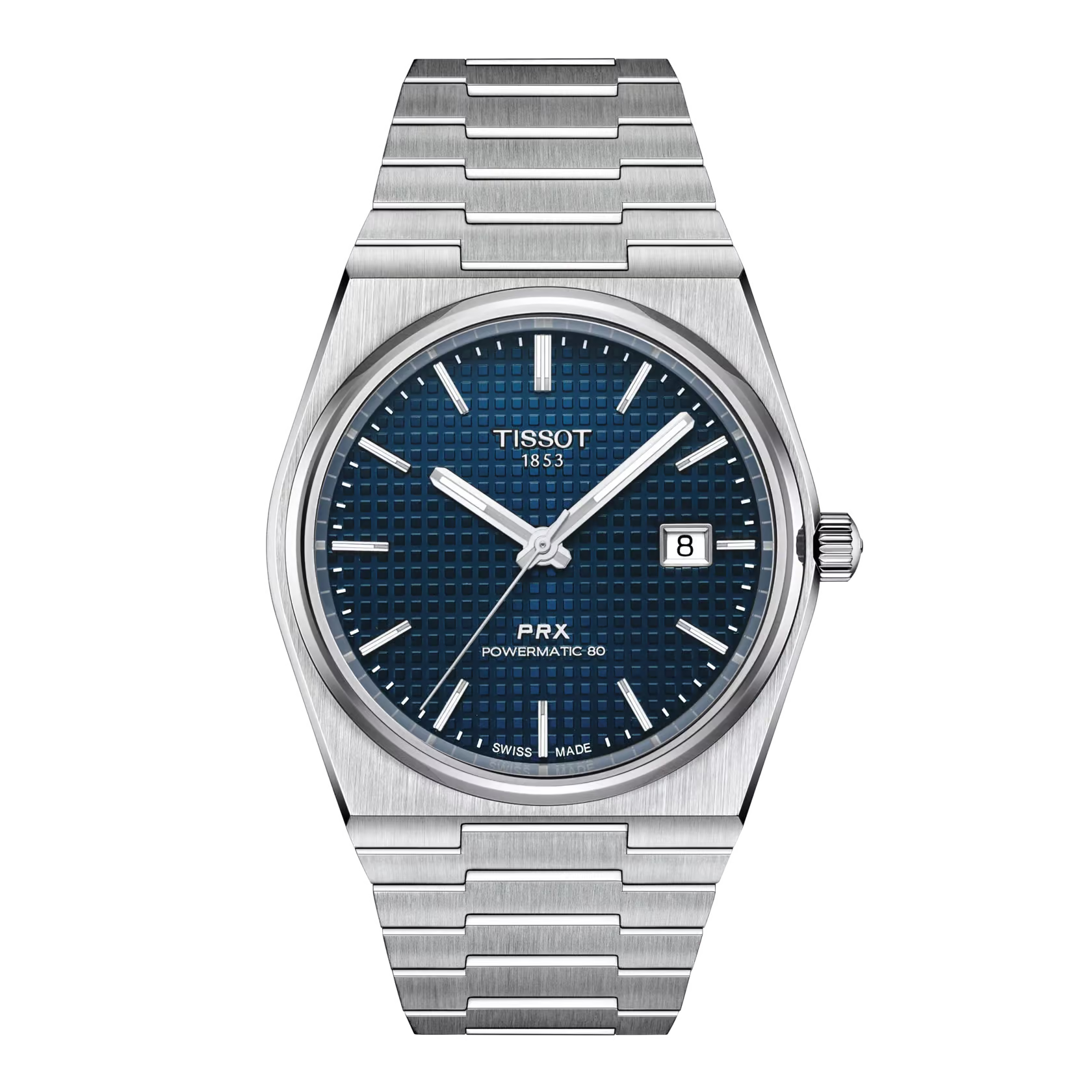
The Tissot PRX Powermatic 80 (€775, ref. T137.407) is the expected competitor. Same 80-hour reserve, Powermatic 80 calibre (ETA C07.111), integrated case-bracelet in a 1970s Genta manner. The problem is not mechanical; it is aesthetic and structural. The waffle-textured dial is a very strong design choice that becomes tiring after 18 months. The PRX is a trend watch, not a timeless watch. Its secondary-market price (€380 to €700) confirms the volatility of desire: people buy it, then move it on.
The Seiko 5 plays in another category of finishing. Printed dial, basic applied indices, 4R36 movement with an official accuracy of -35/+45 seconds per day. The Hamilton, without being a chronometer, runs in practice between -10 and +15 sec/day. The finishing gap is visible in the facets of the hands, the polishing of the crown, and the thickness of the sapphire crystal. At a similar budget, the qualitative jump is clear.
The titanium alternative: worth knowing, but with conditions
The Seiko Presage SARX055 Baby Snowflake deserves a mention for one reason only: it is the only credible full-titanium dress watch available under €1,200. Full titanium case and bracelet, silver sunburst dial inspired by the JDM Snowflake, automatic 6R15 calibre, 50-hour reserve. The problem: it is discontinued. Secondary market only, €900 to €1,200 in Europe, mainly via Japanese JDM sellers. Liquidity is decent (median resale time of 25 days according to WatchCharts), but this is a hunting purchase, not a boutique purchase.
Not recommended if you are buying your first mechanical watch. Worth considering if you are specifically looking for the titanium dress-watch ticket that nobody makes anymore at this price.
TCO warning: never service at this tier
The 5-year total cost of ownership is the most misunderstood line item in this tier. Verified data on the low tier:
| Line item | Hamilton H69439931 (€540) | Tissot PRX (€775) |
|---|---|---|
| Full service (if triggered) | €250-400 | €300-450 |
| 5-year insurance (via home policy) | €15-25 | €25-35 |
| 5-year depreciation | -30 to -40% | -40 to -50% |
| Estimated resale | €350-380 | €425-460 |
| Net 5-year TCO (without service) | ~€190 | ~€325 (43%) |
The rational reflex is explicit. At this tier, a full service costs 50% of the new price. Servicing a Hamilton for €350 in year 5 when its resale value tops out at €380 is economically absurd. You wear the watch until it fails, then you replace it. The ETA 2801 parts market is saturated; any independent watchmaker can handle a partial service for €80 to €120 if truly necessary.
Dedicated insurance makes no sense at this tier. The valuable-objects extension of your home insurance policy (0.5 to 1% per year) is more than enough. MAAF, MAIF, AXA home insurance treat the H69439931 as an everyday object, not an asset.
The allocation rule
The Hamilton Khaki Field Mechanical is the only piece in the €1,000 tier that can be defended on three axes simultaneously: serious mechanics (manual, 80 h), correct proportions (38 mm), authentic story (real military contracts, not reconstructed ones). You buy it for €540, wear it for seven years, do not service it, then pass it on or replace it. This is the tier where rationality takes precedence over investment. Any resale logic here is a trap: at a €540 ticket, depreciation is structural and accepted. The €1,000 tier is a use tier, not an asset tier.
€3,000 tier: Tudor Black Bay 58 pre-Master Chronometer, the honest compromise before the 2026 inflation
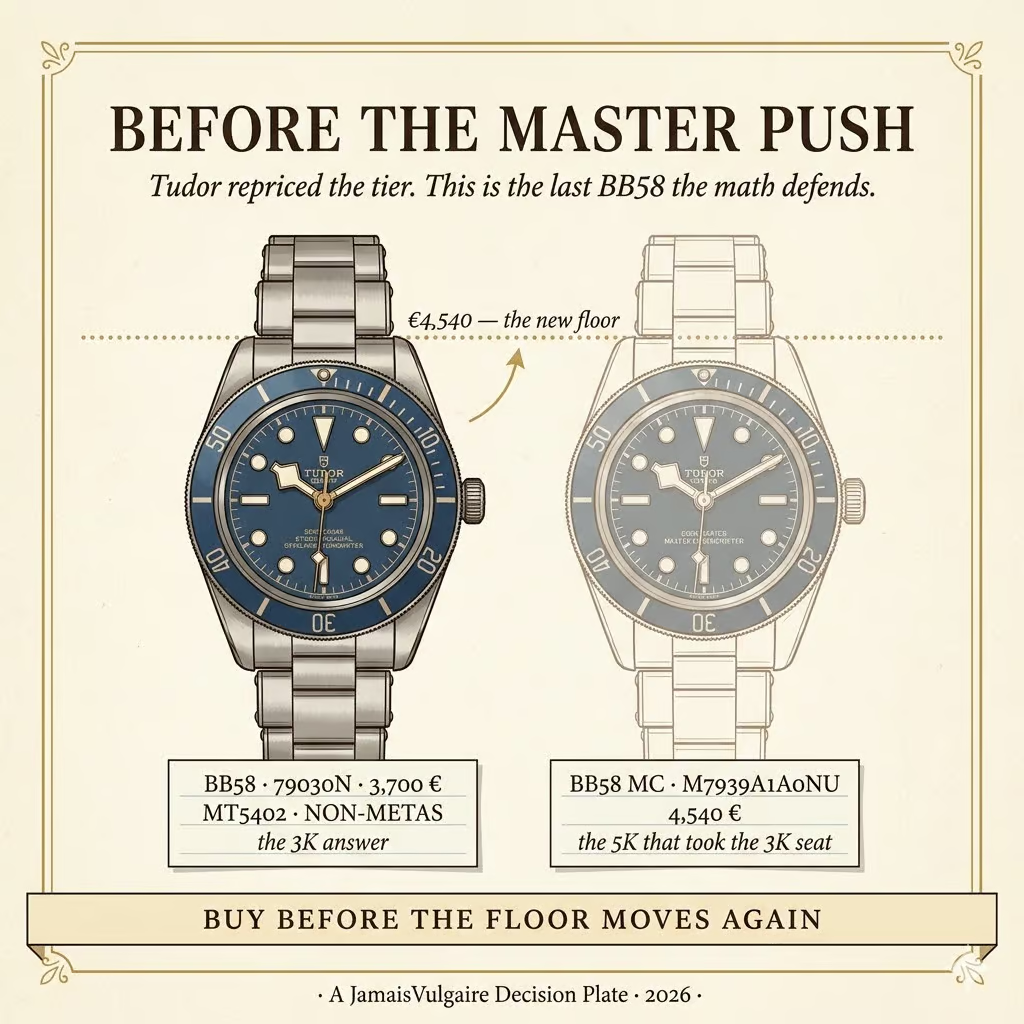
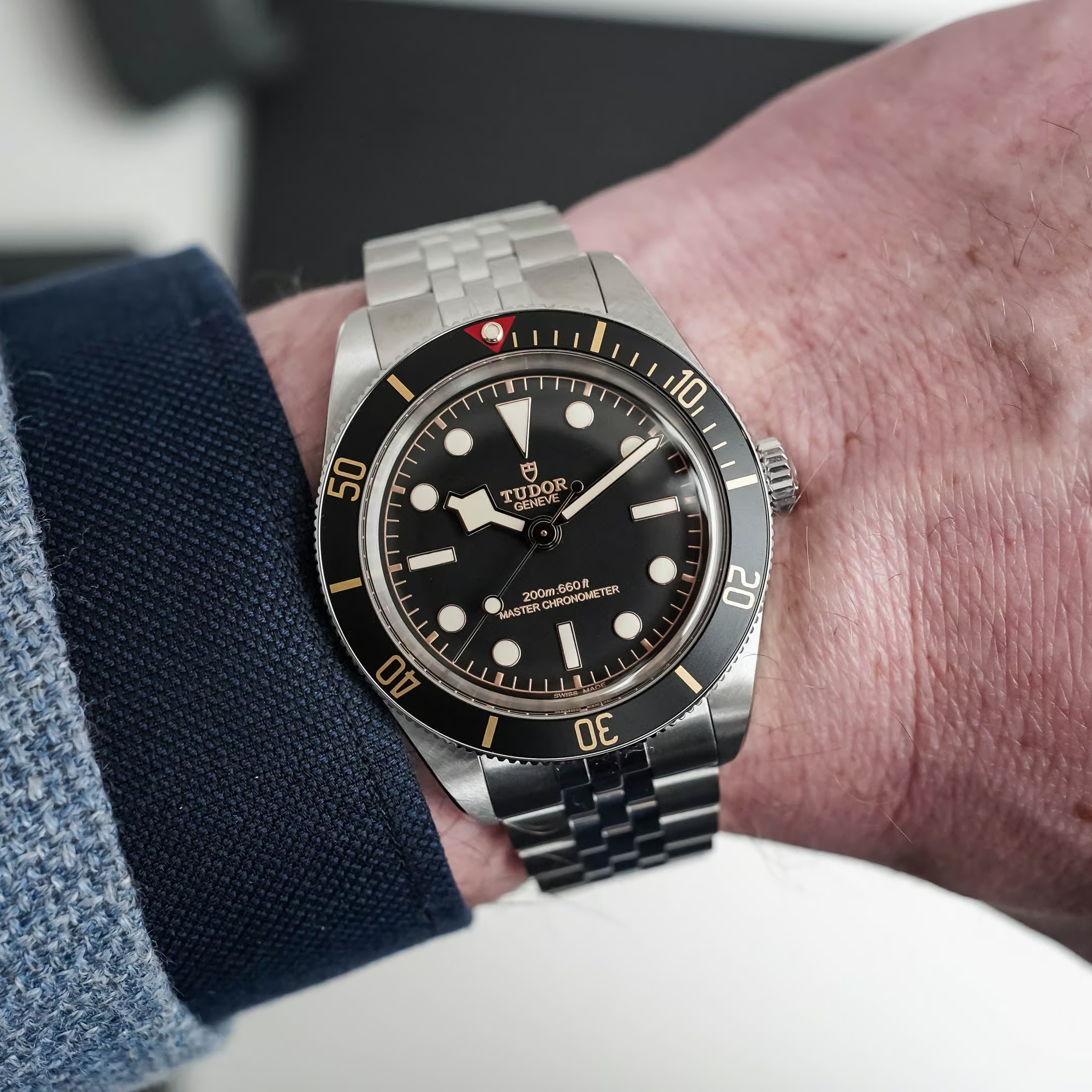
The €3,000 tier has become uncomfortable in 2026. Tudor has released the Black Bay 58 Master Chronometer (ref. M7939A1A0NU) at €4,540 on rubber strap, €4,770 on 3-link bracelet, €4,880 on 5-link bracelet. Strictly speaking, it is no longer a 3K watch. It is a 5K watch occupying the mental space of the segment’s former benchmark. A defensible 3K tier therefore exists only if you accept the secondary market.

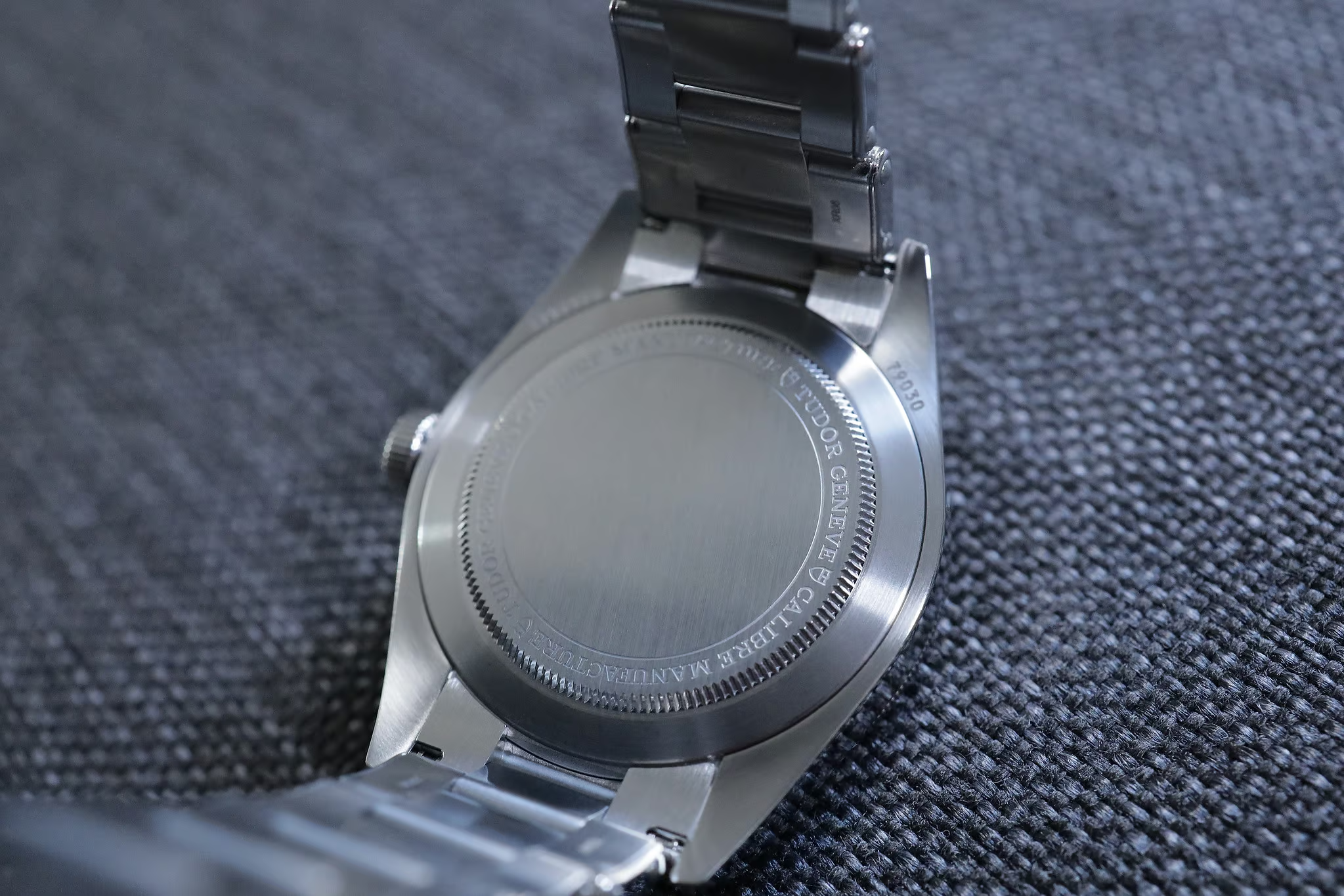
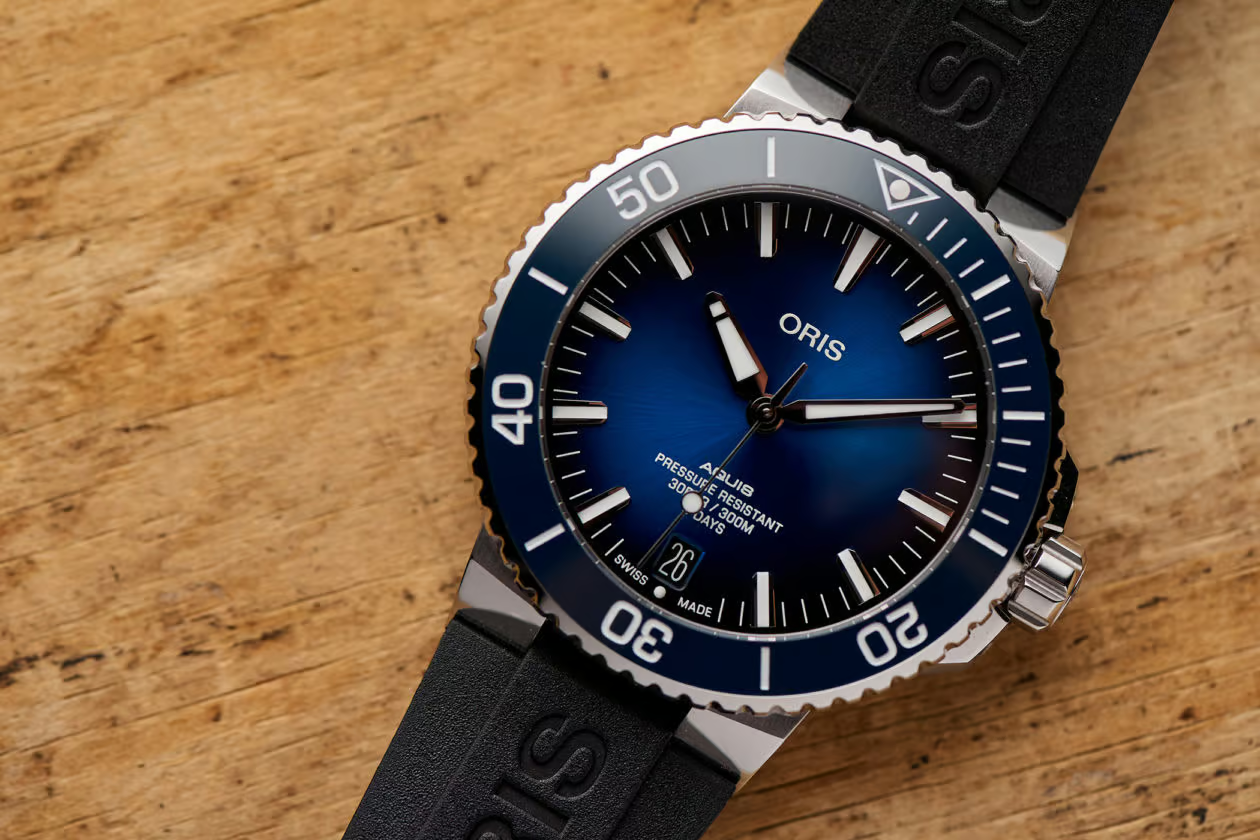
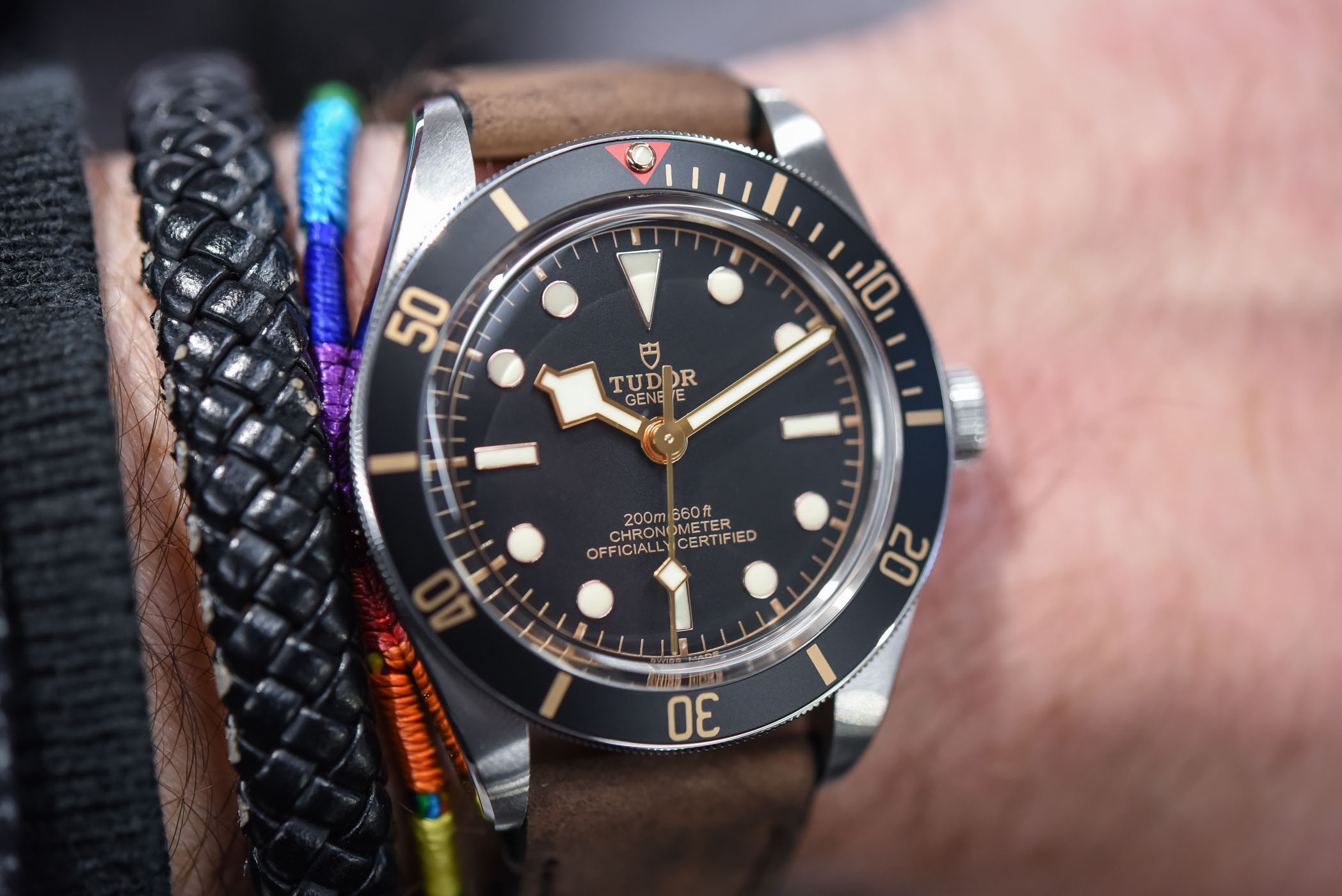
The strict defence: Tudor Black Bay 58 M79030N, the pre-Master Chronometer version, at €3,200-3,900 pre-owned on Chrono24 in very clean condition with full set. It is the 39mm black-gilt model everyone saw on every wrist between 2018 and 2025. MT5402 calibre, COSC, 70-hour power reserve, no METAS certification but seven years of solid real-world feedback. The gilt echoes the 1958 Big Crown. 11.9mm-thick case. It is precisely what the new MC refines without revolutionising.
The Tudor betrayal deserves to be named. Kenissi, the manufacture that produces Tudor calibres, is not an in-house exclusive. It also supplies Breitling (calibre B20), Norqain, TAG Heuer on certain references, and Fortis. Tudor has held a majority stake in Kenissi since 2021, but the MT5402 movement is no more “solo manufacture” than the Powermatic calibre 80 that serves the entire Swatch Group. It is vertically integrated multi-brand subcontracting, which remains a notch above a generic ETA, but does not deserve the “manufacture” argument in the sense Rolex or Patek mean it. The client needs to be told before he learns it on a forum.
The two candidates you systematically hear about at this tier need to be disqualified with arguments.
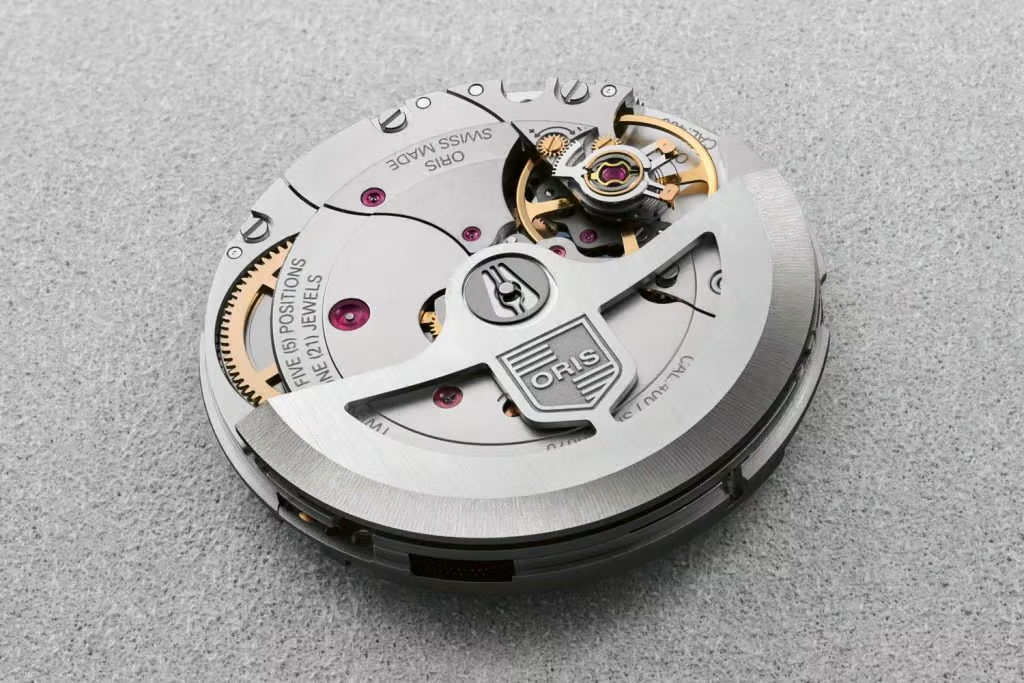
Oris Aquis Date Calibre 400 (ref. 01 400 7763 4135), retail €3,700. The 400 calibre is technically superior to what Kenissi makes: 5-day power reserve, 2,200 A/m anti-magnetism, 10-year warranty, and an independent manufacture in the strict sense. The problem lies elsewhere. Secondary-market value collapses to €2,400-3,000. Nobody wants a pre-owned Oris at 80% of retail. For the client who sees his watch as a partially liquid asset, that is prohibitive. For the one who does not care and wants the best movement in the tier, it is defensible. But at that point, the argument shifts from watchmaking to technical conviction.
Longines Spirit Zulu Time (ref. L3.802.4.93.2), retail €3,100-3,300. The only true GMT in the tier with jumping local hour hand, COSC, silicon hairspring and 72-hour power reserve. The Lindbergh storytelling is genuinely historical, not reconstructed. The L844.4 calibre nevertheless remains a reworked ETA A31 base. On paper the argument holds; in the hand, the result is a watch that sells for €2,300-2,800 on the secondary market and has failed to build a proprietary narrative. It is the coherent traveller’s option, not the tier collector’s.
| Reference | 2026 retail | Secondary | Discount vs retail |
|---|---|---|---|
| Tudor BB58 M79030N (pre-MC) | discontinued | €3,200-3,900 | strict 3K-tier defence |
| Tudor BB58 MC M7939A (2026) | €4,540-4,880 | €4,200-4,800 | outside tier |
| Oris Aquis Cal. 400 | €3,700 | €2,400-3,000 | -19 to -35% |
| Longines Zulu Time | €3,200 | €2,300-2,800 | -12 to -28% |
Over a 5-year horizon, the ROI projection for the 3K tier is median 0%, range -5% to +5%. The 2022 speculative peak has been digested. The Black Bay Pro still trades at -40% off retail on the secondary market ($2,967 vs $4,950 retail according to WatchCharts), but the 1-year rebound is +13.6%. The historic BB58 holds its retail value within plus or minus 5%. It is flat. For a 2026 buyer, flat is the right answer at this tier. Any promise of appreciation at 3K belongs to magical thinking.
Verdict. At a strict €3,000, buy a full-set BB58 M79030N as a recent pre-owned piece. If you can go up to €4,800, take the new MC M7939A: METAS ±0/+5 sec/day, 15,000-gauss anti-magnetism, slimmer profile, and you hold the 5K-tier reference for the next ten years. Between the two, nothing justifies the gap. The Oris is justified by pure technical conviction, the Longines by travel coherence. But neither replaces the Tudor obvious choice in this slot.
€5,000 tier: Tudor Black Bay GMT M79830RB, the only true manufacture GMT under €5,200
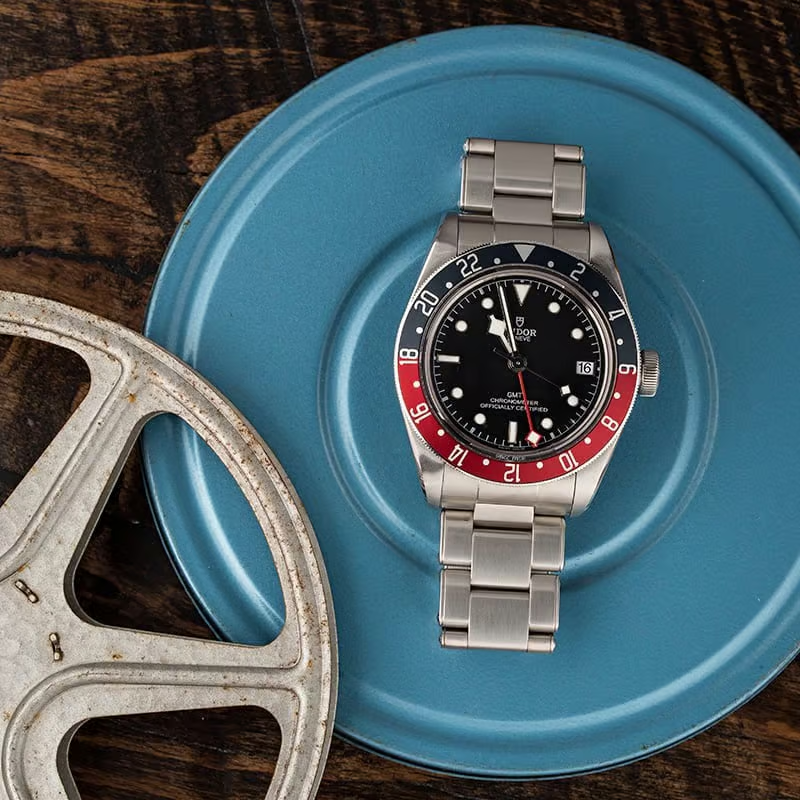
Opening verdict: the Tudor Black Bay GMT reference M79830RB comes in at €5,160 retail. Manufacture MT5652 calibre, COSC-certified, 70-hour power reserve, true GMT (jumping local hour hand). Two-tone black and red Cerachrom bezel, known as Coke. It is the only credible competitor to the Rolex GMT-Master II at €11,250 retail, so at less than half the price. On pure function, the Tudor has no equivalent under €5,200.
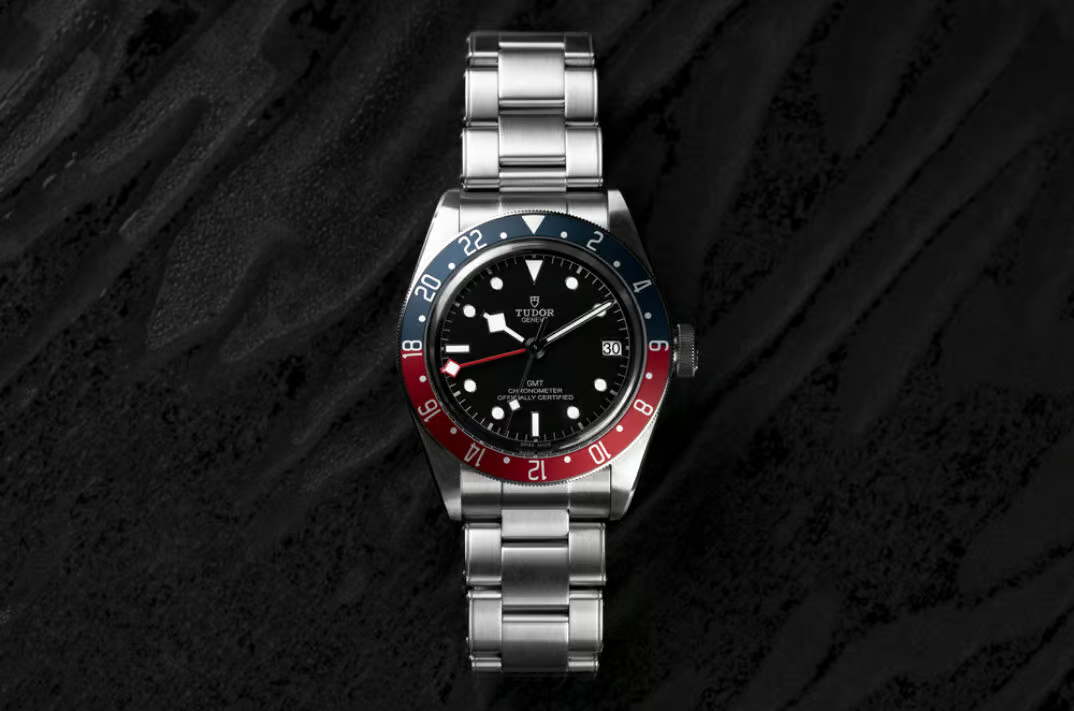
The problem begins as soon as we talk ROI. Over five years, the M79830RB shows -15.5% according to WatchCharts. The secondary market runs between €3,900 and €4,800, i.e. a -43% discount against retail. It is the worst performer in the tier, by far. The +10.6% rebound over one year does not offset the underlying trajectory. Buying this piece means buying a function, not an asset.
Why the Tudor remains defensible despite the discount
The MT5652 calibre is the definitive argument. True GMT means the local hour hand jumps independently by the hour, without touching the main movement. At this price level, only Rolex and Tudor offer this mechanism in a manufacture calibre. The Longines Spirit Zulu Time (€3,200) plays in the same functional family but on a modified ETA base, not on an in-house calibre. The two-tone Cerachrom, meanwhile, is a direct transfer from Rolex R&D (the two brands share Kenissi for movements and certain material processes).
The M79830RB has a supported secondary value. A €3,900 floor means international liquidity works. You resell it in 30 to 60 days on Chrono24 without fire-selling it. The loss is crystallised, not speculative. For a buyer who wants a real everyday GMT and accepts the cost of use, the calculation holds. For a buyer thinking in asset terms, look elsewhere.
If you reject the diver narrative: Omega Aqua Terra 38mm
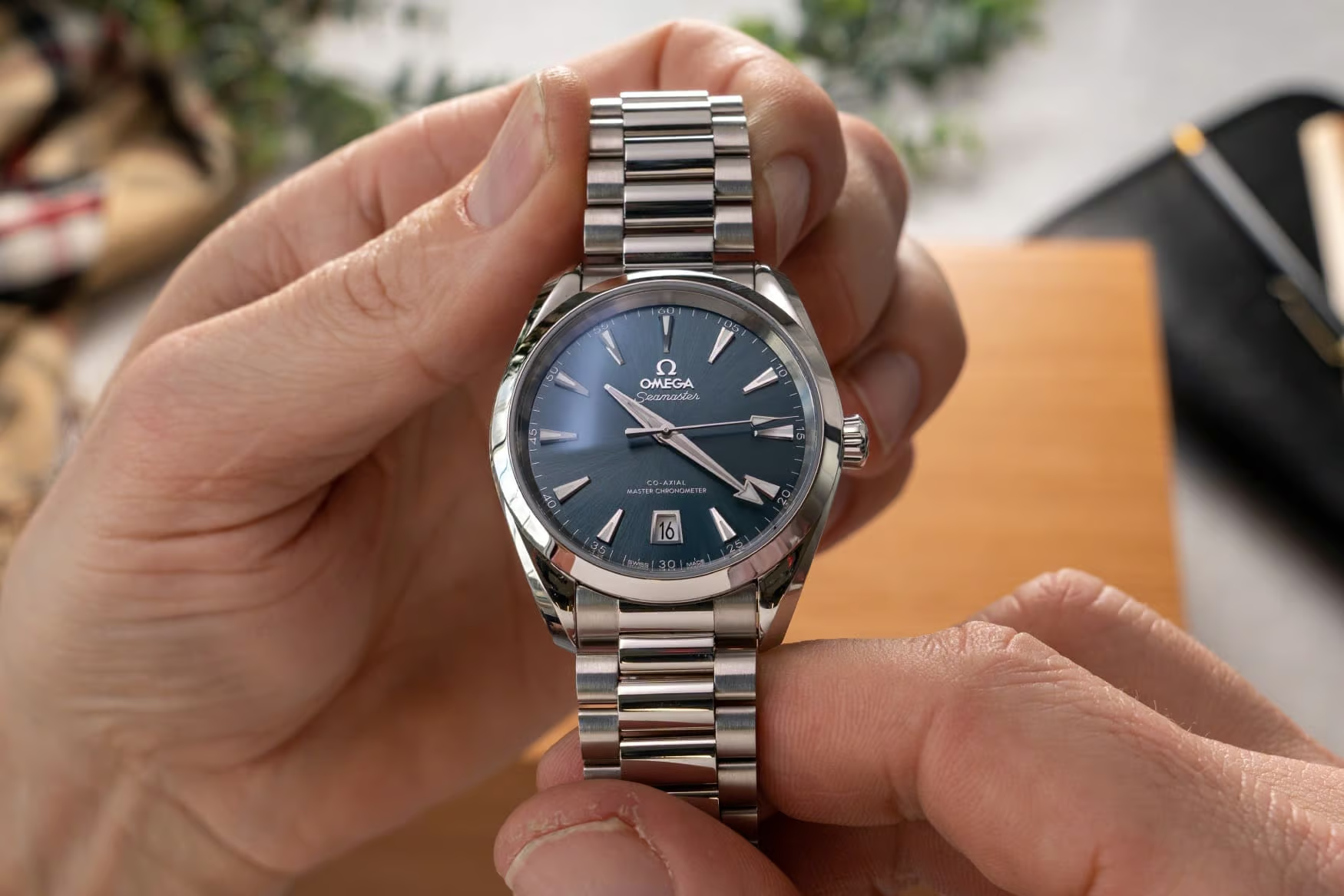
The Omega Seamaster Aqua Terra 150M 38mm, reference 220.10.38.20.03.001, is the dress-sport alternative. Retail €6,100, brought down to roughly €5,400 with the usual AD discount in France (10 to 12%). Co-Axial Master Chronometer 8800 calibre, METAS certification, 15,000-gauss anti-magnetic resistance. Vertical teak dial, immediate visual signature. The 38mm diameter positions it as versatile for suit and weekend wear, where the 41mm Tudor GMT remains a tool watch.
On the secondary market, the Aqua Terra circulates between €4,500 and €5,500. The discount is less violent than on the BB GMT, but the movement is more stable than dynamic. No hype, no premium. It is a watch you wear, not one you trade.
The connoisseur card: Grand Seiko Snowflake SBGA211
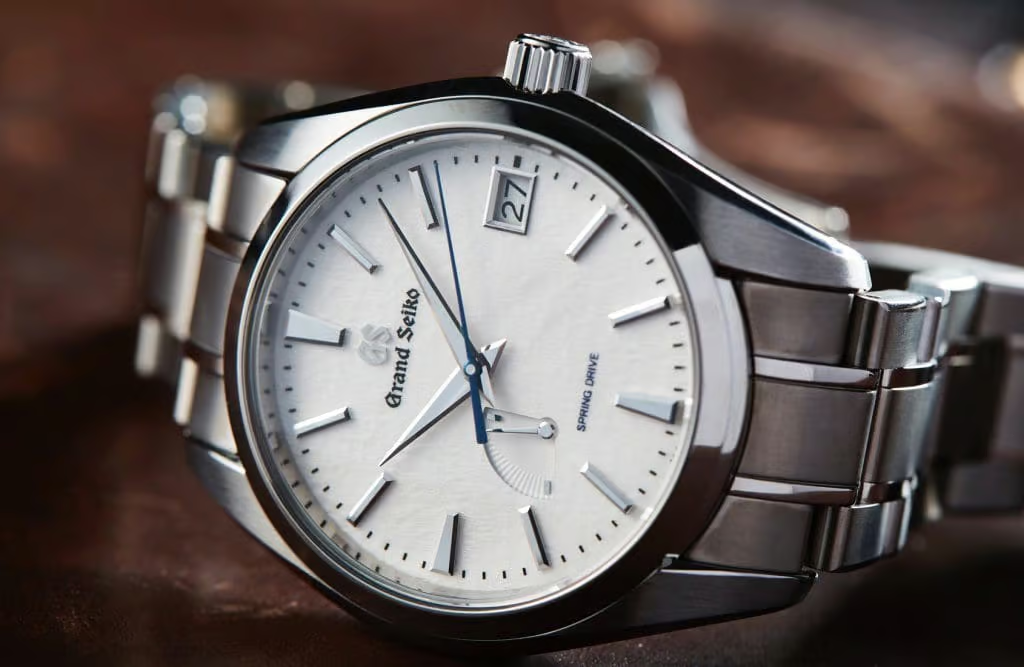
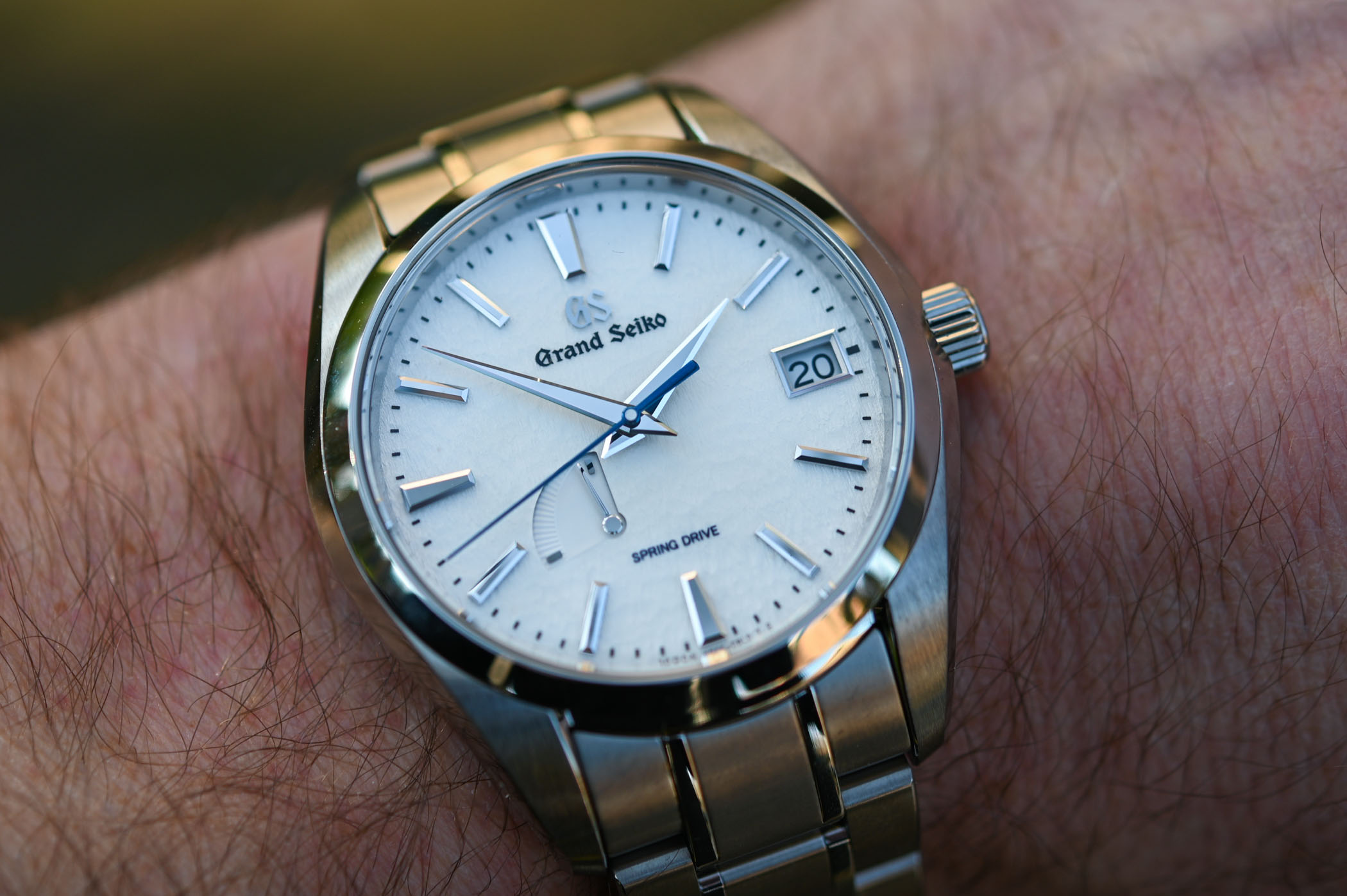
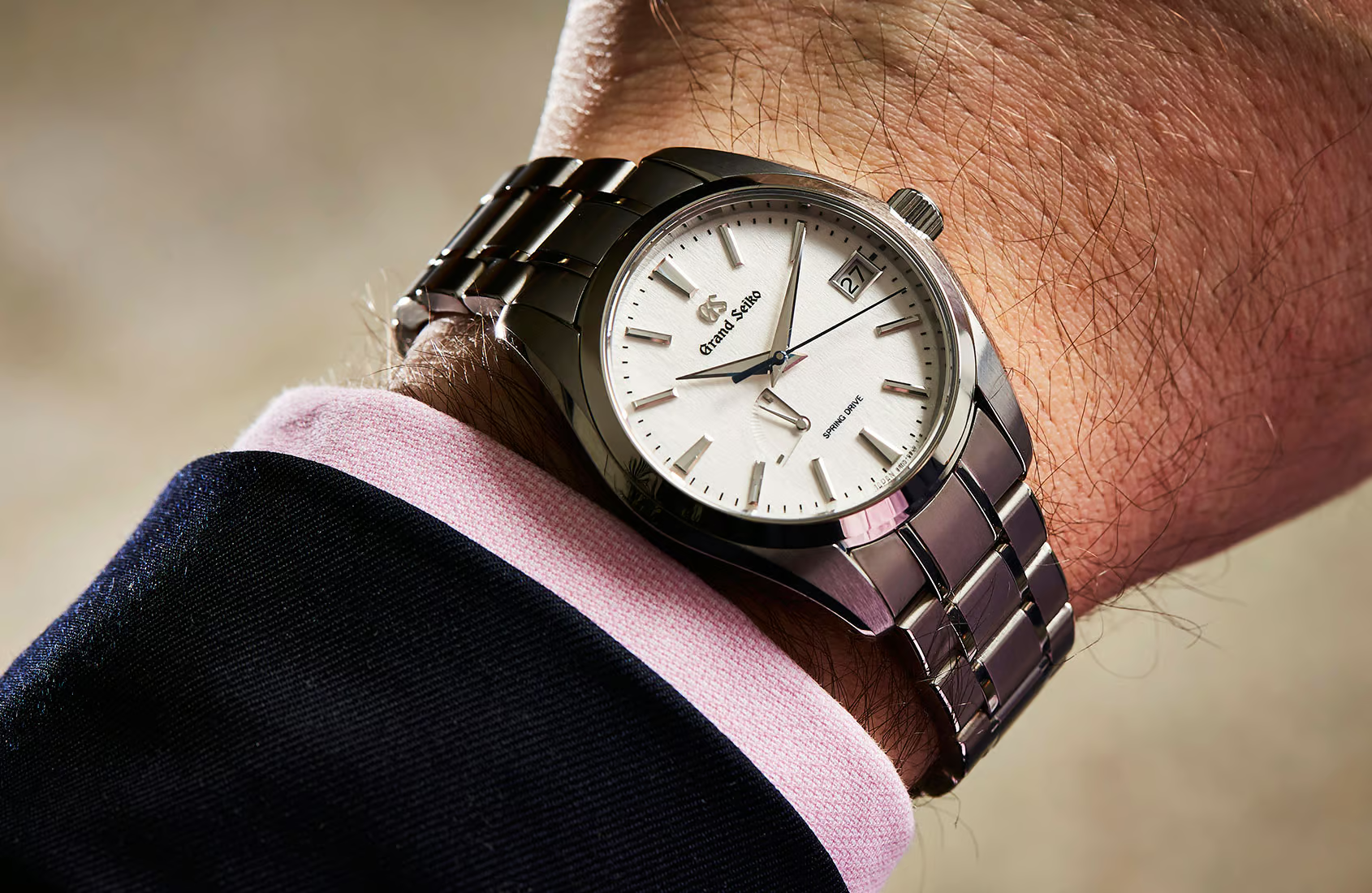
If you want to step outside the Western watchmaking narrative, the Grand Seiko Heritage Spring Drive Snowflake reference SBGA211 is the piece. Retail €6,300, Spring Drive 9R65 calibre, accuracy ±15 seconds per month. Brushed titanium case polished with Zaratsu, iconic snow-textured dial inspired by the winter of Shinshu. Power-reserve indicator on the dial, 72 hours of autonomy.
ROI data: +9.7% over one year, the best performer in the tier. Volatility 8.8%, low-risk segment according to WatchCharts. Secondary value €4,800 to €5,800, so an initial discount but a stable trajectory thereafter. It is the anti-Rolex card par excellence: Spring Drive accuracy (electronic regulation without a battery, mechanical movement), full titanium, Zaratsu finishing unmatched under €10,000. No ostentatious branding, recognition among insiders only.
Decision matrix for the €5,000 tier
| Piece | Retail | Secondary | 5-year ROI | Definitive argument |
|---|---|---|---|---|
| Tudor BB GMT M79830RB | €5,160 | €3,900-4,800 | -15.5% | Only manufacture true GMT under €5,200 |
| Omega Aqua Terra 38 | €6,100 | €4,500-5,500 | ~stable | Dress-sport METAS, versatility |
| Grand Seiko SBGA211 | €6,300 | €4,800-5,800 | +9.7% (1 year) | Spring Drive titanium, anti-Rolex connoisseur choice |
To conclude this tier: the Tudor BB GMT if the GMT function is non-negotiable and you accept the discount. The Aqua Terra 38 if you want suit-to-weekend versatility without the diver folklore. The Snowflake if you read the Japanese watch market and want a piece that looks like nothing else in the room. Three different logics, one tier.
€10,000 tier: Omega Speedmaster Moonwatch Hesalite versus Rolex Oyster Perpetual 41, the real choice

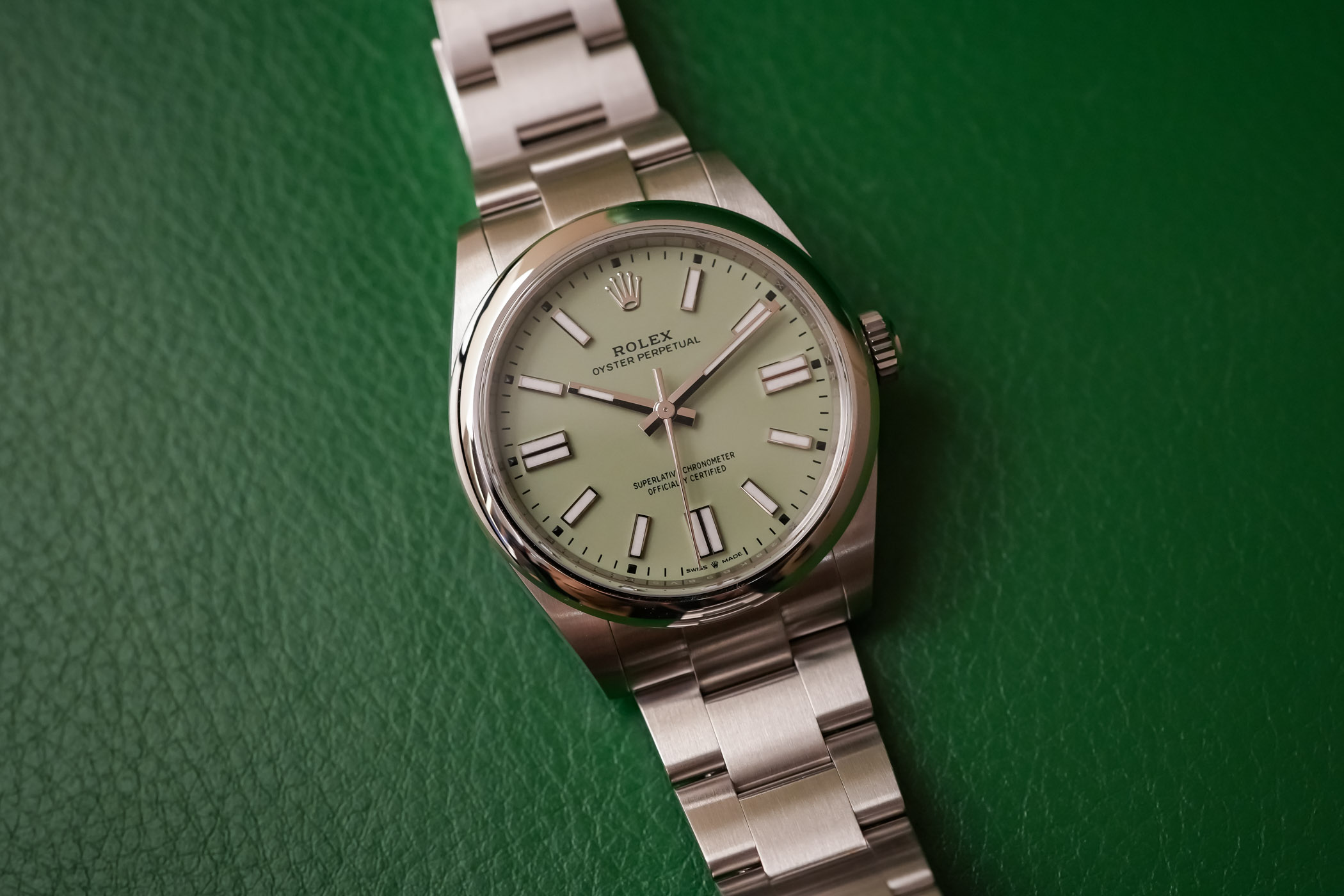
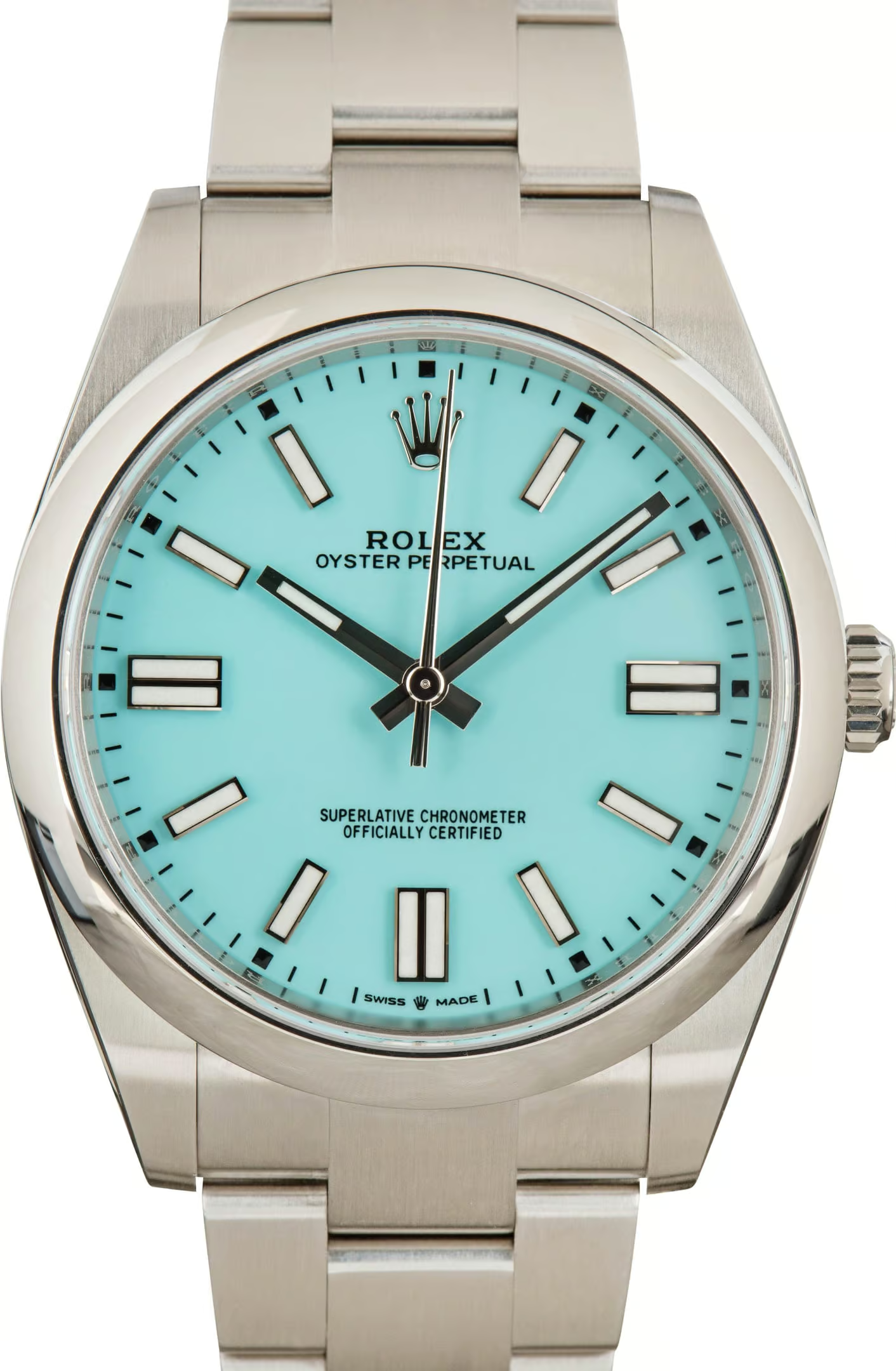
At €10,000, the market offers two opposing logics and one false lead that has to be named before going any further. The mechanical-historical logic points to the Omega Speedmaster Moonwatch Professional Hesalite, reference 310.30.42.50.01.001, retail €7,900 to €8,200. The liquidity logic points to the Rolex Oyster Perpetual 41, references 124300 and 134300, retail €7,300. The false lead is called the Cartier Tank Must, and we will come back to it.
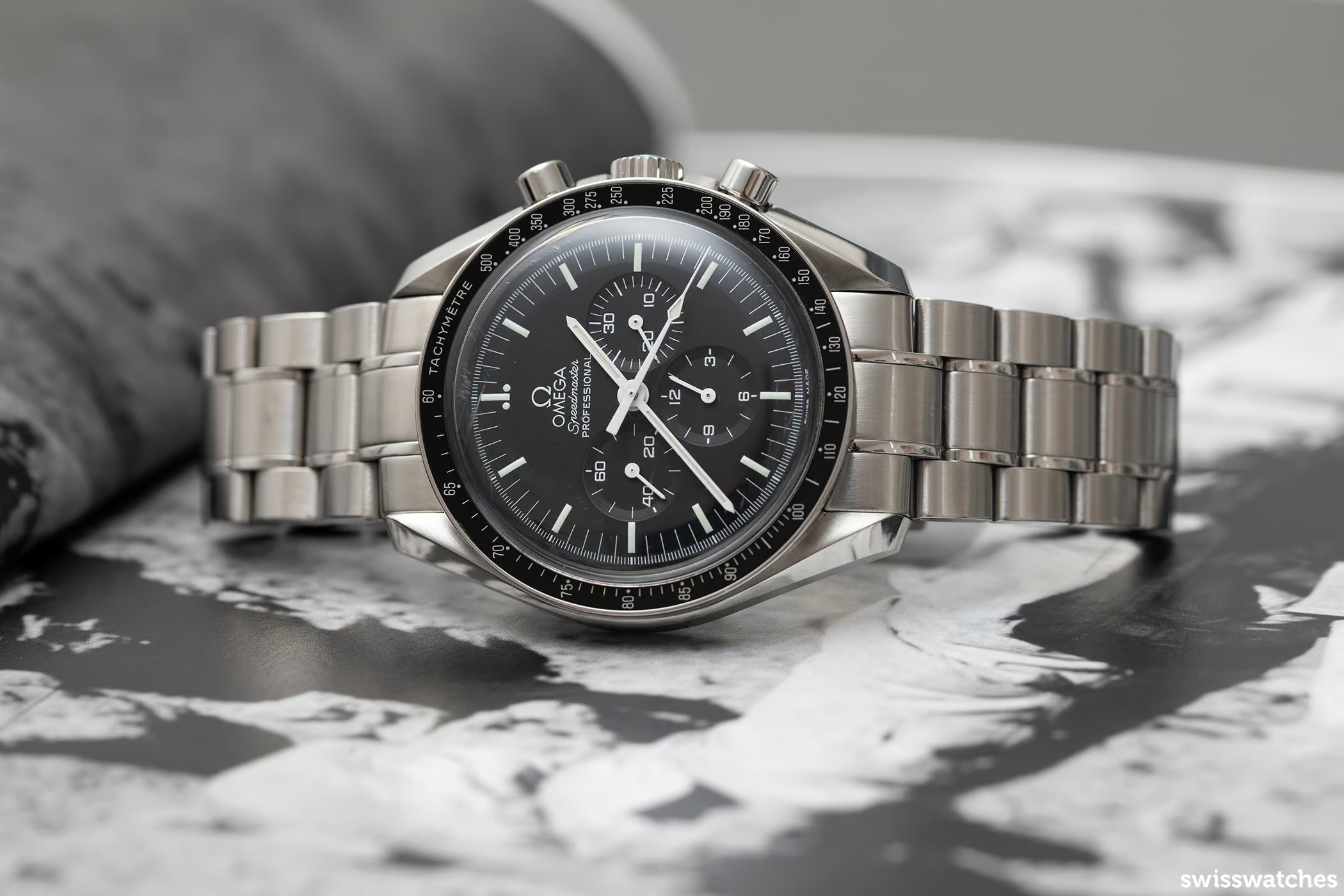
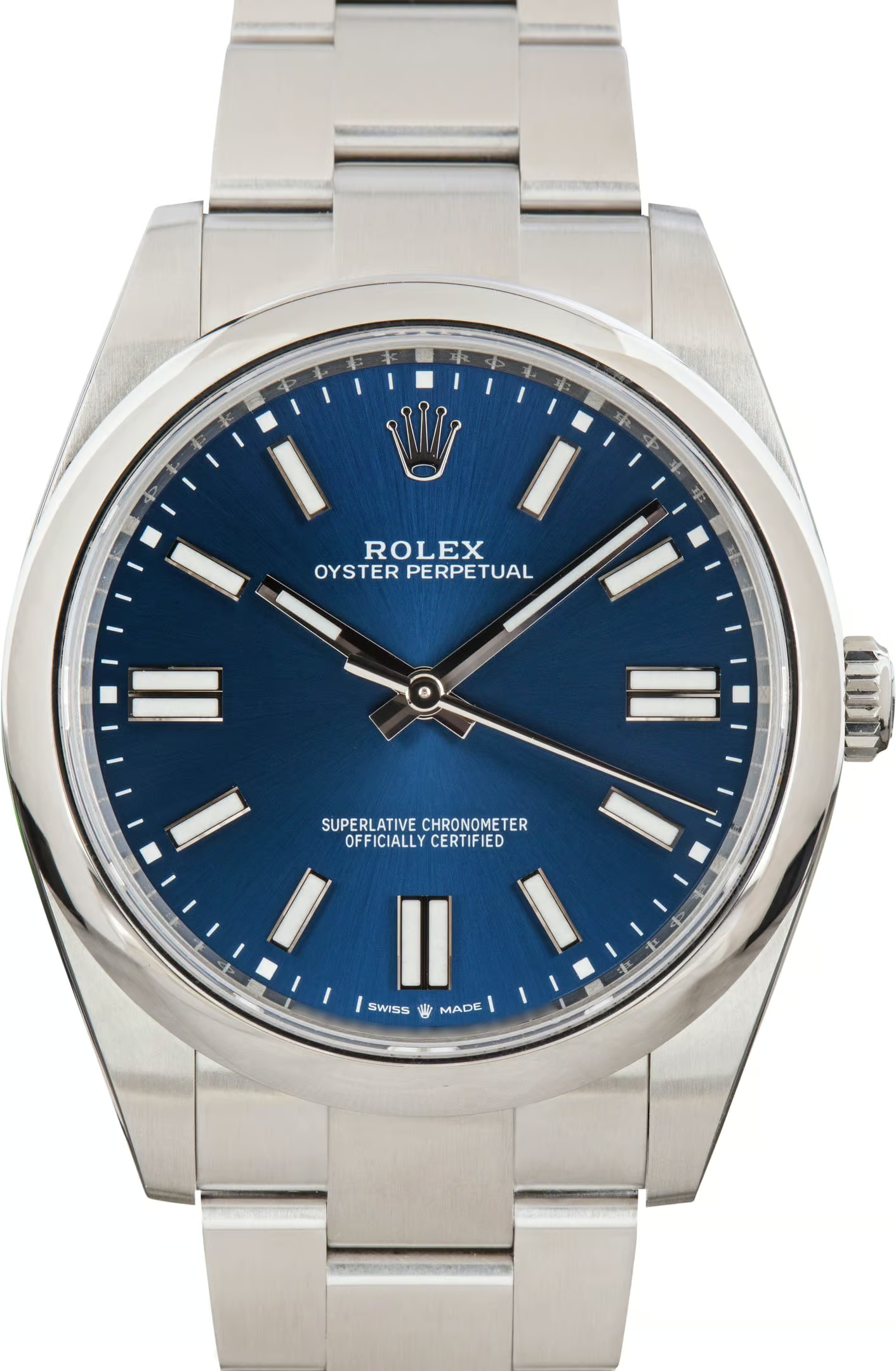
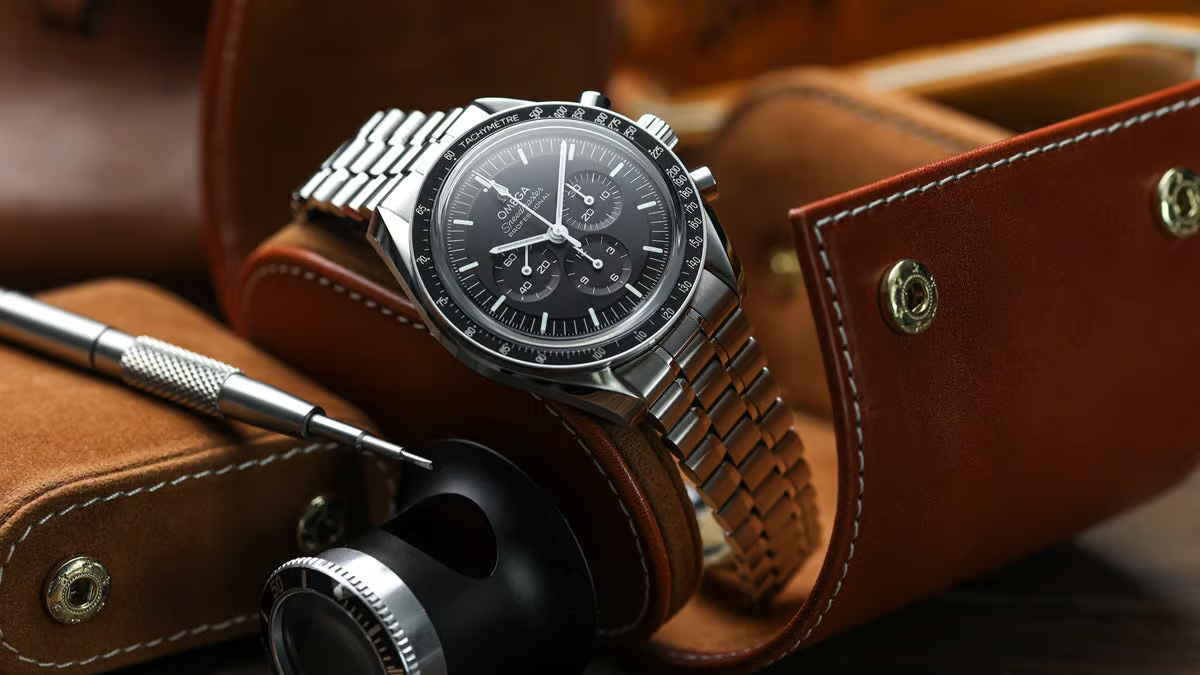
The verdict is explicit: the Speedmaster Hesalite wins the tier on everyday value and narrative singularity. The OP 41 wins on exit. It all depends on what the client expects from the object.
Speedmaster Hesalite: the only historic piece still priced like a real complication
The 310.30.42.50.01.001 remains the 1969 Moon Watch, modernized without being betrayed. Co-Axial Master Chronometer 3861 calibre, METAS certification (15,000-gauss resistance, 0/+5 seconds per day precision), 50-hour power reserve. Hesalite crystal, meaning the plexi approved by NASA in 1965. No other watch in this tier combines an in-house chronograph calibre, certification superior to COSC, and such a well-documented story.
On financial stability, the Sapphire version serves as the benchmark: -3.72% over 5 years according to Chrono24 data. It is one of the flattest figures in the watch market over the period, a market that corrected by -6.1% over five years. The Hesalite holds slightly better than the Sapphire pre-owned, with secondary prices around €5,800 to €7,200. You buy stability the way you buy a euro fund: it does not shine, it does not melt.
Rolex OP 41: the Rolex entry ticket without the speculative premium
The 124300 and its 134300 variant offer something else. In-house Rolex 3230 calibre, Superlative Chronometer certification (-2/+2 seconds per day), 70-hour reserve. No date, no Cyclops, colored dial (turquoise, coral, green) or lacquered black. It is the only way to enter a Rolex boutique without paying a 30 to 40% premium over retail, unlike the Submariner or the GMT-Master II.
Secondary market value €7,000 to €8,500, roughly retail. Near-monetary liquidity: resale in under three weeks on Chrono24, anywhere in the world. It is the defensible choice for someone who wants a steel Rolex, rejects diving folklore, and accepts a watch that says less than the Submariner and travels better than a dress watch.
The Cartier Tank Must trap
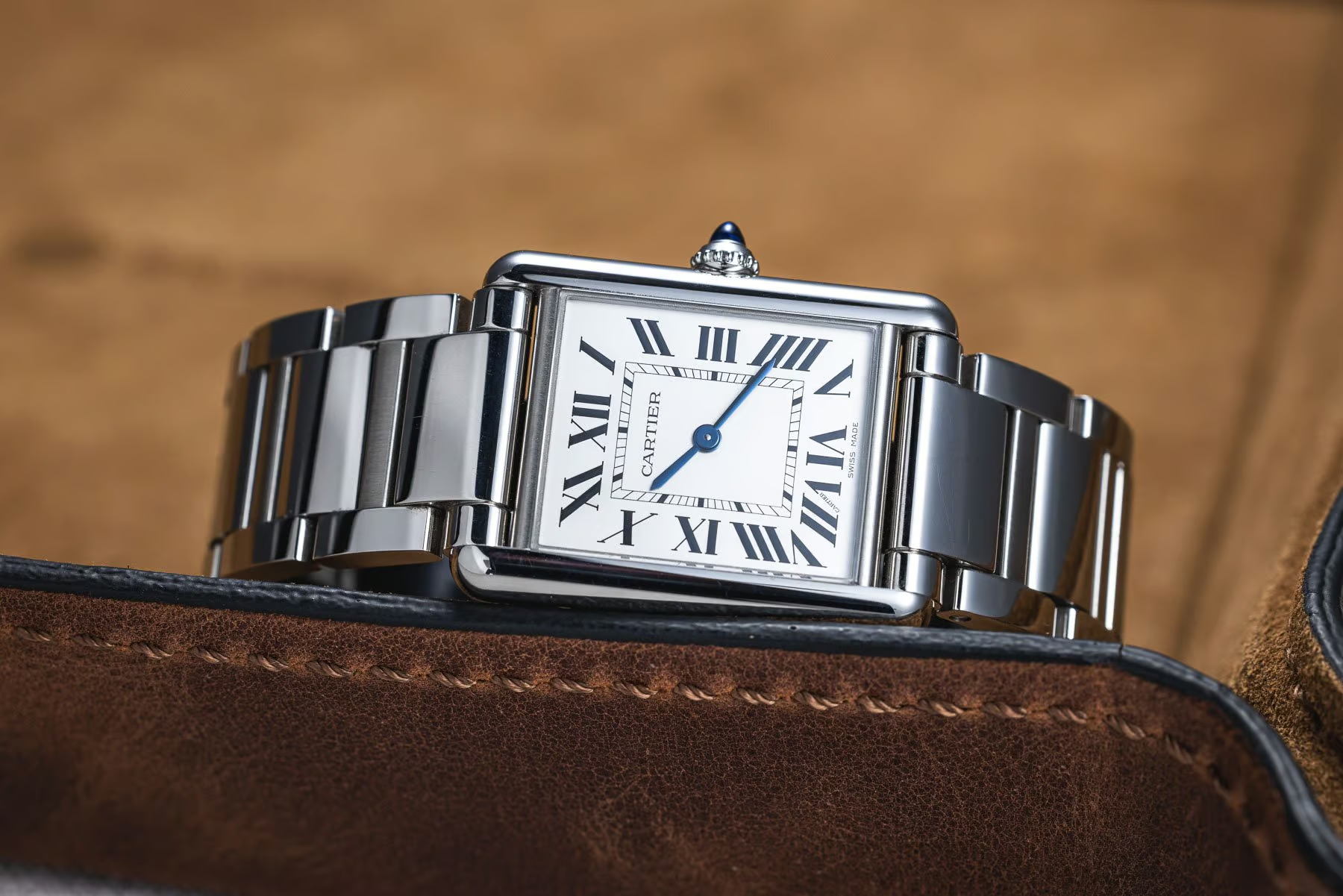
The Tank Must Large WSTA0041 circulates in every 10K list. This is a calibration error: its actual retail is €3,400 to €3,700. It has no place in the €10,000 tier. If you want Cartier that holds the tier, the only defensible answer is the Tank Louis Cartier small model in yellow gold, retail around €9,800, in-house manual 1917 MC calibre. To be clear: this is not a calibre purchase, it is an architecture purchase (1917 design, timeless). Argue it as such, never as a mechanical comparison.
Comparative matrix for the €10,000 tier
| Model | 2026 retail | Secondary | 5-year ROI | Argument |
|---|---|---|---|---|
| Speedmaster Hesalite 310.30.42.50.01.001 | €7,900-8,200 | €5,800-7,200 | -3.72% (Sapphire benchmark) | Moon Watch story, METAS 3861 calibre |
| Rolex OP 41 124300/134300 | €7,300 | €7,000-8,500 | Stable around retail | Instant global liquidity |
| Cartier Tank Must WSTA0041 | €3,400-3,700 | €2,300-3,000 | Stagnant | Outside the tier — do not shortlist |
| Tank Louis Cartier yellow gold | ≈€9,800 | variable | Holds through the metal | The only defensible Cartier at the tier |
Cost of ownership and final arbitration
Over five years, the TCO of an Omega Seamaster bought for €5,500 sits around €1,450, or 26% of the price. The Speedmaster Hesalite remains in the same logic: full Omega service €750 to €900, triggered every 5 to 7 years, insurance around 1.3% per year of the value. Over a 5-year window, service is generally not triggered, so depreciation (-3 to -10%) is the real cost item.
The OP 41 plays a different score: zero to slightly positive depreciation, Rolex Datejust service €650 to €800, similar insurance. TCO below 15% of the purchase price over five years. It is the least expensive watch to wear in the tier, provided you accept that it says nothing beyond the crown.
The final cut: if you want to wear a historic object with a true in-house chronograph, take the Speedmaster Hesalite. If you want resale certainty and the crown on your wrist, take the OP 41. If you want Cartier in the 10K tier, forget the Tank Must and aim for the Tank Louis Cartier in yellow gold. Everything else is a poorly arbitrated compromise.
€20,000 tier: Rolex Submariner Date 126610LN, the absolute benchmark and its Cartier Santos antithesis
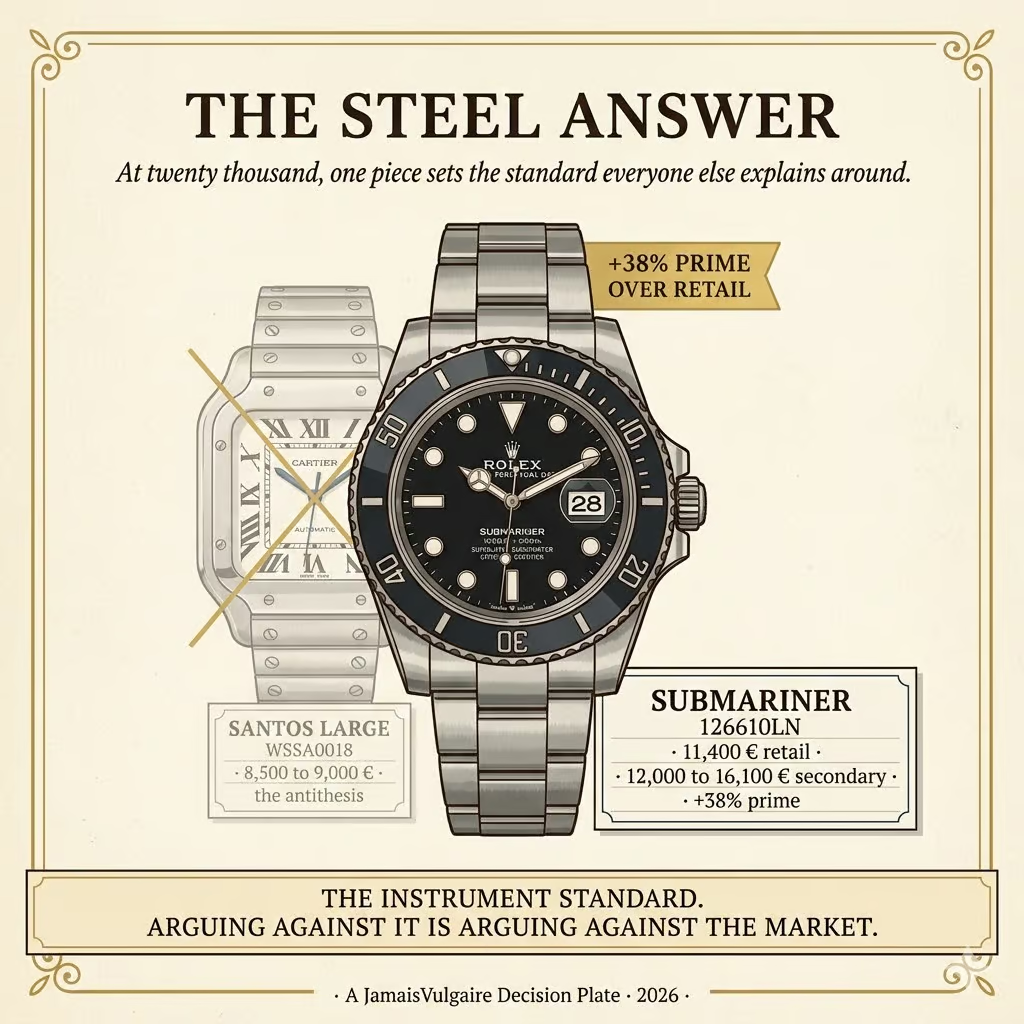
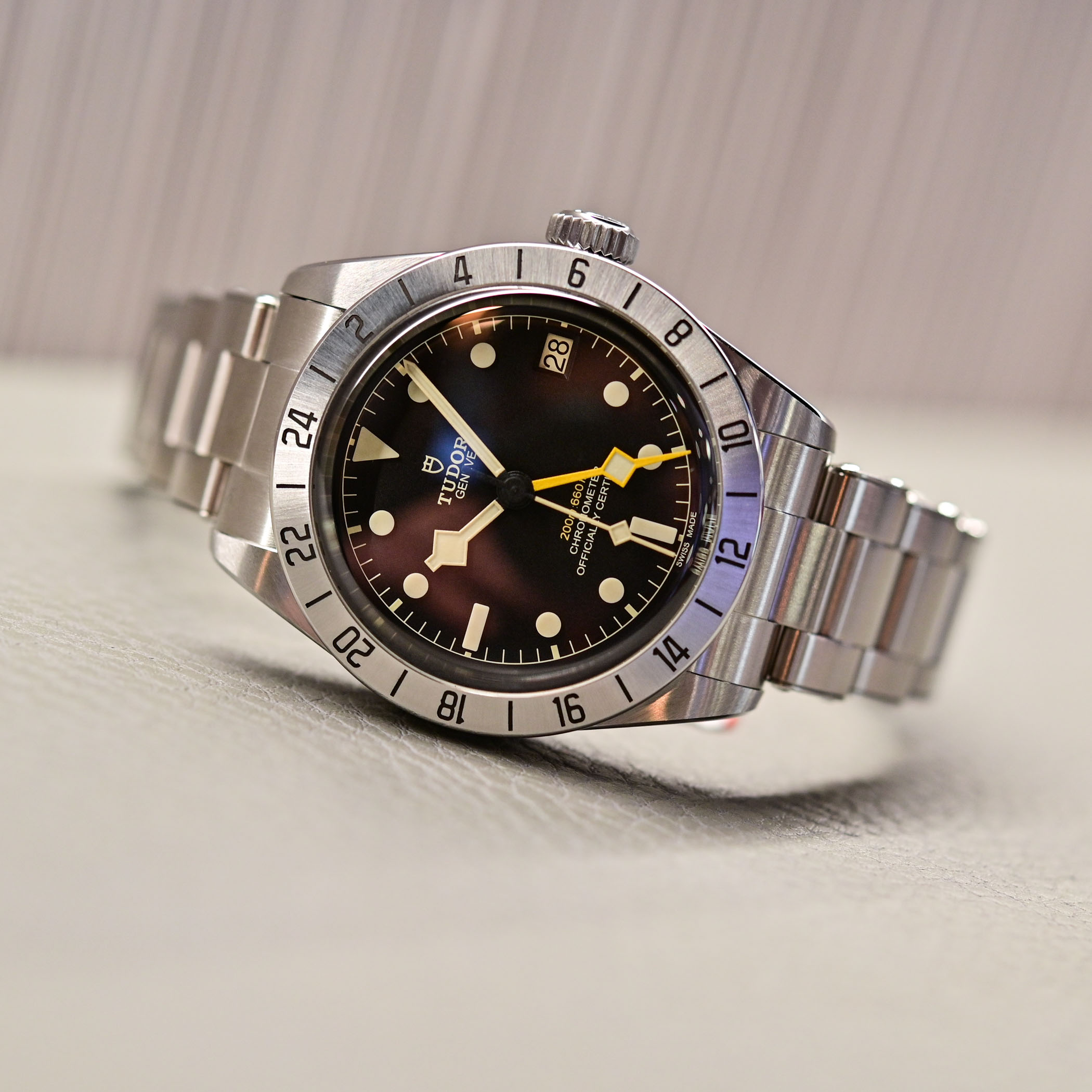
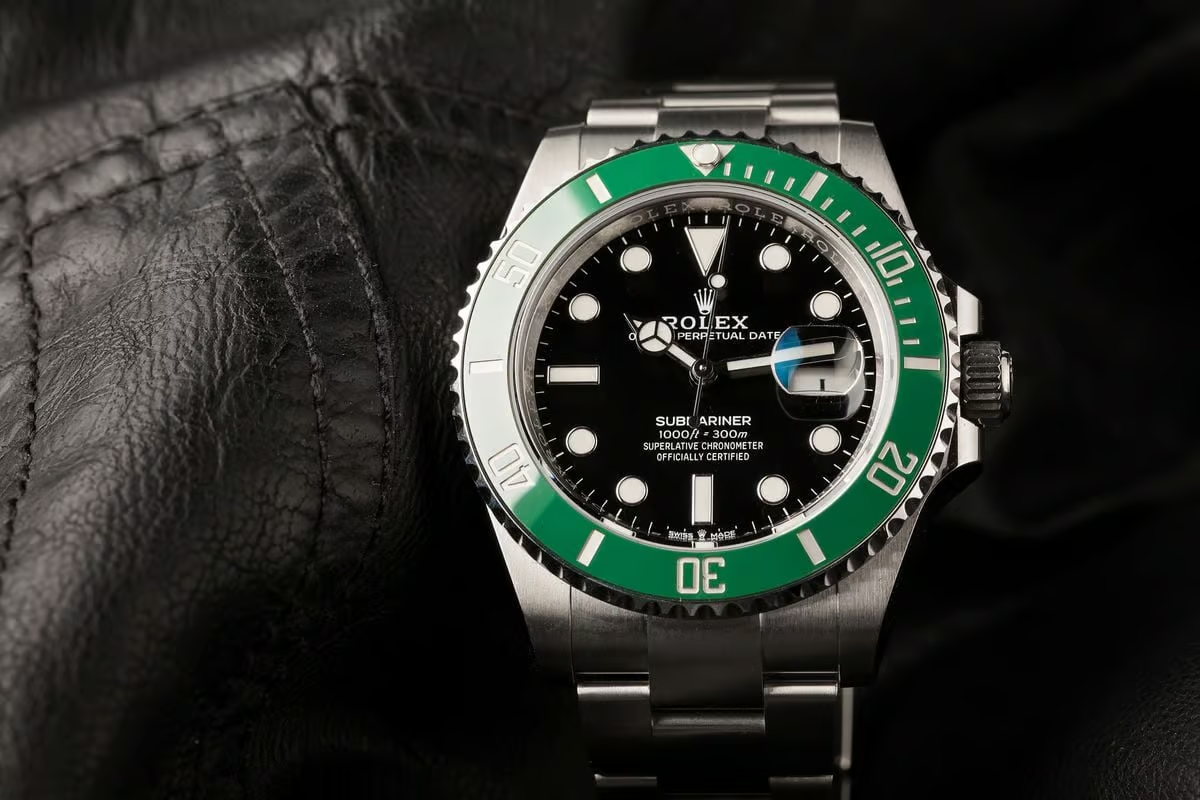
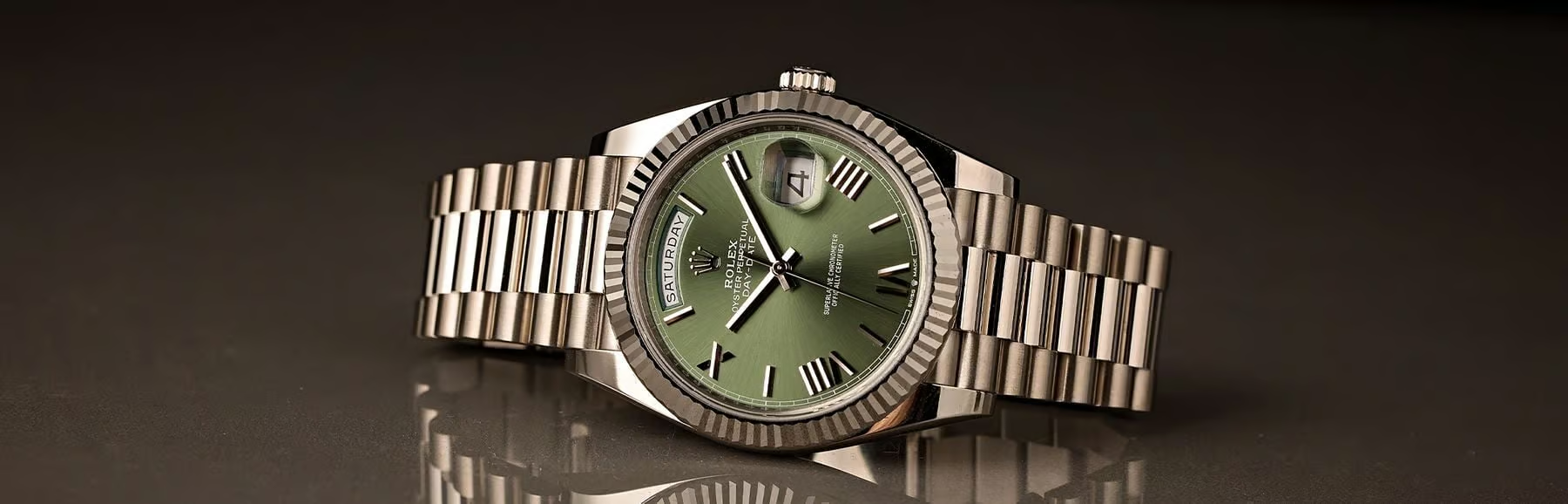
At this tier, there is one reference and only one coherent counter-proposal. Everything else falls under personal taste that cannot be analytically defended. The Rolex Submariner Date 126610LN at €11,400 retail MSRP France 2026 (after the +2.8% steel increase in January 2026) remains the benchmark instrument. Secondary market value €12,000 to €16,100 depending on condition. Structural premium +38% vs retail. Arguing against it means arguing against the market average.
Submariner 126610LN: the absolute consensus value
In-house Rolex 3235 calibre, Superlative Chronometer certified to -2/+2 seconds per day, 70-hour reserve, Chronergy escapement. 41 mm Oystersteel case, 60-minute graduated Cerachrom ceramic bezel, 300-meter water resistance. The specification has no identifiable industrial flaw at the price.
Financial performance over 5 years: -5.7%. Performance over the trailing 12 months: +6.4%. The trajectory says it all: peak at €18,000 in Q1 2022, correction to €13,000 at the end of 2023, rebound to €15,600 in May 2026. The raw 5-year figure is negative, but the buyer who obtained retail at €11,400 remains structurally +38% above his purchase price. Depreciation is not a loss if retail access was obtained.
The real cost over 5 years
For a Sub bought for €12,500 on the secondary market, total cost of ownership is dominated by insurance, not by service or depreciation.
| Item | 5-year amount | TCO share |
|---|---|---|
| Secondary purchase | €12,500 | base |
| Rolex service (not triggered if recent) | €0 | 0% |
| Dedicated Hiscox insurance (~2.4%/year) | €1,500 | dominant |
| Estimated resale at 5 years | €13,000 | +€500 |
| Net TCO | €1,000 | 8% |
Eight percent of the purchase price over 5 years, dominated by insurance. No other wearable luxury object does better. Service does not appear within the 5-year window for a recent watch. The agreed Hiscox value requires a Hache-type appraisal or equivalent, with higher premiums in Paris and on the Côte d’Azur.
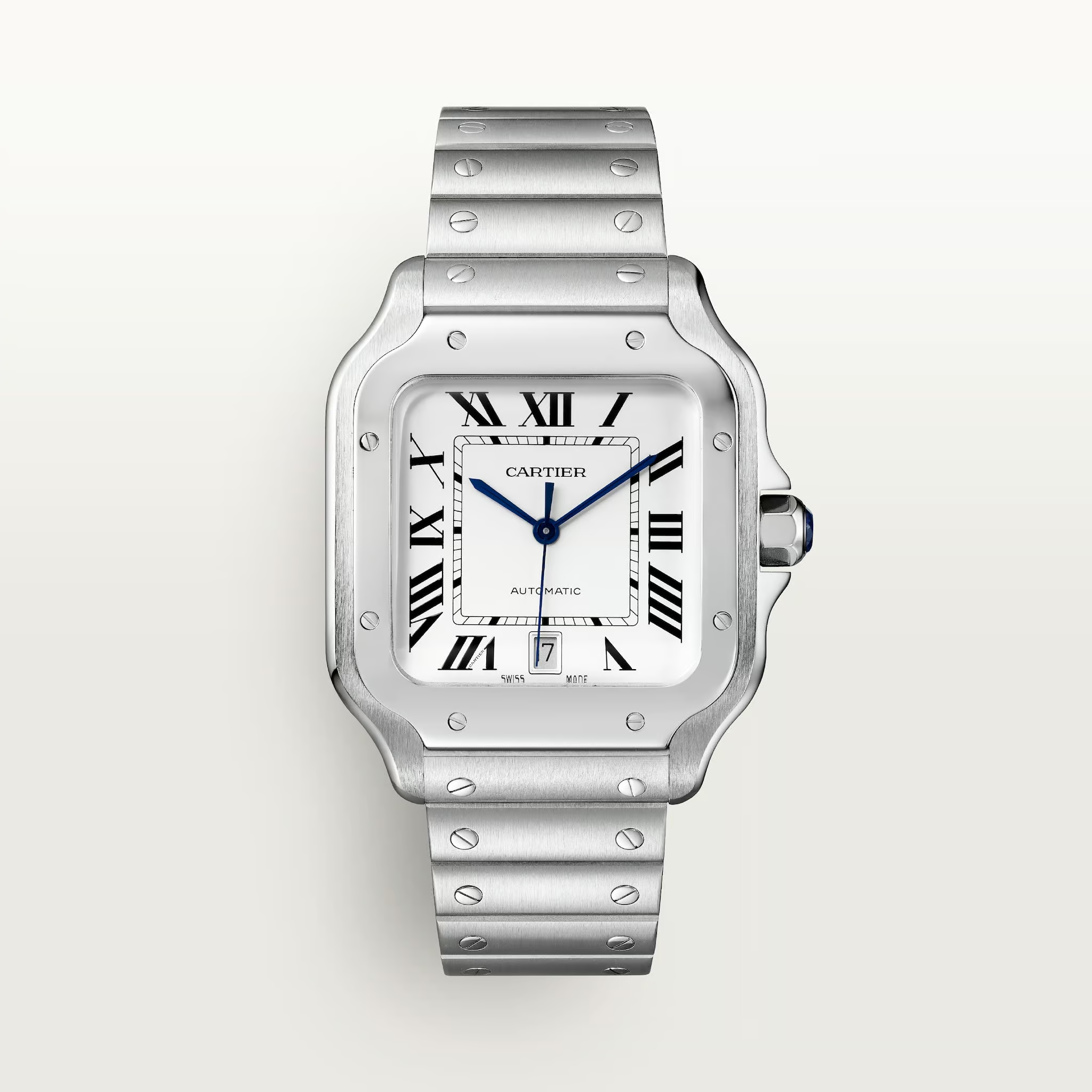
The coherent antithesis: Cartier Santos Large WSSA0018
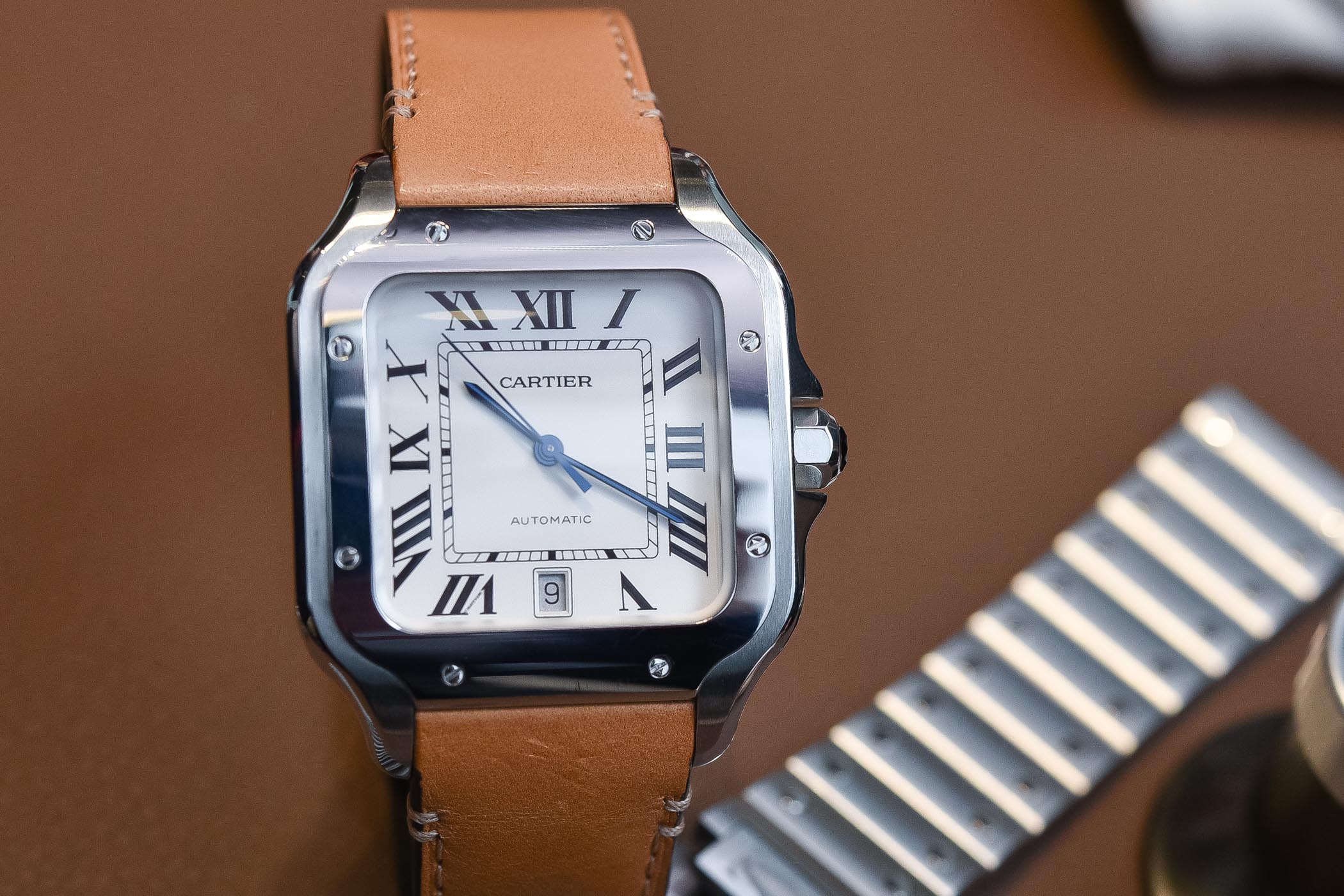
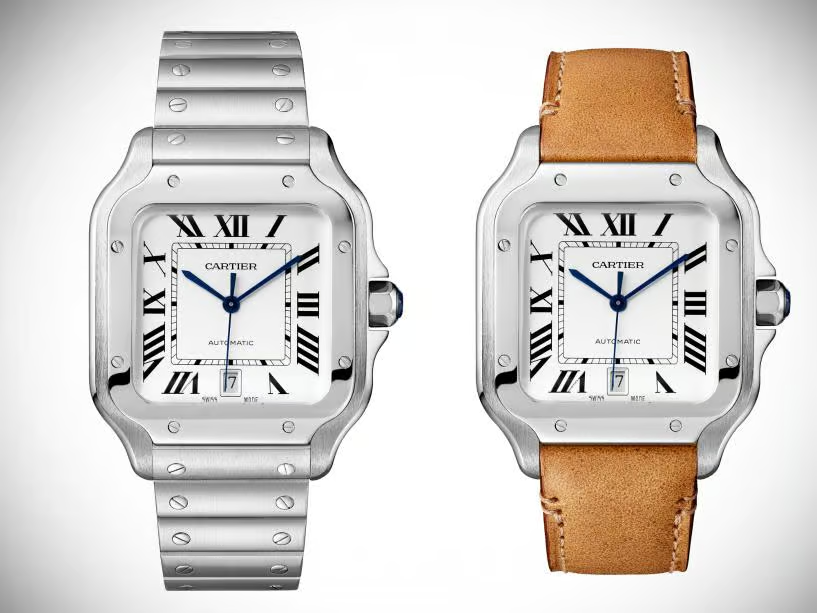
The only intellectually defensible counter-argument at the tier. Cartier Santos Large WSSA0018, €8,600 steel retail, anti-magnetic automatic 1847 MC calibre, 42-hour reserve. Tool-free QuickSwitch bracelet and SmartLink system: that is the piece’s real everyday engineering, not the calibre.
Financial performance: +4.4% over 5 years, +11.5% over 12 months. The WSSA0018 outperforms the overall Santos index by 5.3 points. First wristwatch in modern history (1904), suit/casual versatility the Sub will never have. To aim strictly at €20,000 in Cartier, the target is the WGSA0029 two-tone steel/yellow gold around €14,800 or the full yellow gold WHSA0015 around €40,000 (outside the tier). The arbitration sweet spot is the two-tone.
Erratum to flag: the Tudor Black Bay Pro is miscalibrated for this tier
Catawiki often offers Tudor Black Bay Pro examples, useful for comparing references and wear levels.
The Tudor Black Bay Pro M79470 is positioned at €3,450 to €3,750 retail. It does not play in the €20,000 tier. Any list that places it here disqualifies its author. Analytically valid substitution: Rolex Explorer II 226570 around €10,350 or Omega Seamaster 300 Heritage Master Chronometer around €9,500. If you want to stay with Tudor at €20,000, you have to aim for the bronze Royal Pelagos FXD or the yellow-gold editions; otherwise Tudor saturates around €8,000.
Tier verdict
The Submariner 126610LN remains the consensus market value. The 5-year depreciation (-5.7%) does not penalize the buyer who obtains retail, because the secondary price remains structurally +38% above MSRP. The Cartier Santos WSSA0018 at €8,600, then moving up to two-tone around €14,800, is the only counter-proposal that holds water, with genuinely positive 5-year ROI (+4.4%) and a non-substitutable tailoring story. Buying both as complements remains the most analytically defensible strategy in the tier: Sub as a liquid instrument, Santos as an appreciating dress piece.
The €50,000 tier: Daytona 126500LN, Cartier Privé Tank Cintrée, Patek Calatrava 6119G, the capital verdict
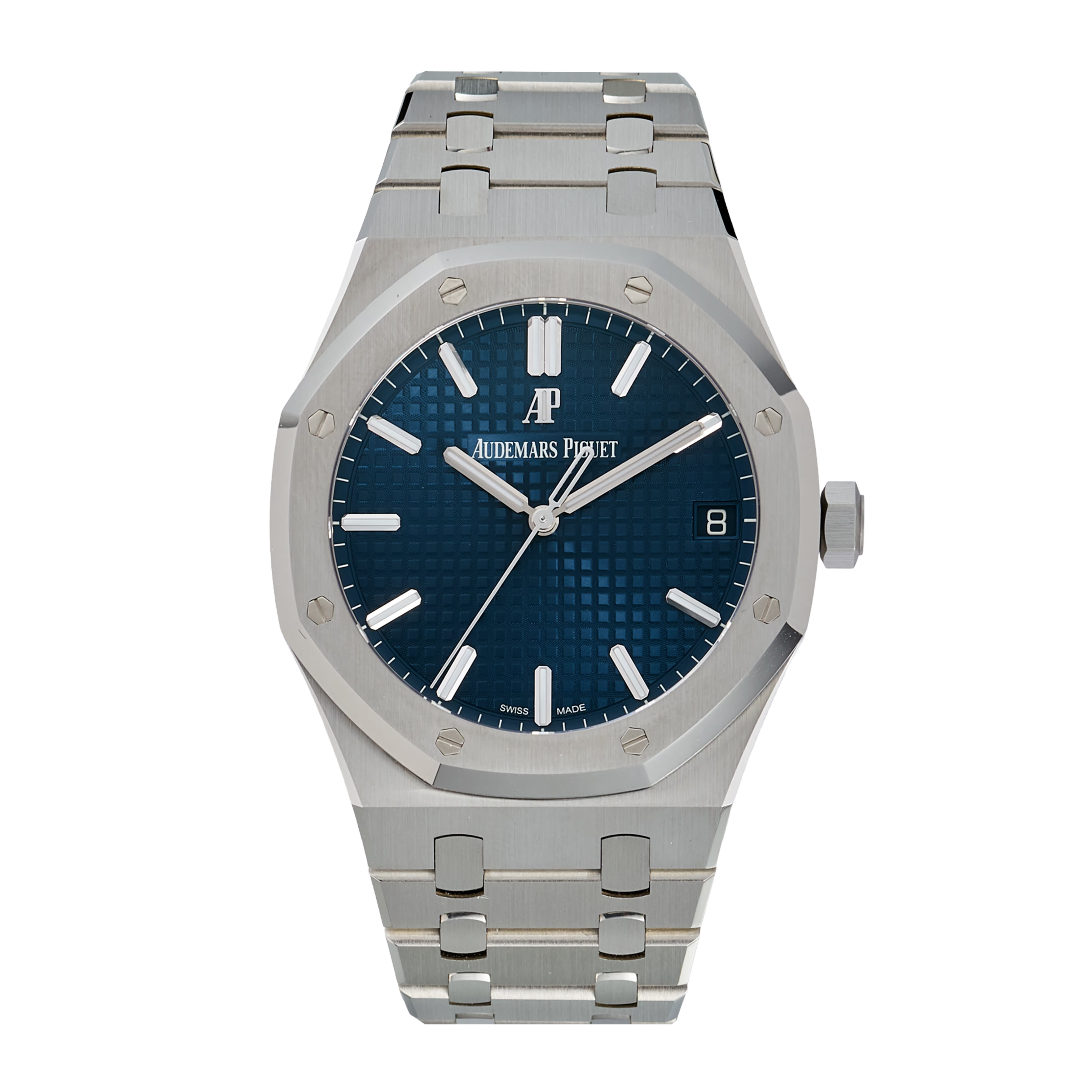
At €50,000, the trade-off is no longer technical. All three candidates come out of the same drawer: Patek Seal or Superlative Chronometer, hand finishing, manufacture movements beyond dispute. The choice is made elsewhere: instant liquidity, connoisseur desirability, or institutional staying power. Only one of the three ticks all three boxes at once, and it is not the one Instagram pushes.
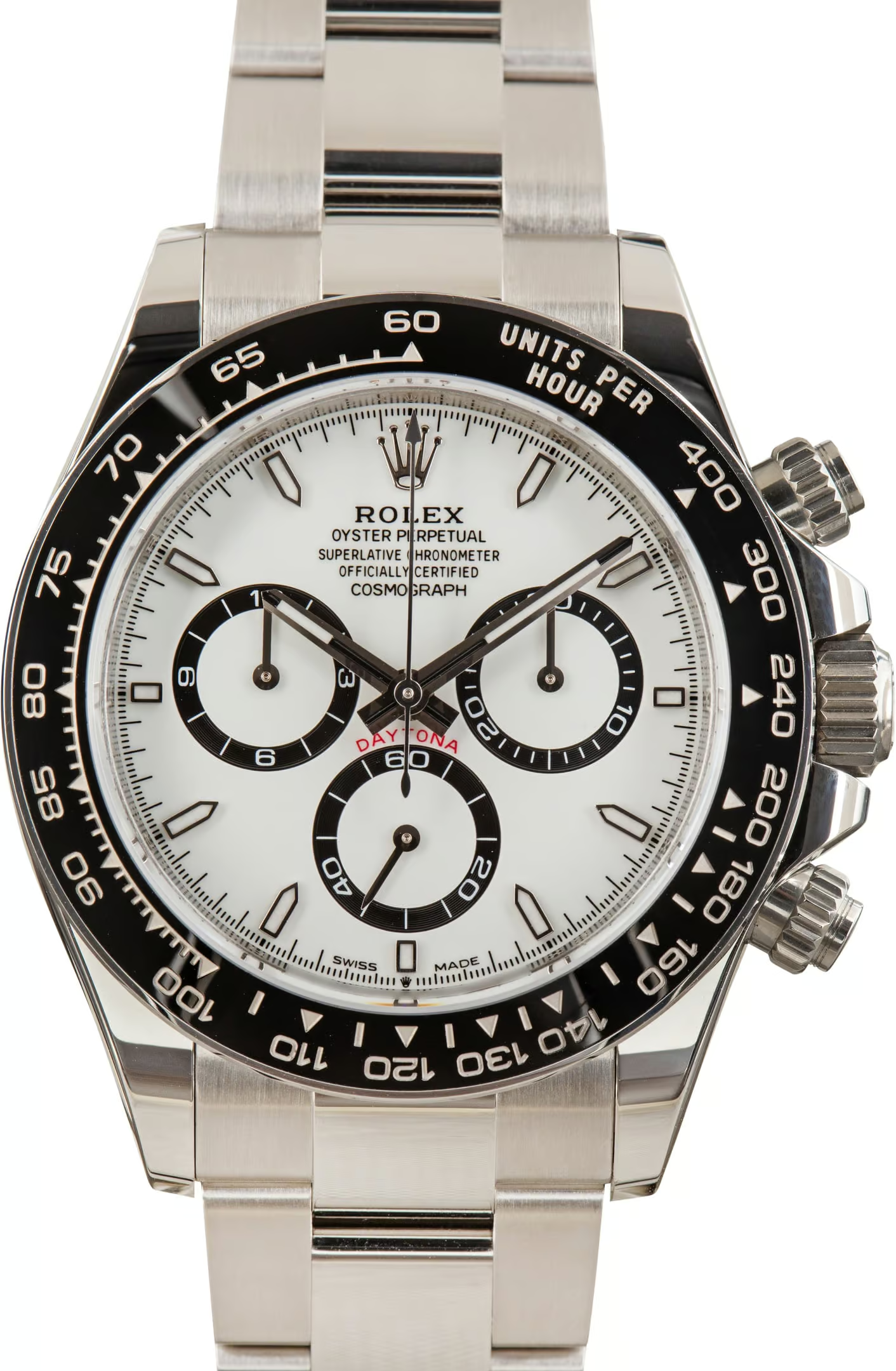
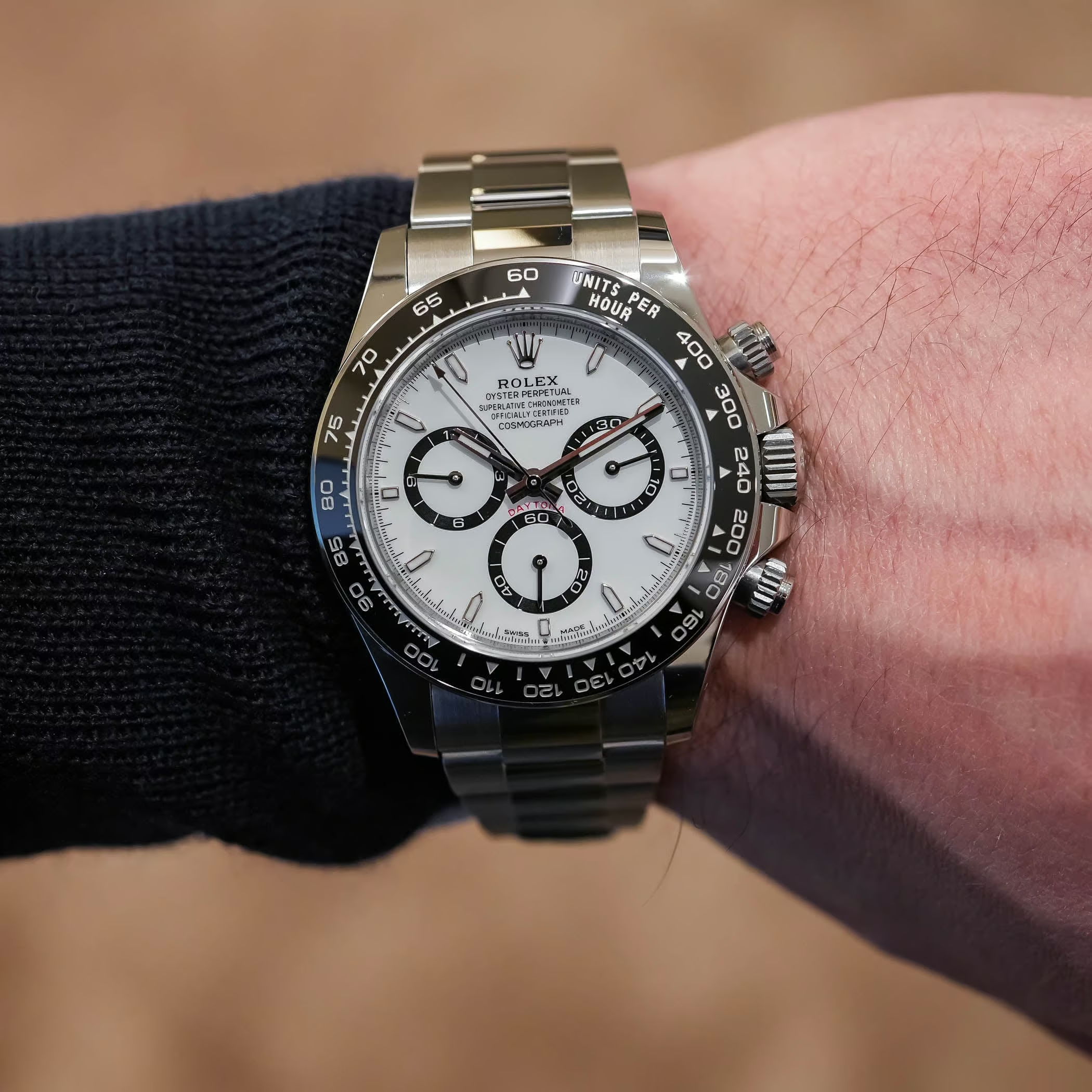
The Rolex Cosmograph Daytona 126500LN is the monetary ticket. Retail: official French RRP of €16,300 (steel +2.2% in 2026), secondary-market value €28,000 to €38,500 depending on the Panda or black dial. A 2x premium, no strings attached. Rolex 4131 calibre, column-wheel chronograph, ceramic bezel, 72h power reserve. Global liquidity is unbeatable: a median 25 days to sell anywhere, the closest object to a cash equivalent in the category. At 50K, this is the tier where you buy a new Daytona on the grey market.
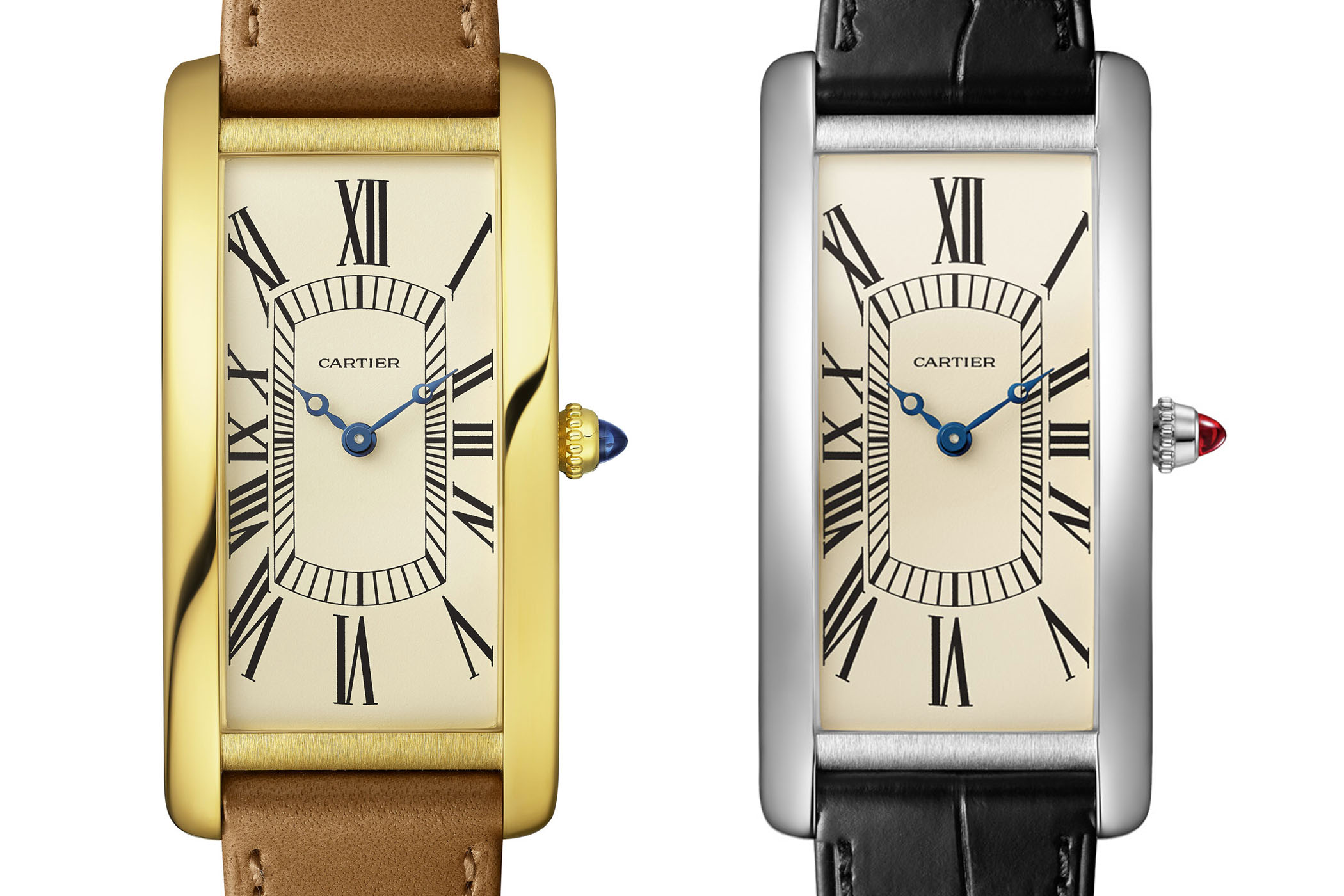
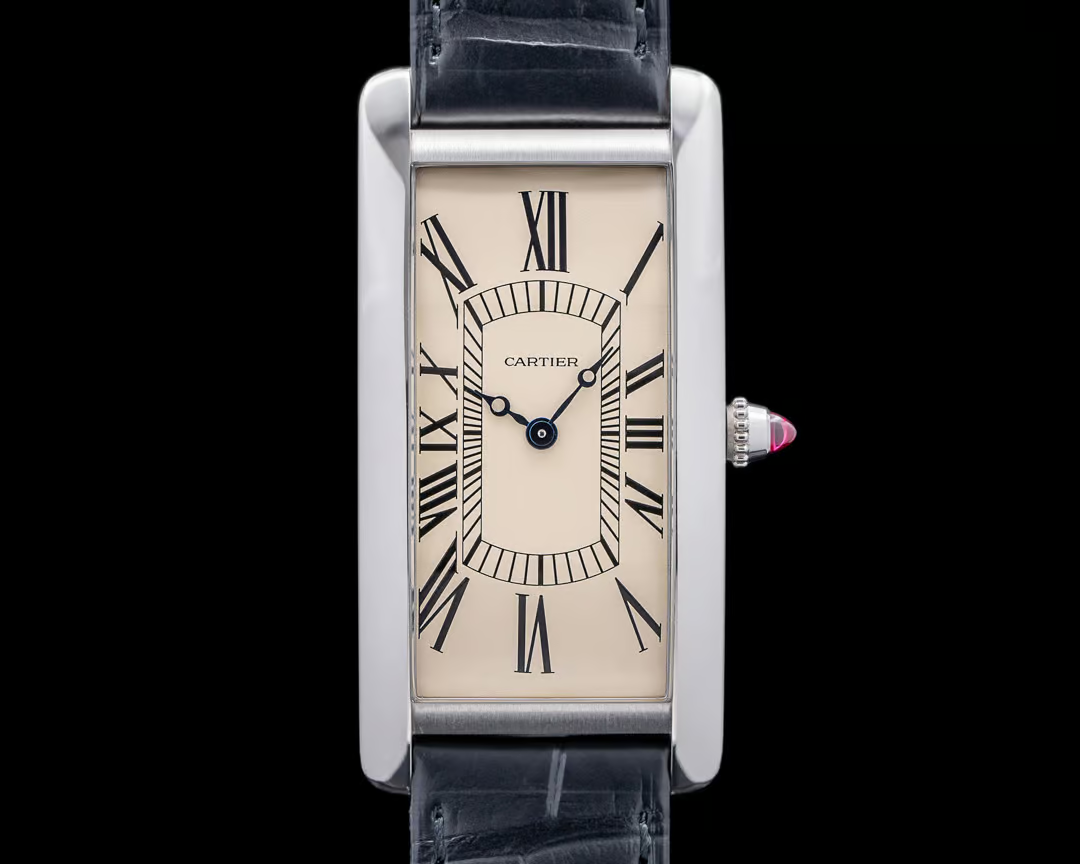
The Cartier Privé Tank Cintrée WGTA0143 is the absolute anti-Daytona. €29,600 in yellow gold, €34,700 in platinum, limited series of 200 pieces. Historic 1921 curved format, hand-wound Cartier 1917 MC calibre, elongated dial, zero chronograph, zero complication display. This is a piece of Art Deco architecture, not an object for after-work debate. Secondary-market prices for previous Privé editions (Tank Normale 2023) hold retail +15%, with a reasonable projection of €30,000 to €38,000. Desirability is connoisseur-driven, the run size limits dilution, and the complete absence of Instagram hype is the feature, not the bug.
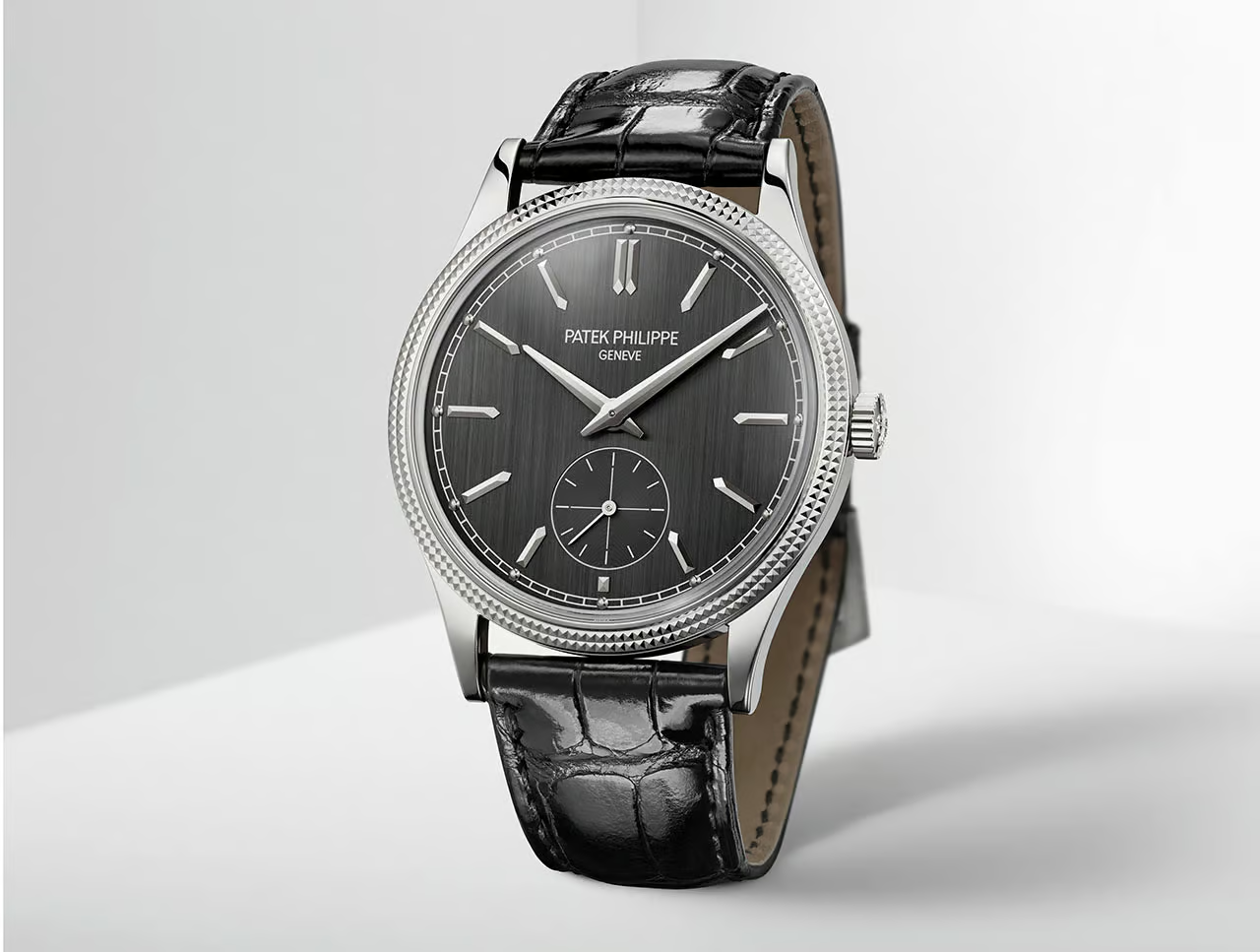
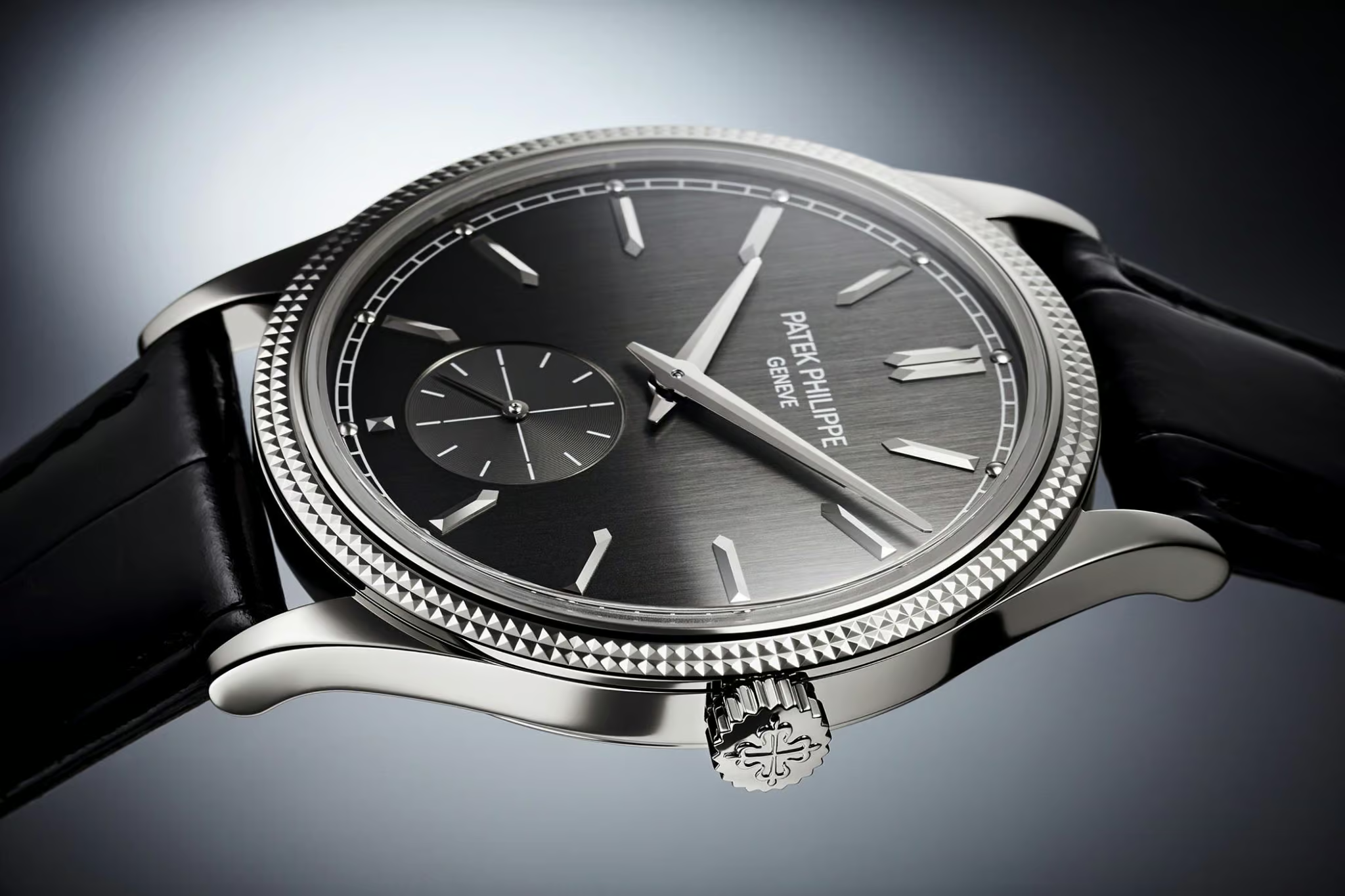
The Patek Philippe Calatrava 6119G-001 is the lowest-risk official Patek entry ticket. Retail €25,510 to €26,150, hand-wound manufacture 30-255 PS calibre, 65h power reserve, Patek Seal (an in-house standard stricter than COSC). 39mm white gold, Clous de Paris bezel borrowed from the historic 1934 Calatrava 96, grained charcoal dial. 2026 value holding at €28,000 to €35,000, and its sister reference, the 5227G, shows +22.7% over 5 years according to WatchCharts, the outright champion of the tier across all data. When Nautilus access is closed at retail, this is the Patek door that actually opens.
The capital verdict
| Reference | 2026 retail | Secondary-market value | Premium |
|---|---|---|---|
| Rolex Daytona 126500LN | €16,300 | €28,000 to €38,500 | 2x |
| Cartier Privé Tank Cintrée WGTA0143 | €29,600 (yellow gold) | €30,000 to €38,000 (projected) | +15% |
| Patek Calatrava 6119G | €25,510 to €26,150 | €28,000 to €35,000 | +15 to +35% |
Median 5-year ROI on this tier is +8%, but dispersion by reference is enormous. The 5-year TCO of a Patek at €35,000 comes out at €9,500, or 27% of the purchase price (10 to 15% depreciation + dedicated insurance at 2 to 3%/year + manufacture service at €1,100 every 7 to 10 years). The Daytona can deliver a near-zero TCO if the market premium holds, with Hiscox insurance the only truly paid line item. The Cintrée, thanks to its limited run, sits between the two, with higher liquidity risk but a solid collector floor.
Anyone who already has a Submariner on the wrist and wants to step out of steel-sport folklore chooses the Cintrée. Anyone who wants the institution, hand finishing, and the historic 1934 signature chooses the Calatrava 6119G. Anyone who wants the purest monetary ticket, the object resellable in 48 hours in Tokyo, Geneva, or Miami, chooses the Daytona 126500LN. All three are defensible. The only mistake is buying the Daytona for the story, the Cintrée for resale, or the Calatrava for hype. Each piece serves a precise function. Mixing up the functions is the only trap in this tier.
The final table: real 5-year TCO by tier, the only number that matters before buying
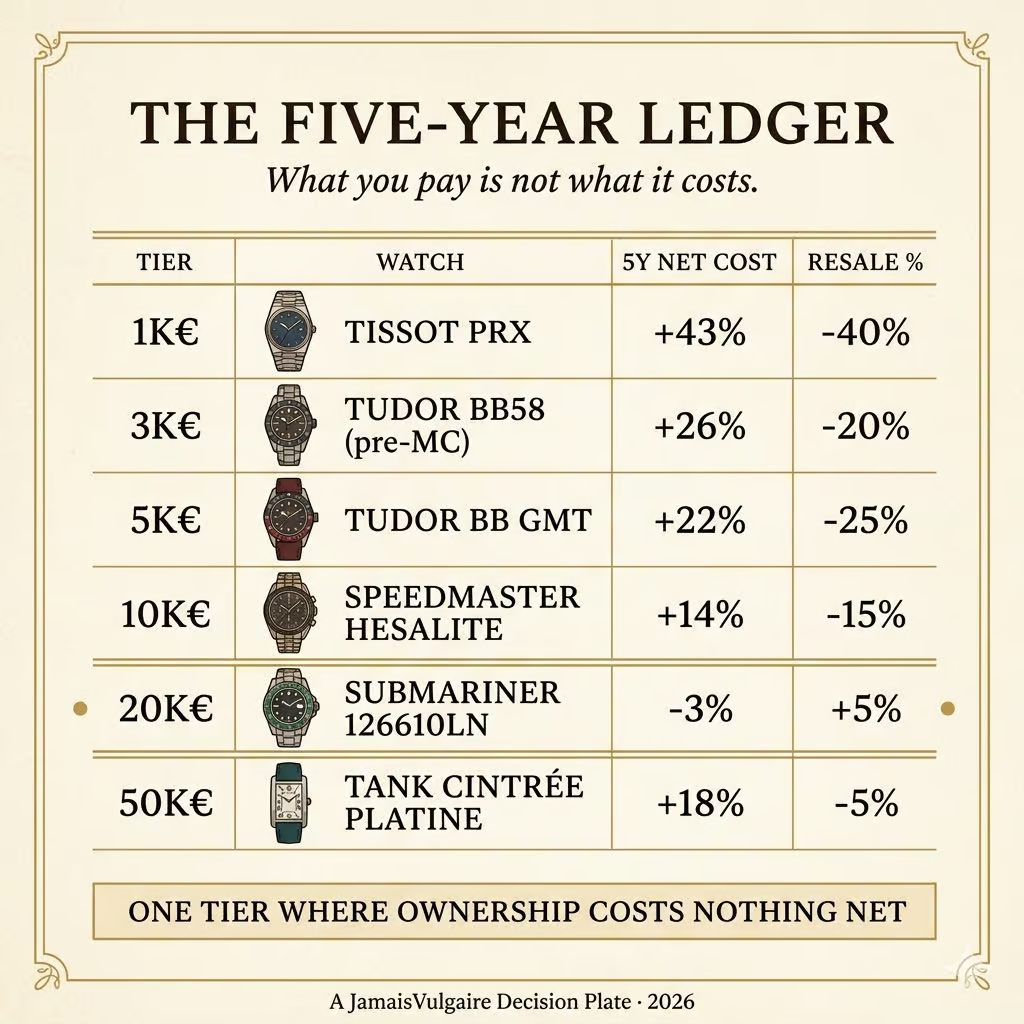
The purchase price is not the price of the watch. The real number is the 5-year TCO: purchase + service + insurance, minus resale. This single line reconciles everything brands, boutiques, and forums refuse to add up together. Here is the verdict, tier by tier.
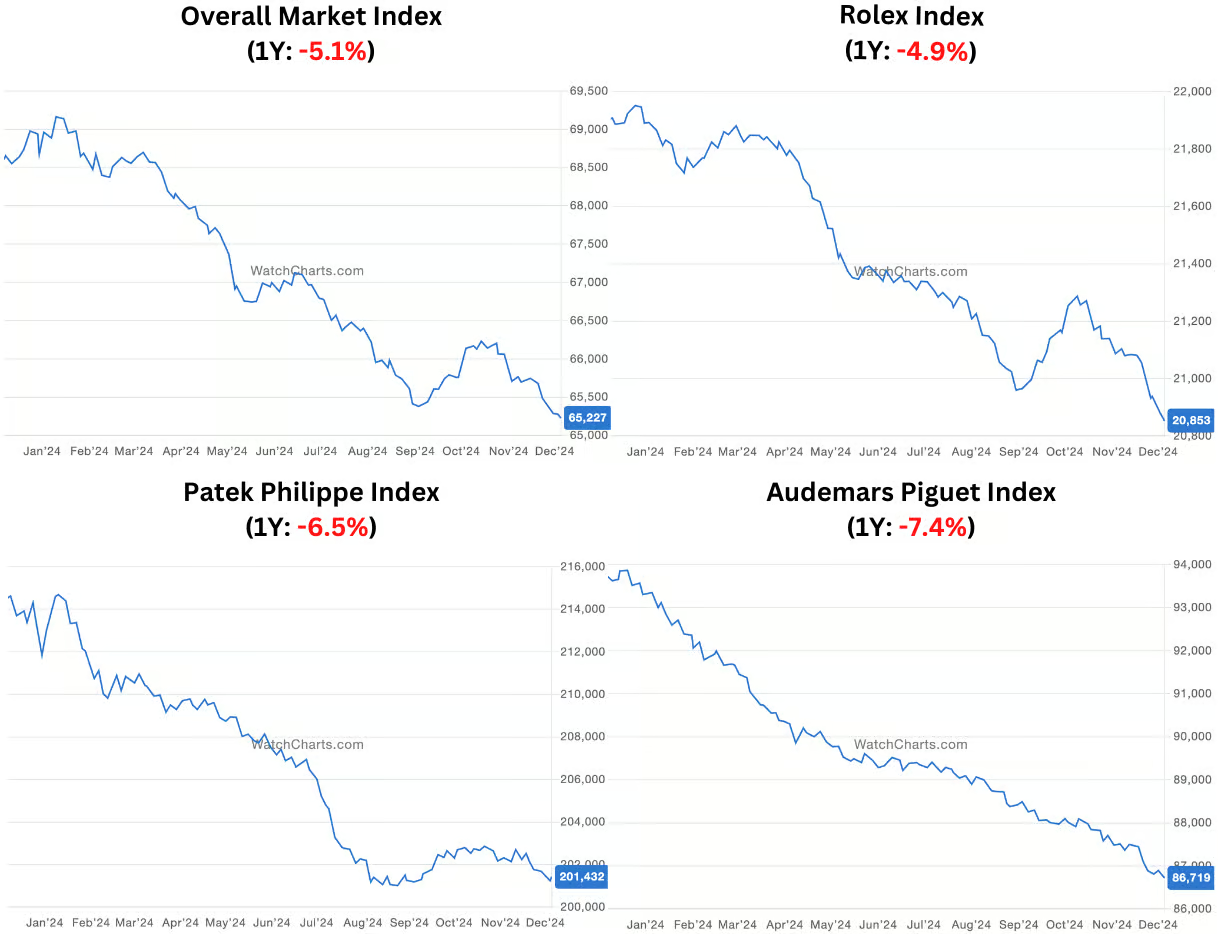

| Tier | Example | 5-year depreciation | Insurance/year | 5-year service | Net TCO |
|---|---|---|---|---|---|
| €1K | Tissot PRX €750 | -40% | 0.5-1% | skipped | 43% |
| Mid (€5K) | Seamaster 300M €5,500 | -20% | 1.3% | €0 | 26% |
| High steel sport | Submariner 126610LN €12,500 | +4% | 2.4% | €0 | 8% |
| High dressy | Patek Calatrava 5227 €35,000 | -15% | 2.5% | €1,100 | 27% |
€1K tier: 43% lost, and that is the optimistic version
Buy a Tissot PRX Powermatic 80 for €750. In five years, it resells for around €450. Depreciation runs at -40% the moment it leaves the display case, and insurance is diluted into the home-insurance extension (€10 to €20/year). Nobody services a €750 watch for €350: the calculation is absurd, so the service line item is zero by default.
Gross result: €325 lost over 5 years, or 43% of the purchase price. This is the tier where TCO most resembles a new car. The watch works like a consumable, not an asset.
Mid tier: 26%, the zone of honest stability
A Seamaster 300M bought for €5,500 resells for around €4,400 five years later. Depreciation has stabilized at 15-25% depending on the reference (Tudor has held better than Omega since 2024, +6.6% secondary share vs +4%). Dedicated valuables insurance rises to 1.3%/year, or roughly €350 cumulatively. A complete Omega service (€750-900) is almost never triggered within the 5-year window: the official cadence is 6-7 years, and the buyer resells before then.
Net TCO: €1,450, or 26% of the purchase price. This is the most predictable tier. No upside, no collapse. The watch behaves as expected.
High steel-sport tier: 8%, even negative
This is where TCO becomes an anomaly. A Submariner 126610LN bought for €12,500 on the secondary market resells for around €13,000 five years later. Depreciation does not exist: the market has maintained a structural premium of +38% over boutique retail since 2024. The Rolex Datejust service (€650-800) is not triggered if the watch is recent, but Daytona/Sky-Dweller climb to €1,500-2,500 with parts.
The line item that now dominates: insurance. Hiscox, Clever, and AXA XL require a dedicated contract with agreed value and Hache appraisal for any piece from the trinity. Count 2 to 3%/year on market value, higher in Paris and on the Côte d’Azur. For the Sub, that gives €1,500 in cumulative insurance over 5 years, and a net TCO of 8%, even negative if you accessed retail.
Dry verdict: this is the only watch asset class where 5-year TCO can flip into the green. Steel Rolex sport at retail access, full stop. Not dressy Patek, not complicated Cartier, not dressy AP.
High dressy tier: 27%, the heavy ticket without the premium
A Patek Calatrava 5227 bought for €35,000 resells for around €30,000 five years later. Depreciation is measured (10-15%), but it exists. Add dedicated insurance at 2.5%/year (€4,500 cumulatively) and a simple automatic Patek service at €1,100 (up to €2,800 for a split-seconds perpetual calendar).
Net TCO: €9,500, or 27% of the purchase price. As a percentage, this is the mid tier. In absolute value, it is the equivalent of two Submariners bought and resold without loss. Dress-watch/complication logic is expensive in absolute terms even when the percentage remains reasonable.
The two modifiers that change everything
Full set vs incomplete. Box, papers, links, certificate: resale rises by +20 to +30%. Without papers, an additional -15 to -25% discount applies. On a Sub, the full-set vs no-papers gap easily represents €4,000 of 5-year TCO. It is more impactful than the choice of model.
Official service vs outside the brand. Non-original parts after an unofficial intervention: an additional -30 to -50% discount on the high tier. Servicing a Patek at an independent watchmaker to save €600 destroys €5,000 in resale value. The high tier requires the official channel; it is not a choice.
The final rule
Outside the Rolex / Patek / AP trinity, the high tier always depreciates. Breguet, Vacheron outside Overseas, complicated Cartiers, perpetual IWCs: heavy ticket and standard depreciation. The entry price does not protect against loss. Only liquidity protects, and liquidity exists only in the trinity.
Only one asset class allows a negative 5-year TCO: steel Rolex sport with retail access. Everything else is an expense, not an investment. Buy with full awareness.
€1,000 bracket: Hamilton Khaki Field Mechanical, the mil-spec watch that beats the PRX
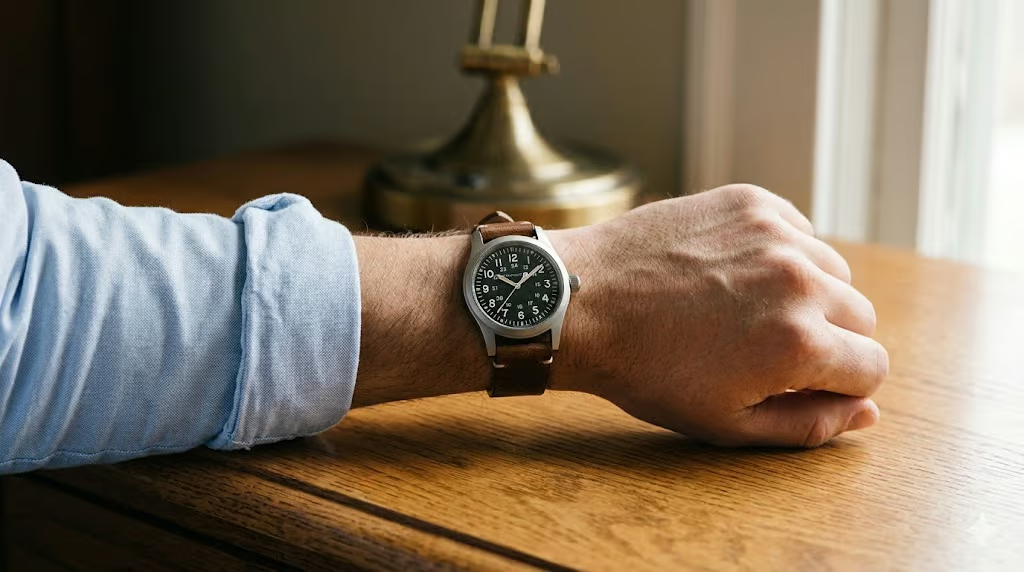
Under €1,000, the 2026 market offers three serious candidates and about fifty pretenders. The three serious ones: Hamilton Khaki Field Mechanical, Tissot PRX Powermatic 80, Seiko Presage Sharp Edged (SARX091). Immediate verdict, no suspense: the Hamilton H69439931 at €625 retail holds the bracket better than anything else. Here is why.
The 38 mm steel case, manual wind, H-50 calibre (ETA 2801 base) with an 80-hour power reserve. Luminova cathedral hands, supplied on a NATO strap. No date. This is exactly the grammar of a mil-spec field watch, inherited directly from the American military MIL-W-46374 specification that Hamilton produced in the 1960s and 70s. A certified cousin, not an opportunistic homage.
Why the PRX loses the arbitration
The Tissot PRX Powermatic 80 (T137.407.11.041.00) costs €780, offers a 1978 Genta-esque integrated bracelet and a Powermatic 80 calibre (ETA C07.111) with an 80-hour reserve. On paper, the price-to-design ratio is unbeatable. In real life, the PRX suffers from a terminal problem: omnipresence. Seen everywhere since 2021, turned by default into the poor man’s Royal Oak, it has lost its discovery status and become a mass signal. The executive buying a PRX today is buying consensus, not an object.
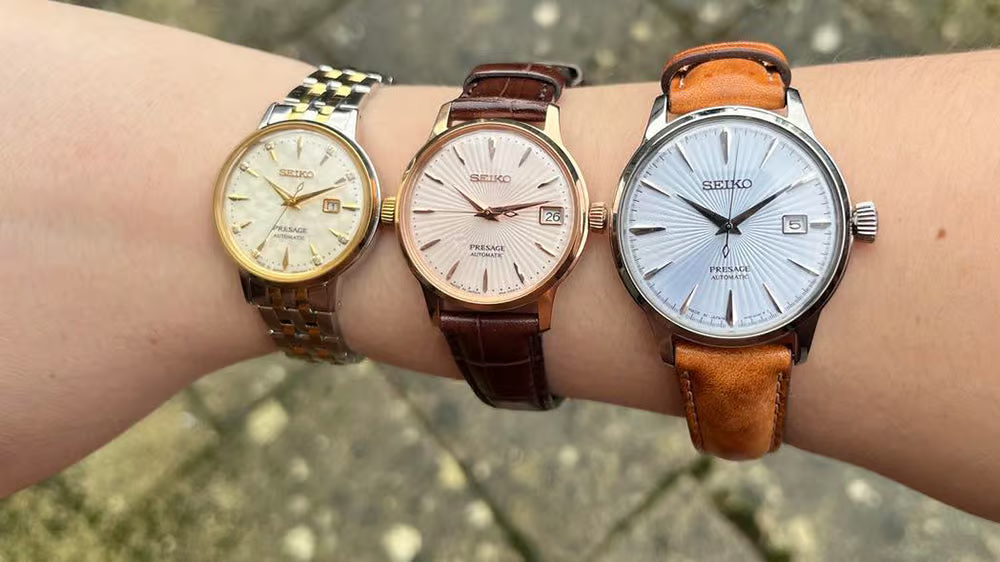
For the Seiko SARX091, the verdict is different. Asakusa fluted dial, Grand Seiko-level mirror Zaratsu polishing, 6R35 calibre with a 70-hour reserve, 39.3 mm. Technically superior to both Swiss watches in finishing. Problem: the real price sits between €1,100 and €1,300. The SARX exceeds the strict bracket by 10 to 30 percent. If the budget holds, it is defensible. If the bracket is firmly capped at €1,000, it leaves the equation.
The comparison table
| Reference | 2026 retail | Diameter | Calibre | Reserve |
|---|---|---|---|---|
| Hamilton H69439931 | €625 | 38 mm | H-50 manual | 80 h |
| Tissot PRX T137.407 | €780 | 40 mm | Powermatic 80 | 80 h |
| Seiko SARX091 | €1,100 to €1,300 | 39.3 mm | 6R35 | 70 h |
Watch culture as the tiebreaker
At an equivalent budget, the Hamilton offers something neither the Tissot nor the Seiko provides: non-negotiable historical legitimacy. The MIL-W-46374 is not a marketing story; it is a military specification that Hamilton actually produced. Manual wind, 38 mm, NATO, maximum legibility, no date: every code is meaningful, none is decorative. The Tissot PRX is a successful industrial-design exercise without culture of its own. The Seiko SARX is a demonstration of Japanese finishing outside the bracket.
The secondary market and real TCO
On Chrono24 and WatchCharts, the H69439931 trades between €455 and €558, i.e. a 10 to 27 percent discount versus retail. The PRX, despite its omnipresence, holds between €450 and €700 (equivalent discount, but a higher base). Over 5 years, expect a standard depreciation of 30 to 45 percent for both. Nobody buys a €625 watch for resale. The real 5-year TCO (purchase + one €300 service + home insurance included, minus resale at 62 percent) comes out at around 113 percent of the purchase price. You are paying for ownership, not the object. Accept it.
Service: category 3 at an independent watchmaker, €200 to €350 every 5 to 7 years for a full movement overhaul. Insurance: covered by standard home insurance (MAAF, MAIF, Macif) with no extension required below €2,000. Annual recurring cost: zero or marginal.
€1K bracket verdict
The Hamilton Khaki Field Mechanical H69439931 is the only sub-€700 piece that simultaneously satisfies three criteria: verifiable watch culture, correct anatomical format (38 mm), serious manual finishing for the price. The PRX is a good design buy, not a good dial buy. The SARX is technically a better watch but falls outside the bracket. For an executive starting a collection or wanting a single defensible sub-1K piece, the Hamilton is the non-negotiable answer.
€3,000 bracket: Oris Aquis Calibre 400 against the Tudor Black Bay 58 betrayal
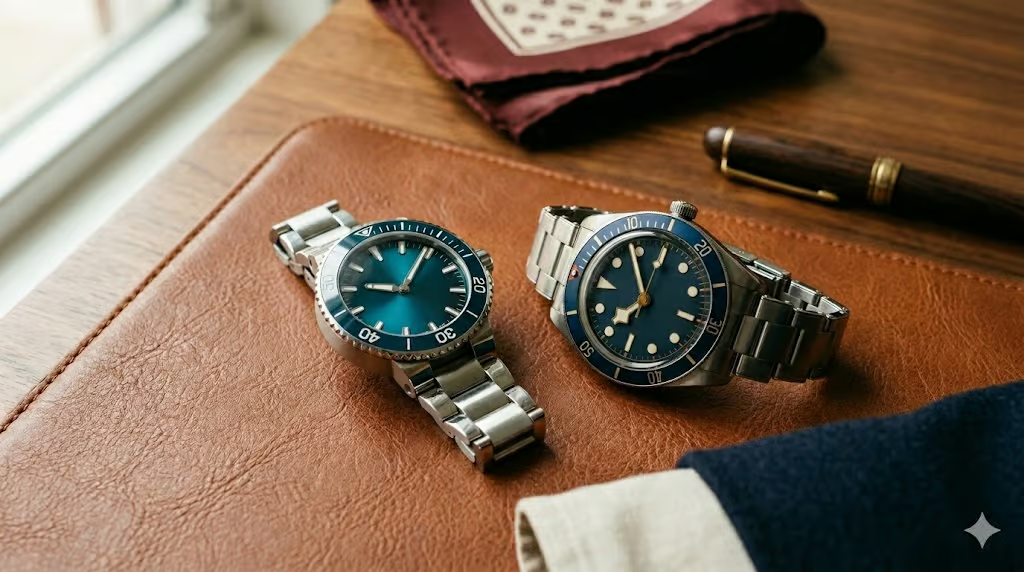
The €3,000 bracket changed owner in 2026. For five years, the answer was automatic: Tudor Black Bay 58, full stop. Reference 79030N held the segment at €3,700 retail, with a comfortable secondary market between €3,186 and €5,445. That era is over.
Tudor released the Black Bay 58 Master Chronometer METAS (ref. M7939A1A0NU-0001) at €4,540 on rubber, €4,770 on 3-link and €4,880 on 5-link. The watch is technically superior (MT5402 calibre, METAS certification, Omega Co-Axial parity), but it has left the bracket. Anyone still selling you the BB58 as the 3K diver is confusing the 2020 vintage with 2026 reality.
The new crown: Oris Aquis Calibre 400
The Oris Aquis Date Calibre 400 (ref. 01 400 7763 4135) takes the segment back at €3,700. The technical file is dry and defensible:
- 120-hour power reserve (a full 5 days) versus 70h at Tudor
- Anti-magnetic resistance of 2,250 A/m, i.e. twice the ISO 764 threshold
- 10-year manufacture warranty, versus 5 years at Tudor
- 300-metre water resistance, 41.5 mm case, independent Swiss manufacture (Hölstein)
The Calibre 400 is not a dressed-up ETA. Oris developed it in-house and positioned it as a technical bulwark against Rolex/Tudor on the terrain of magnetic reliability. For an executive working in an open space saturated with permanent magnets (screens, bags, speakers, keyboards), the 2,250 A/m specification is not a marketing argument. It is a set of specifications.
The GMT alternative: Longines Spirit Zulu Time
If a diver does not do the job, the Longines Spirit Zulu Time 42 mm (ref. L3.812.4.63.6) holds the bracket between €3,100 and €3,300. It is the only true flyer GMT (local time adjustable via the crown, independently of the reference time) available under €4,000. The L844.4 calibre is COSC-certified, with silicon balance spring and 72h reserve.
GMT verdict: the Spirit Zulu Time kills the Black Bay GMT (€4,800 to €5,000) on price/complication ratio. Tudor keeps the advantage of brand equity and secondary liquidity, but you pay €1,500 to €1,700 for an equivalent function. If you actually travel (and not for Instagram), the Longines is the rational decision.
Comparison table: who defends what at 3K
| Model | 2026 price | Reserve | Core argument | Weakness |
|---|---|---|---|---|
| Oris Aquis Cal. 400 | €3,700 | 120 h | Manufacture movement, 10-year warranty, 2,250 A/m anti-magnetic resistance | Lower brand equity than Tudor on resale |
| Longines Spirit Zulu Time | €3,100 to €3,300 | 72 h | True flyer GMT, COSC, silicon balance spring | 42 mm too generous below a 17 cm wrist |
| Tudor BB58 M7939A1A0NU | €4,540 to €4,880 | 70 h | Absolute reference, Master Chronometer METAS | Outside the 3K bracket. Moves into 5K. |
The brutal ROI calculation
Secondary-market figures confirm the repositioning. The Tudor Black Bay Pro 79470, an alternative candidate often cited, shows -40 percent versus retail ($2,967 secondary vs $4,950 retail) but rebounds by +12.3 percent over 12 months. Mixed signal: retail purchase = immediate loss; secondary purchase = correct entry.
Over five years, the Tudor index is down -16.2 percent. The historic BB58 remains more stable than the BB Pro, but no Tudor in this bracket positions itself as an investment. The 3K buying logic is use, not speculation. In that framework, the Oris downgrades Tudor on the technical dimension (reserve, anti-magnetism, warranty) and accepts the capital loss like everyone else.
Final recommendation
For the strict 3K bracket, there are two defensible choices. Oris Aquis Calibre 400 if you want a serious diver with an in-house movement and a warranty that covers the first decade. Longines Spirit Zulu Time if you want a true GMT and actually read the time in two time zones. The Tudor BB58 remains an excellent buy, but in the 5K bracket. Treating it as a 3K option in 2026 means you have not updated your price table for three years.
€5,000 bracket: Grand Seiko Snowflake, the inflection point for an in-house calibre
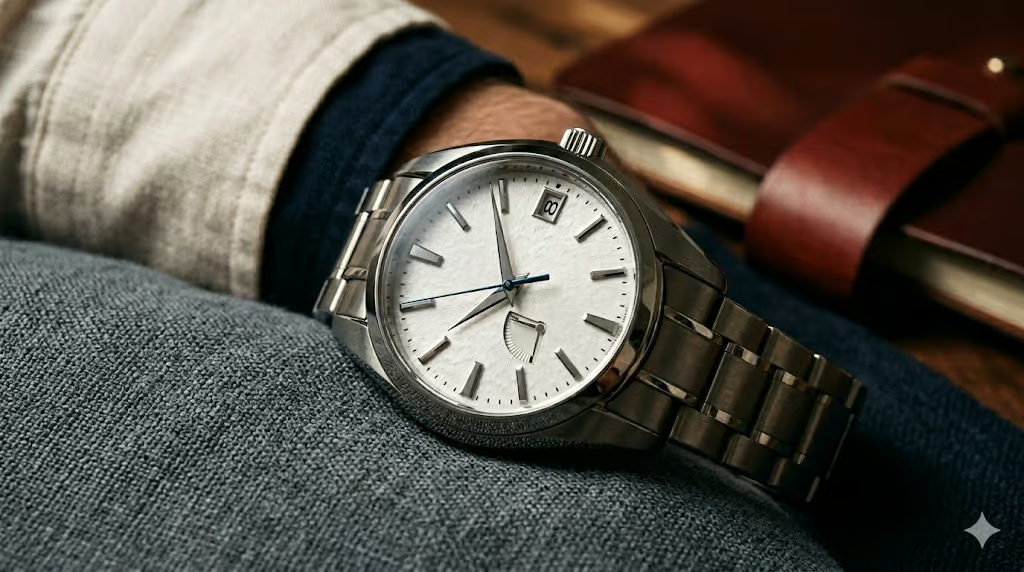
At €5,000, the decision criterion shifts. Below that, you buy a case and a dial. At this level, you buy a movement. It is the first bracket where the calibre signature becomes the main argument, and where finishing stops being a marketing promise and becomes a reality visible to the naked eye.
Three serious candidates occupy this zone. The Tudor Black Bay GMT (reference M79830RB), the Omega Seamaster Aqua Terra 38mm (reference 220.10.38.20.03.001), and the Grand Seiko SBGA211 Snowflake. All three can be defended. Only one fully justifies the ticket.
The verdict: SBGA211 for finishing, full stop
The Grand Seiko SBGA211 sells for between €5,800 and €6,700 in European boutiques, and around €4,003 to €5,899 on the secondary market. Zaratsu titanium case (mirror polishing without optical distortion), textured snow dial with no paint or transfer, 9R65 Spring Drive calibre with a 72-hour power reserve and glide motion seconds hand. No Swiss watch at this price can match it on surface finishing. This is not an opinion; it is an observation made under a 10x loupe.
Spring Drive is neither quartz nor mechanical in the strict sense. A conventional mainspring, but regulated by an electromagnetic brake calibrated to quartz. The result: accuracy of +/- 1 second per day, superior to a COSC chronometer, and a seconds hand that glides without ticking. The movement has been exclusive to Grand Seiko since 1999. No one else produces it.
Tudor Black Bay GMT: true GMT, substantial aesthetics
The Tudor BB GMT M79830RB costs between €4,800 and €5,000 at an authorised retailer, and around €3,500 to €4,500 pre-owned. MT5652 COSC calibre, true flyer GMT (local time independently adjustable via the crown), two-tone Coca-Cola ceramic bezel. It is the most credible alternative to the Rolex GMT-Master II, which is inaccessible at ADs. Everything about it is technically defensible.
Weakness: the 41mm case with 15mm thickness is bulky. And the finishing remains industrial. Correct polishing, correct brushing, nothing exceptional. On the secondary market, the BB GMT shows -15.5 percent over 5 years but +10.6 percent over 12 months. WatchCharts risk score: 57/100. The recent rebound is real, but the base remains a mass-production product.
Omega Aqua Terra 38mm: the universal sport-chic watch, outside the strict bracket
The Aqua Terra 38mm (reference 220.10.38.20.03.001) sits between €6,500 and €6,800, therefore 30 percent above the ticket. Master Chronometer METAS, anti-magnetic to 15,000 gauss, 8800 Co-Axial calibre. The 38mm diameter makes it the most versatile dress-sport watch in the segment, the teak dial is a signature, and the 150m water resistance is real. Technically irreproachable.
The problem: at €6,500, you are in Snowflake territory. And the Snowflake offers superior finishing, a rarer movement, and a more pronounced singularity. The Aqua Terra is an excellent watch. The SBGA211 is a statement of watchmaking typology.
Numerical comparison
| Reference | Retail 2026 | Secondary | 12-month ROI | Volatility |
|---|---|---|---|---|
| GS SBGA211 | €5,800-6,700 | €4,003-5,899 | +9.7% | 9.2% |
| Tudor BB GMT 79830RB | €4,800-5,000 | €3,500-4,500 | +10.6% | n/a |
| Omega AT 38mm | €6,500-6,800 | €4,500-5,500 | stable | low |
The Snowflake holds its 12-month ROI, with 9.2 percent volatility and a median resale time of 18 days. This is the first time in this guide that a bracket offers genuine value retention, and it is Grand Seiko bringing it, not Switzerland.
The real weakness to know
Grand Seiko after-sales service in France remains limited. No dedicated centre, returns via the boutique on avenue George V in Paris or shipment to Switzerland. Expect 6 to 10 weeks for a full service, versus 3 to 5 weeks at Tudor or Omega France. The service is billed between €650 and €900, in the upper-bracket range.
For daily use without interruption during a business trip, the Tudor remains more reassuring. For a piece you wear over a decade knowing you will entrust it to service once every 7 years, the SBGA211 is defensible without reservation. The question is not technical; it is logistical.
Recommendation
On a strict €5,000 budget, the Tudor BB GMT remains the clean buy. On a flexible budget up to €6,700, the Grand Seiko SBGA211 is the only purchase that justifies the bracket. The Aqua Terra 38mm is the default option for those who want a mainstream Swiss brand without thinking, but it offers nothing the Snowflake does not do better within €200.
The 5K bracket marks the end of consumer watchmaking and the beginning of auteur watchmaking. Buying Grand Seiko here means stepping out of the Rolex/Tudor/Omega mindset and entering a logic of pure finishing. It is a choice of typology, not status. And this is the first time in this guide that the two can diverge without penalty.
€10,000 bracket: Omega Speedmaster Hesalite versus Rolex OP 41, the real choice

The €10,000 bracket pits two watchmaking philosophies against each other that cannot be reconciled. On one side, pure utility certified by NASA. On the other, the signature of the Oyster case in its most stripped-back version. A third path exists on paper, signed Cartier, but it underuses the budget far too clearly to defend its place here. The choice is not aesthetic; it is philosophical.
Omega Speedmaster Pro Hesalite: the watch for use
Reference 310.30.42.50.01.001 retails at €6,700. 42 mm case, 3861 Co-Axial Master Chronometer calibre, 50-hour power reserve, domed Hesalite crystal. This is the version certified by NASA in 1965, the one worn during the Apollo missions, and still the only civilian watch approved for extravehicular activity.
The Sapphire version (reference 310.30.42.50.01.002) rises to €7,400 to €7,800 retail. Sapphire crystal, sapphire caseback displaying the 3861 calibre. More modern, more exposed to scratches on the rear crystal, less faithful to history. The extra €700 to €1,100 is paid for movement visibility, not function.
The ratio is unbeatable. METAS-certified Master Chronometer, anti-magnetic to 15,000 gauss, manual chronograph, tachymeter, readable calibre finishing through the back. No other sub-10K piece offers this level of technical certification. Secondary pricing ranges between €5,500 and €7,000, which means contained but real depreciation. The Speedmaster Hesalite is not bought for resale; it is bought to be worn.
Rolex OP 41: Oyster purity versus the liquidity trap
Reference 124300 is the most stripped-back Rolex in the catalogue. No date, no complication, no rotating bezel. Just the Oyster case, the Oyster bracelet, and a coloured dial (blue, turquoise green, coral yellow depending on the year) that turned the object from utility piece into hype object. 3230 calibre, Superlative Chronometer, 70-hour reserve, 100-metre water resistance.
Theoretical retail: €7,000 to €7,300. Real price: elsewhere. The secondary market shows €8,500 to €15,000 depending on dial and year. The gap comes from the shortage at authorised dealers, where allocation is almost nil without purchase history. Buying an OP 41 at retail means going through a long waiting list, or accepting a bundle with another less desirable reference.
The financial consequence is clear. At €10,000 on the secondary market, the OP 41 remains culturally defensible. At €13,000 or €15,000, the ratio collapses against a Sub Date 126610LN, which can be found in the same zone and offers 300-metre diving capability + date + ceramic bezel. Oyster purity has a market price that no longer has anything to do with its official price.
The false candidate: Cartier Tank Must XL Auto
The Tank Must Large XL Automatic (WSTA0040) comes in at €4,350 to €4,500. 41 mm case, automatic 1847 MC calibre, 42-hour reserve. Aesthetically, it is the pure Tank: 1917, Andy Warhol, John F. Kennedy, the entry ticket into the iconic dress watch without going to Patek.
The problem is dimensional. At €4,500, the object underuses a €10,000 budget by more than half. To stay with Cartier within the target, you need to aim for the rose-gold Tank Louis Cartier around €13,000, or move up to the Santos Large (WSSA0018) at €8,500 to €9,000. The Tank Must remains an excellent sub-5K buy, not an answer to the €10,000 bracket.
The 5-year ROI calculation
The €10,000 bracket is the first where appreciation becomes a defensible hypothesis, not a certainty. The figures measured over 5 years:
| Reference | Retail 2026 | 5-year ROI | Liquidity |
|---|---|---|---|
| Speedmaster Pro Hesalite | €6,700 | approx. -10% | High |
| Rolex OP 41 124300 | €7,000-7,300 | +15 to +100% market | Maximum |
| Cartier Santos Medium WSSA0029 | €7,750 | +14.5% | Good |
| Cartier Tank Louis W1529756 | ≈ €9,000 | +38.5% | Good |
The data is surprising. The Tank Louis Cartier W1529756 comes out ahead over 5 years with +38.5%, ahead of the Santos Medium at +14.5%. The Speedmaster Hesalite remains stable around -10%, which corresponds to contained depreciation for an object in this category. The OP 41 keeps a massive premium on the secondary market, but that premium is not ROI: it is the entry price for someone who does not have access to the AD.
The verdict
The Speedmaster Hesalite wins for use. METAS-certified Master Chronometer calibre, indisputable NASA heritage, retail price accessible without allocation, contained depreciation, a watch you wear every day without calculation. At €6,700, it leaves €3,300 on the table for another line item (long-term servicing, a second strap, or simply available cash).
The OP 41 wins for signature, on one condition: getting it at retail from an AD with purchase history. At a secondary-market price of €10,000 and above, the ratio shifts and the Sub Date becomes a better buy one step higher. Oyster purity is a defensible thesis; its liquidity trap is a fact.
The executive hesitating between the two is not really hesitating. Speedmaster Hesalite for the person who wants a pure-use piece. OP 41 for the person who wants a Rolex signature at the price of the signature. Both choices are defensible. They are not meant for the same person.
The 20,000-euro tier: Rolex Submariner vs Cartier Santos, investment vs icon
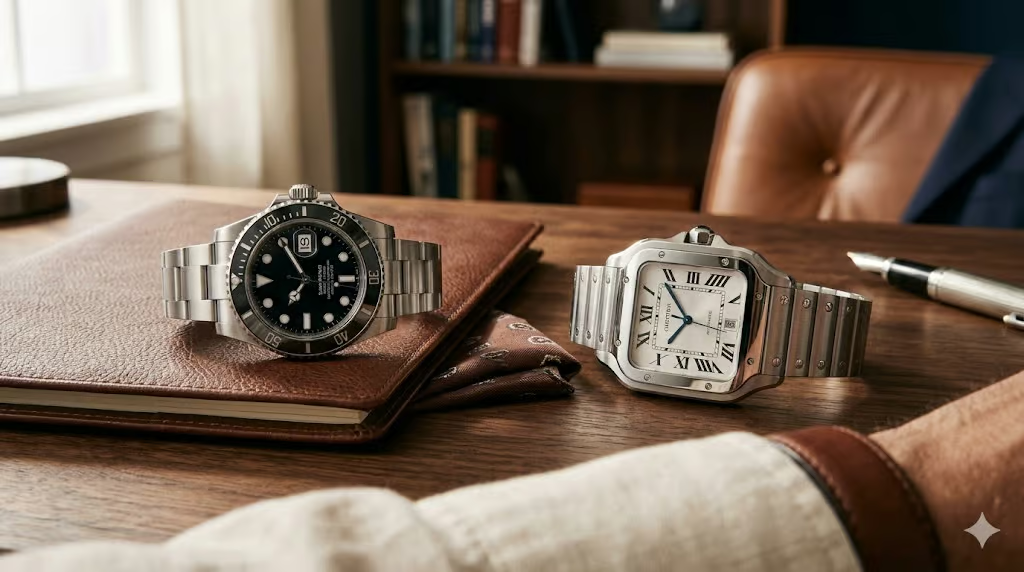
The 20K tier opens up a philosophical fork in the road. On one side, the Rolex Submariner Date 126610LN: theoretical retail 10,700 to 11,000 euros, real market price 13,500 to 17,000 euros, absolute liquidity. On the other, the Cartier Santos Large WSSA0018 at 8,500 to 9,000 euros, the first men’s wristwatch in history (1904), with a QuickSwitch bracelet. Two serious candidates, two opposite logics. One buys liquidity and ubiquity. The other buys singularity and pedigree.
Before getting into the trade-offs, let’s dismiss the false lead. The Tudor Black Bay Pro 79470 regularly comes up in 20K conversations. It has no place there. Retail 4,500 to 4,700 euros, secondary-market value 2,900 to 3,500 euros (a -40 percent discount vs retail). It is an excellent watch, but it belongs in the 5K tier. Placing it here means leaving 15,000 euros unused and buying a watch that has already taken a heavy hit. Verdict: off-topic.
Submariner 126610LN: the benchmark diver
The Submariner Date is the industry’s reference diver. Cerachrom ceramic bezel, 3235 COSC Superlative Chronometer calibre, 300-metre water resistance, 70-hour power reserve. 41mm case, adjusted format in 2020. The 126610LN does not innovate; it consolidates. That is precisely its strength.
The arithmetic matters. The 11,000-euro retail price is theoretical: the Sub Date is almost never available from an authorised dealer at list price. The secondary market puts it at 13,500 to 17,000 euros, a premium of roughly 50 percent above retail. The 2026 Rolex increase (+2 to 6 percent on steel, i.e. +300 to 350 euros on the Submariner) only reinforces that gap.
On the ROI side: -5.7 percent over 5 years, +6.4 percent over 1 year. The post-2022 bubble correction hit the price (peak at 16,000 USD), but the stabilisation since late 2024 sketches out a reasonable buying window. The Sub Date remains the most liquid watch asset in the world. Sellable in 48 hours, anywhere, without difficult negotiation. It is the very definition of a portable store of value.
The charge of ubiquity is legitimate. The Submariner has become a commonplace. At dinners, in Saint-Tropez, on terraces in the 8th arrondissement, it no longer distinguishes its wearer. It confirms financial status without signalling stylistic intelligence. For anyone looking for a personal signal, that is a major flaw.
Santos WSSA0018: the icon that underuses the budget
The Santos de Cartier plays a different score. 1904, created for Alberto Santos-Dumont. The first men’s wristwatch in watchmaking history. Square case with exposed screws, flat bezel, integrated bracelet. Automatic 1847 MC calibre, 40-hour reserve, 39.8mm. The QuickSwitch system lets you switch between steel bracelet and leather strap in a few seconds. It is an authentic dress-sport watch, not a marketing hybrid.
At 8,500 to 9,000 euros, the Santos Large structurally underuses the 20K budget. 11,000 to 12,000 euros remain available. This is the blind spot of its candidacy: excellent object, wrong tier. Buying a steel Santos within a 20K budget amounts to buying a 9K dress-sport watch and keeping the rest in cash.
To fully use 20K in the Cartier universe, there are two serious routes. The Santos in rose gold (around 23,000 to 25,000 euros) consumes the budget in full and places the wearer in the solid-gold category. The steel Santos Chronograph (around 25,000 euros) adds the chronograph complication while retaining the dress-sport look. Both make use of the tier.
On ROI, Cartier outperforms Rolex on the 5-year average. The Santos Medium shows +14.5 percent over 5 years, the gold Tank Louis +38.5 percent. The Santos is an object that appreciates, without the speculative fever weighing on Rolex sports models.
Arbitrage table
| Reference | 2026 retail | Real market | 5-year ROI | 20K budget use |
|---|---|---|---|---|
| Rolex Sub 126610LN | €10,700-11,000 | €13,500-17,000 | -5.7% | Full (market) |
| Cartier Santos WSSA0018 | €8,500-9,000 | €7,500-9,500 | +14.5% (Medium) | Partial (-50%) |
| Cartier Santos rose gold | €23,000-25,000 | €22,000-26,000 | Stable to + | Full |
| Tudor BB Pro 79470 | €4,500-4,700 | €2,900-3,500 | -40% vs retail | Outside the tier |
Verdict
The trade-off comes down to one question: are we buying liquidity or singularity? For the executive who wants a watch resellable in 48 hours in any capital city, the Submariner 126610LN remains the most efficient watch instrument on the market. It is the defensible investment, even at the 15,000-euro market price. The premium is justified by absolute liquidity and the 3235 calibre.
For the man who refuses the financial uniform and seeks a stylistic signal, the Santos in rose gold or the Santos Chronograph fully exploit the budget, establish a 1904 pedigree, and step outside the Rolex corridor. The steel Santos WSSA0018 remains excellent but should be bought as a 9K watch, not as the piece for a 20K tier. Mixing the two logics produces frustration: 9K spent, 11K lying dormant, and the vague impression of having missed the tier.
The 50,000-euro tier: Cartier Tank Cintrée Platinum, the capital verdict against Daytona and Patek
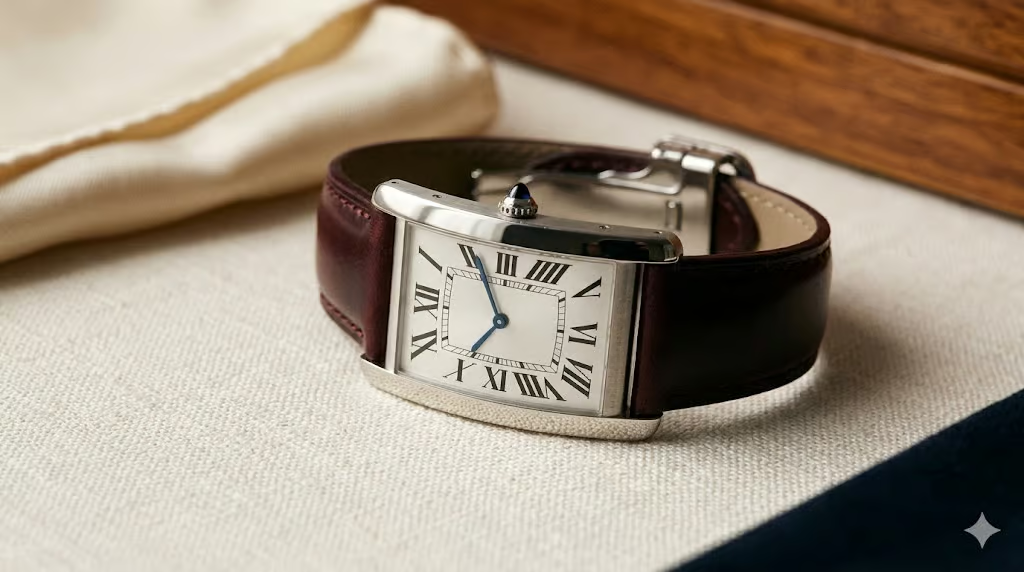
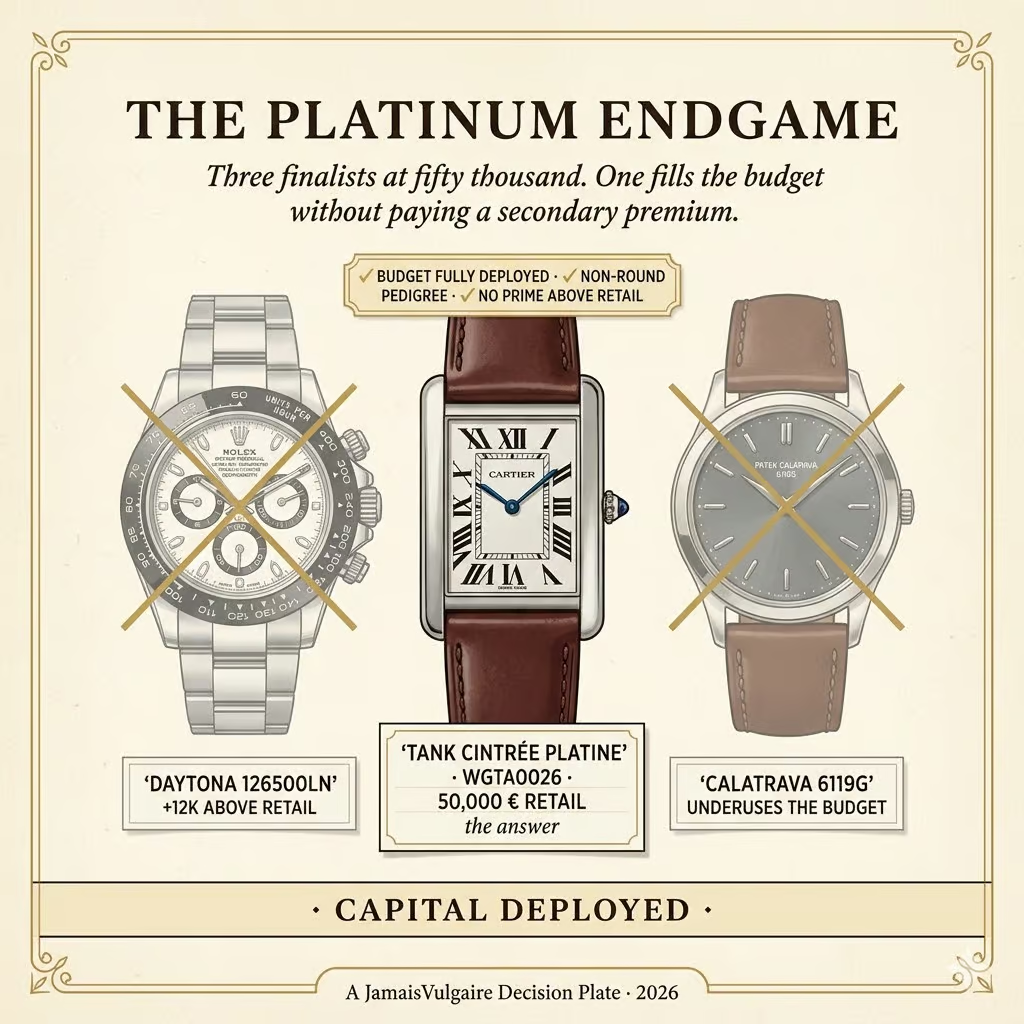
The 50,000-euro tier is no longer a pleasure tier. It is a positioning tier. Three serious candidates occupy the zone, but only one stands up to the three criteria that matter at this level of capital: full budget occupation, unmatched aesthetic pedigree, and the absence of an absurd market premium over theoretical retail.
Plain verdict: the Cartier Tank Cintrée Platine WGTA0026. Not the Daytona. Not the Calatrava 6119G. The Tank Cintrée.
The three finalists, laid out flat
Before arguing the case, let’s put the three pieces on the same table. No storytelling, no brand ecosystem. Just the numbers.
| Reference | 2026 retail | Secondary market | Retail/market gap |
|---|---|---|---|
| Rolex Daytona 126500LN | €16,500 to 17,000 | €30,900 to 39,000 | +88 to +130% |
| Patek Calatrava 6119G | €35,000 to 38,000 | €26,800 to 33,000 | -23 to -27% |
| Cartier Tank Cintrée Platine WGTA0026 | €50,000 to 58,000 | €45,000 to 60,000 | balanced |
Only one of the three fully occupies the tier. The other two leave budget unused or impose a violent market surcharge.
The Daytona 126500LN: safe-haven value, torn-up entry ticket
The ceramic Daytona remains the most liquid object of desire on the market. In-house 4131 calibre, ceramic bezel, column-wheel chronograph. On paper, it would be indefensible not to put it in the tier. In practice, the case collapses as soon as you look at the buying mechanics.
The theoretical retail price is 17,000 euros. Allocation from an authorised dealer is zero for a new client. The purchase happens on the secondary market, at 30,900-39,000 euros for the panda version. So you pay almost double Rolex retail for what Rolex refuses to sell you at the Rolex price. The previous 116500LN reference burst to 50,000 dollars in 2022 and then corrected by -38%, a useful reminder that the scarcity premium is a volatile asset, not an annuity.
Add ubiquity. A ceramic Daytona on the wrist of a finance or tech executive in 2026 no longer signals anything. It has become a trading-floor commonplace. The ticket is expensive, the object is everywhere. The 50K tier deserves better than that.
The Patek Calatrava 6119G: the entry-Patek trap
The Calatrava 6119G-001 embodies the entry strategy at Patek Philippe. White gold, Clous de Paris bezel, new-generation hand-wound 30-255 PS calibre released in 2021, small seconds at 6 o’clock. It is technically irreproachable and culturally legitimate.
But the market says something else. Retail at 37,510 euros. Secondary-market price at 26,800-33,000 euros. A -27% discount the moment it leaves the boutique. WatchCharts assigns the reference a risk score of 81 out of 100, rated extreme risk. Translation: a buyer forced to resell within twelve months loses a clean quarter of his capital.
The global Patek Calatrava index shows a +19% rebound over 1 year, a signal that a floor has probably been reached. But buying a 6119G at 37,000 euros only to see it quoted at 28,000 the next day remains an act of faith, not allocation. At this tier, faith is no longer enough.
Another point: the 6119G does not occupy the tier. It leaves 12,000 to 15,000 euros of budget unused. Either you allocate it elsewhere (and dilute), or you leave it dormant (and underpay your tier).
Why the Tank Cintrée Platinum wins
The Tank Cintrée WGTA0026 ticks the three boxes the other two miss.
One. It fully occupies the tier. Price 50,000 to 58,000 euros, right in the window. No market surcharge to pay, no orphaned budget to reallocate.
Two. Its aesthetic pedigree is unrivalled in the tier. Faithful reissue of the Tank Cintrée of 1921, 46.30 x 23 mm elongated tonneau case in 950 platinum, hand-wound 430 MC calibre, 38-hour reserve. No Daytona, no Calatrava offers this format or this grammar. The Tank Cintrée has no competitor in the global catalogue on this design.
Three. The secondary market at 45,000-60,000 euros keeps the retail value level. No Daytona-style speculative premium, no Calatrava-style violent discount. Solid platinum protects intrinsic value (material), and the limitation of platinum allocations at Cartier protects rarity (object). The documented 2026 increase on Cartier platinum pieces mechanically reinforces the floor.
One honest weakness remains: Cartier allocation on platinum is selective, and the piece remains a formal dress watch, not very versatile. It is not an everyday watch. It is a watch for an identified wrist. At the 50K tier, that is precisely what we are looking for.
Verdict
The Cartier Tank Cintrée Platine WGTA0026 is the only one of the three that consumes its tier without distorting it. The Daytona forces you to pay the market premium or wait ten years for an imaginary allocation. The Calatrava 6119G loses 10,000 euros the moment it leaves the boutique. The Tank Cintrée does what the 50,000-euro tier is meant to do: place a definitive object on the wrist, without speculative arbitrage and without compromising on pedigree.
For those who want the Daytona at any price, the rational trade-off is the pre-owned ceramic 116500LN at 31,000 euros with its historical +106% vs MSRP as a cushion, not the 126500LN at 39,000. For those who want Patek, the 50K tier is too low: aim higher or wait. For everyone else: Tank Cintrée.
By Valery Khung, founder of JamaisVulgaire. Watch market analysis based on data from WatchCharts, Chrono24, Morgan Stanley + LuxeConsult, and proprietary R30I (Rolex) and PP12I (Patek) indices.

Pour bien s'habiller, il faut comprendre le vêtement, mais aussi la marque et sa stratégie.