
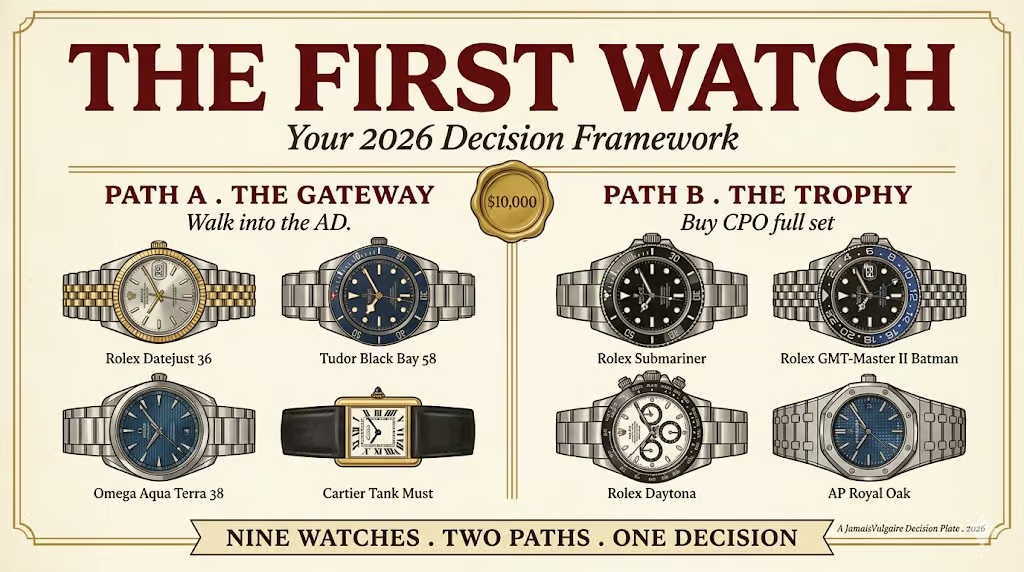

In January 2026, the entry Rolex Submariner crossed $10,050. The full Rolex line went up 7% on average, steel 5.6%, gold 9%. Grey market premiums on steel sports compressed from 80% to 25-35%. A Tudor Black Bay 58 Master Chronometer now lands at $4,975. A Patek Calatrava service costs $3,500, twice. The first luxury watch decision is no longer about taste alone. It is a five-axis problem: archetype, usage, permanence, AD access, and 10-year carry. Most first-time buyers get one of those axes wrong and pay for it in resale.
Some links in this article may generate a small commission at no extra cost to you, helping support our independent guides.
Sommaire
The 2026 reset: why the entry Rolex Submariner crossing $10K changes the math
January 2026 closed the bracket on the post-pandemic watch market. Rolex pushed retail prices up roughly 7% across the catalogue, with steel +5.6% and gold +9%. The trigger was structural: a 15% US import tariff on Swiss watches stacked on top of a USD weakening ~12% against the CHF over the preceding twelve months. The number that matters for first-watch buyers is the Submariner 124060 moving from $9,500 to $10,050, with the date 126610LN at $10,400.
The five-figure threshold is a psychological event, not a financial one. For a decade the « entry Sub » was a four-figure decision a HENRY buyer could close in an afternoon. In 2026 it sits next to a Datejust 41 at ~$9,000 base and ~$11,700 with fluted bezel and Jubilee. The steel Daytona 126500LN holds at $16,900 MSRP and stays gated by AD relationship. The implication is that the entire « entry Rolex » conversation has shifted into the bracket where Aqua Terra, Speedmaster Professional, and Tank Louis Cartier become rational adjacent picks rather than downgrades.
The second reset is grey market normalization. Steel Submariners now trade between $11,500 and $14,500, a 25-35% premium over retail. That spread looked like 80%+ at the 2021-22 peak. In dollars, the premium for immediacy on a no-date Sub has compressed from $7,000-$8,000 down to roughly $1,500-$3,000. The Daytona stays in its own weather system at $25-32K grey, but for the rest of the steel sports line, the gap between AD waitlist and immediate purchase has narrowed to a number a director-level buyer can absorb without flinching.
The compressed grey premium changes the rational path. The 2021-22 playbook required building an AD relationship over 18 to 36 months, often through a precursor Datejust or Oyster Perpetual purchase, before the call came on a Sub. That math assumed a $5,000-$7,000 grey arbitrage on the back end. At a $2,000-$3,000 spread, the precursor purchase, the SA visits, the configuration flexibility, and the eighteen months of waiting cost more than the premium they were designed to capture. For a first-time buyer without an existing AD history, 2026 is the first year since 2019 where walking into a grey dealer is not strictly the irrational move.
| Reference | MSRP 2026 | Grey 2026 | Grey 2021-22 peak |
|---|---|---|---|
| Submariner 124060 | $10,050 | $11,500-13,500 | $17,000-19,000 |
| Submariner 126610LN | $10,400 | $12,000-14,500 | $18,000-20,000 |
| Datejust 41 fluted/Jubilee | $11,700 | $10,000-12,000 | $13,500-15,500 |
| Daytona 126500LN | $16,900 | $25,000-32,000 | $38,000-45,000 |
The conclusion is uncomfortable for buyers carrying a 2022 mental model. The frame that organized first-watch decisions during the hype cycle, where any steel Rolex at retail was an arbitrage trade and the upgrade ladder ran Tudor to Sub to Daytona, has expired. In 2026 the Sub is a $10K consumption decision with a thin appreciation thesis. The Tudor Black Bay 58 at $3,575-$5,350 is no longer a « stepping stone » toward an obviously underpriced Rolex; it is a 50% discount on a 39mm dive watch that arrives in two weeks instead of two years.
This is the most rational first-watch market in five years for buyers who can afford to wait. The compression cuts both ways. It rewards the cadre who treats the purchase as a single deliberate decision and punishes the buyer still running 2021 logic, where speed and waitlist position drove the math. The rest of this guide assumes the reader understands which side of that line they want to stand on.
The five gates: the questions to run before any model selection
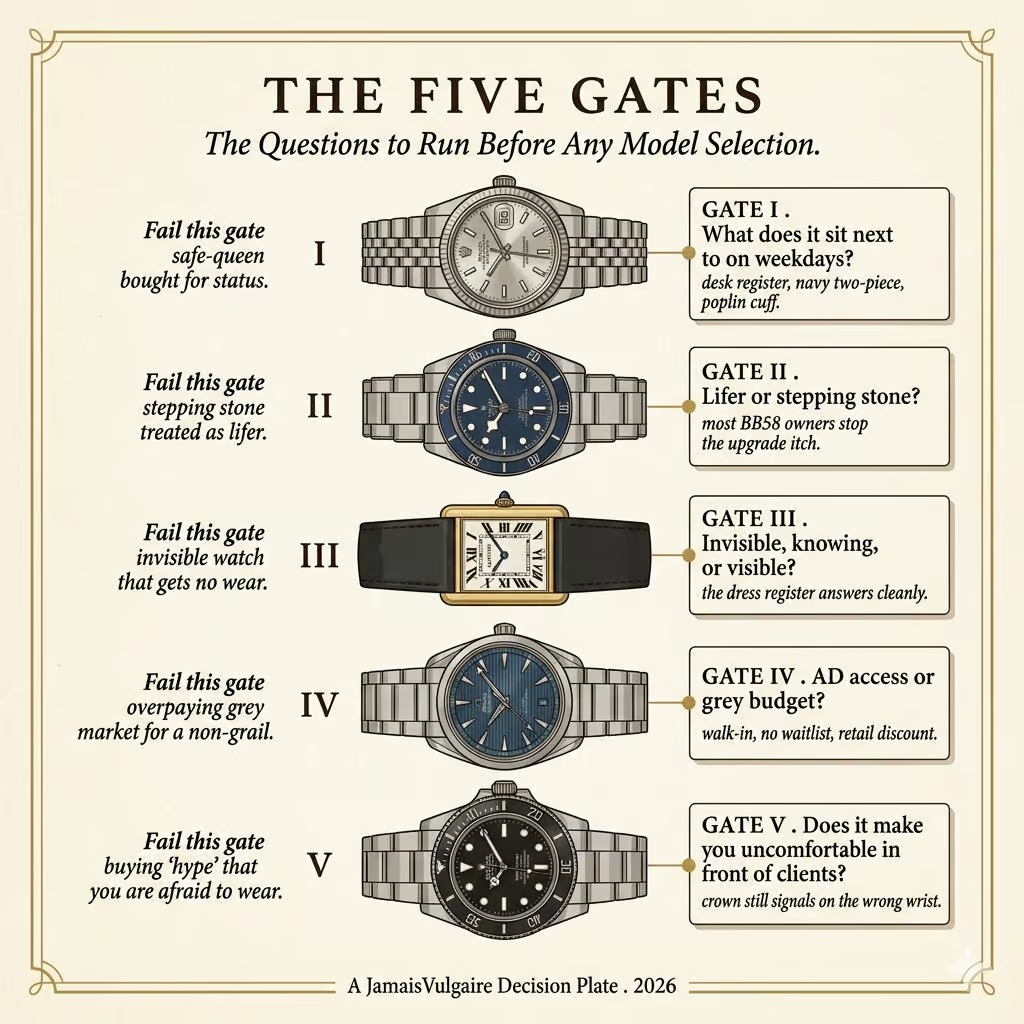
Before any reference, before any AD visit, run the watch through five gates. They narrow the field faster than any feature comparison, and they stop the two failure modes that destroy first purchases: the safe-queen bought for status, and the stepping-stone bought as if it were a lifer. 68% of new collectors report regretting their first luxury watch within twelve months when the decision was driven by hype. The gates exist to break that pattern.
Gate 1. What does it sit next to on weekdays?
Look at the sleeve, not the dial. If the week is built around a suit and a French cuff, anything thicker than 12mm catches and disrupts drape. That eliminates the Submariner (12.5mm), the Black Bay Pro (14.6mm), every Panerai Luminor. If the week is a henley and a sport coat, the Datejust 36 or Aqua Terra 38 reads correctly. If the week is a T-shirt and sneakers, the dress watch becomes the safe queen.
This is the lawyer rule made universal. Cuff compatibility is decisive and almost always under-weighted. Print a paper template, tape it on the wrist, wear it under a real shirt for a day before buying.
Gate 2. Lifer or stepping stone?
The single highest-signal question in the entire framework. A lifer buys once, with heirloom intent, and should overbuy. That means precious metal, dress-coded, time-only: Cartier Tank Louis Cartier in gold, Patek Calatrava 6119, A. Lange & Sohne Saxonia Thin or Lange 1. The math accepts depreciation because the exit is never.
A stepping-stone buyer expects to upgrade in three to seven years and should underbuy. That means high-resale steel sports with a clean exit: Submariner 124060, Speedmaster Professional, used Royal Oak 15510. Hold dry powder for the next acquisition. Confusing the two categories is the most expensive mistake in the entire decision, larger than any retail-versus-grey arbitrage.
Gate 3. Invisible, knowing, or visible?
Three signal registers, three different watches.
| Register | Reads as | Canonical pick |
|---|---|---|
| Invisible | quiet power, no decode by outsiders | Tank LC, Calatrava 6119, Saxonia Thin |
| Knowing | readable only by other collectors | BB58 Master Chronometer, Aqua Terra 38 teak, Speedmaster Professional |
| Visible | recognised across the table | Submariner 126610LN, Datejust 41 fluted Jubilee, Royal Oak 15510 |
The lawyer earns nothing from visible. The post-IPO founder is buying visible whether he admits it or not. The director landing on Aqua Terra is buying knowing and pretending it is invisible. Be honest about the register, then the shortlist writes itself.
Gate 4. AD access or grey budget?
The 2026 market makes this gate cheaper to lose than it used to be. Submariner grey premiums have compressed from 80%+ at the 2021-22 peak to 25-35%. Paying $1,500 to $3,000 over retail on grey is now often cheaper than the friction of two precursor Datejust purchases to build allocation history.
The exception is the holy trinity in steel. Royal Oak 15510 is boutique-only since the multi-brand wind-down, no AD shopping exists. Nautilus 5811/1G retails at ~$89,767 and trades at $150,000+ grey. For a first luxury watch, skip these. The math is hostile to first-time buyers and the only honest budget for them is the grey premium treated as the cost of immediacy, not investment.
Gate 5. Does the brand make you uncomfortable in front of clients?
Last gate, fastest answer. If the watch would prejudice a jury, embarrass a board, or read wrong to a client paying $1,200 an hour, the watch is wrong regardless of how it scored on the first four gates. Hublot Big Bang, Panerai Luminor 44+, gold Yacht-Master, two-tone Datejust for a tech founder under forty: all eliminated here, not on aesthetics, on context fit.
The verdict. Run all five gates before naming a single reference. If gate 2 returns lifer, go heirloom: Tank LC, Calatrava, Lange 1, no steel sports. If it returns stepping stone, go liquid: Submariner grey at retail-plus-three, or BB58 at retail, and keep the powder dry. The wrong first watch is rarely the wrong reference. It is almost always a category error answered before the gates were asked.
Three HENRY archetypes, three different right answers

The first-luxury-watch decision is not a universal optimization problem. It is three different problems wearing the same shopping list. The cadre director, the partner-track lawyer, and the post-IPO tech operator share a tax bracket and not much else. Their dominant social context, daily uniform, and signaling register diverge enough that the correct first piece for one is the embarrassing mistake for another.
Run the question through the dominant context, not the aspirational one. What sits next to the watch on weekdays decides more than what sits next to it on Instagram.
The cadre / director: default Datejust, alternative Aqua Terra
Profile: $200-400K HHI, suit three to five days a week, mix of boardroom, travel, dinner, weekend. Values understated competence over visible flex. Buying the watch to mark a promotion, a 40th birthday, or a deal closed.
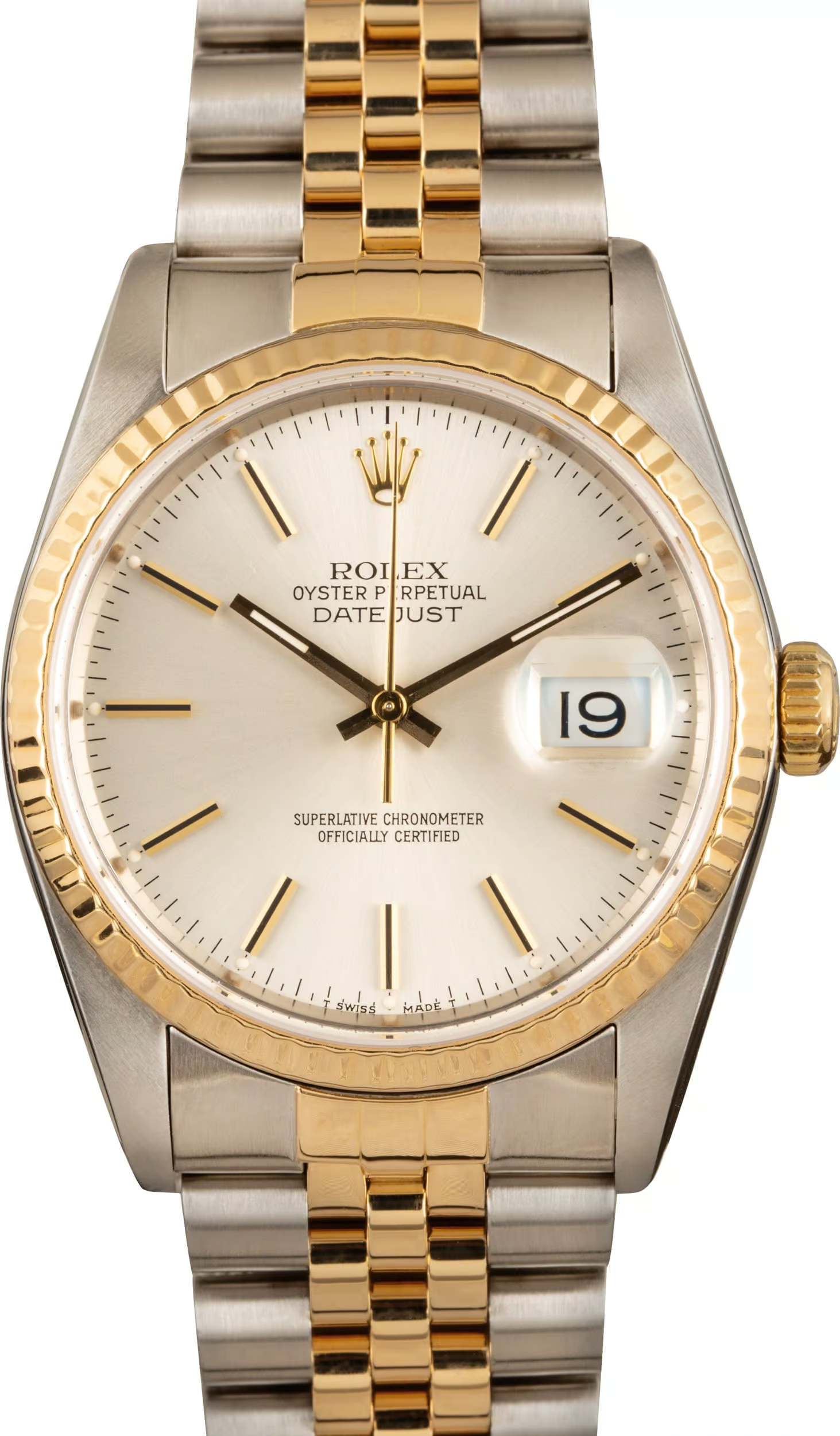
The default is Rolex Datejust 36 ($7,050) or Datejust 41 fluted bezel + Jubilee (~$11,700). Slim profile slips under a French cuff. GADA in the strict sense: same watch in the boardroom Tuesday, on the plane Wednesday, at dinner Friday, on the trail Saturday. AD walk-in availability is realistic on standard configs, which is not true of the Submariner. The archetype is summarized in the old line: Datejust is who you are, Submariner is what you do. Directors who have already arrived buy the first one.
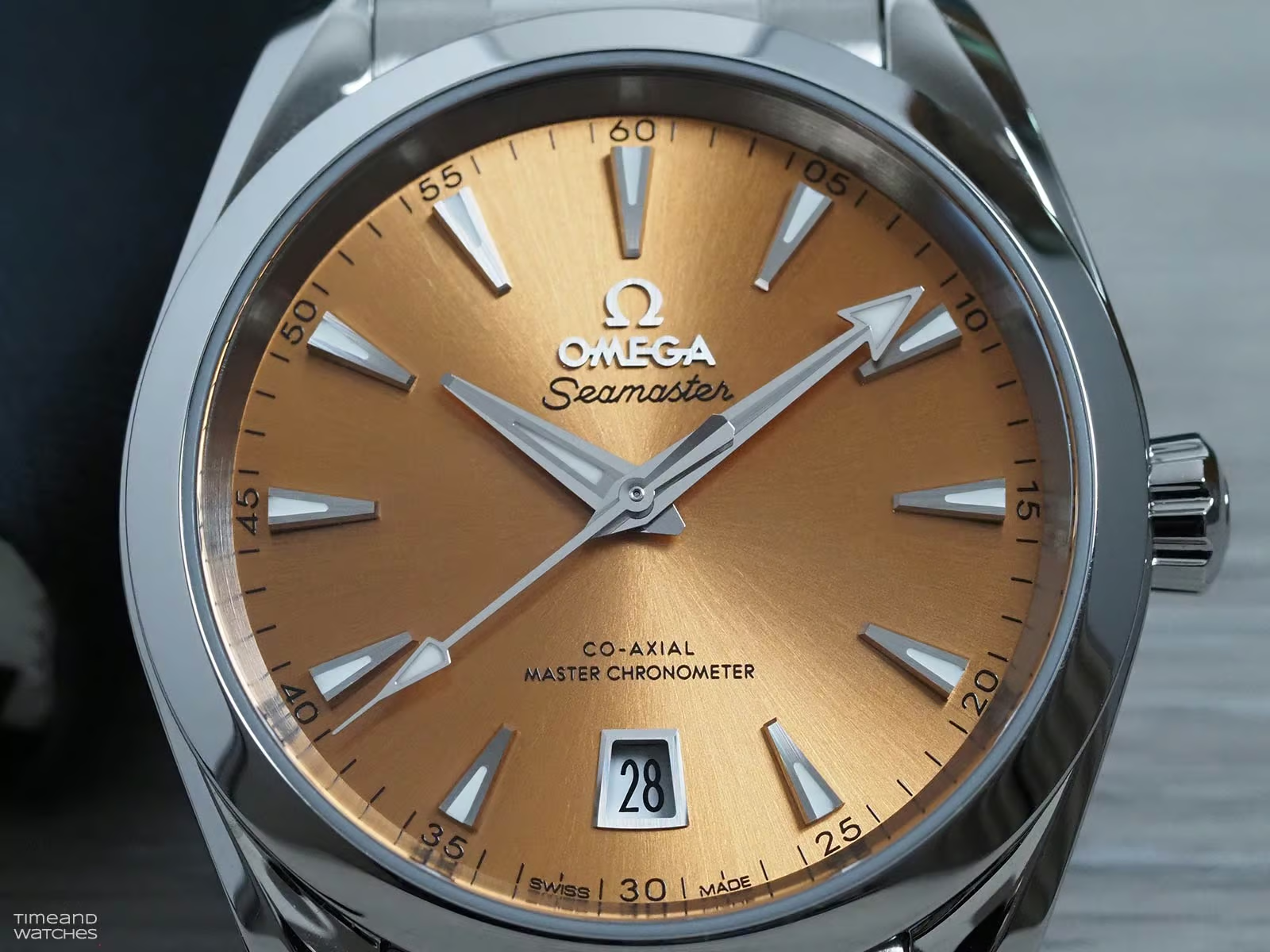
The alternative, for the buyer who finds Rolex too obvious, is the Omega Aqua Terra 38mm ($6,300). METAS Master Chronometer, anti-magnetic to 15,000 gauss, teak-deck dial that reads more interesting to watch people than a Datejust. Thirty to forty percent cheaper for spec that, on paper, beats the equivalent Rolex. The Aqua Terra is the I did the research move. Reads to other directors as taste, not absence of budget.
Trap to flag: the Datejust 41 two-tone Wimbledon. Looks like a safe Rolex on the website. Reads as middle-management aspirational in the room. If the goal is understatement, steel-only or white gold fluted. Skip the bi-metal.
The partner-track lawyer: skip Rolex sports entirely
Profile: senior associate or partner, biglaw or boutique, $300-800K comp. French cuffs daily. Courtroom, deposition, negotiation. Cannot wear anything that prejudices a jury or signals showiness to a client paying $1,200 an hour. Cuff drape is the spec that decides everything else.
Sport-watch cases catch on French cuffs and disrupt the line. A Submariner at 12.5mm thick or a Daytona at 11.9mm both sit too proud under a barrel cuff. The first watch should be thin, dress-coded, and quiet to the wrong audience. Loud only to those who should know.
The entry pick is the Cartier Tank Must Large ($3,500 quartz, $4,200 automatic). Quartz is acceptable in this register. Hyper-versatile, unisex-elegant, slips under any cuff. The partner-tier move is the Tank Louis Cartier in gold ($12,500), or the Patek Calatrava 6119 (~$28,000), or the A. Lange & Söhne Saxonia Thin ($21,000). The Calatrava reads as quiet power and is decoded only by those who should decode it. The Saxonia Thin signals horological literacy without sport-watch noise, often preferred at name-partner level.
Trap to flag: the Submariner-as-first-Rolex impulse. Yes, every senior partner has one in the drawer. They are not wearing it to court. The first piece should be the court watch, not the weekend watch. If the sports Rolex itch persists, it becomes the second purchase, not the first.
The tech IPO / post-liquidity operator: skip the Submariner
Profile: 32-42, post-liquidity event, $1M+ liquid, non-suit daily uniform, primary social context is other founders, VCs, and tech leadership. The tension is real: mentors say play it cool, the wrist says mark the moment.
Here is the counter-intuitive verdict. At this net-worth level, a $10,400 Submariner reads as first-job watch, not arrival watch. The $10K Sub was the arrival watch in 2014. After a liquidity event it reads as someone who priced the celebration before they made the money. The canonical IPO piece is the Audemars Piguet Royal Oak 15510 ($28,500 retail, $35-42K grey). Steel, time-and-date, the original Genta integrated bracelet. Community-validated. Will not look dated in fifteen years.
Trap to flag: the marketed-at watches. Hublot Big Bang, Richard Mille below the $200K screw-money tier, AP Royal Oak Offshore in gold with diamonds. These pieces are advertised at exactly this buyer because the brands know the cohort and the cohort does not yet know the brands. Hublot loses 30-40% in year one. RM at the entry tier reads as someone who borrowed the receipt. The community-validated steel Royal Oak is the move; the lifestyle-marketed alternatives are the embarrassment three years out.
| Archetype | Default | Alternative | Avoid |
|---|---|---|---|
| Director / Cadre | Datejust 36/41 fluted + Jubilee | Aqua Terra 38 | Two-tone Wimbledon |
| Partner-track lawyer | Tank LC or Calatrava 6119 | Saxonia Thin | Submariner, Daytona, Yacht-Master |
| Tech IPO operator | Royal Oak 15510 | Lange Odysseus | Hublot, RM, Offshore gold/diamonds |
The takeaway is not that one archetype has better taste than another. The takeaway is that the first luxury watch is a context match, not a ranking exercise. Buy the watch that fits the room you sit in five days a week. The aspirational room can wait for the second purchase.
The six classics that earn their reputation (and why)
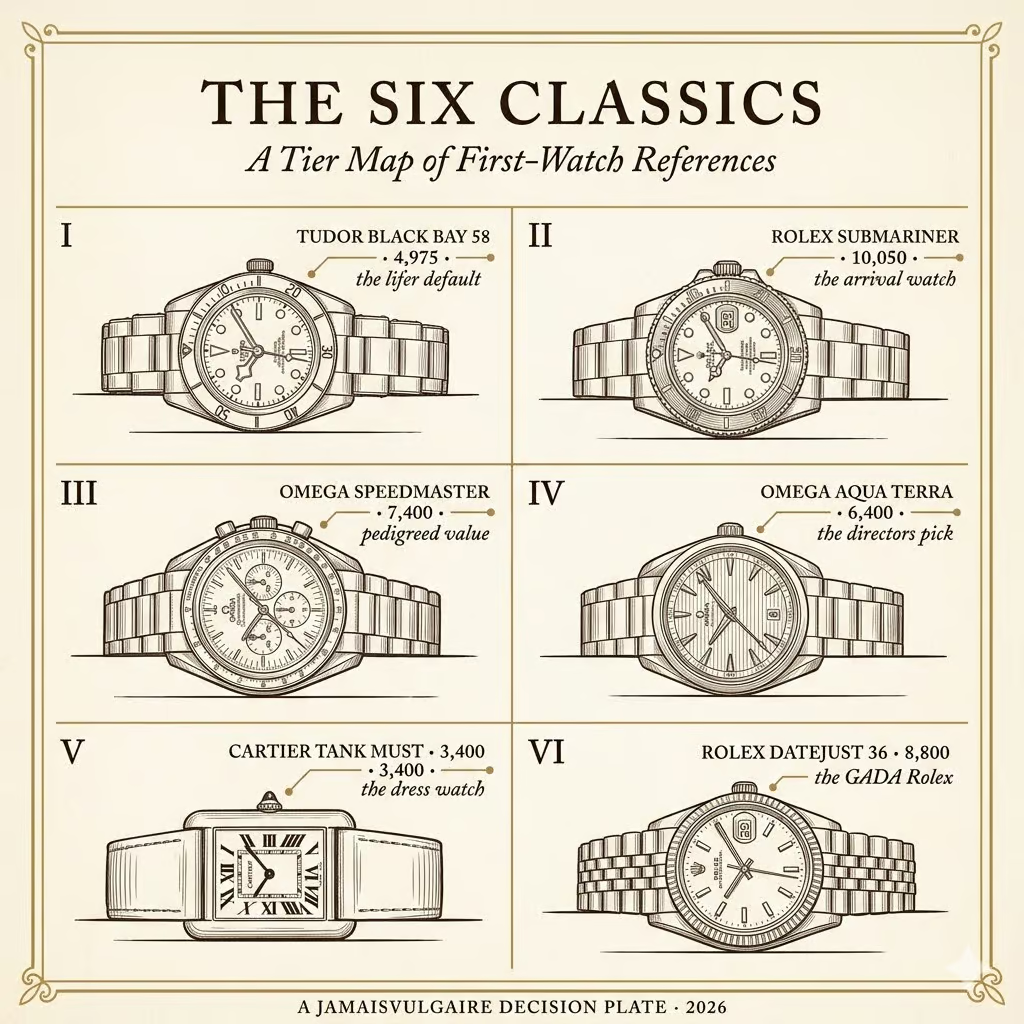
Strip the discourse down and the same six references keep surfacing. They earn the recommendation through different mechanisms: availability, pedigree, cuff-compatibility, value-to-spec ratio, or pure horological substance. None of them are the wrong answer. The question is which mechanism matches your situation.
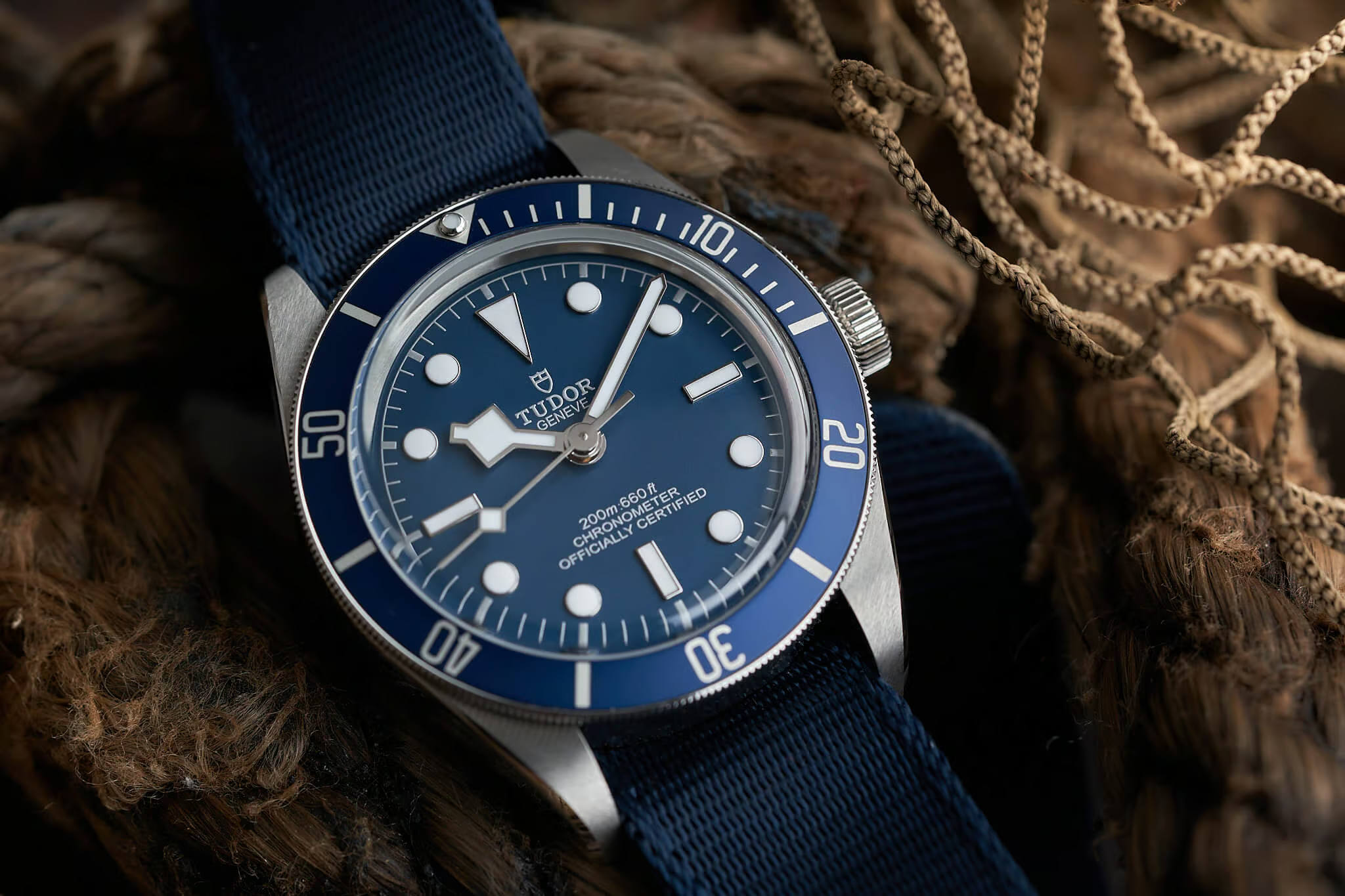


1. Tudor Black Bay 58 — the lifer-coded default
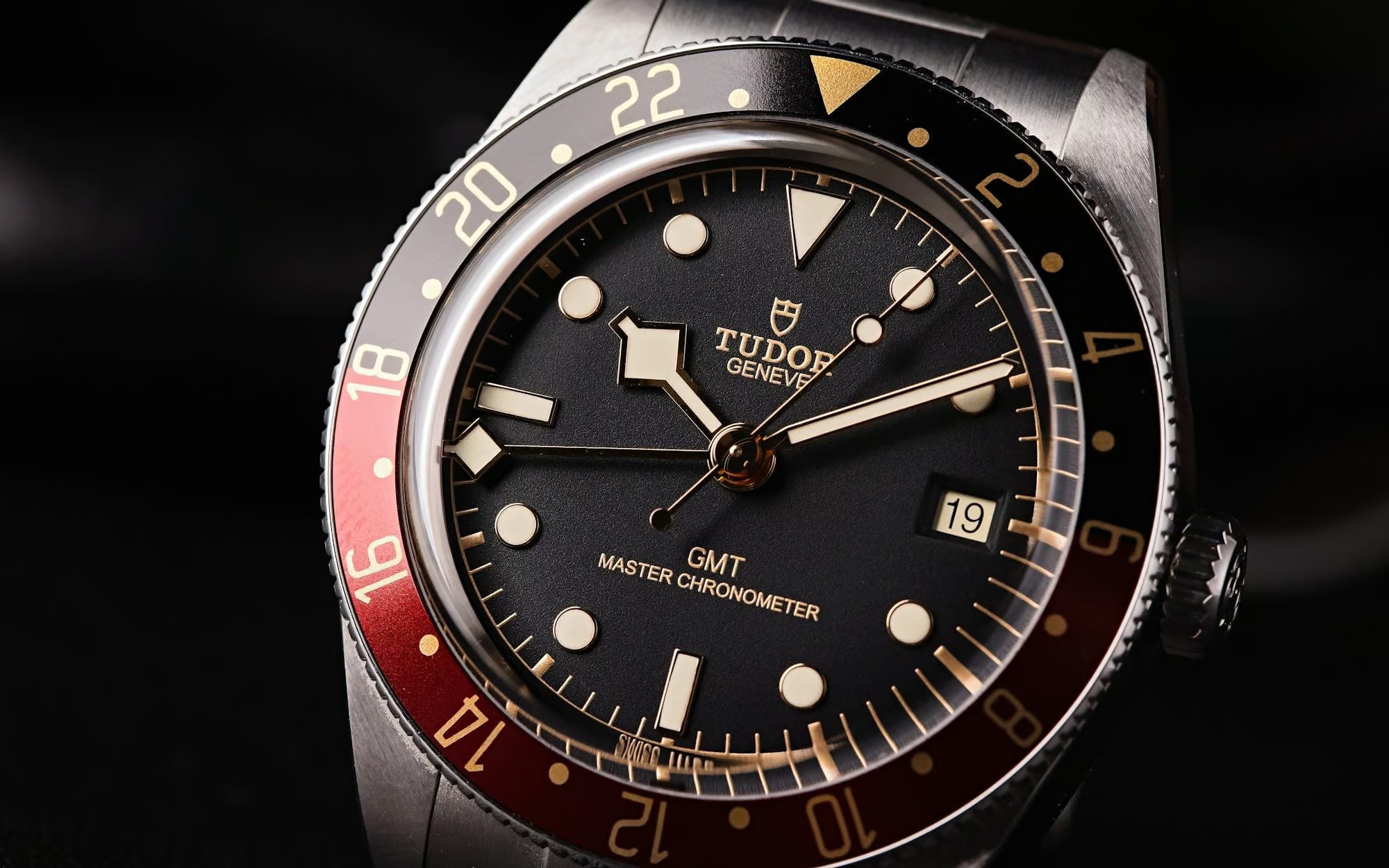
The BB58 is the single most recommended first luxury watch of the 2020s, and the 2026 Master Chronometer update closed the spec gap with Omega. METAS certification, manufacture MT5400 movement, 39mm case that sits flat under a sport coat. Pricing now reads $4,975 on rubber, $5,225 three-link, $5,350 five-link.
What sets it apart from the rest of the list is availability. Walk into a Tudor boutique and you walk out wearing one. No allocation theater, no precursor purchases, no grey premium. For buyers who are horologically curious but not Rolex-committed, the BB58 ends the upgrade itch for many. The trap to acknowledge: it depreciates. Secondary sits around $2,400 to $3,200 on older references. Buy it because you want to wear it, not because you want to resell it.
2. Rolex Submariner — the arrival watch, finally rational
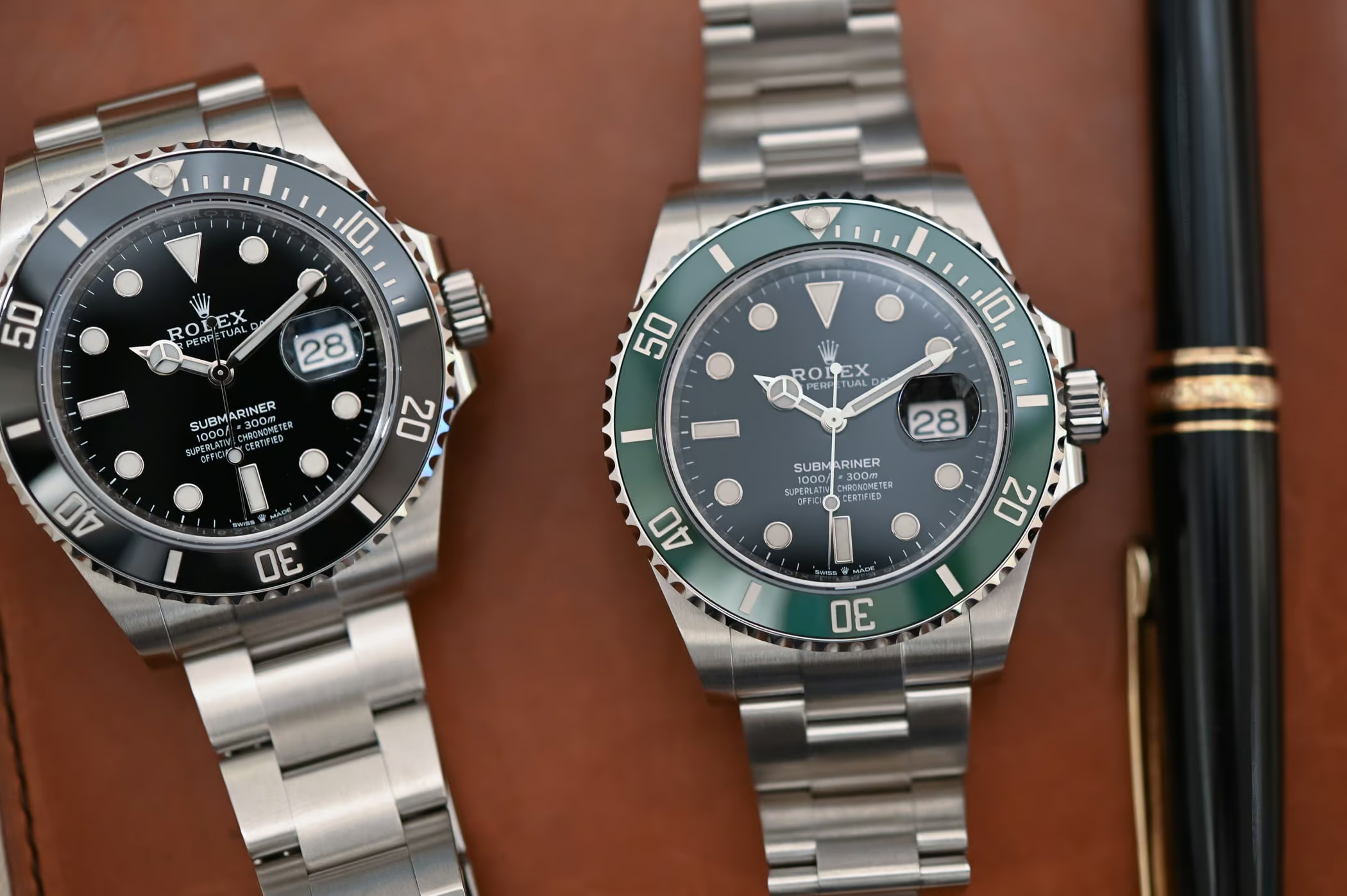
The Submariner 124060 (no-date) sits at $10,050 after the January 2026 price increase. The 126610LN (date) is $10,400. Grey market trades 25 to 35% above retail, down from the 80%+ premiums of 2021-22. That compression matters. A buyer paying $11,500 to $14,500 at a reputable grey dealer in 2026 is often making a more rational call than a buyer playing the multi-purchase AD relationship game.
The case for the Sub as first watch hinges on one thing: do you specifically want a Rolex, or do you want a dive watch? If the answer is Rolex, skip Tudor and buy the Sub directly. The double-acquisition friction of BB58 then Sub eats $2,000 to $3,000 in depreciation and two rounds of decision fatigue. If the answer is dive watch, the Sub is not the obvious upgrade over BB58 it once was.
3. Omega Speedmaster Professional — best value in pedigreed watchmaking
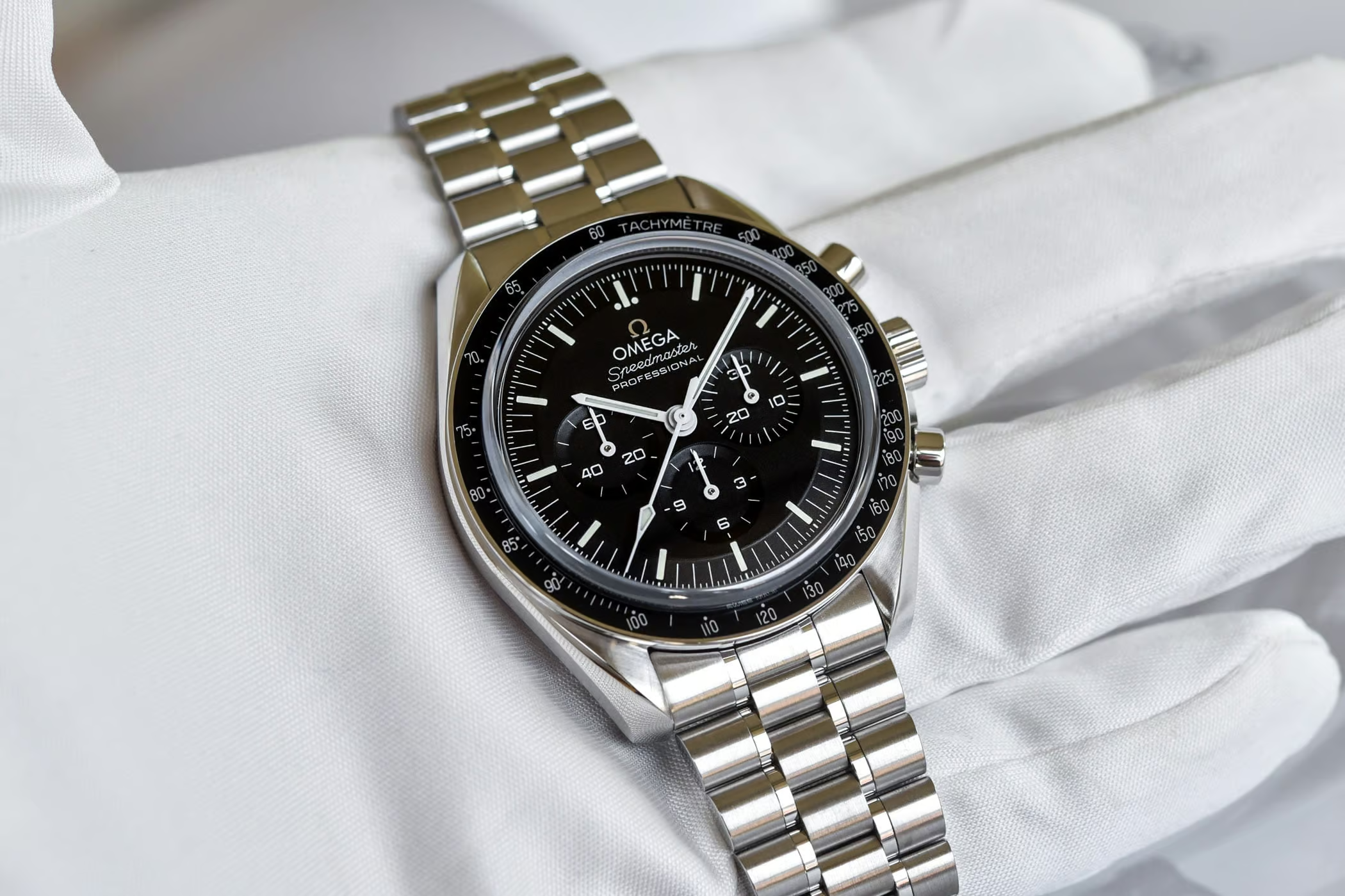
The Hesalite Speedmaster Moonwatch at $7,000 is the answer to one question: what is the most history-dense, mechanically interesting watch you can buy at this price. Manual-wind chronograph, caliber 3861 in-house, the only watch NASA flight-qualified for EVA. The 2026 black-and-white panda releases push the steel premium configuration to EUR 10,200 / ~$11,100, but the base Hesalite is the move.
It is the history-nerd pick. It is also the only chronograph universally recommended as first luxury watch because it is the chronograph reference. Service runs heavier than a three-hand piece (around $1,300 at authorized service), and the Hesalite crystal needs occasional replacement. Both costs are part of the deal, not surprises.
4. Omega Aqua Terra 38/41 — the director’s research pick
The Aqua Terra 38mm at $6,300 with the teak dial is the watch you arrive at after actually reading. METAS Master Chronometer, 15,000 gauss anti-magnetic, in-house caliber 8800. Dressier than the BB58, sportier than a Datejust, 30 to 40% cheaper than the steel Rolex equivalent for arguably better spec.
The Aqua Terra is the cadre/director move when Datejust feels obvious. It signals horological literacy to the people whose opinion you care about and reads as a competent dress-sport watch to everyone else. The 41mm reference at $6,800 wears bigger and works better on larger wrists, but the 38mm is the more elegant choice for most.
5. Cartier Tank Must / LC — the dress-watch first pick
The most under-recommended first luxury watch for the office-first buyer. The Tank Must Large quartz at $3,500 sits cleanly under a French cuff, reads as quiet competence in any negotiation room, and does not require explanation. For partner-tier budgets, the Tank Louis Cartier in gold at $12,500 is the lawyer’s canonical first watch.
Quartz is acceptable in this register. The Tank shape predates the wristwatch arms race and refuses to participate in it. For anyone who wears suits four days a week, this is the watch that does not catch on a cuff, does not signal flex, and does not require a Rolex AD relationship to acquire. The buyer who picks the Tank over the Sub is usually the buyer who knows what they actually need.
6. Rolex Datejust 36/41 — the GADA Rolex
The Datejust 36 at $7,050 is increasingly favored by tasteful collectors over the 41mm reference. Slimmer profile, more vintage-coded, slips under a dress cuff in a way the 41 does not. The Datejust 41 base sits near $9,000, the fluted bezel plus Jubilee configuration runs $11,700.
If the maxim is true that « Datejust is who you are, Submariner is what you do, » the Datejust is the more honest first Rolex for the cadre buyer. Walk-in availability at AD is realistic on most configurations, which the Sub cannot claim. The 36 is the more thoughtful choice; the 41 is the more obvious one.
https://jamaisvulgaire.com/wp-content/uploads/2026/06/1_featured-image-team-picks-quantity-over-quality-challenge.jpg
How the six map to budget and use
| Reference | 2026 entry price | Best for |
|---|---|---|
| Tudor BB58 MC | $4,975 | Available now, lifer-coded |
| Cartier Tank Must LM | $3,500 | Office-first, French cuff |
| Omega Aqua Terra 38 | $6,300 | The research-driven pick |
| Omega Speedmaster Hesalite | $7,000 | History, manual chrono |
| Rolex Datejust 36 | $7,050 | GADA Rolex, slim profile |
| Rolex Submariner 124060 | $10,050 | Arrival watch, brand-committed |
The decision is rarely between all six. It collapses to two or three once you answer how you dress on weekdays and whether you specifically want a Rolex. The rest is execution.
Skip Tudor and go straight to Rolex? The honest math
The question comes up in every first-watch conversation once the budget clears $5K. Two camps, both confident. The skip-Tudor camp says buy once, cry once. The don’t-skip camp says BB58 ends the upgrade itch for most people. Both are right under specific conditions. The mistake is treating it as a personality test instead of a math problem.
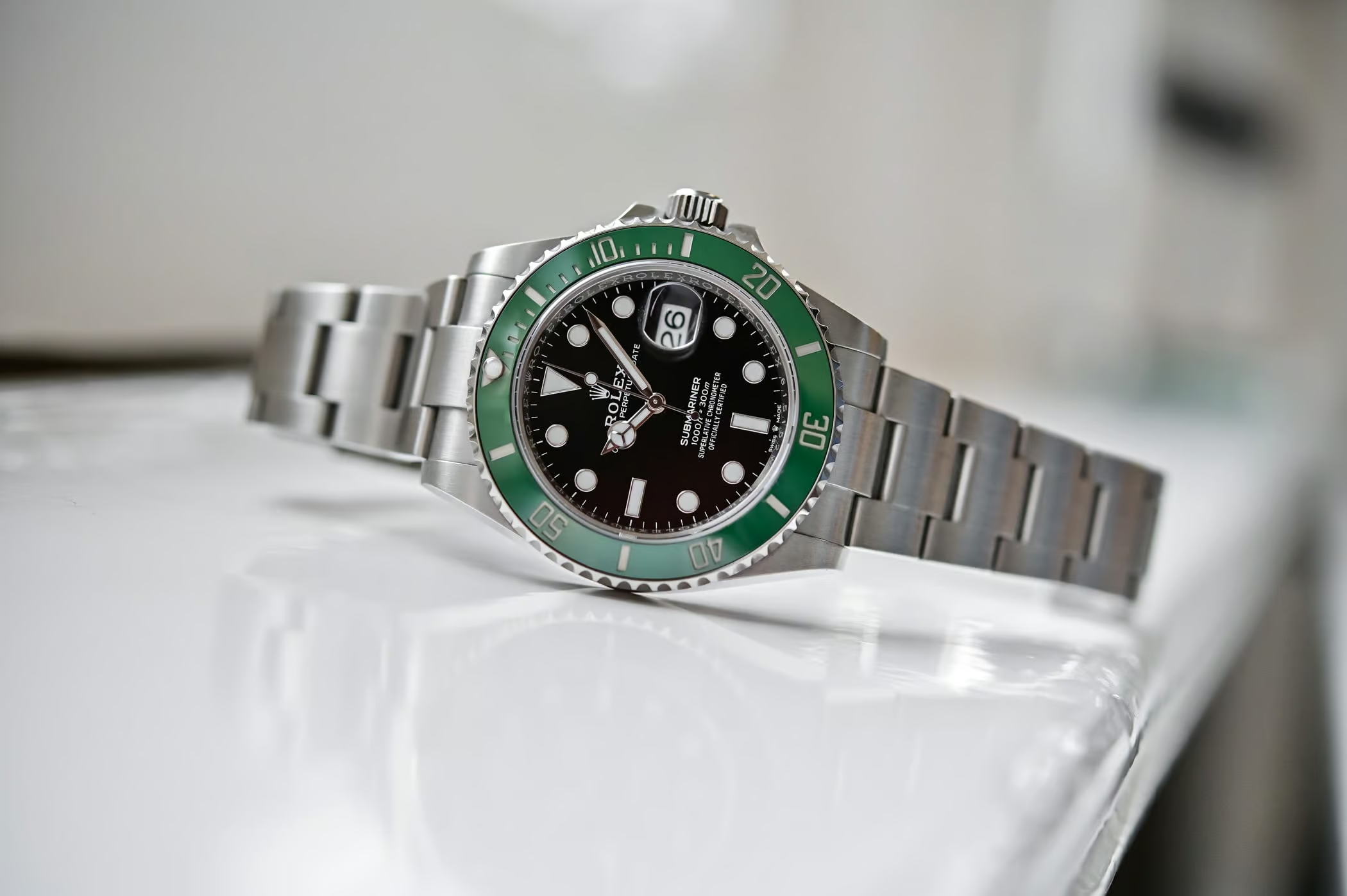
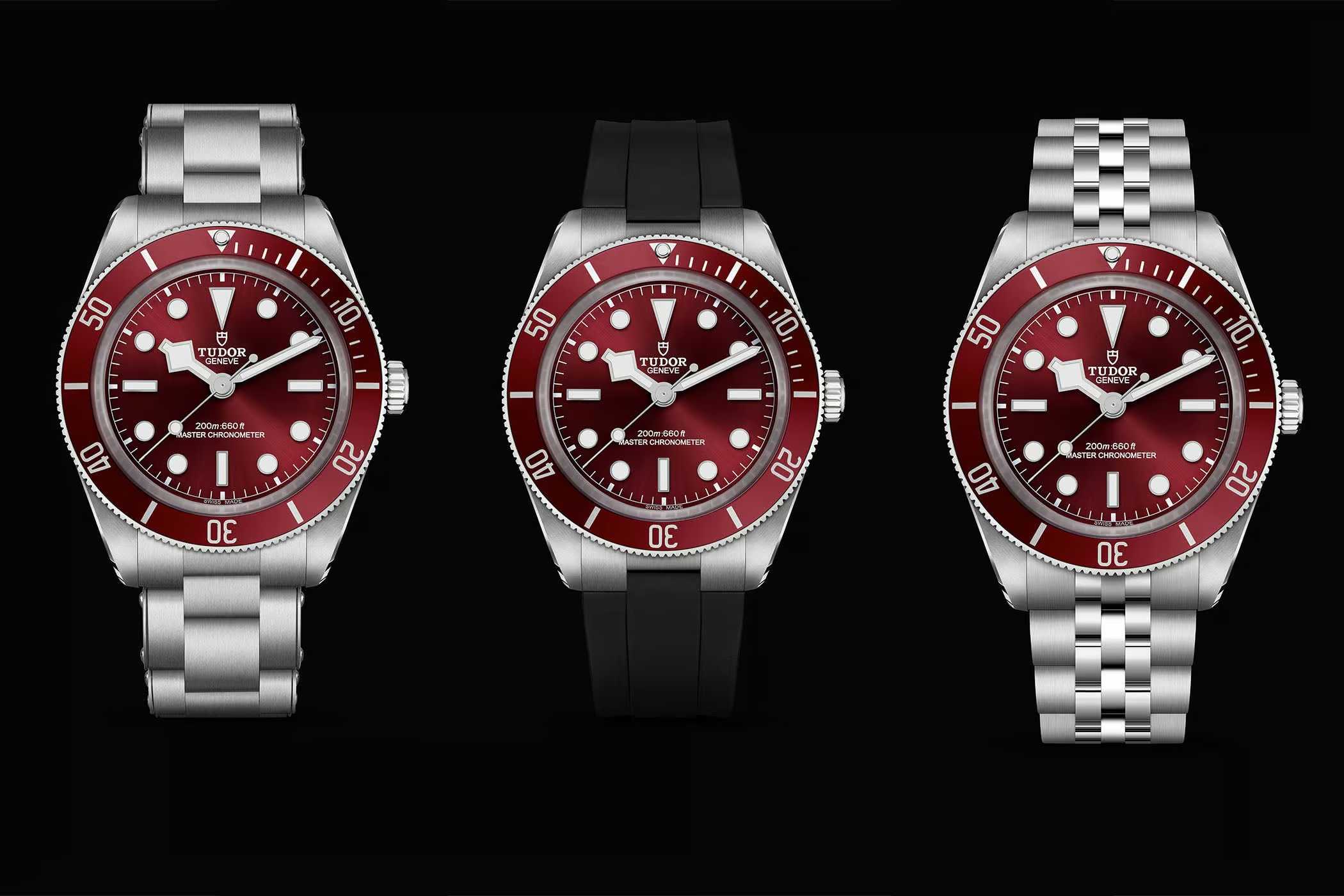
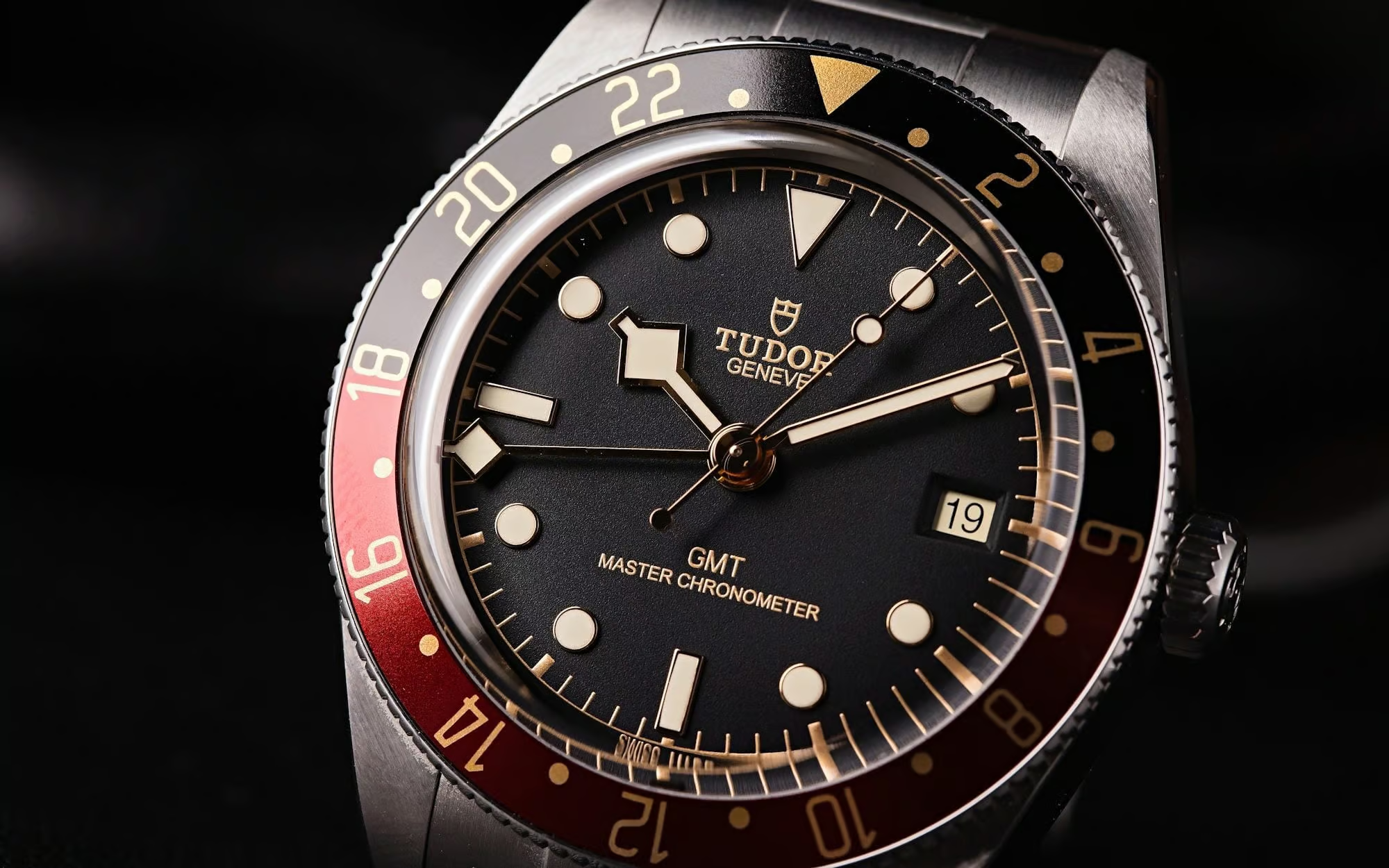
Start with the residual value asymmetry. The Tudor Black Bay 58 three-link trades around $4,376 on the grey market against a $5,225 retail. That is roughly 16% below sticker on a current-production reference. The Submariner 124060 moves in the opposite direction: $10,050 retail, $11,500 to $14,500 grey, a 25 to 35% premium that has compressed from the 2021-2022 highs but has not gone away.
Project that across ten years. The midpoint scenario puts BB58 at roughly -5% nominal value change. The Submariner midpoint lands near +20%. The brand floor under steel Rolex sports is doing structural work the Tudor does not get.
The double-acquisition trap
Here is the case for skipping. Buy the BB58 at $5,225. Wear it two years. Decide you want the Submariner anyway. Sell the Tudor at roughly $3,500 used. You ate $1,700 in depreciation plus the transaction friction of two acquisitions. Then you pay $10,400 retail or $13,500 grey for the Sub. Total outlay on the path: $15,200 to $18,300. Direct-to-Sub buyer paid $10,400 to $13,500. The Tudor was a $2,000 to $5,000 detour.
This math only matters if you actually upgrade. If the BB58 ends the conversation, the detour was the destination. Many buyers report exactly this outcome. The watch is enough.
The used-Rolex arbitrage
Most first-watch guides skip this because it complicates the brand-versus-brand framing. A 2-year-old Submariner inside the 5-year transferable factory warranty trades at 20 to 25% off retail. That puts a warranty-covered Sub at $7,500 to $8,300, often below a new BB58 on the three-link with the Master Chronometer spec. The hierarchy inverts on absolute value once you accept pre-owned.
| Reference | Channel | 2026 cost | 10-year midpoint value change |
|---|---|---|---|
| Tudor BB58 3-link | Grey | $4,376 | -5% |
| Tudor BB58 3-link | Retail | $5,225 | -5% |
| Submariner 124060 | Used (3+ yr warranty left) | $7,800 | +20% |
| Submariner 124060 | Retail (if allocated) | $10,050 | +20% |
| Submariner 124060 | Grey | $11,500-13,500 | +20% |
The size question is not the brand question
One detail clears up half the confusion. The BB58 is 39mm. The Submariner is 41mm. If your wrist or your wardrobe needs the smaller dive shape, the answer is Tudor and there is no Rolex equivalent in current production. The Black Bay 54 exists but does not change the brand math.
If you specifically want the 41mm Rolex case profile, the BB58 was never going to scratch the itch. Buying it as a stepping stone toward a 41mm watch is the textbook double-acquisition trap.
The verdict
Skip Tudor if any of these are true. You have a real AD relationship or the grey budget for a Sub. You want the Rolex brand specifically for non-horological reasons: career milestone, heirloom intent, the crown means something to your father or to the people you sit across from. You want the 41mm case shape, not the 39mm.
Do not skip Tudor if you are horologically curious without a hard Rolex commitment. Do not skip if you want availability now and the AD path is closed. Do not skip if the 39mm case is what you actually want on your wrist.
One last note. The buyers who regret skipping Tudor are the ones who bought the Sub for what it signaled and discovered they wanted something quieter. The buyers who regret not skipping are the ones who knew from the start that only the crown would do. Read your own intent before you read the spec sheet.
TCO Over 10 Years: The Math No One Shows You
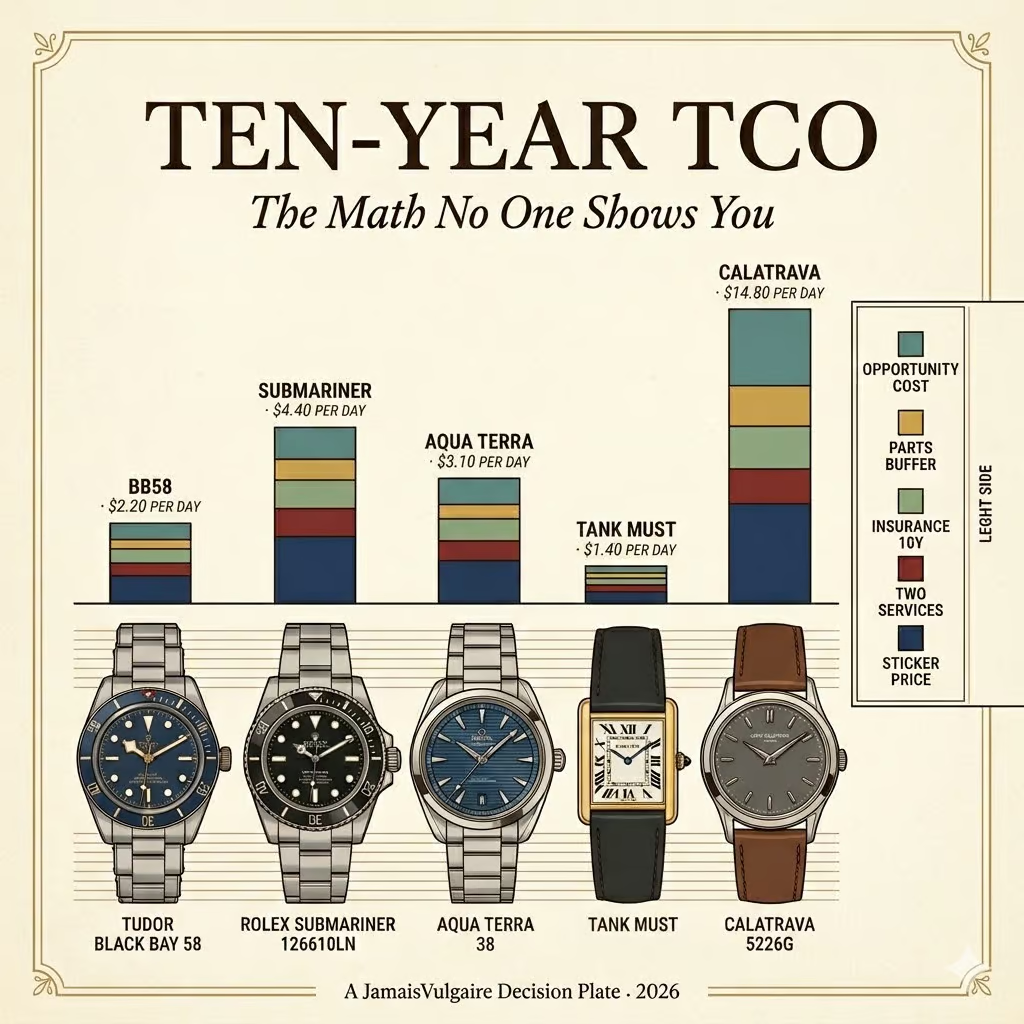
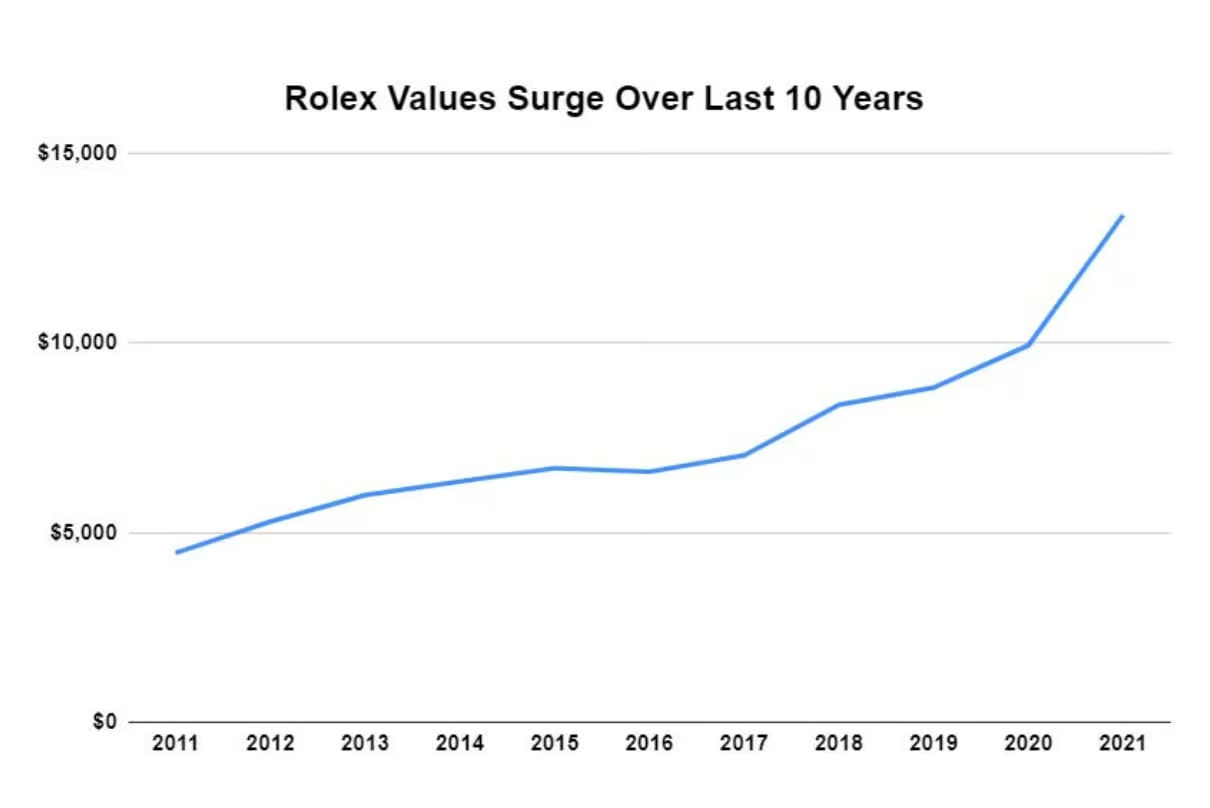
The sticker price is the smallest line on the bill. Over a decade of ownership, sales tax, two services, parts buffers, insurance, and accessories double the cost of the cheaper watches and add 40% to the expensive ones. The only honest way to compare a Tudor Black Bay 58 against a Patek Calatrava 5226G is net of resale, annualized, divided by 3,650 days. The numbers reorder the hierarchy.
Five scenarios, same framework: purchase + 8% sales tax + two service visits + 15-20% parts buffer + 1.25% annual insurance + strap/accessory drift, minus estimated year-10 market value. Insurance is blended from Jewelers Mutual, Chubb, and Hodinkee rate cards. Service intervals follow brand-stated guidance, conservatively assuming two visits per decade.
| Scenario | Purchase | 10-yr outlay | Year-10 value | Net cost | $/year |
|---|---|---|---|---|---|
| S1 Tudor BB58 AD | $4,525 | $6,787 | $3,200 | $3,587 | $359 |
| S2 Speedmaster Moonwatch AD | $7,800 | $12,297 | $4,500 | $7,797 | $780 |
| S3 Submariner 124060 gray | $13,500 | $18,690 | $13,000 | $5,690 | $569 |
| S4 Patek Calatrava 5226G AD | $47,262 | $66,963 | $30,000 | $36,963 | $3,696 |
| S5 Cartier Tank Must auto preowned | $3,100 | $6,218 | $2,200 | $4,018 | $402 |
The Tudor BB58 at $0.98 per day over ten years is the floor. The Patek 5226G at $10.13 per day is the ceiling. The spread is 10x for watches that occupy the same wrist real estate. Anyone calling a Calatrava a first watch is selling something other than horology.
Service is the largest hidden line
Sticker price drives the marketing. Service kills the math. A Patek simple time-only service runs $3,800 per visit at the manufacture in Plan-les-Ouates or its authorized network. Two visits over a decade equals $7,600, more than an entire Tudor BB58 ten-year outlay. The Calatrava buyer pays a second Tudor every five years just to keep the watch running.
Tudor uses the same Rolex Service Center infrastructure but charges $500 per visit. Omega 3-hand is $900. Speedmaster chronograph jumps to $1,200 because column wheel and vertical clutch labor doubles bench time. Rolex Submariner sits at $950. The Cartier mechanical Tank tracks Omega 3-hand at $900. The quartz Tank Must drops to $250 for a pressure test, which is why some readers will quietly reconsider the battery version.
Add a 15-20% parts buffer. Bracelets stretch, crowns gasket-out, pushers wear, hands get re-lumed. On the Patek that buffer alone is $1,520 over the decade. On the Tudor it is $150.
Insurance compounds
At a 1.25% blended rate (Jewelers Mutual baseline, Chubb mid, Hodinkee high), insurance becomes a structural cost. A $40,000 declared value on the Patek generates $6,000 in cumulative premiums over ten years. The Submariner at $13,000 declared value runs $1,625. The Tudor at $4,000 averaged value costs $500 total. Higher net worth households quoted by Chubb Masterpiece often pay 1.5-1.8% on the higher tiers, pushing the Patek line past $7,200.
Skip insurance and the math improves on paper. The first watchmaker visit after a knock or a service-loss claim makes the case for it. The 1.25% baseline is conservative.
Sales tax is the line nobody quotes
An 8% blended US sales tax adds $362 on the Tudor and $3,781 on the Patek. The Submariner at gray-market price absorbs $1,080. State residency matters at the upper tiers. Oregon, New Hampshire, Montana, and Delaware levy no sales tax. A Manhattan address at 8.875% pays an extra $420 on the Calatrava versus the 8% national average, and roughly $4,200 versus Oregon. At the Tudor tier the optimization is rounding error. At the Patek tier it pays for the first service.
The only scenario that breaks even
The Rolex Submariner 124060 bought gray at $13,500 is the only line in the table where the year-10 estimated value ($13,000) approaches the purchase price. Net 10-year cost lands at $5,690, almost entirely composed of tax, service, insurance, and accessories. The watch itself depreciates roughly $500 over a decade in nominal dollars, which means real-dollar appreciation is plausible.
That math assumes the 2026 gray-market correction holds and the secondary floor on steel sports Rolex stays near current levels. WatchCharts shows the Submariner back to April 2021 pricing after the 2022 peak collapsed. The thesis: buy after the correction, hold through one full service cycle, exit at near-parity. No other scenario in the table delivers that profile.
Verdict
Ranked by annualized cost: Tudor BB58 ($359), Cartier Tank Must auto preowned ($402), Submariner gray ($569), Speedmaster Moonwatch ($780), Patek 5226G ($3,696). The Tank Must quartz on battery (not modeled above) drops below $260/year because the movement service line disappears. If pure TCO is the criterion, the answer is a quartz Cartier or a Tudor.
The Patek is not in the same conversation. It is a deliberate purchase of maison ownership, not a watch. Knowing the spread is 10x per day versus the Tudor is the price of admission to having that conversation honestly.
The Five Wrong First Watches and the Lessons They Teach
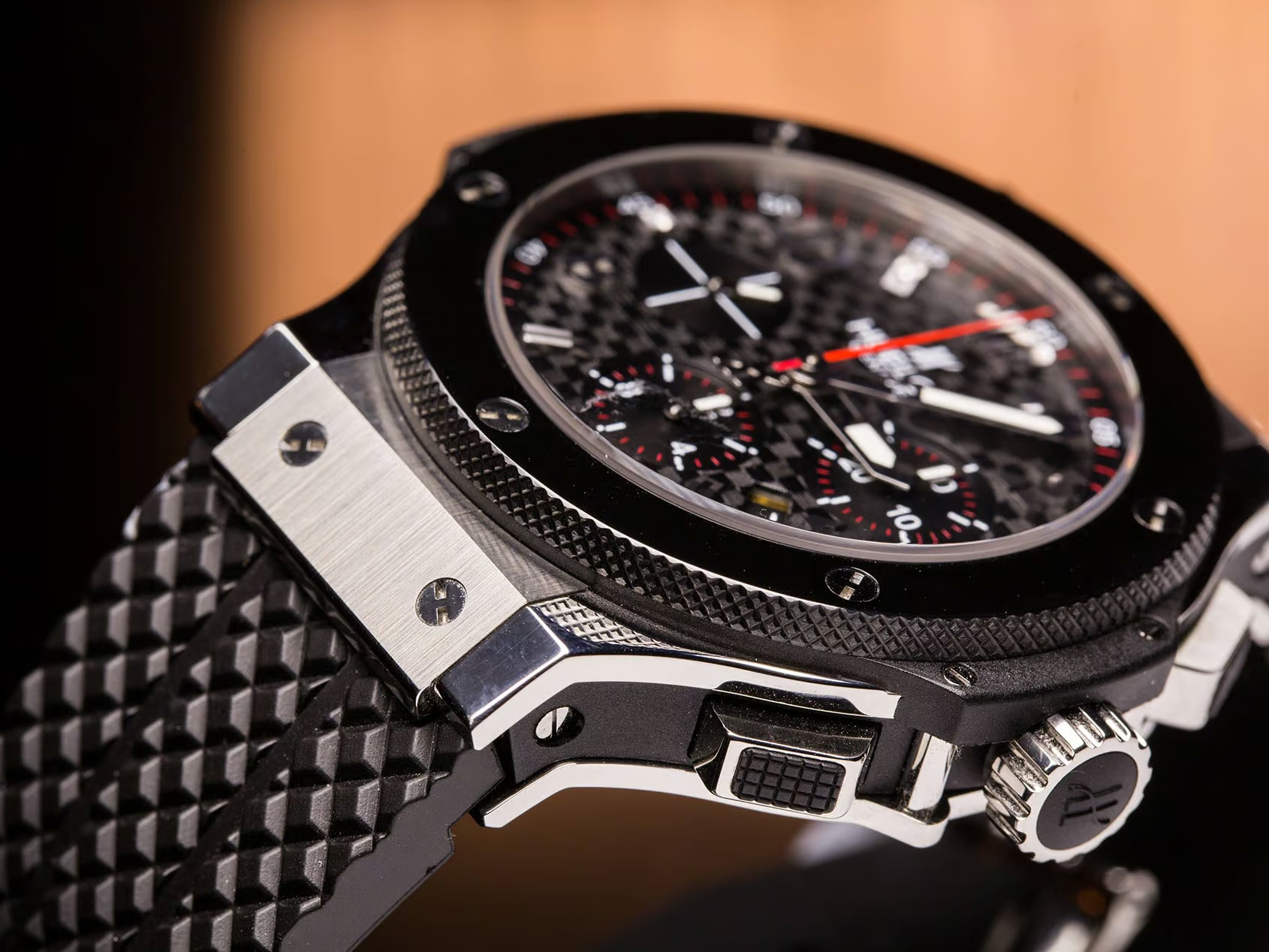
Every wrong first watch teaches the same thing in a different accent. The buyer optimized for status, scarcity, or volume, and forgot the watch had to survive a Monday morning under a poplin cuff. These five references are the most expensive lessons in the 2026 corpus. Each one corresponds to a failure mode, a demographic risk, and a depreciation curve.
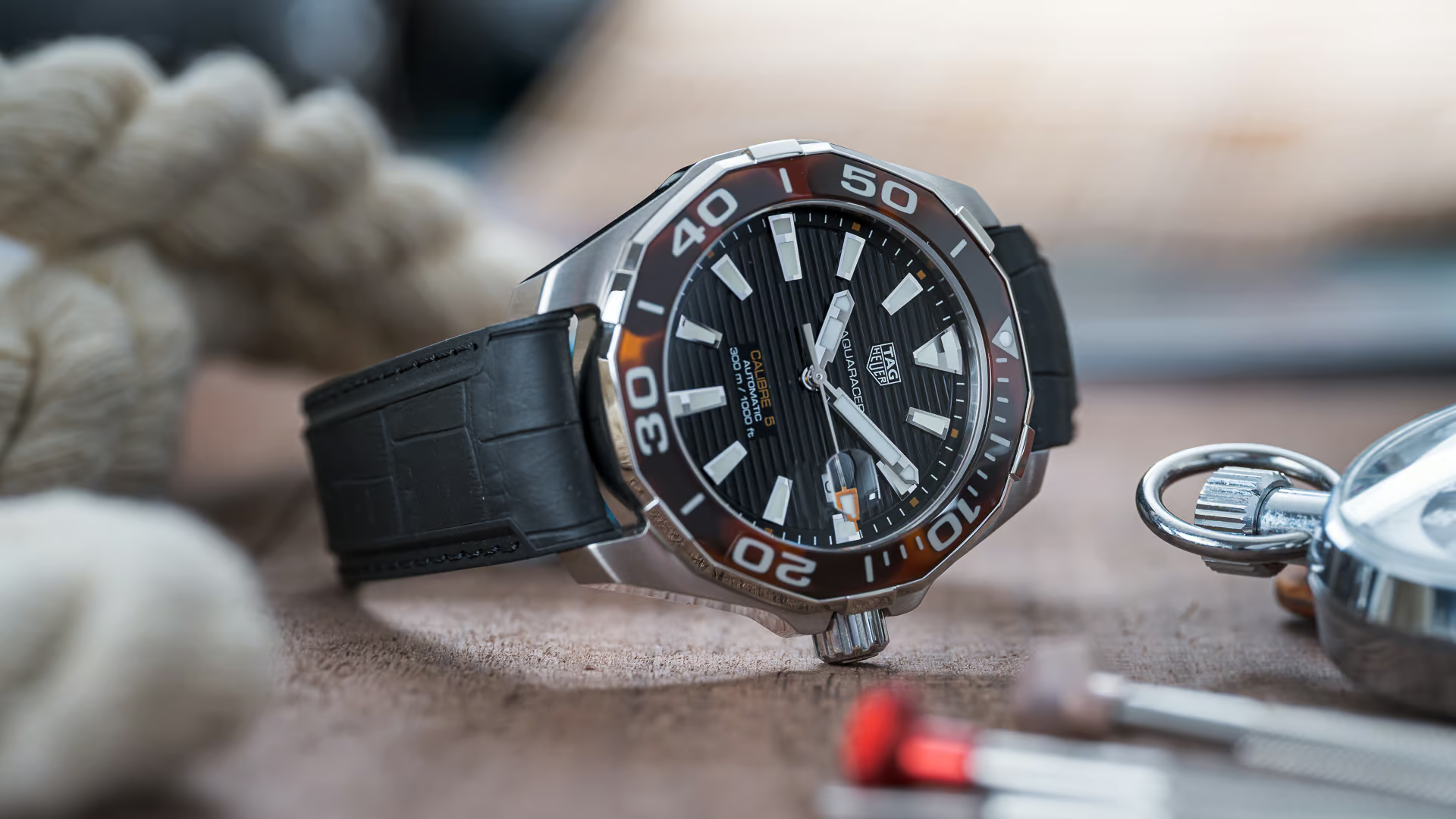

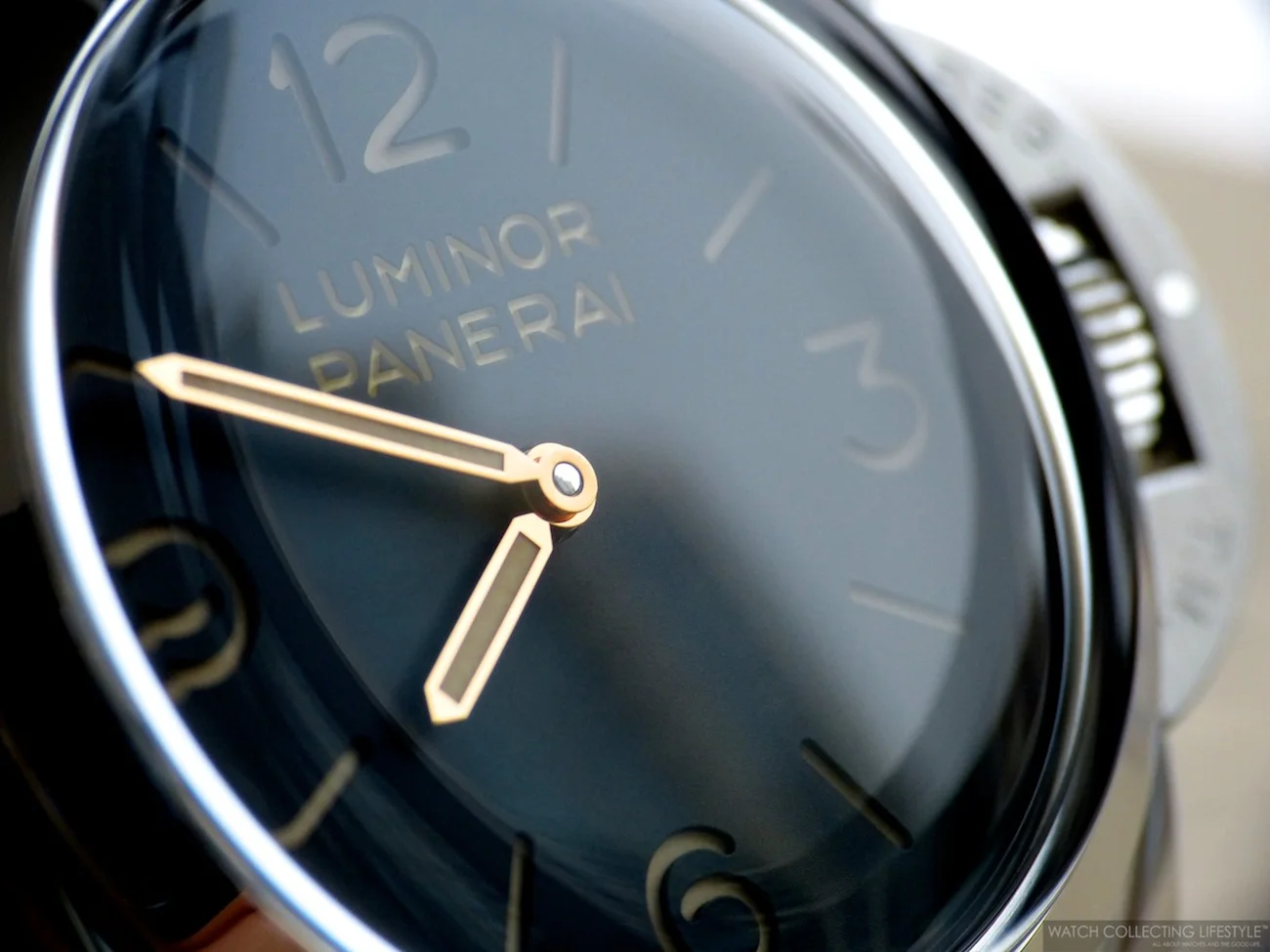
1. Panerai Luminor 44mm: the dated trophy
The Panerai Luminor 44mm was the executive flex of the 2010s. The cushion case wears like 46mm, the lug-to-lug overruns most 17cm wrists, and the sandwich dial reads as 2014 in a 2026 board meeting. The watch was designed for divers and adopted by men who confused size for presence.
Failure mode: oversized geometry, dated aesthetic, sub-cuff impossibility. Under a worsted suit sleeve, the crown guard catches on the cuff opening and the case bulges. The watch broadcasts a decade-old register, the menswear equivalent of a peak-lapel three-button. Demographic risk: lawyers and finance professionals get exposed at the deposition table. Tech buyers read as late adopters of a fad. Resale stays depressed because the secondary market is saturated with 2012-2018 references that nobody under 40 wants.
2. Hublot Big Bang: the universal disqualifier
The Hublot Big Bang is the only watch on this list that disqualifies you in every professional register simultaneously. Finance, law, medicine, consulting, civil service: the watch reads as nightclub, soccer player, or crypto exit. Hublot built its brand on visibility, and visibility is exactly what a first watch should not negotiate.
Failure mode: 40 to 60% depreciation from retail within 36 months, the worst curve among mainstream luxury brands. The polymer-and-ceramic case construction does not age into vintage character. Demographic risk: there is no peer group where a Big Bang as first watch reads as taste. Even within the new-money tech cohort, it signals that the buyer skipped the reading. Verdict: buying a Big Bang as your first luxury watch is the closest thing in horology to an autograph on a regret form.
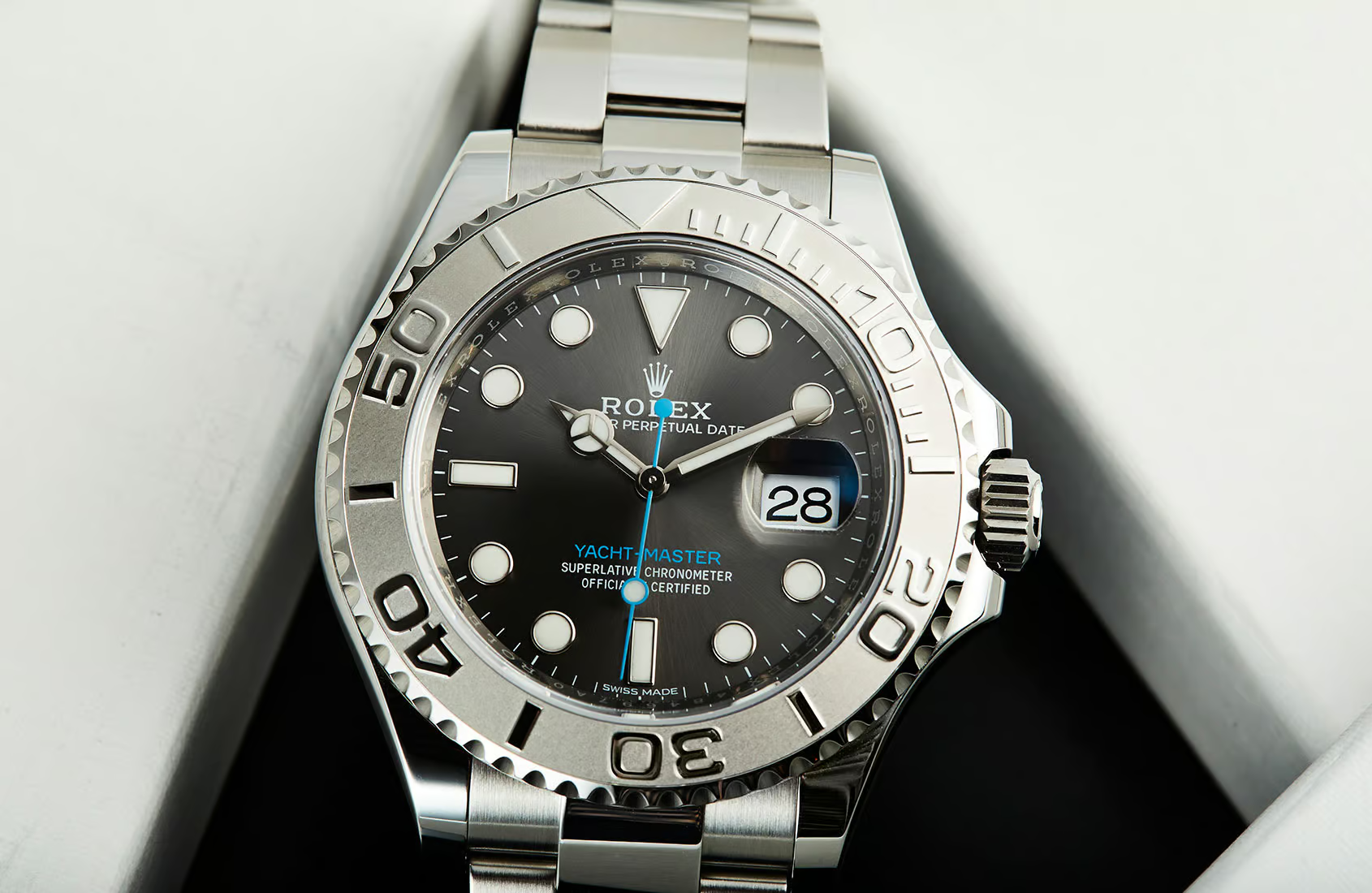
3. Rolex Yacht-Master 40 Rolesium: flex without status
The Yacht-Master 40 in Rolesium (steel case, platinum bezel) sits in the most awkward middle ground in the Rolex catalog. Too sporty for an office that would accept a Datejust, too dressy for any deck that would actually see saltwater, too referential to the Submariner without the Submariner’s earned standing.
Failure mode: the platinum bezel reads as « I wanted to be different from the Sub guy » rather than as an autonomous design choice. Demographic risk: cadre and director buyers read it as indecision. The Yacht-Master signals a buyer who knew the Submariner was the answer and chose the variant anyway, which is the worst possible first-Rolex story. If the goal is sport-diver permanence, the answer is Submariner Date 126610LN at $10,050 retail. The Yacht-Master is the watch you buy when you’ve already owned a Sub.
4. Iced or diamond Datejust as first watch: closing the tasteful narrative
A diamond-set Datejust as a first Rolex closes off the only honest narrative the Datejust offers: the quiet, earned, generational first Rolex. The original DJ41 white-dial Jubilee is the cleanest first watch in the Rolex catalog. Putting diamonds on it before owning the plain version reverses the order of taste.
Failure mode: aftermarket diamond settings collapse resale by 25 to 40%, factory settings hold better but still narrow the buyer pool to a fraction of the standard Datejust market. Demographic risk: in conservative professional settings the watch reads as new money pre-empting the right to flex. The Datejust earns its weight over a decade of wear; iced from day one, it signals the buyer skipped the apprenticeship. A plain Datejust 36 or 41 in Oystersteel can become diamonds at year ten if the wrist still wants them. The reverse path does not exist.
5. Breitling Avenger 46mm (and the large pilot chrono trap)
The Breitling Avenger 46mm, the Navitimer 46, and any pilot chronograph above 44mm fail the cuff test before they fail the taste test. Office-dominant HENRY buyers spend 75% of wear time under a shirt sleeve. A 46mm case with 16mm thickness and aggressive lug geometry does not fit, does not sit, and does not stop catching.
Failure mode: geometric incompatibility with dress shirts above 44mm cuff opening. Thick lugs press into the wrist bone during desk work. Demographic risk: the wrong first watch for any role that requires a jacket more than once a week. The fix is a 41mm or 42mm chronograph at most. The Omega Speedmaster Moonwatch at 42mm and 13.6mm thick is the acceptable upper bound for a chronograph first watch and the Apollo heritage earns the height. Beyond that, the wrist refuses.
Bonus traps: M4 hype and M6 relationship
Two adjacent failure modes deserve a footnote because they recur every cycle.
The hype trap (M4): the Tudor Black Bay Pro launched in 2022 at $3,825 retail, peaked at $5,500 on the gray market in 2022-2023, and corrected to $3,500 to $3,800 used by 2026. Textbook 18-month mean reversion. Buyers who paid the peak premium absorbed a 30 to 35% loss on a watch they could have walked into any Tudor boutique to buy at retail twelve months later. The rule writes itself: if a steel sport watch trades above retail, wait eighteen months.
The AP/Patek-without-relationship trap (M6): the Patek Nautilus 5711/1A retailed near $35,000, peaked at approximately $131,000 on the gray market in 2022, and corrected to roughly $89,000 by 2026. A buyer who paid peak grey for status absorbed a $42,000 paper loss while never building the AD relationship that would have unlocked retail allocation. The math punishes the impatient. The fix is to start a Patek or AP relationship with a Calatrava or a Code 11.59, eighteen to thirty-six months before asking for the hot reference.
| Wrong first watch | Failure mode | Resale signal |
|---|---|---|
| Panerai Luminor 44mm | Dated, oversized, sub-cuff fail | Depressed secondary, narrow buyer pool |
| Hublot Big Bang | Universal disqualifier | 40 to 60% drop |
| Yacht-Master 40 Rolesium | Flex without Sub status | Holds value, reads indecisive |
| Iced Datejust as first | Closes tasteful first-Rolex narrative | 25 to 40% drop on aftermarket stones |
| Breitling Avenger 46mm | Won’t fit under dress cuff | Slow secondary, thick-lug penalty |
The pattern across all five is identical. The buyer optimized for the room rather than the wrist. The correct first watch passes the cuff test, survives the resale market, and tells a story the buyer can still defend at year ten. The wrong ones fail the cuff first, the story second, and the spreadsheet last.
The Framework, Applied: Three Case Studies
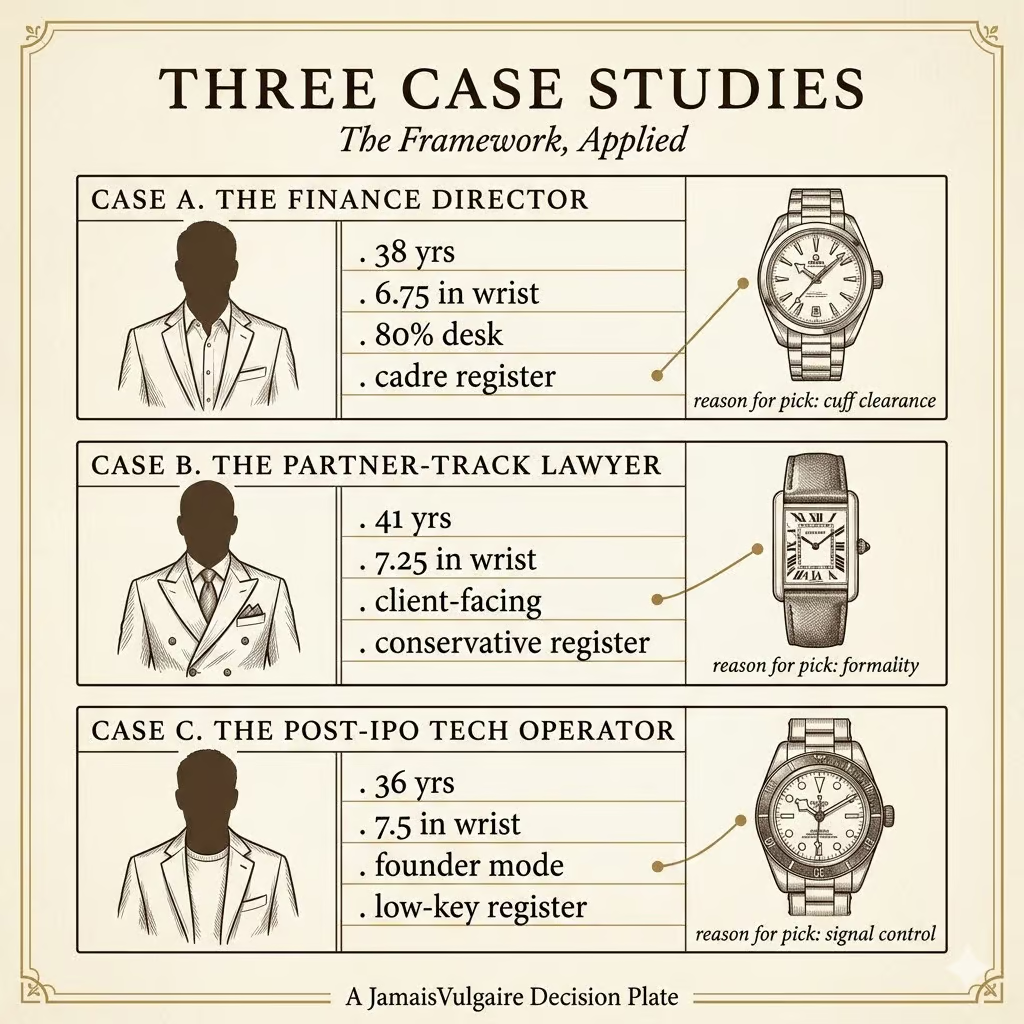
The matrix is theory until it meets a wrist, a budget, and a calendar. Three composites below. Each one ran the same protocol: use case first, comfort and sizing second, brand last. Each one almost bought the wrong watch. Each one ended up with the right one.
Case A: The Finance Director
Thirty-eight years old, finance director at a mid-cap, 6.75-inch wrist, office-dominant routine (about 80% desk, board rooms, client lunches), lifer intent, $8K budget, expandable to $11K all-in. Wants one watch he can hand to his son in 2055.
The almost-buy was the Rolex Yacht-Master 40 Rolesium. He liked the platinum bezel. The matrix killed it in one line: too sporty for the board, too dressy for actual sailing, reads as flex-without-status in finance peer groups. Verdict: rejected as flex.
The verdict landed on the Rolex Datejust 41 white dial, Jubilee bracelet (ref. 126334). 11.9mm thick, slips under a French cuff, neutral in every room. He built an AD relationship over 12 to 18 months: quarterly visits, one Oyster Perpetual gateway purchase, mid-week mornings only. Allocated at retail.
| Line item | Amount (USD) |
|---|---|
| Watch + tax (all-in) | ~$10,800 |
| Two services over 10 years | $1,900 |
| Insurance (1.25% avg) | $1,500 |
| Bracelet, misc. | $300 |
| Year-10 estimated value | ~$13,000 |
| 10-year TCO | ~$650/year |
The Datejust 41 has appreciated +27.3% over five years per WatchCharts. The TCO assumes flat-to-slight gain over the next decade. The Yacht-Master would have cost similar money to acquire and signaled the wrong thing every Monday morning.
Case B: The Senior Associate
Forty-two, senior associate at a white-shoe firm, two years from partnership vote, conservative dress code, dressy intent, $5K budget. Wants a watch that does not visibly clack on a deposition table or telegraph senior-partner posture before he holds the title.
The almost-buy was the Rolex Datejust 36 two-tone (steel and yellow gold). The matrix flagged it as senior-partner cliche, too early. Two-tone Datejusts read as inherited or earned over 20 years. Wearing one as a senior associate is a tell. Rejected.
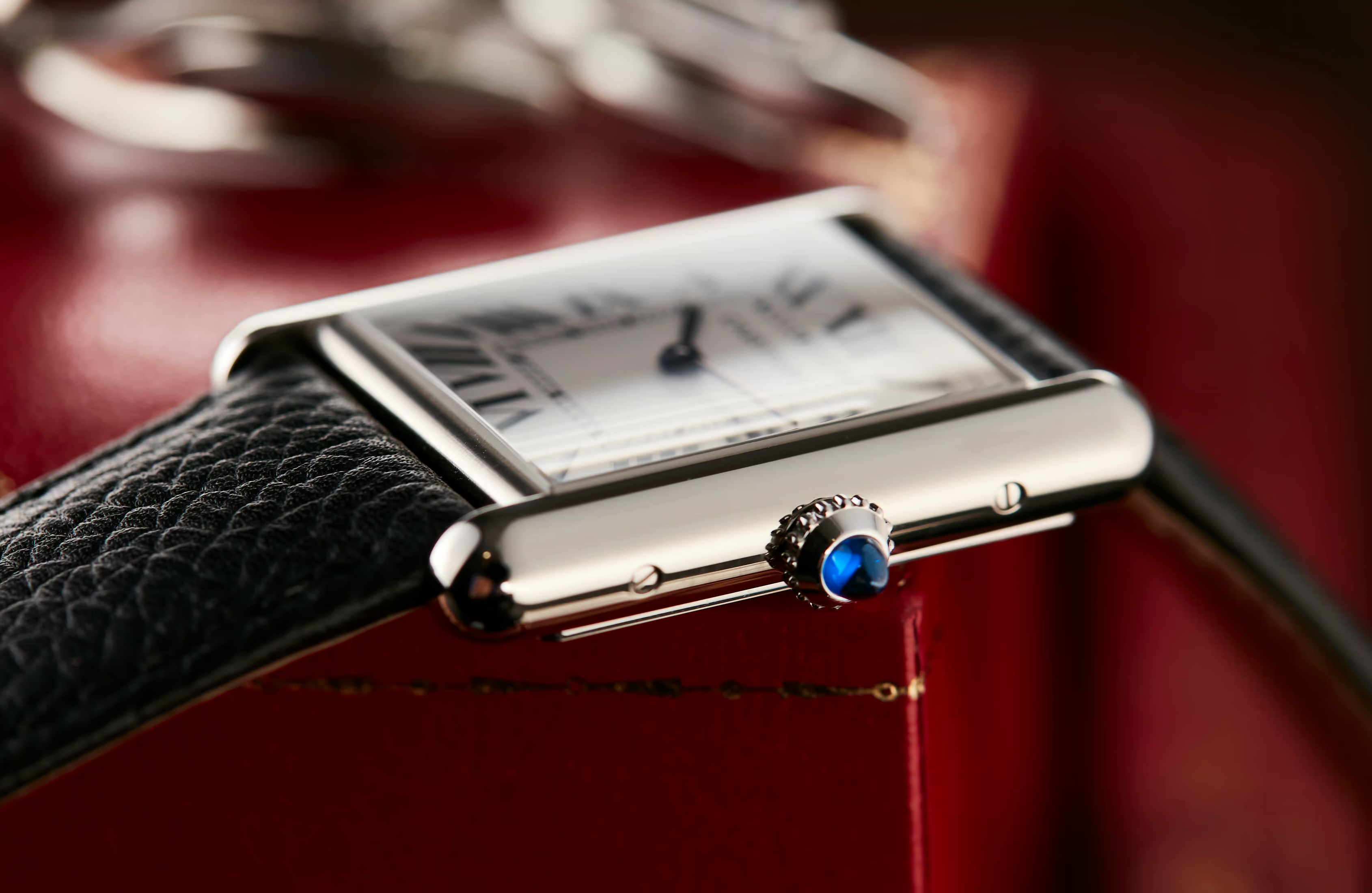
The verdict: Cartier Tank Must Large Auto, preowned full-set (ref. WSTA0040), picked up at $3,100 from a CPO dealer with transferable warranty. Quiet rectangular case, leather strap, walks into any deposition room without comment. Princess Diana wore one. Yves Saint Laurent wore one. The cultural permission is there.
| Line item | Amount (USD) |
|---|---|
| Watch + tax | $3,348 |
| Two mechanical services over 10 years | $2,070 |
| Insurance (1.25% avg) | $350 |
| Three strap replacements | $450 |
| Year-10 estimated value | ~$2,200 |
| 10-year TCO | $402/year |
Preowned full-set strategy: near-zero immediate depreciation, manufacturer warranty remainder transferred, box-and-papers premium preserved. He saved roughly $1,000 vs. the Datejust 36 and bought himself dress-code optionality. The Datejust waits for partnership.
https://monochrome-watches.com/app/uploads/2019/12/Audemars-Piguet-Royal-Oak-15202-vs-15500-16.jpg
Case C: The Post-IPO Tech Founder
Thirty-four, just liquidated $4M of vested stock, statement intent, $30K budget, zero patience. Initial ask: Patek Nautilus 5711/1A in steel. The market reply: $89K gray, no AD relationship, no allocation runway. Five years of Calatrava purchases first. He laughs.
The matrix walked him through the WatchCharts five-year history of the 5711. Peak 2022: ~$131K. Current 2026: ~$89K. Retail at discontinuation: ~$35,000. Down roughly 32% from peak, still 2.5x retail. The 5711 is not a watch at this price. It is an expiring options contract on someone else’s hype. Rejected.
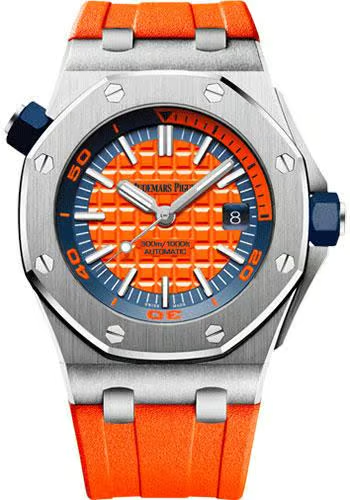
The verdict: Audemars Piguet Royal Oak Selfwinding 41mm (ref. 15500ST) via gray CPO at the compressed 2026 premium of roughly $48K, against a 2022 peak of $65K and a $31,500 retail he would wait 5 to 8 years for. AD relationship not worth it for a buyer who values speed over discount. He paid the premium, accepted it, and stopped chasing.
| Line item | Amount (USD) |
|---|---|
| Watch + tax (gray CPO) | ~$51,800 |
| Two services over 10 years | ~$3,200 |
| Insurance (1.5% avg, Chubb) | ~$6,750 |
| Year-10 estimated value (conservative) | ~$40,000 |
| 10-year TCO | ~$2,175/year |
The Royal Oak at $48K is a different watch than the Royal Oak at $65K. Same reference, different decision. The meta-rule he almost violated: if a watch trades above retail, wait 18 months. He waited 14 on the Royal Oak. The 5711 has been waiting four years and still has not corrected to a buyable number. One was a trade. The other was a trap.
Three buyers, three budgets, one protocol. None of them bought the watch they walked in wanting. All three bought the one the matrix gave them.
The Decision Matrix: Budget, Usage, Permanence
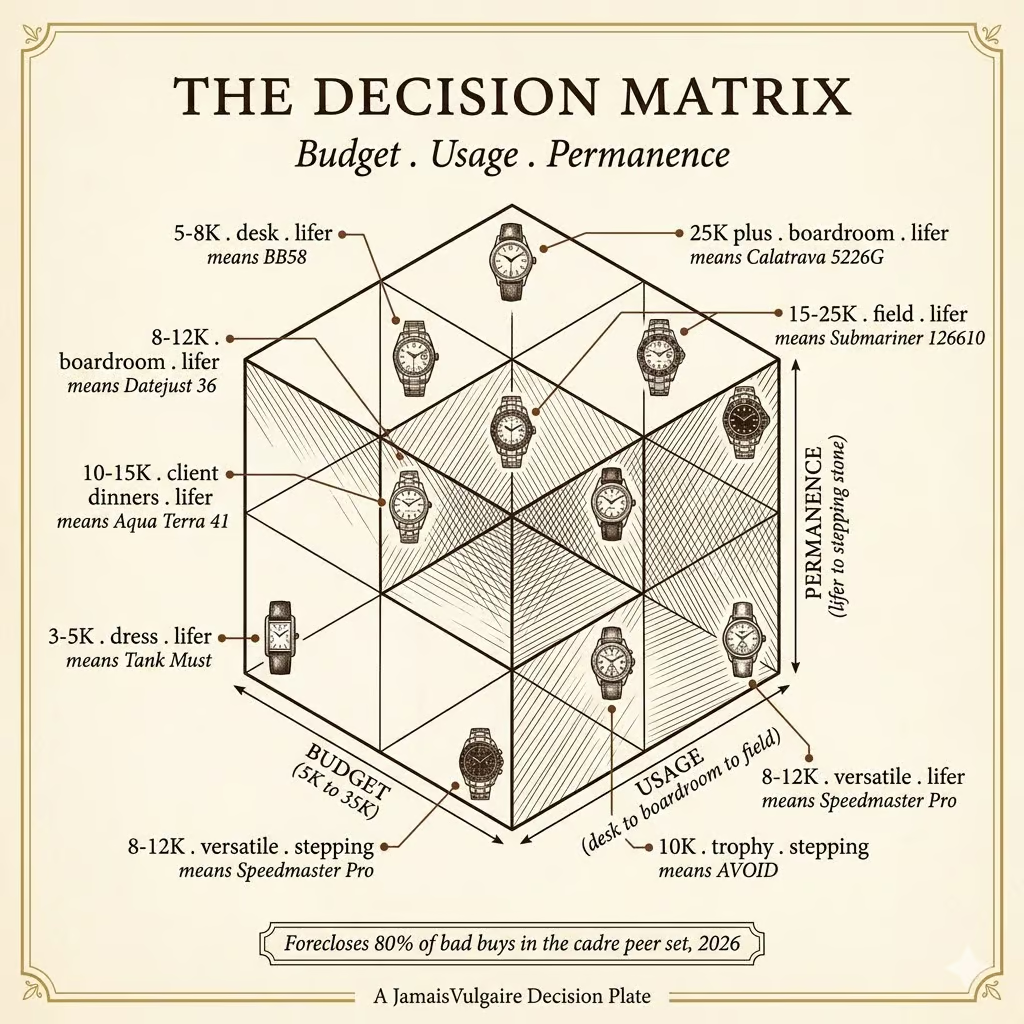
Before a single brand enters the conversation, three orthogonal questions must be answered. Skip them and you join the 68% of first buyers who regret the purchase within twelve months. The matrix below forecloses roughly 80% of the bad buys we see across HENRY peer groups in 2026.
Axis one is budget. Axis two is usage. Axis three is permanence. None of them is about taste yet. Taste arrives once these three are locked.
Axis 1: Budget tiers
Three brackets define the field. Entry tier ($3,000 to $5,000) anchors on the Tudor Black Bay 58 at $4,075 retail, the Cartier Tank Must between $3,000 and $5,500, the Tag Heuer Carrera, and the Longines Spirit. Core tier ($5,000 to $12,000) is the HENRY sweet spot: Omega Speedmaster Moonwatch around $6,300, Aqua Terra 41mm around $6,500, Rolex Submariner Date at $10,050 retail, Datejust 41 between $8,500 and $11,500. Statement tier ($15,000 to $35,000) begins at the AP Royal Oak 41mm steel at $31,500 retail, with secondary market between $45,000 and $65,000 and an AD wait of five to eight years.
The Statement tier is rarely the right first purchase. Buying a Royal Oak before you understand why you want one is the most expensive entry mistake in this category.
Axis 2: Usage profile
Three profiles cover the vast majority of HENRY wrists.
| Profile | Best fit | Why |
|---|---|---|
| Office-dominant (75%+ desk, meetings) | Aqua Terra, Datejust 41, Tank Must | Cuff-friendly, sub-12mm thick, dressy enough for the board |
| Travel-heavy executive | Submariner Date, Aqua Terra, Speedmaster | Robust, globally recognized, no anxiety in lounges |
| One-watch lifer | Black Bay 58, Submariner No-Date, Speedmaster | 38 to 41mm sport, dress-down/dress-up tolerance, decades of service |
For office-dominant wrists, the cuff rule is non-negotiable: case thickness above 12mm or diameter above 40mm is a red flag. That single rule eliminates Panerai, the Royal Oak Offshore, most 46mm Breitling chronographs. It points toward the BB58 at 11.9mm, the Datejust 41 at 11.9mm, the Aqua Terra at 12.5mm. The Speedmaster at 13.6mm is the heritage exception.
Axis 3: Permanence intent
Two paths only. Stepping stone means you are testing taste, expecting to exit in 18 to 36 months. The correct plays are the BB58 or the Speedmaster. The math is brutal and in your favor: a Speedmaster sells in days through any CPO dealer, and the BB58 retains roughly 85% of retail. Exit cost approaches zero.
The lifer or heirloom path is the opposite calculation. The plays are the Submariner, the Datejust 41, the Speedmaster Moonwatch. Each has a service network thirty years deep, transferable warranty mechanics, and brand permanence that survives generational handoff. The Rolex five-year international warranty transfers with the original card; Omega services through any boutique worldwide.
The trap is mixing the two intents. Buying a Royal Oak as a stepping stone is financial self-harm. Buying a fashion-forward chronograph as an heirloom is taste-blindness.
Reading the matrix
Three axes, three answers each, twenty-seven combinations. Most close themselves once written down. An office-dominant lawyer at the entry tier looking for a lifer lands on the Tank Must or the BB58. A travel-heavy director in the core tier optimizing for permanence lands on the Submariner. A one-watch lifer with $6,500 to spend lands on the Speedmaster or the Aqua Terra, no further debate required.
The combinations that do not resolve cleanly are the warning signs. If your answers point at a 44mm Panerai for office-dominant use, the matrix is telling you the watch is wrong, not that the matrix is. Verdict: answer the three axes in writing before you visit a single boutique. Anything else is shopping by mood.
The HENRY Archetypes: Who You Actually Are Before Who You Want to Look Like
Budget is the wrong starting point. Three archetypes dominate the first-luxury-watch decision between $5,000 and $35,000, and each one rewards a different watch, a different acquisition path, and a different relationship with the room. Pick the archetype first. The reference falls out of it.
The frame matters because the dominant failure mode is signaling to the wrong audience. Industry tracking pegs first-buyer regret at roughly 68% within twelve months, almost entirely driven by status purchases made for peers the buyer does not actually have. The archetype filter cuts that risk before the wallet opens.
Archetype 1: The Cadre / Director
35-48, $200K-$400K base, mid-to-large company. Watch psyche: quiet competence. Wants one piece that survives the board, the lunch, the airport, and the weekend without a single comment from anyone who matters.
Top picks: Rolex Datejust 41 white dial on Oyster (ref. 126334, $8,500-$11,500), Omega Seamaster Aqua Terra 41mm teak dial (~$6,500), Tudor Black Bay 58 (ref. 79030N, $4,075). Cuff-friendly at 11.9mm thick for the DJ41 and BB58, dressy enough for the room, weekend-tolerant on a Saturday.
Avoid: Yacht-Master 40 Rolesium reads as flex without the Submariner’s iconic floor, Royal Oak is too loud for the European cadre register, Hublot Big Bang is an instant disqualifier in finance or legal peer groups. The AD play: build a 12-18 month relationship for the DJ41 white. The Aqua Terra is a walk-in at any boutique.
Archetype 2: Partner-Track Lawyer or Finance
32-42, $300K-$700K, billing or deal-flow. Watch psyche: conservative dress code, peer signaling, cuff discipline. The piece must not visibly clack on a deposition table or telegraph trying-too-hard at a partners’ dinner.
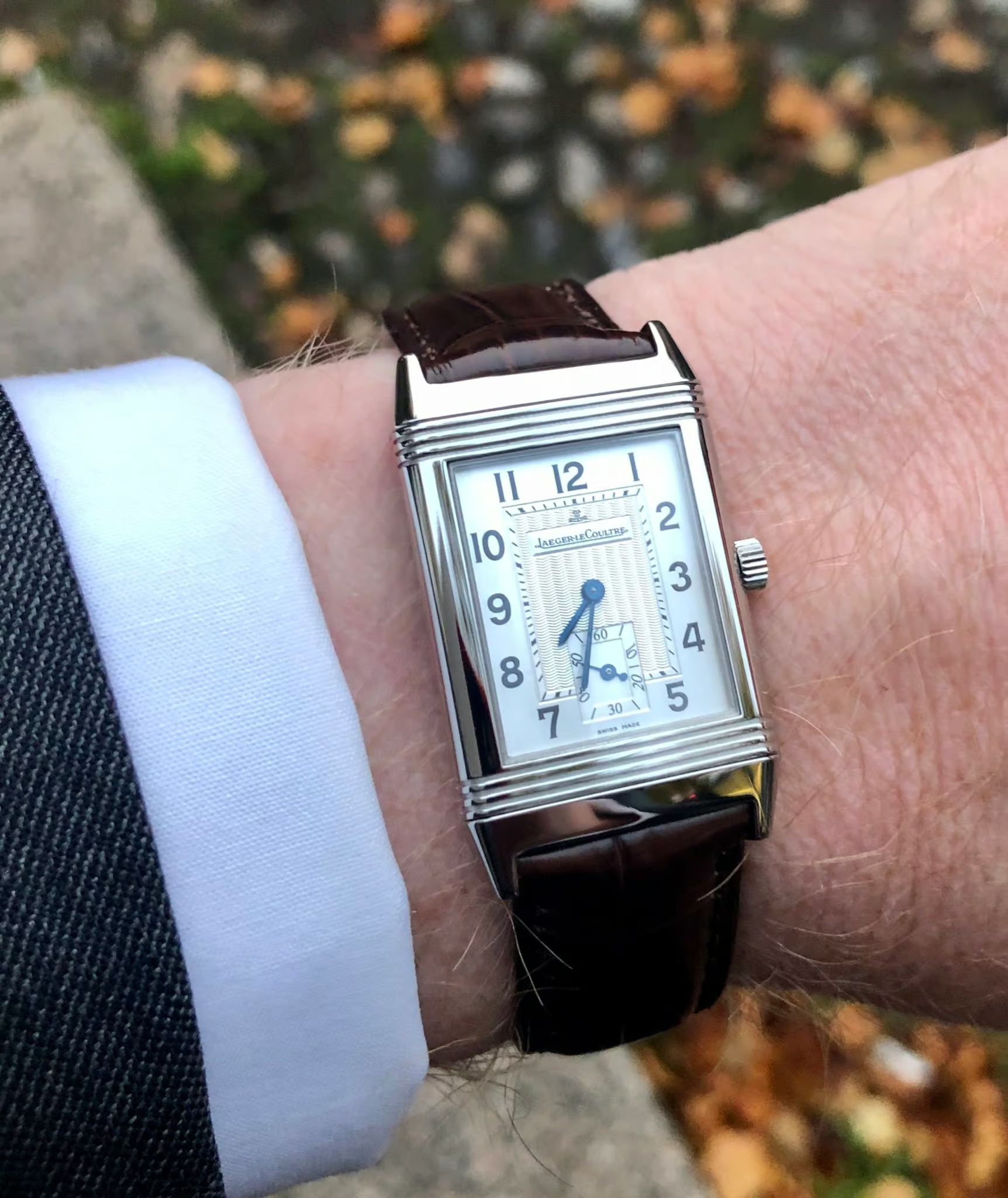
Top picks: Cartier Tank Must ($3,000-$3,500 retail, boutique walk-in), Tank Louis in gold for the dress register, Rolex Datejust 36 (ref. 126200) on Jubilee, JLC Reverso Classic, Omega Aqua Terra 38mm. The Tank Must is the single highest taste-per-dollar move at under $5K, with cultural cachet (Diana, DiCaprio) intact.
Avoid: anything 42mm+ chronograph under a cuff, two-tone or diamond Datejust (reads as senior-partner cliché claimed too early), Panerai 44mm (cushion case wears like 46mm, dated since the 2010s peak). AD strategy: Cartier and JLC are no-waitlist boutique experiences. The DJ36 white silver Jubilee is broadly available at AD in 2026 without the wait that defined the prior cycle.
Archetype 3: Tech IPO New Money
30-40, $500K-$2M+ liquid post-vest. Watch psyche: wants to skip tiers, often jumps straight to Royal Oak, Nautilus or Daytona as the first wrist. The highest regret rate of any archetype.
Safe picks: Rolex Submariner Date (ref. 126610LN, $10,050 retail, $9,800-$13,000 secondary) as status floor. AP Royal Oak 41mm Selfwinding only if the buyer can absorb a 5-8 year AD wait or accept $45K-$65K secondary on a $31,500 retail piece. For a dressy flex, Lange 1 or a Patek Calatrava signal collector context rather than status-chase.
Common mistakes, all documented in 2026 resale data:
| Wrong first watch | Why it fails | Damage |
|---|---|---|
| Hublot Big Bang | Low taste signal, soccer-player coding in HENRY peer groups | 40-60% depreciation |
| Yacht-Master 40 Rolesium | Reads as crypto-bro, almost-Sub-but-different | Indecision signal, weak resale |
| Iced Datejust at 32 | Closes the tasteful-first-Rolex narrative | Aftermarket diamond discount on resale |
AD Strategy by Archetype
The 2026 market has flattened the AD relationship game. Steel sports premiums collapsed to at-or-below MSRP gray, which means the multi-year tax-purchase chase is significantly less valuable than it was at the 2022 peak.
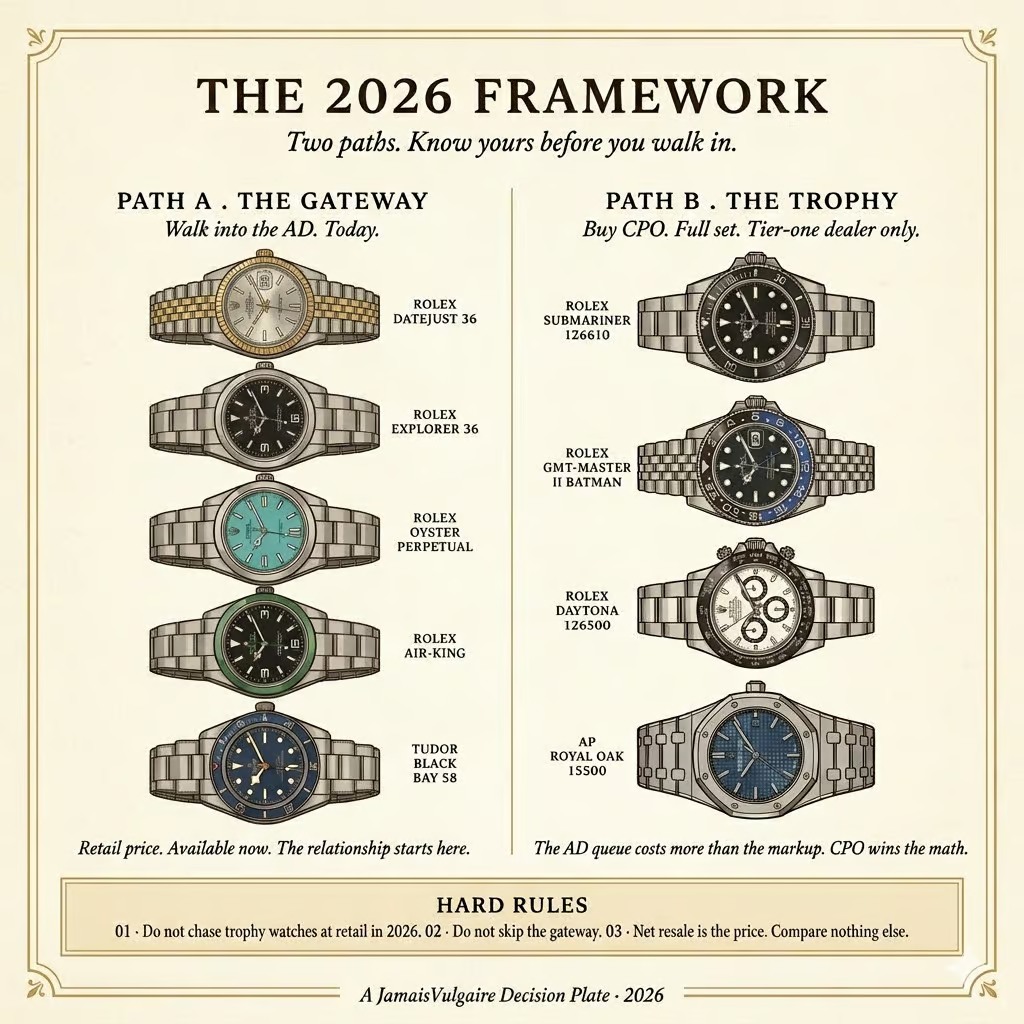
The cadre builds a real 12-18 month relationship with one local AD for the Datejust 41, with gateway purchases (Explorer 36, Oyster Perpetual, Air-King) signaling commitment. The lawyer walks into Cartier or JLC and leaves with the piece the same afternoon. The tech IPO buyer should accept that gray market at compressed 2026 premiums is the rational move. Speed beats discount when the discount has already arrived.
The archetype determines the watch. The watch does not determine the archetype. A Royal Oak on the wrong wrist signals exactly what its buyer was hoping to avoid: that they bought the watch the algorithm rewarded, not the one their life actually wears.
The Classics That Earn Their Reputation (And the One Everyone Misses)
Seven references dominate every serious first-watch shortlist. Five earn their place. One is a trap dressed as a trophy. And one, the most overlooked, delivers more taste-per-dollar than anything else in the category.
Here is the tier map, with retail, secondary, and AD reality as of 2026.
| Reference | Retail 2026 | Secondary | AD Reality |
|---|---|---|---|
| Rolex Submariner 126610LN | $10,050 | $9,800 to $13,000 | 6 to 24 month wait |
| Rolex Datejust 41 white/Jubilee | $8,500 to $11,500 | Near retail | In stock or 3 to 6 months |
| Tudor Black Bay 58 | $4,075 | $3,200 to $4,200 | Walk-in |
| Omega Speedmaster Cal 3861 | ~$6,300 | ~$4,800 | Walk-in |
| Omega Aqua Terra 41mm | ~$6,500 | Near retail | Walk-in |
| AP Royal Oak 41mm | $31,500 | $45K to $65K | 5 to 8 year wait |
| Cartier Tank Must | $3,000 to $3,500 | $2,800 to $5,500 | Boutique walk-in |
The Default Reference: Submariner 126610LN
The Submariner remains the global passport. Recognized in every airport lounge, every boardroom, every service center for the next thirty years. The 2026 reality: gray market premiums have collapsed. You can often buy a 126610LN secondary at-or-below the $10,050 retail, with full set and transferable warranty. The AD chase that defined 2018 to 2023 is no longer the smart play for a standard steel Sub.
Verdict: buy if you want the global default. Buy secondary full-set within the five-year warranty window. Skip the AD line unless you specifically want the boutique experience.
The Cadre’s Quiet Choice: Datejust 41
The Datejust 41 in white dial on Jubilee bracelet is the most underestimated Rolex in 2026. 11.9mm thick, dressy enough for a board meeting, casual enough for a weekend. Most ADs have stock or a 3-to-6-month wait. It is also the gateway to a real AD relationship if you intend to acquire a Daytona or GMT later.
Verdict: the safest first Rolex for any office-dominant role. Avoid two-tone and diamond variants. They close off the tasteful narrative.
The Spec-Winner: Tudor Black Bay 58
The BB58 received the MT5400-U Master Chronometer upgrade in 2026. METAS certified, 0/+5 seconds per day, 15,000 gauss magnetic resistance. On raw spec, it beats the Submariner’s COSC +2/-2 movement at 40% of the price. The remaining premium for the Sub is brand status, not horology.
Verdict: skip the BB58 only if your budget is firmly above $10K, your wrist is 7 inches or larger, and you are certain a sport diver is your forever watch. Otherwise, the 39mm by 11.9mm BB58 is the lowest-regret first watch in the category. Exit cost is near zero.
The Move Everyone Misses: Speedmaster Moonwatch
The single most under-discussed first-watch move in 2026: the Omega Speedmaster Moonwatch at ~$6,300 retail. No waitlist. Apollo program heritage. The Cal 3861 is Master Chronometer certified, hand-wound, hesalite or sapphire. It dresses up under a sport coat, dresses down on NATO, and signals collector taste over status-chasing.
It is the highest taste-per-dollar first watch on the market. The peer signaling is precise: anyone who knows watches recognizes a Speedmaster owner as someone who chose the reference, not the queue. Anyone who doesn’t sees a clean chronograph and moves on. That asymmetry is the whole point.
The Office Hybrid: Aqua Terra 41mm
The Aqua Terra 41mm at ~$6,500 is the best office-first watch on the market. Teak dial, 12.5mm thick, anti-magnetic, walk-in at any Omega boutique. It is the dress-sport hybrid that solves the one-watch problem for cadres who refuse to play the Rolex game.
Verdict: the rational alternative to the Datejust 41 for buyers who want in-house movement and Master Chronometer certification without the brand tax.
The Trap: Royal Oak 41mm as First Watch
The Royal Oak 41mm Selfwinding is a great watch and a terrible first watch. Retail is $31,500. AD wait is 5 to 8 years. Secondary sits at $45K to $65K. Tech IPO buyers regularly pay the gray premium and discover within eighteen months that they bought a status object, not a watch they wear.
Verdict: the Royal Oak is a third or fourth watch, after taste is established. Buy it because the case finishing on Tapisserie dials genuinely moves you, not because the queue does.
The Dress Floor: Cartier Tank Must
The Tank Must at $3,000 to $3,500 is the consensus dress floor under $5K. Boutique walk-in, Princess Diana cultural cachet, strong secondary on the W4TA variant. Paired with a Submariner or BB58, it is the cleanest two-watch collection a cadre can assemble before turning forty.
Verdict: if your role is partner-track legal or finance, the Tank Must is the watch that does not clack on a deposition table. Buy on leather, swap straps yearly, never overthink it.
Should You Skip Tudor and Go Straight to Rolex? The 2026 Answer
The question splits the first-watch internet in half. One camp argues the Tudor Black Bay 58 is a stepping stone tax. The other argues the Rolex Submariner at $10,050 retail is overpaying for a crown. The 2026 data settles it more cleanly than either side wants.
The Case for Skipping Tudor
The skip argument rests on three pillars. First, budget. If you can write a check for $10,000+ without flinching, the BB58 becomes redundant inventory in the safe. Second, certainty. If you have spent eighteen months looking at sport divers and concluded Rolex is the only answer, the Tudor will feel like a placeholder from day one. Third, recognition. The Submariner is the most globally legible luxury watch on the planet. A managing partner in Singapore reads it the same way a developer in Lisbon does. The BB58 requires a watch-literate audience.
The skip camp also points to depreciation arithmetic. A Submariner bought at MSRP in 2026 trades at $9,800 to $13,000 secondary. The BB58 trades at $3,200 to $4,200 against a $4,075 retail. Both retain value well by industry standards. But if the BB58 is genuinely transitional, the resale dance, the photography, the meeting in a coffee shop with a stranger, is friction the Submariner avoids entirely.
The Case for BB58 First
Then you look at the 2026 spec sheet, and the argument inverts. The BB58 received the MT5400-U Master Chronometer upgrade this year. METAS certified. 0/+5 seconds per day. 15,000 gauss magnetic resistance. The Submariner runs a COSC-certified caliber rated +2/-2 seconds per day, no METAS, no anti-magnetic spec at that level. On raw horology, the Tudor now beats the Rolex at 40% of the price.
Case geometry matters more than buyers admit. The BB58 measures 39mm x 11.9mm. That is the sweet spot for the 6.5 to 7-inch wrist that fits most office-dominant buyers. The Submariner Date sits at 41mm x 12.5mm with crown guards that add visual mass. On a 6.75-inch wrist, the Sub starts overhanging. The Tudor sits flush.
Availability closes the argument. Walk into any Tudor AD on a Tuesday afternoon and the BB58 is in the case. No allocation game, no relationship tax, no quarterly visits to the sales associate. The Submariner allocation has compressed from five years to six-to-twenty-four months in 2026, but it is still a wait.
The Exit Cost Math
This is the line that decides it. Sell a BB58 within eighteen months and you absorb roughly $0 to $500 in loss. Sell a Submariner inside the same window and you eat $2,000+ in depreciation, because new Rolex steel sports drop 20 to 30% the moment they leave the boutique. The Tudor is the lowest-regret bet because the regret is nearly free.
| Factor | BB58 (2026) | Submariner Date |
|---|---|---|
| Retail price | $4,075 | $10,050 |
| Movement spec | METAS, 0/+5 sec/day, 15,000 gauss | COSC, +2/-2 sec/day |
| Case dimensions | 39mm x 11.9mm | 41mm x 12.5mm |
| AD availability | Walk-in | 6 to 24 month wait |
| 18-month exit cost | $0 to $500 | $2,000+ |
The 2026 Verdict
Skip the Black Bay 58 only if all three conditions hold. Budget is firmly $10,000+ with no flinch. Wrist measures 7 inches or larger. The sport diver is unambiguously your forever wrist, not a placeholder while you figure out whether you actually prefer dress watches or chronographs.
Miss any of those three and the BB58 is the lower-regret play. You get a spec-superior 2026 movement, immediate availability, and an exit cost that rounds to zero. If you discover in twelve months that you wanted a Datejust, a Cartier Tank, or a Speedmaster instead, the Tudor lets you pivot without writing off four figures. The Submariner does not.
Used vs New, Gray vs AD: The 2026 Inversion
The playbook that ran from 2018 to 2023 is dead. For most first-watch buyers in 2026, walking into an authorized dealer and paying retail for a steel sport Rolex is the worst financial move on the menu. The premiums have compressed, the secondary market has caught up, and the math no longer rewards the relationship grind.
Buy a new steel Rolex at retail today and you absorb a 20 to 30% immediate depreciation the moment you walk out of the boutique. A new gold Rolex drops up to 40%. These aren’t 2008 numbers, they are 2026 numbers, validated by WatchCharts January 2026 data showing the Rolex secondary index back to April 2021 levels.
Now flip the trade. A pre-owned Submariner or Daytona with the original card, box, papers, and remaining factory warranty commands a 10 to 25% box-and-papers premium over a watch sold loose. Buy a two-year-old full set within the 5-year Rolex international warranty window and the warranty transfers to you. You skip the depreciation curve, keep manufacturer coverage, and own the same reference that someone else paid retail for.
The Gray Market Premium Has Collapsed
From 2020 to 2022, gray market sellers extracted 30 to 50% premiums on Submariner, GMT-Master II, and Daytona. That trade is over. By Q1 2026, Sub 126610LN trades at $9,800 to $13,000 against a $10,050 retail. Many references sit at or below MSRP on Chrono24 and Bezel.
Solid gold Rolex references sell below retail in most major markets. The Patek Nautilus 5711/1A, which peaked at $131,000 against a $35,000 retail, now trades around $89,000. A 32% correction off peak, with more compression expected through 2026.
The AD Relationship Game in 2026
The historic AD playbook required $100,000+ in « tax purchases » (gold dress watches, ladies’ pieces, accessories) before a steel sport allocation surfaced. That cost-of-entry was rational when secondary premiums ran 50% above retail. It isn’t rational when gray market sits at MSRP.
The current allocation reality: a first-time client can secure a Submariner in 6 to 24 months at most North American ADs, against 3 to 5 years at the 2022 peak. The Daytona and specific GMT dial variants remain the only references where relationship building still produces measurable savings.
The CPO Dealer Verdict
For buyers who want manufacturer warranty insurance without the AD wait, Certified Pre-Owned programs from Bob’s Watches, Bezel, Hodinkee Shop, Watchfinder, and Crown & Caliber add 1 to 2 years of dealer warranty on top of any factory remainder. Authentication is built in. Box and papers are verified.
This is the cleanest play for someone buying a $10,000 watch they want to own for a decade.
| Acquisition path | Year-1 cost vs retail | Warranty | Best for |
|---|---|---|---|
| New from AD (non-allocation) | +8% sales tax, -20 to -30% resale | 5 years factory | Datejust, Aqua Terra, Speedmaster walk-ins |
| AD allocation (Sub/GMT/Daytona) | Retail, 6-24 month wait | 5 years factory | Buyers who want trophy at MSRP and have time |
| Gray (Chrono24, Bezel) | 0 to 5% above MSRP in 2026 | Often stripped, varies | Speed buyers willing to skip warranty |
| CPO full set, within 5yr window | 10-25% premium for papers | Factory remainder + 1-2yr dealer | Lowest-regret first luxury watch |
Service Math the Marketing Doesn’t Show
Factor service into the calculus before you sign. Full Rolex service runs $800 to $1,200 every 7 to 10 years. A pre-owned full-set that needs service in 18 months still beats an AD purchase by a wide margin once depreciation is netted out.
The verdict for 2026: if you want a Datejust, Explorer 36, Oyster Perpetual, Air-King, or Tudor Black Bay 58, the AD walk-in is the right move. These are gateway purchases, available, and they build the relationship that matters if you later want a Daytona. For the trophy references (Submariner, GMT, Royal Oak), the 2026 answer is CPO full set from a tier-one dealer. The AD chase costs more than the watch.
By Valery Khung, founder of JamaisVulgaire. Watch market analysis based on WatchCharts, Chrono24, Morgan Stanley + LuxeConsult data, and proprietary indices R30I (Rolex) and PP12I (Patek).

Pour bien s'habiller, il faut comprendre le vêtement, mais aussi la marque et sa stratégie.
- Orient Star Contemporary Date: שעון השמלה היפני שסייקו צריך לחשוש ממנו מתחת ל-700 אירו - 07/06/2026
- Orient Star Contemporary Date: den japanska klänningsklockan som Seiko borde frukta under 700 € - 07/06/2026
- Orient Star Contemporary Date: den japanske kjoleklokken som Seiko burde frykte under €700 - 07/06/2026