
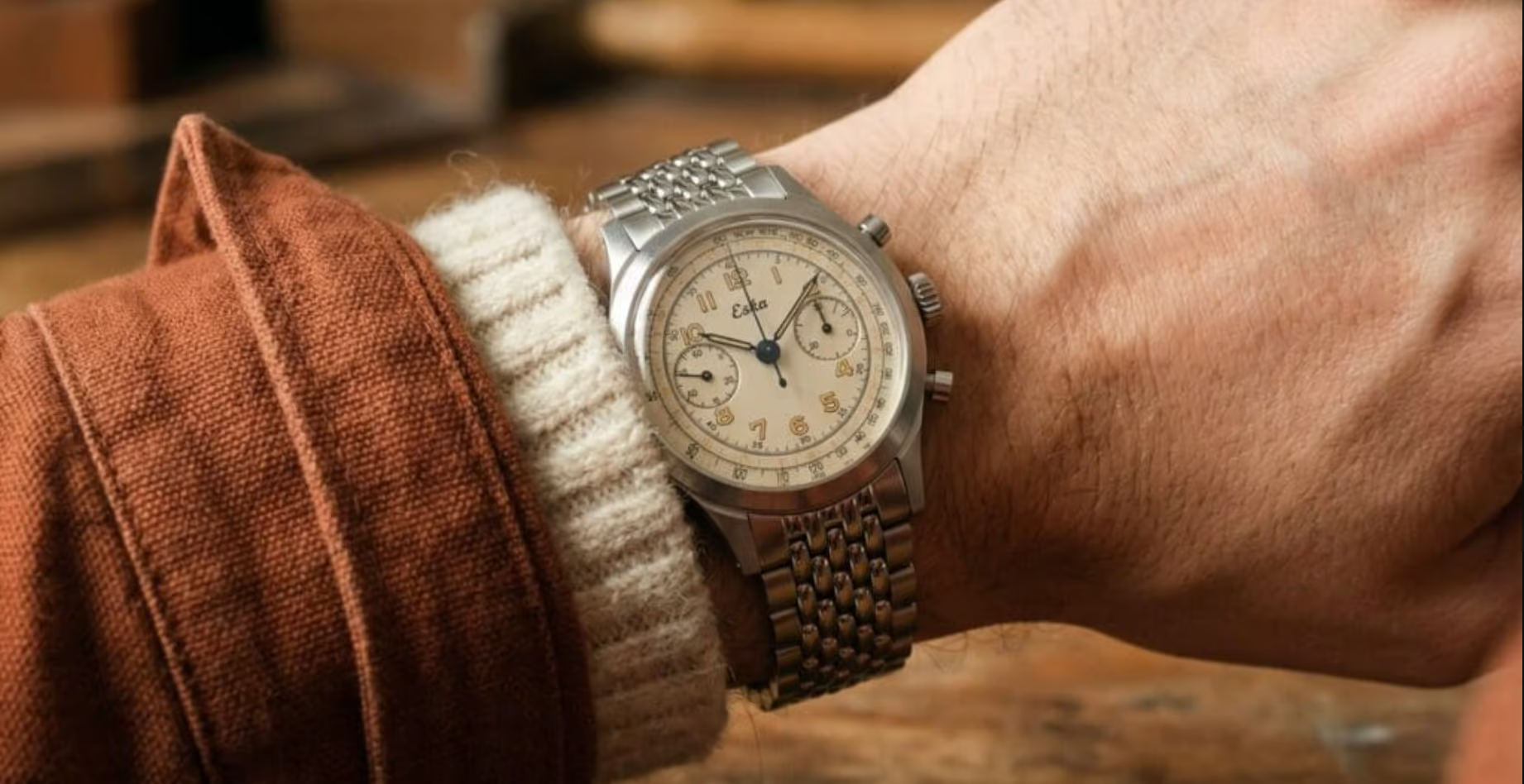
A Swiss brand founded in 1918, disappeared in 1987, and resurrected by two French collectors in 2024. The Eska Heritage SK25 Beige embodies this return to its roots: a 38mm neo-vintage chronograph, equipped with a La Joux-Perret column-wheel caliber, offered at €2,450. A proposition that deserves a closer look.


What if the best watches of tomorrow were those of yesteryear?
The neo-vintage chronograph market is flooded with soulless « homages. » Dials copying Omega here, cases mimicking Rolex there. Boring.
Then there’s Eska. A brand nobody knows. And that’s precisely what makes it fascinating.
Founded in Grenchen in 1918, lost in the turmoil of the quartz crisis, Eska returns from the dead with a bold proposition: not to imitate others, but to reinterpret its own heritage. The result? A 38mm chronograph that houses a high-end Swiss caliber—the same type of movement found in pieces twice as expensive.
At €2,450, the SK25 Heritage Beige plays in a league where Hamilton and Longines reign supreme. Can it truly compete?
I spent several weeks with this watch on my wrist. Here’s what I took away—unsparingly. Does the SK25 Heritage Beige live up to its promises? This comprehensive review gives you our opinion.
Sommaire
Introduction: An Original Neo-Vintage Proposition
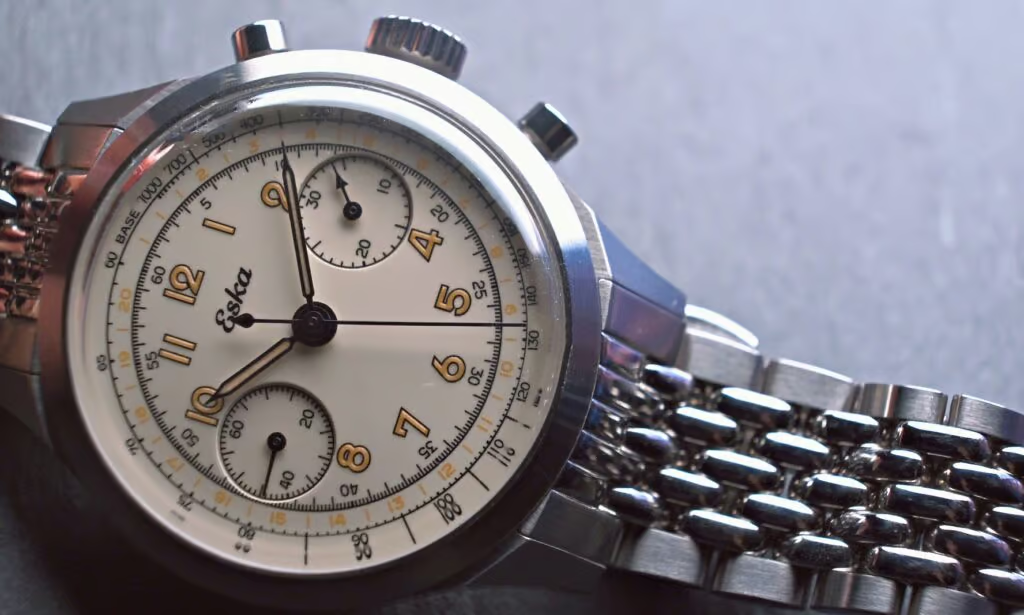
In a now-crowded « neo-vintage » chronograph market, the Eska Heritage SK25 Beige presents a unique proposition. This is an automatic watch (actually, a mechanical hand-wound watch, we’ll come back to that) aimed at purists who appreciate fine traditional watchmaking. Its positioning is clear: 38mm diameter, a style inspired by the 1940s-50s, high-quality construction assembled in France, and a price of around €2,450 – placing it in the premium mid-range between accessible micro-brands and the prestigious references of major groups.
This SK25 Heritage Beige targets two main audiences. On one hand, the enlightened enthusiast already equipped with affordable watches (e.g., Tissot, Hamilton) looking for a horological step-up: a piece with a stronger mechanical personality, without paying the hefty marketing premium of a major manufacturer. On the other hand, the curious collector who, tired of seeing the best-sellers of major groups on every wrist, is interested in independent or resurrected brands – but who demands to know if the story (the history) matches the substance (the real quality).
The question is therefore: does the Eska Heritage SK25 Beige bring real added value compared to existing neo-vintage chronographs at the same price? Is its quality-to-price ratio justified against fierce competition (we’re thinking of the Hamilton Intra-Matic H, Longines Heritage, Baltic Tricompax, etc.)? Our analysis will be threefold: the Watch (perceived quality, field test), the Brand (Eska’s legitimacy), and the Market (positioning and alternatives). In the background, a question: why is the revival of Eska particularly interesting in this segment today?
Context & History: The Rebirth of a Watchmaking Signature
Before diving into the review, a detour through history is necessary. Eska is not just another micro-brand invented on Instagram, but a historic house returned from the dead.
The « Mini Saga » of Eska
Origins (1918) – The story begins in Grenchen, in German-speaking Switzerland. A watchmaker named Sylvan Kocher founds the factory S. Kocher & Co. The brand name Eska derives directly from it: it’s the pronunciation of the initials S K (es-ka). The initial production focused on elegant and precise watches, distributed in Europe and as far as the American continent.
Golden Age (1940-1960) – Eska earns a fine international reputation, even having a production unit in Brazil to meet demand. The brand excels in classic watches but also offers complications (calendars, moon phases, chronographs). Above all, Eska becomes known for its superb cloisonné enamel dials and very neat jewelry watches, testifying to its artisanal know-how. In the 1950s, Eska launches a very rare dive watch, the Amphibian 600, which is now almost impossible to find. For some markets, the brand also uses the name Royce, easier to pronounce abroad.
Extinction (1987) – Like hundreds of others, Eska does not survive the quartz crisis. From the late 1970s, the influx of cheap quartz watches, especially from Japan, undermines Swiss mechanical watchmaking. In 1987, after nearly 70 years of activity and more than 250 models created, Eska ceases its operations. The beautiful brand falls into oblivion… The story could have ended there.
Rebirth (2024) – Nearly 40 years later, two French enthusiasts, Christophe Chevreton and Sinicha Knezevic, decide to revive Eska. They are neither opportunistic industrialists nor newbies: they are collectors who know the brand and its potential. Through a Kickstarter campaign in 2024, they finance the reissue of the Amphibian 250, a modern version (40mm) of the legendary Amphibian 600 diver. It is an immediate success among knowledgeable enthusiasts. Building on this momentum, they then tackle a neo-vintage chronograph from the Eska archives: our Heritage SK25.
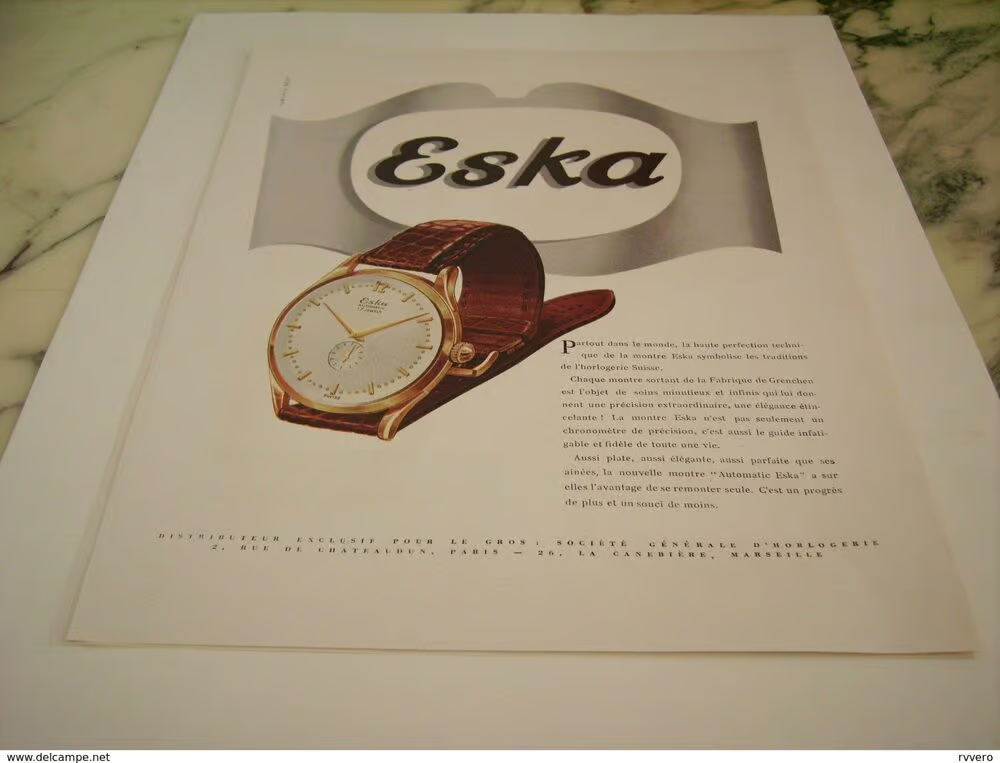
Eska advertisement from 1949 – the brand boasts of « the high technical perfection » of its watches sold worldwide, a reflection of Swiss watchmaking – Credit: Delcampe
A Very Real Legitimacy
The Eska revival project is not just about marketing storytelling. The approach is intended to be coherent and respectful of the heritage.
- A clear vision: the new owners have stated their ambition: « to honor the soul of the historical models » while reinterpreting them with contemporary components. This philosophy won over backers from the initial campaign.
- Proof from the archive: the first relaunched model, the Amphibian 250, was a direct reissue of a very rare vintage Eska. For the SK25 Heritage, the same logic applies: the design is inspired by a period chronograph found in the brand’s archives. The two-level dial (step dial) and the enamel finish are not there by chance: Eska once excelled in elaborate dials. They are not inventing a story, they are extending the real one.
- A micro-brand that didn’t come out of nowhere: the difference is stark between Eska and many recent micro-brands. Eska leverages its own heritage rather than imitating that of others. The SK25 is not a soulless homage: it is the updated continuity of an authentic Eska style.
Finally, the market context favors this revival. In recent years, we have witnessed the return to grace of the vintage style: more contained diameters (here 38mm), « patinated » colors (beige, cream), and clean design. Enthusiasts favor watches that tell a story, far from standardized productions. Eska, with its rediscovered heritage, arrives at the right time to offer a fresh and confidential alternative to the best-sellers of major groups. In short, everything indicated that Eska could bring something different… It remains to be seen if the watch itself keeps its promises.
Detailed Spec Sheet: Eska SK25 Heritage Beige
The Eska Heritage SK25 Beige doesn’t just list specifications; each technical choice reflects a true horological intention. Let’s break down its spec sheet point by point, explaining concretely what it implies.
Case: 316L stainless steel, 38mm diameter, 13.9mm thickness (including crystal), 47mm lug-to-lug length, drilled lugs, alternating polished/brushed finishes. → Concretely, 38mm is a return to vintage proportions (most modern chronos are 41-43mm). The 47mm from lug to lug ensures excellent comfort, even on a thin wrist.
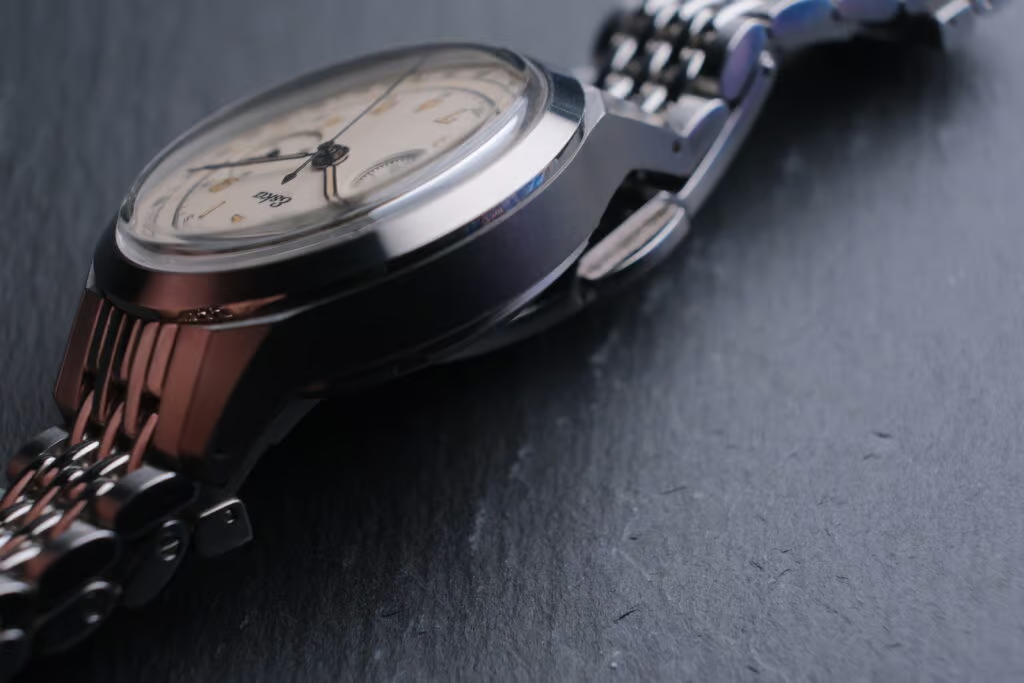
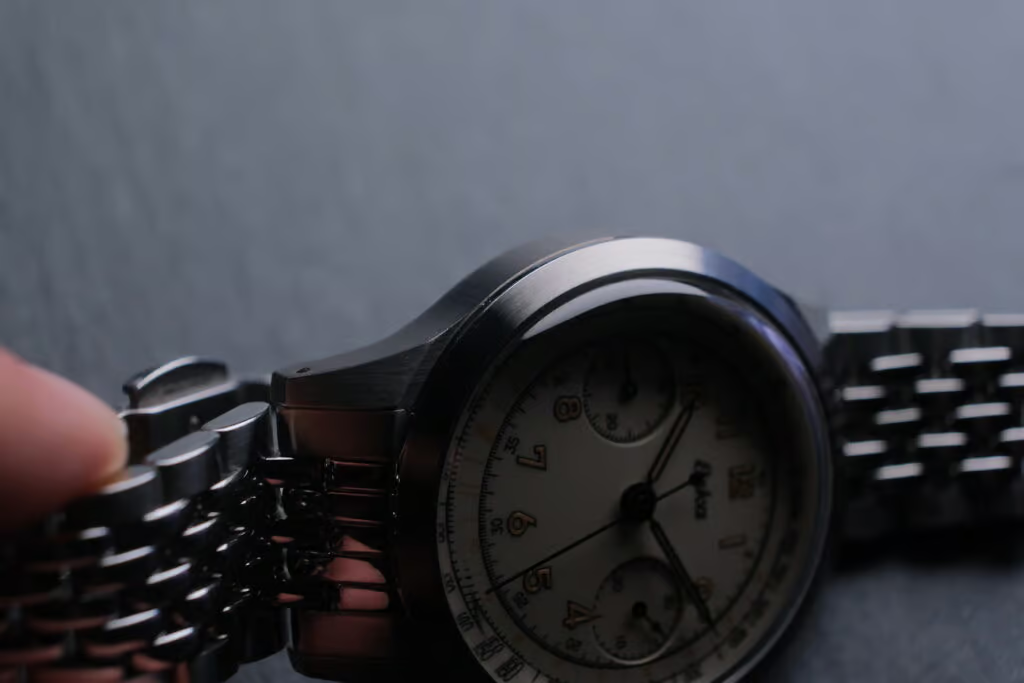
The 13.9mm thickness remains reasonable for a mechanical chronograph (the L113 caliber is over 7mm thick). The drilled lugs make it easy to change straps with a simple tool, without scratching the case. Finally, the alternation of polished and brushed surfaces gives visual depth and a quality look (e.g., brushed sides, polished chamfers).
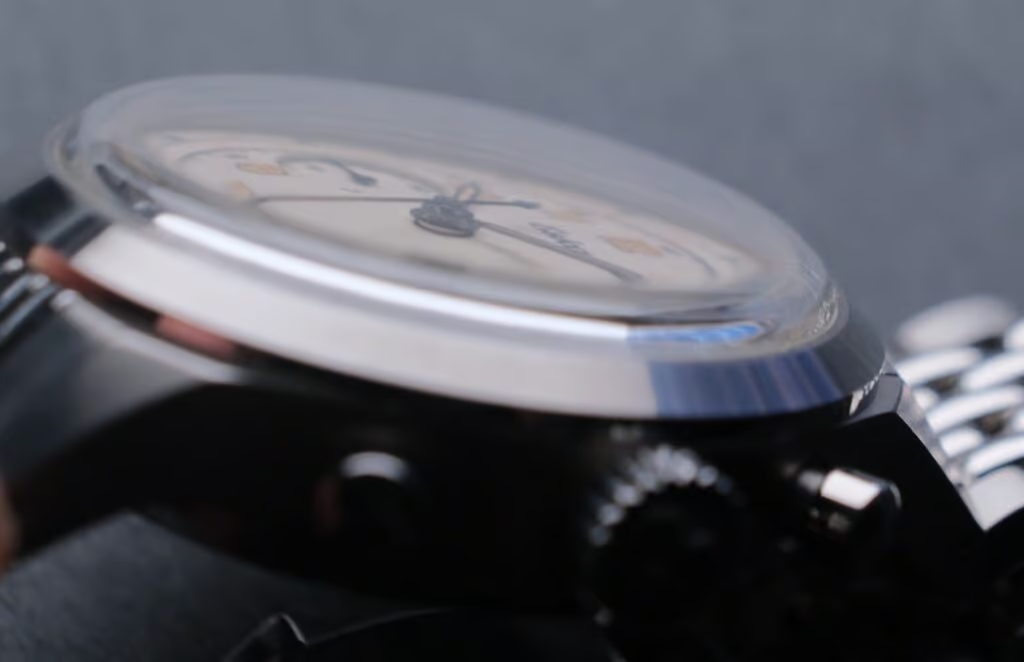
Crystal: Domed (« box dome ») sapphire crystal with anti-reflective coating; sapphire crystal also on the back (enlarged transparent caseback). → Sapphire crystal is highly scratch-resistant; here it is domed to replicate the look of vintage plexiglass, while remaining scratch-proof.
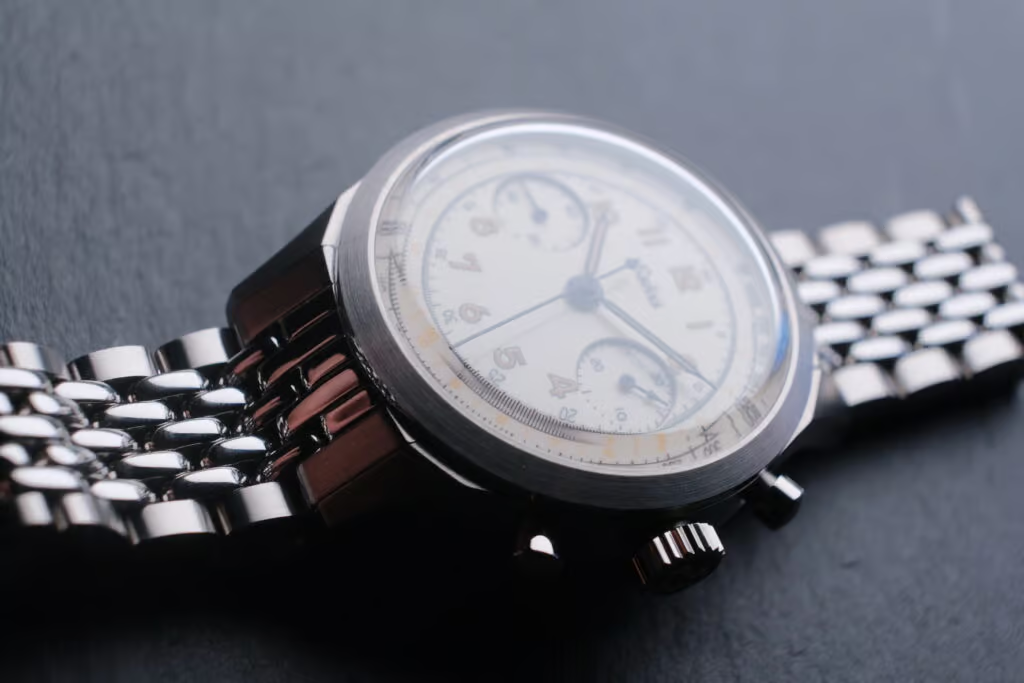
The internal anti-reflective coating prevents bluish reflections and improves legibility at certain angles. On the back, a second sapphire offers a wide view of the movement.
Caliber (engine): La Joux-Perret L113 movement (mechanical manual-winding), bi-compax chronograph with column wheel. → This is the horological heart of this watch, and a major strong point. La Joux-Perret is a renowned Swiss movement maker (owned by the Citizen group) that produces high-end calibers. The L113 is a manual-winding chronograph: you have to wind it with the crown (about 30 turns) every ~2 days.
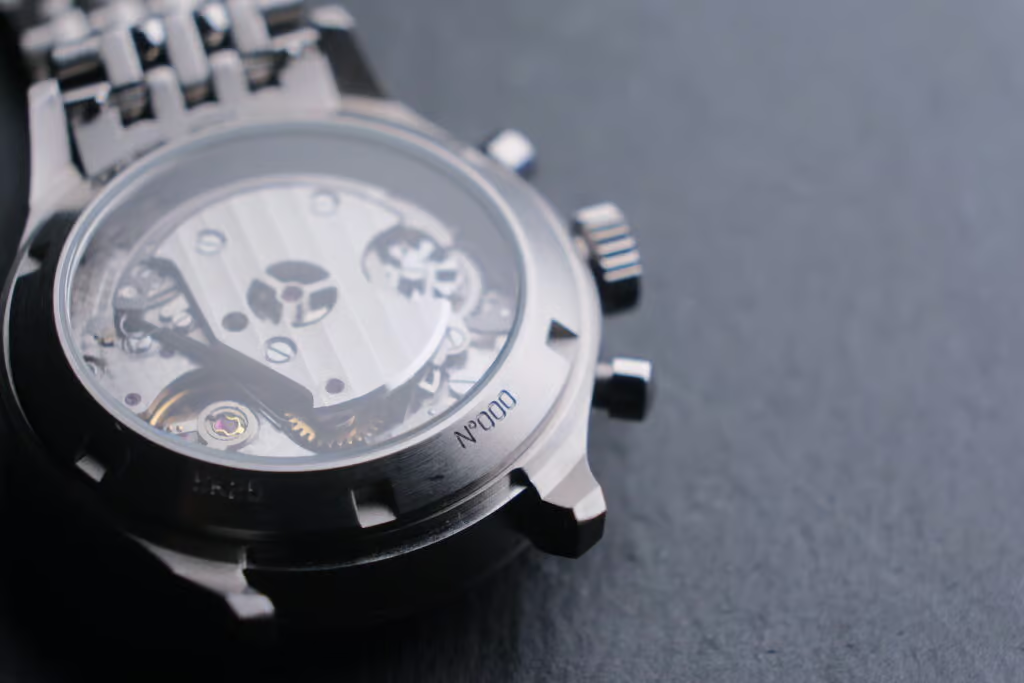
Choosing a manual caliber over an automatic one allows for a slightly slimmer case (no rotor), a clear view of the movement, and offers a daily interaction with the watch (the winding ritual appeals to purists).
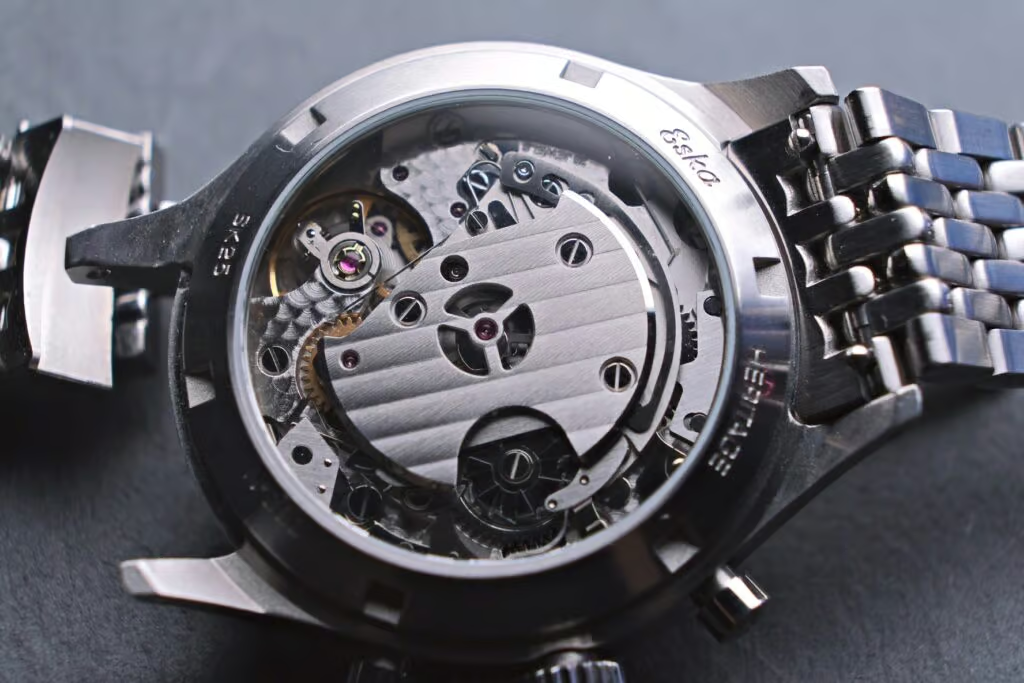
The chronograph is controlled by a column wheel, a traditional system that is more precise and nobler than a cam. You can feel the effects: activating the chrono via the pushers is crisp and smooth, without any parasitic hand jump.
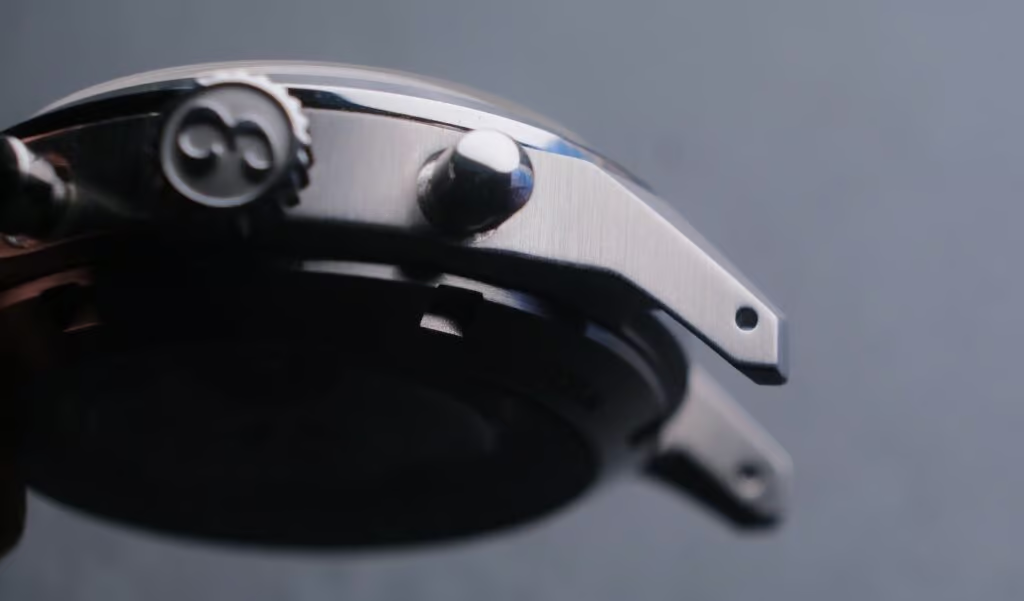
Performance: 4 Hz frequency (28,800 vibrations/hour), hacking seconds, 24 jewels, 60-hour power reserve. → 4 Hz is the contemporary standard for high frequency: the chrono hand makes 8 beats per second, giving a smooth gliding impression. The hacking seconds feature means that when you pull the crown, the second hand stops: you can set the time to the exact second. The caliber has 24 jewels—these synthetic red stones serve as anti-friction bearings—a consistent number for this type of chronograph movement (each jewel reduces wear on a pivot, so more jewels = better longevity and precision). Finally, the 60-hour power reserve is excellent: the watch can be left for two days without being wound and will continue to run.
Dial: Eggshell beige color (double-layer enamel finish), two sub-dials (at 3 o’clock: 30-minute totalizer; at 9 o’clock: small seconds), black peripheral tachymeter scale. → The dial is the aesthetic centerpiece. The vintage beige hue provides warmth and legibility (the black hands stand out well).
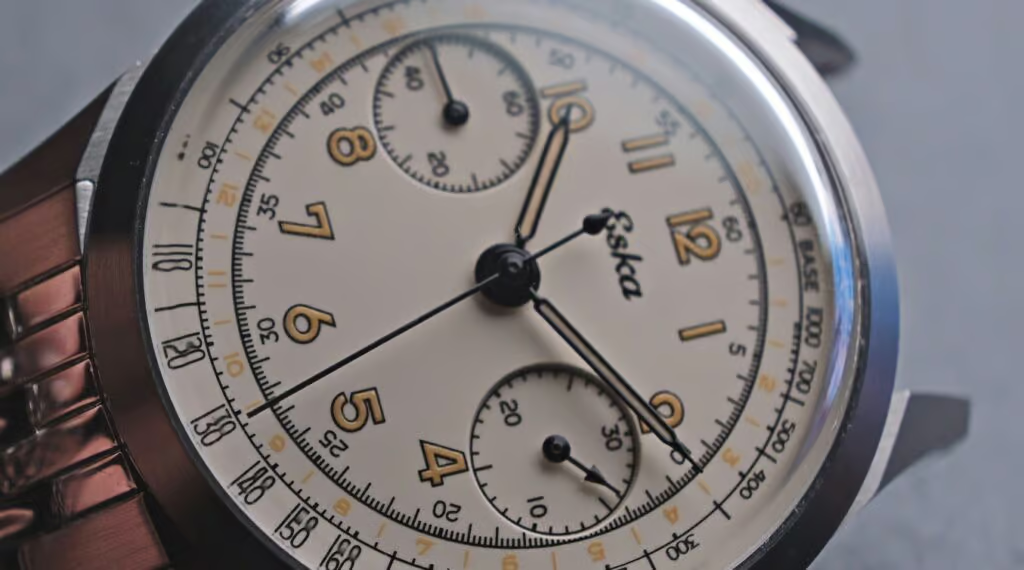
The double-level construction (called a step dial) means the main disc is in two parts, with the sub-dials slightly recessed: this creates visual depth and an undeniable retro charm. The surface is treated with an enamel-like finish: a glossy lacquered look reminiscent of old enamel dials (without their fragility). The applied Arabic numerals are colored Old Radium (beige/patinated yellow) for a vintage style. A tachymeter scale (base 1000) runs along the edge, theoretically allowing for speed measurements on a kilometer basis.
Hands & Lume: Alpha-type hour/minute hands (black, with Super-LumiNova Old Radium filling), chromed central seconds hand, matte black painted sub-dial hands. → The main hands are black with beige luminescent material (like « aged radium »). Don’t expect them to glow like a neon sign: the Super-LumiNova Old Radium is chosen for its nostalgic color more than for its nighttime power. It nevertheless provides readability in the dark for a few hours after exposure to light. The large chronograph hand is thin and chromed, with a circular counterweight. The small sub-dial hands are black to contrast with the beige background.
Water Resistance: 5 ATM (50m). → This is the acknowledged weak point: 5 ATM means the watch is resistant to splashes, rain, and hand washing, but not to swimming or showering. It’s not a diver, just a daily « civilian » chronograph. Forget it for the pool or the beach. That said, 50m is still better than many vintage chronos (often 30m). For daily wear, you can wear it in the rain or while washing your hands without fear, but avoid intentionally submerging it.
Straps: 18mm lug width (vintage size), two options available: brown « collet Maya » leather with a pin buckle, or a « beads of rice » steel bracelet with a butterfly clasp and integrated end links. → The 18mm lug width is consistent with the contained diameter: it visually slims the watch. The provided leather strap is made of quality grained calfskin. It features quick-release spring bars for changing the strap without tools. The so-called beads of rice steel bracelet is a nod to the 1950s-60s: its rounded and polished links offer a supple feel and a dressy look. The clasp is a butterfly type (double folding). Both straps integrate perfectly with the watch’s drilled lugs, enhancing the authentic vintage look.
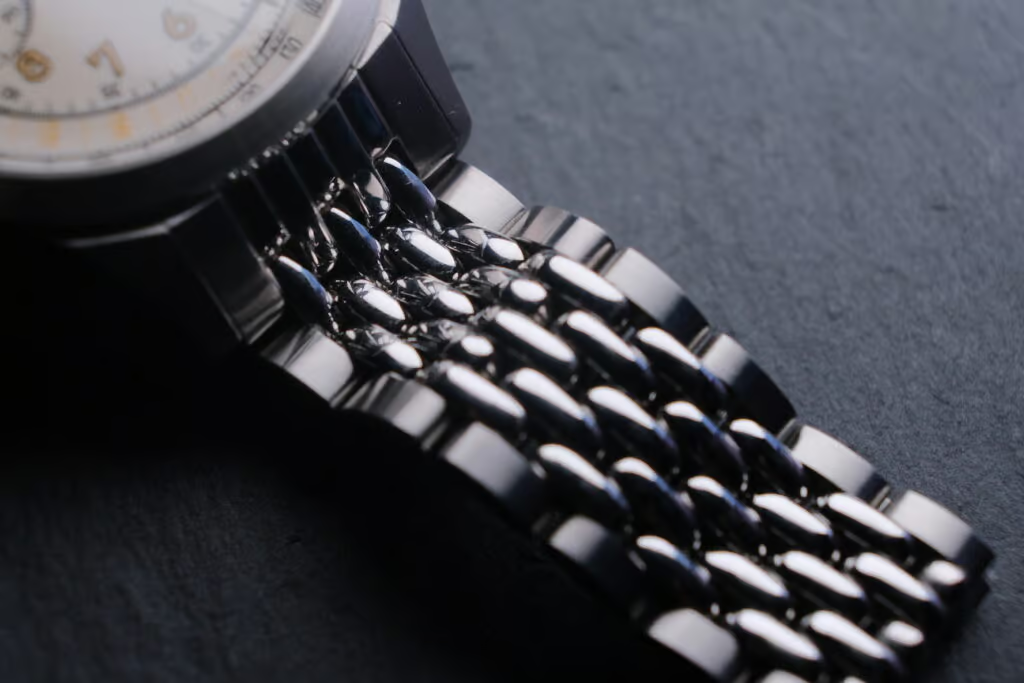
Note: The SK25 has no date (and that’s a good thing for the symmetrical aesthetics of the dial). The caseback is held by screws (four screws at the corners). The crown is not screw-down (unnecessary at 5 ATM) but offers a good grip thanks to its size and its « onion » type fluting.
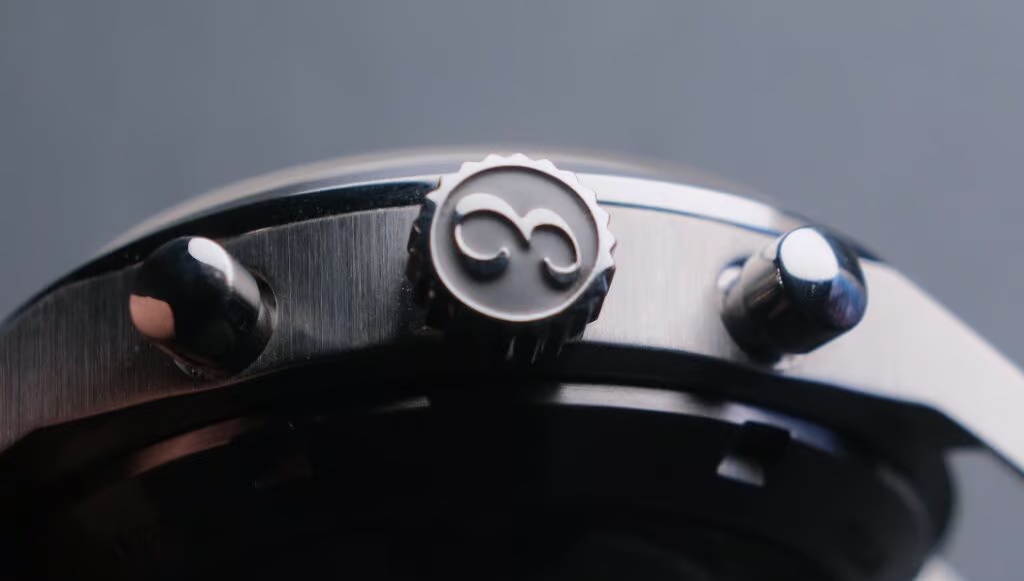
Finally, the horological seriousness lies in the details: the watch has a stop-second function, is manually wound (obviously), and offers exactly the same indications as a historical chronograph: 2 counters, no date, no frills.
Field Test & User Impressions
We wore the Eska SK25 Heritage Beige for several days, in different conditions (office, casual weekend, dressy outing). Here are our impressions, raw and unfiltered.
Comfort and Wrist Presence
First surprise: despite the chronograph and its 13.9mm thickness, the watch wears really well. On my 17.5cm wrist, its 38mm diameter makes it immediately comfortable and perfectly centered. The key measurement is actually the 47mm lug-to-lug length: it ensures that the lugs do not exceed the width of the wrist, which is the secret to a good fit. Here, it’s impeccable. The watch « sits » well on the wrist, without rolling.
Let’s be transparent: the 13.9mm thickness is visually noticeable from the side (it’s a chronograph, not an ultra-thin). However, the domed face of the sapphire crystal and the structure of the case mitigate this sensation. The sapphire caseback is quite flat and the downward-curved lugs help the watch to hug the curve of the wrist.
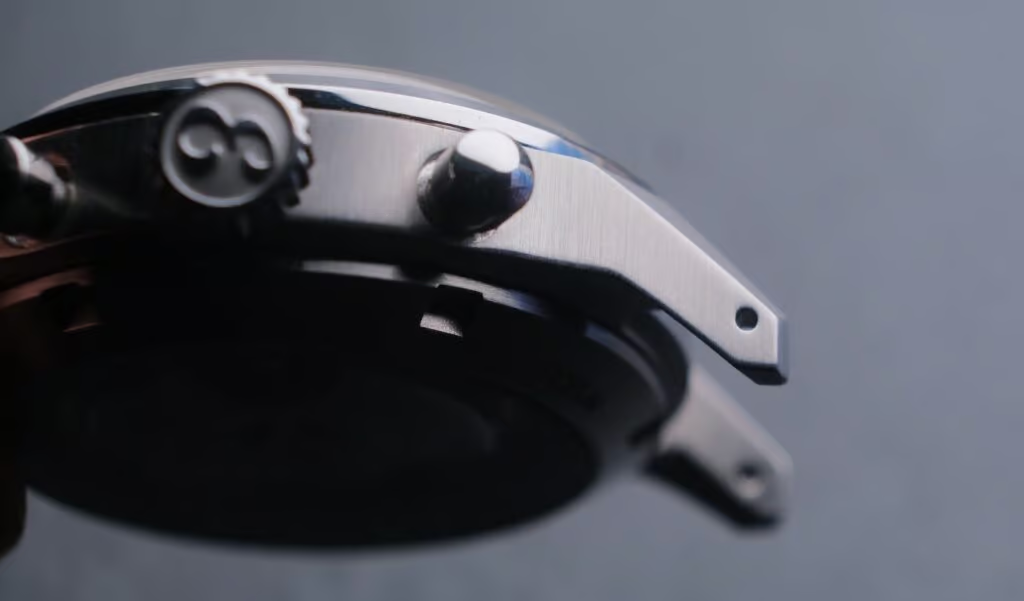
In the end, the balance is very good: it’s not an unstable « spinning top, » but a well-seated chronograph.
Under a shirt, the watch sometimes catches on the sleeve due to the domed crystal, but no more than another classic chronograph. It is clearly a versatile everyday watch, which works just as well with a smart casual outfit (shirt, chinos) as with a blazer or even a polo shirt on the weekend.
Readability & Dial Charm
The beige dial of our test model is a small delight to observe. In broad daylight, it captures the light in a diffuse way thanks to its slightly creamy enamel finish. The golden Arabic numerals and black hands create optimal contrast: reading the time is instantaneous, at a glance. Since the two registers (counters) are recessed and of the same shade, they play with shadows without compromising clarity.
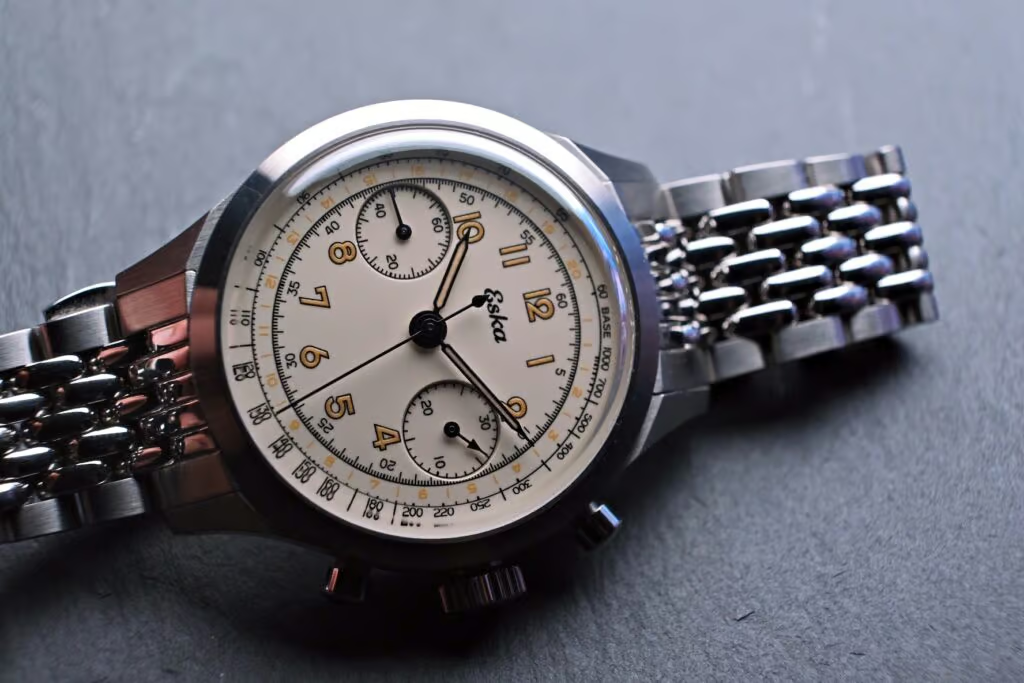
The thin, steel central seconds hand is a little less prominent in low light conditions (it’s not painted), but this is a coherent aesthetic choice.
At night, as expected, the luminescence is symbolic. The hour/minute hands and the numerals have a patinated Super-LumiNova Old Radium: the shade is a soft beige-green that glows faintly after exposure to light. It’s not a diver’s torch, far from it, but you can still make out the time for a few hours in the dark. Let’s not forget that the goal here is aesthetic (to imitate aged radium), not to be a pocket flashlight.
The general atmosphere that this Eska exudes is hard to describe otherwise than as sober visual pleasure. It doesn’t particularly attract the attention of the uninitiated (beige is understated, the design isn’t flashy).
(Note: if you opt for the black dial Heritage Black version, the readability remains excellent thanks to the white hands. The visual rendering is more contrasted, more « military tool. » The beige dial, on the other hand, gives a warmer, more collector-like feel.)
Perceived Quality & Killer Details
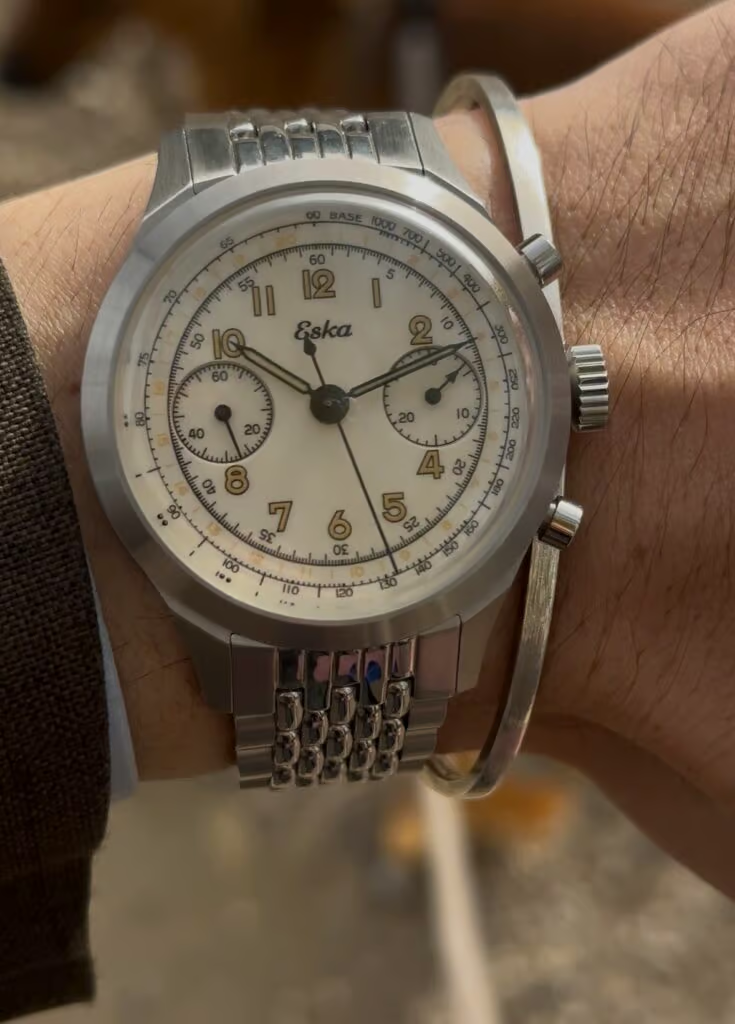
From the moment you handle it, the SK25 Heritage exudes quality. Frankly, it’s a step above most micro-brand watches I’ve tried in this price range.
The case is superbly executed: the edges between polished and brushed surfaces are sharp, clean, without any overflow or micro-scratches. The drilled lugs are polished on the inside, a sign of attention to detail. The oversized crown is engraved with the Eska logo and offers an ideal grip for winding. And that manual winding… let’s talk about it!
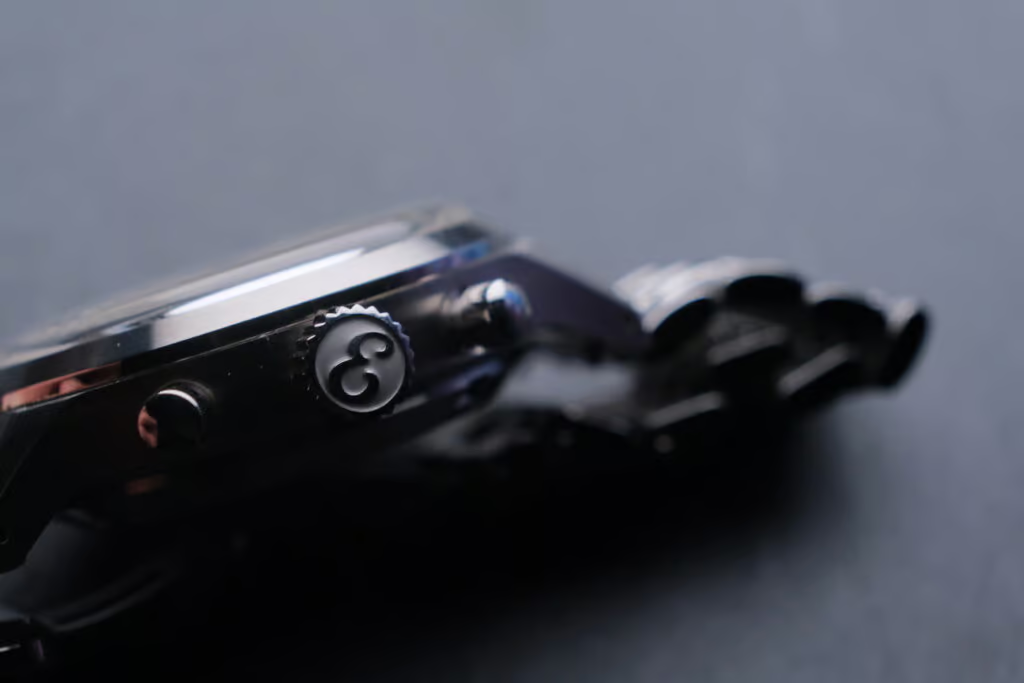
It’s one of the great hidden pleasures of this watch. Every morning, turning the crown about thirty clicks is a small ritual: the sensation under the fingers is soft and fluid, with just the right amount of progressive resistance to indicate that the spring is tightening.
The column-wheel chronograph also delivers its share of tactile satisfaction. Pressing the start pusher (at 2 o’clock) triggers a clean, sharp click, without excessive effort. The hand immediately starts, without the slight delay or micro-jump sometimes encountered on cam-operated movements. The same goes for stopping and resetting: a surgical clack, and the counter hands return precisely to twelve. It’s subtle, but it’s what distinguishes high-end chronographs: here, every manipulation breathes mechanical precision. We find the signature of the column wheel and the LJP know-how.
As for the dial and overall impression, everything is consistent. The tachymeter markings are ultra-fine and regular. The texts (logo, mentions) are sharp. The hands are perfectly aligned (the chrono’s 0 falls exactly opposite 12). I looked for assembly or finishing defects: I found no obvious ones to the naked eye. The transparent caseback reveals a soberly decorated movement (Geneva stripes on the bridges, non-blued screws, a column with 6 steel arms) which, admittedly, is not on the level of a manufactured chronograph at €10,000, but has nothing to be ashamed of in this price range.
The watch exudes a real coherence. You can feel that it was designed by enthusiasts for enthusiasts. A simple example: the large central seconds hand is exactly the right length to reach the tachy scale, no more, no less. This is the kind of proportional detail that you don’t master if you are just « assembling generic parts. » Here, everything fits.
Specific Added Value of the SK25
While wearing the Eska Heritage Beige, you quickly realize what it brings more compared to other neo-vintage chronographs on the market.
What it does better than the others: finish and mechanics. Clearly, the combination of a non-blued LJP column-wheel caliber and a luxurious dial finish (enamel, double level) is unprecedented at this price point. You get the horological substance of a higher category piece. Where a competitor at €1,500 would use a good but more basic movement (Sellita or Seagull) and a simpler dial, the Eska offers a more noble engine and a more elaborate face. In use, this translates to more pleasure (silky manual winding, high-end pusher action) and more visual refinement.
What it does less well: brand recognition and universality. Let’s be honest, Eska is a niche brand today. To the general public, its name means nothing (I vaguely heard someone ask, « is that a whiskey? »). For someone who wants a watch that’s easy to resell or that flatters the ego with its prestige, this is not (yet) the ideal choice. Moreover, its very distinctive style will not appeal to everyone: a slightly « yellowed patina » beige dial, a resolutely retro look. It owns its personality, which is a plus for some, but may seem too specific for others who would prefer a more classic black/white chronograph (Eska also offers a Heritage Black dial).
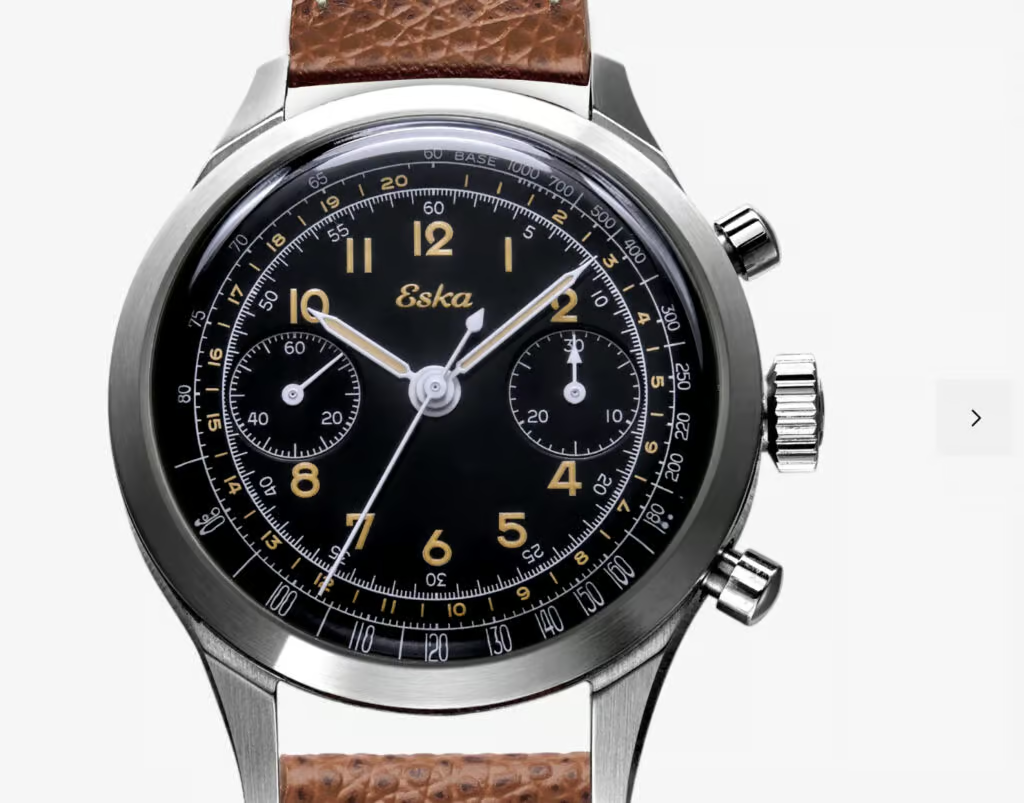
In summary, the SK25 Heritage Beige offers something rare: it allows you to experience high-level horological sensations (column-wheel caliber, manual winding, archive-inspired design) without climbing to exorbitant prices. This is what makes you grow attached to it over the days.
Price/Quality Ratio vs. the Segment
Let’s talk numbers. Priced at €2,450 (including VAT), the Eska Heritage SK25 Beige is in a competitive niche. At this level (~€2-3k), you can find several quality neo-vintage chronographs. To better evaluate its P/Q ratio, let’s compare it to some direct competitors.
Here is a small comparison table of similar models (vintage-style chronographs, two counters, in the €1,500–€2,500 range):
| Brand & Model | Dimensions | Movement (Type, mechanism, PR) | Water Resistance | Retail Price | (+) / (–) |
|---|---|---|---|---|---|
| Eska Heritage Beige [subject of the test] | 38 × 13.9 mm (47 mm L2L) | LJP L113 Manual, column wheel, 60h | 5 ATM (50m) | ~ €2,450 | (+) Noble LJP caliber, high-end dial finishes, contained diameter * (–) Limited water resistance, little-known brand |
| Hamilton Intra-Matic Chrono H “Panda” 2021 | 40 × 14.3 mm (49 mm L2L) | H-51 (Valjoux base) Manual, cam, 60h | 10 ATM (100m) | ~ €2,100 | (+) Historic brand, 10 ATM, iconic panda look * (–) Thicker and larger, cam mechanism |
| Baltic Tricompax Panda or Reverse | 39.5 × 13.5 mm (47 mm L2L) | Sellita SW510-M Manual, cam, 63h | 5 ATM (50m) | ~ €1,650 | (+) Unbeatable P/Q ratio, well-executed design * (–) Standard movement, hesalite crystal, limited production |
| Hanhart 417 ES 1954 (39mm) Flyback reissue | 39 × 13.3 mm (46.5 mm L2L) | Sellita SW510-M* Manual, column wheel (flyback), 58h | 10 ATM (100m) | ~ €2,300 | (+) Real military heritage, flyback function, 10 ATM * (–) More tool-like style (continuous rotatability), asymmetrical pushers (on 42mm) |
| Montre Heritage Chronograph Sector – 324.442 | 39 × 10.5 mm (47.4 mm L2L) | LJP L113Manual, column wheel, 60h | 5 ATM (50m) | ~ €3,000 | (+) Same movement maker as Eska (La Joux-Perret), very well-finished LC-450 column-wheel caliber, very neat two-tone sector, 39mm proportions very easy to wear, true legitimacy of brand revival.* (–) Price significantly higher than the SK25 for very similar specs, only 5 ATM, still confidential distribution so potentially slower resale. |
Reading the table: we can see that the Eska is positioned against serious competitors. Its price is higher than Baltic or Hamilton, but in exchange, it offers a technically superior caliber (LJP vs. Sellita/Valjoux) and more luxurious finishing. Compared to Hamilton, it loses in water resistance (5 ATM vs. 10 ATM) but gains a more noble column-wheel movement. Against Baltic, it is more expensive (Eska = smaller, higher-quality series, Baltic = more industrial production). As for Studio Underd0g, it’s the fun outsider: it does offer a column wheel for cheap, but with a Chinese Sea-Gull movement with uncertain after-sales service and a less high-end image.
Mini P/Q verdict: the price/quality ratio of the SK25 is good, even excellent for a connoisseur. If judged solely on weight and diameter, one might find « cheaper elsewhere. » But that would be to miss the essence of this watch. For ~€2.5k, Eska offers a true high-end Swiss caliber where most direct competitors use Sellita or Seagull (very decent, but more common). Likewise, the attention to detail (double enamel dial, polished lugs, etc.) places it a cut above pieces at the same price. Here, you are paying for horological substance and quality of execution, not marketing or a ubiquitous logo. For a knowledgeable enthusiast, it’s a « connoisseur’s » P/Q ratio, a good investment in pleasure.
The neo-vintage offered by Lebois has comparable quality, but with a much less aggressive price-quality ratio than the Eska.
Market Analysis: Neo-Vintage Chronograph, a Small but Growing Niche
Beyond the case of the SK25, let’s look at the general trend. Why does this watch exist? What horological landscape does it enrich?
In recent years, we’ve seen a massive return of « neo-vintage » watches. The chronograph is no exception: gone are the 45mm bricks and cluttered dials, the public is returning to more measured things. Diameters around 38-40mm, design inspired by the 50s-60s, retro colors (beige, black lacquer)… Nostalgic ingredients are in vogue.
In this context, the Eska Heritage Beige positions itself as a scholarly and confidential alternative to mainstream references. Instead of buying a Hamilton or a Longines seen everywhere, you can opt for Eska and have something that (almost) no one else has. In this sense, the SK25 is an « insider’s » watch. It is aimed at those who know the history (or have read this article!) and who like the idea of an authentic revival.
Compared to entry-level micro-brands (Underd0g, Baltic…) which also do neo-vintage, Eska plays a more qualitative card: a higher-end movement, more advanced manufacturing, and a real heritage to tell. We are in a premium independent positioning. Conversely, compared to established major houses, Eska offers the freshness of novelty and exclusivity (only 250 pieces produced per year, assembled in Besançon). It’s off the beaten path, without sacrificing quality or horological seriousness.
Ultimately, Eska’s role in this market is to offer a « gem » for discerning enthusiasts. Where some revived brands just do vintage pastiche to ride the trend, Eska seeks balance: respect for the original design + contribution of modern high-level components. It’s not just about selling an archive dream, it’s about delivering a product that holds up mechanically. This approach, we bet, could set a precedent if it succeeds.
Watchmaking Notions Explained (Eska SK25 Heritage Beige)
Let’s take a moment to explain some of the watchmaking terms and concepts mentioned, in direct relation to this Eska. The idea is to clarify, with simple analogies, what this changes in daily life.
- Manual vs. Automatic Caliber: An automatic caliber winds itself thanks to an oscillating weight (rotor) that turns with the movements of the wrist. A manual caliber has no rotor: you have to wind it by hand by turning the crown. Analogy: automatic is like a hybrid car that recharges its battery while driving, manual is like an electric car that you have to plug in regularly. In our Eska: the choice of a pure manual (LJP L113) aims for the pleasure of purists: you have to wind it every day or two, which creates an interaction. In return, the movement is visible without a rotor hiding the view, and the watch can be a bit thinner.
- Column-Wheel Chronograph: this is the brain of the chronograph mechanism. There are two main systems for managing the start/stop/reset functions: the cam and the column wheel. The cam is simpler and cheaper to manufacture, the column wheel is more complex, more precise but costs more. Analogy: the cam is like an automatic gearbox (efficient but a bit rough), the column wheel is like a sports car’s manual gearbox (more controlled, more rewarding). On the Eska: the L113 uses a column wheel, hence that smooth feeling when you press the pushers: no brutal « crack, » no misses – everything engages to the millimeter. This is what distinguishes a high-end chronograph.
- Frequency (« 4 Hz »): the frequency of a movement corresponds to the number of oscillations of the balance wheel per hour. 4 Hz = 28,800 vibrations/hour = 8 beats per second of the seconds hand. Analogy: it’s like the frame rate of a video. 8 frames per second (8 Hz) is smoother than 6 frames/s (3 Hz). On the Eska: we are at 4 Hz, so the chronograph’s seconds hand moves very smoothly, and theoretically, the precision is better because the movement recovers more quickly from slight disturbances (shock, etc.). Most vintage watches were at 3 Hz (21,600 A/h), the Eska is at the modern cadence of 4 Hz.
- Power Reserve (60h): this is the autonomy of the watch once fully wound. Here, about 60-65 hours. Analogy: it’s the capacity of a car’s fuel tank. 60h is like a large tank that allows you to drive further without refueling than a standard 40h tank. On the Eska: this means you can take the watch off on Friday evening, leave it all weekend, and on Monday morning it’s still running. This is very convenient, you don’t have to wind it too often (although, let’s admit, you want to do it because it’s so pleasant!).
- Jewels (24 jewels): in watchmaking, jewels are small synthetic stones (usually pink/red) inserted at the pivot points of the axes in the movement. They serve as anti-friction bearings. Analogy: imagine micro ball bearings made of ruby that come between the axis and its support. The ruby has the advantage of being very hard and smooth, so metal against ruby has very little friction, whereas metal against metal wears out quickly. On the Eska: 24 jewels is standard for a chronograph of this type (Valjoux movements have 17 or 25 depending on the version). The presence of jewels is a guarantee of durability and quality (each jewel reduces wear, so the more there are in strategic places, the better).
On the back of a vintage Amphibian 600, we discover a Swiss automatic caliber (here with a rotor engraved « S. Kocher & Co » and mention of 17 jewels) – a contrast with the manual caliber chosen for the SK25 – Credit: Matthew Bain Inc.
- Water Resistance (5 ATM): as explained above, 5 ATM = resistant to a static pressure of 50m of water. Analogy: it’s a bit like the IPX rating in electronics. 50m does not mean you can dive to 50m! It’s a lab measurement, without movement. On the Eska: 5 ATM means daily use is ok (rain, washing dishes, hands), but avoid showering (heat and soap wear out the seals) and prohibit swimming or diving – the dynamics of the water can exceed this pressure.
Style Tips: A Surprisingly Versatile Watch
As you’ve gathered from this review, the Eska Heritage SK25 Beige is not an ostentatious watch. And that’s precisely what makes it remarkably versatile in terms of style.
With its 38mm diameter and beige dial with Old Radium accents, it fits into a discreet vintage register that works just as well with a formal outfit as with a more casual ensemble. I was able to verify this through several clothing configurations — and I must admit that this watch surprised me with its ability to adapt.
The Formal Register: From Tuxedo to City Suit
This is perhaps where the SK25 distinguishes itself most from its competitors. Where a 42mm sports chronograph would seem out of place under a dress shirt cuff, the contained proportions of the Eska allow it to slip effortlessly into a formal outfit.
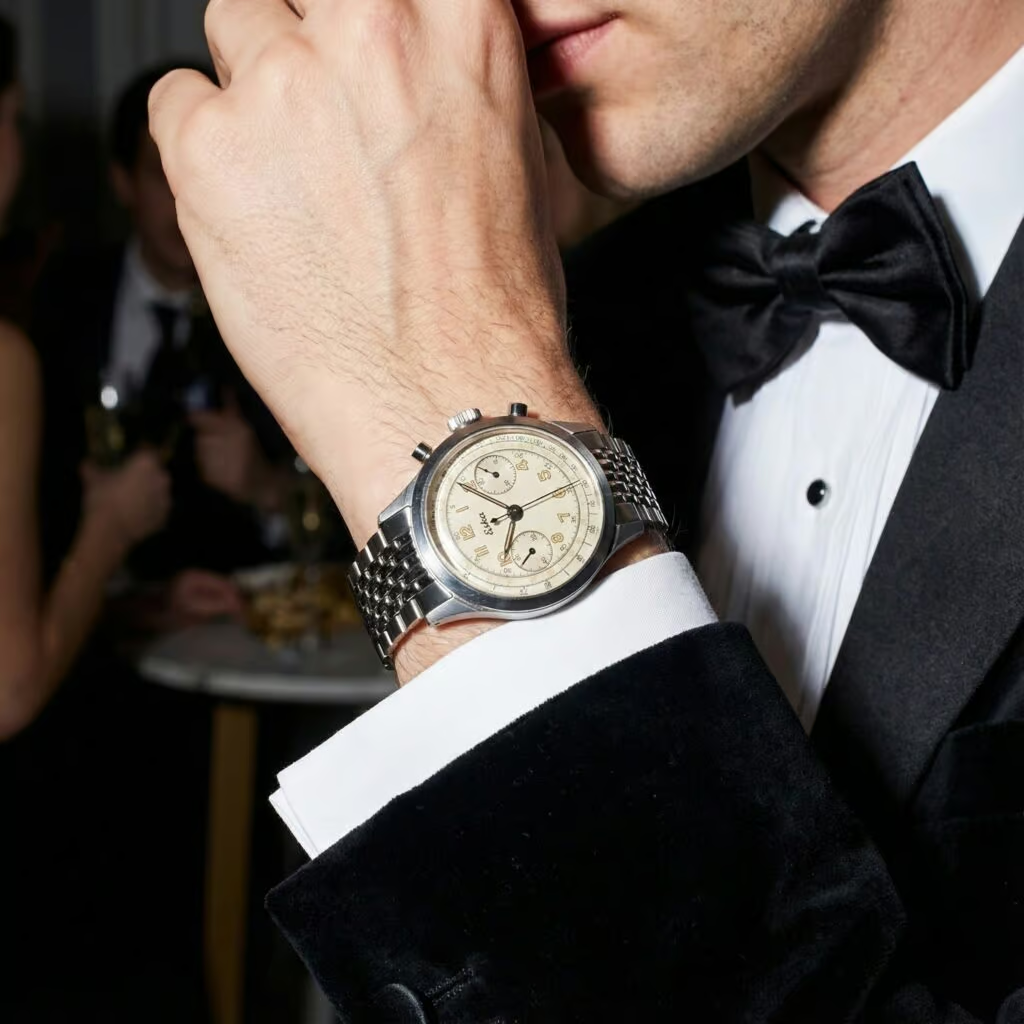
Worn with a silk-lapel tuxedo and a black bow tie, it adds a touch of personality without ever being vulgar. The « beads of rice » steel bracelet reinforces this dressy side: its rounded and polished links subtly catch the light, like the city watches of the 1950s.
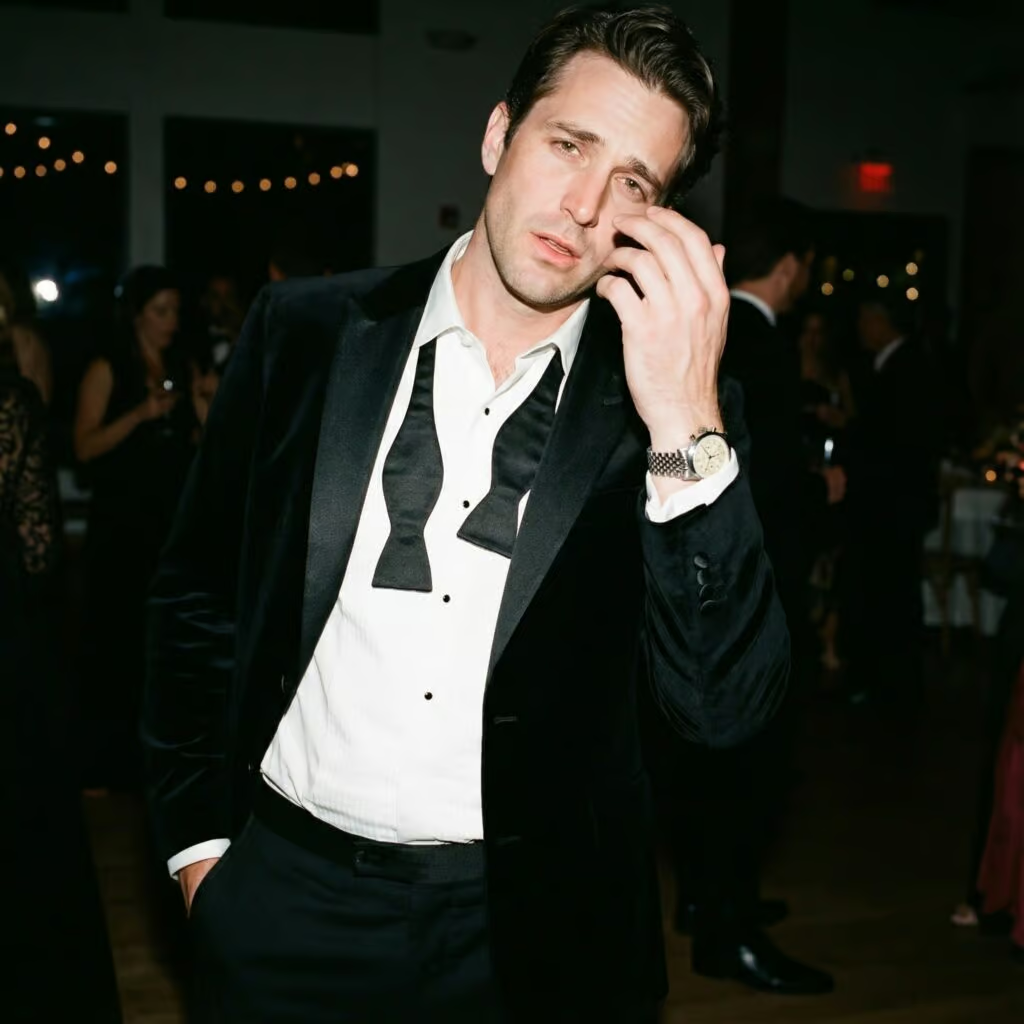
At the end of the evening, with the bow tie undone and the collar open, the watch retains all its relevance. It accompanies this moment of elegant relaxation naturally.
The Ivy League Style: Its Natural Playground
If I had to recommend one clothing register for this SK25, it would undoubtedly be the American preppy style.
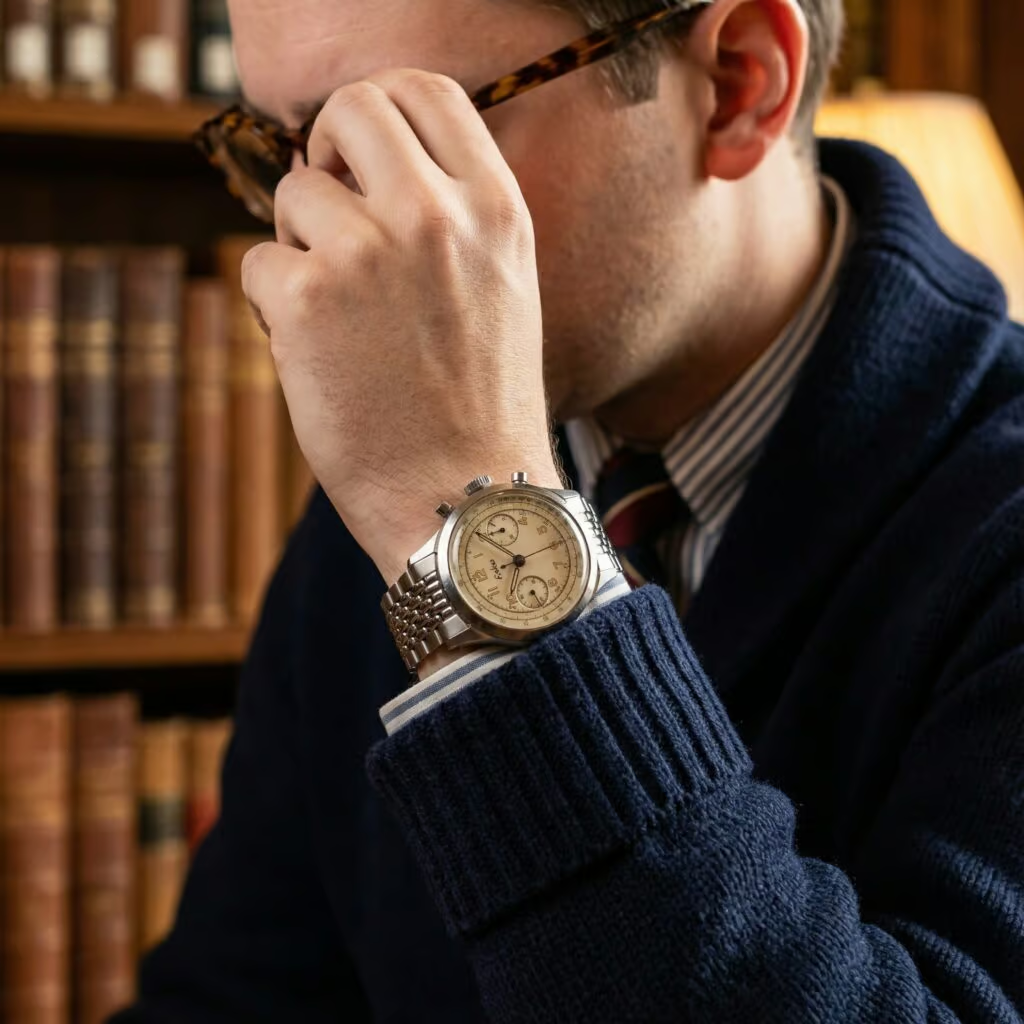
The navy blue wool shawl collar cardigan, the bengal striped shirt, the club tie with diagonal stripes, and the tobacco corduroy trousers: this is a combination that truly enhances the champagne dial and golden indexes of the Eska. We find this chromatic coherence between the warm tones of the dial and the autumnal materials of the outfit.

With a ribbed sailor sweater worn over a shirt and a club tie, the watch also fits in perfectly. The steel bracelet brings a discreet touch of preciousness amidst the raw textures of the knit.
The Smart Casual: Terraces and Summer Afternoons
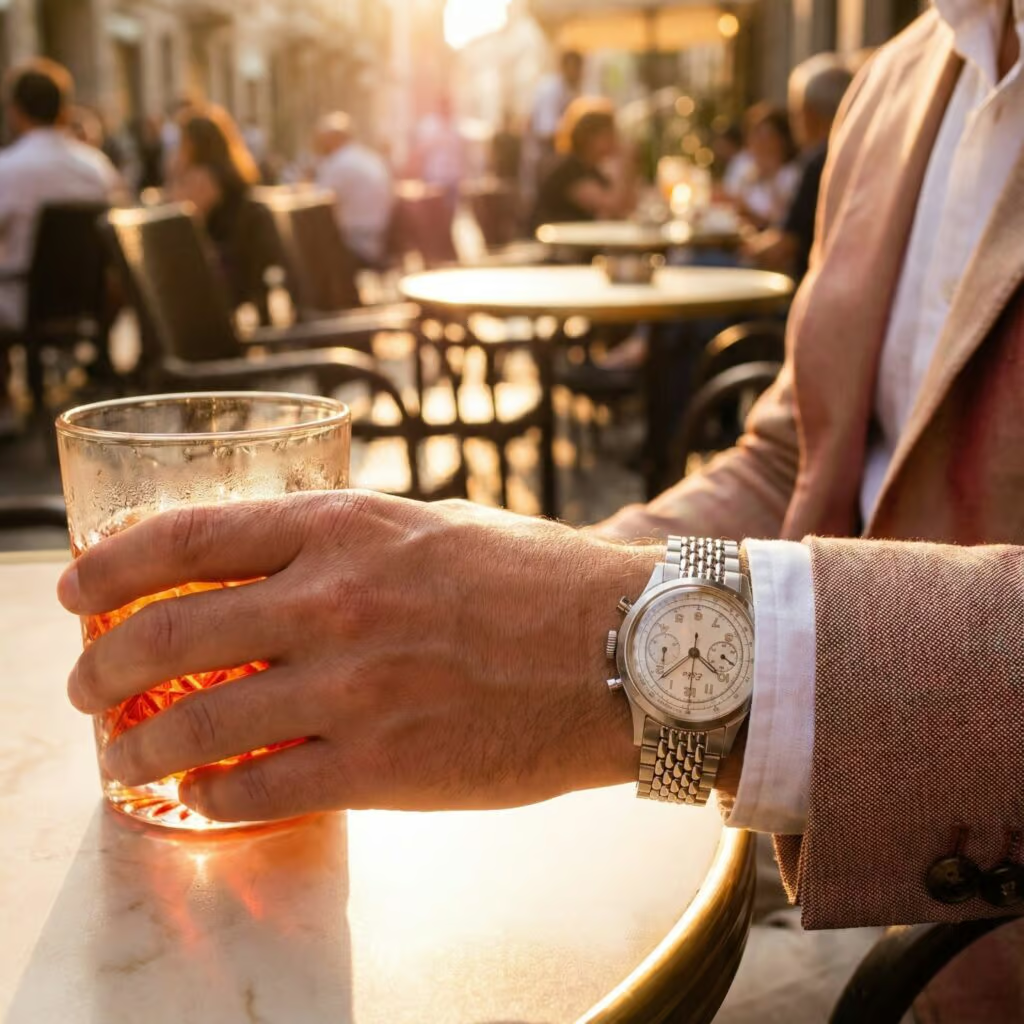
The « eggshell » beige shade of the dial makes perfect sense when worn with summer pieces. An unlined jacket in linen or cotton in pastel tones — pale pink, sand, ecru — creates a harmonious dialogue with the watch.
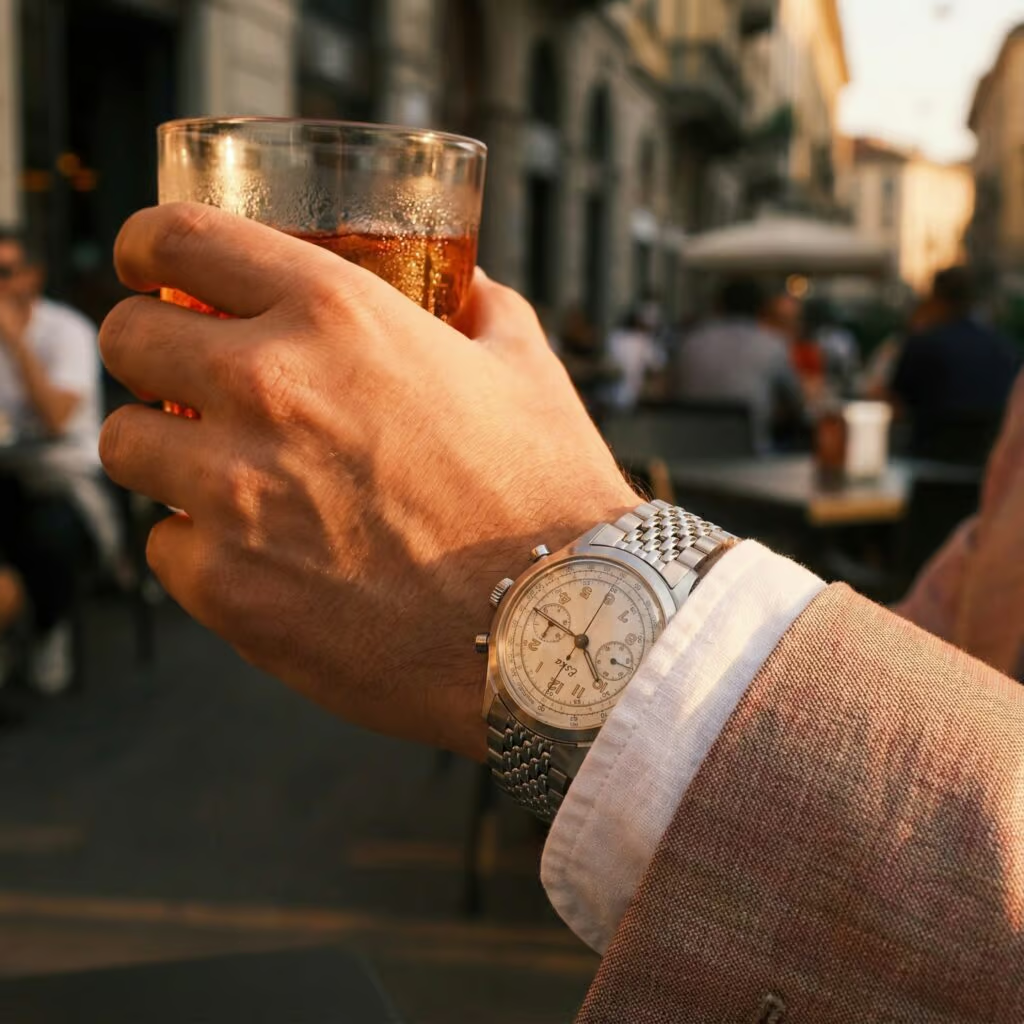
On a Parisian terrace, with a drink in hand, the SK25 perfectly accompanies this moment of sophisticated relaxation. It doesn’t overdo it, but its presence is noticeable. This is exactly what you expect from a watch in this context: to be there without imposing itself.
The Workwear Register: A Welcome Surprise
I didn’t necessarily expect this watch to work with more utilitarian outfits. And yet.
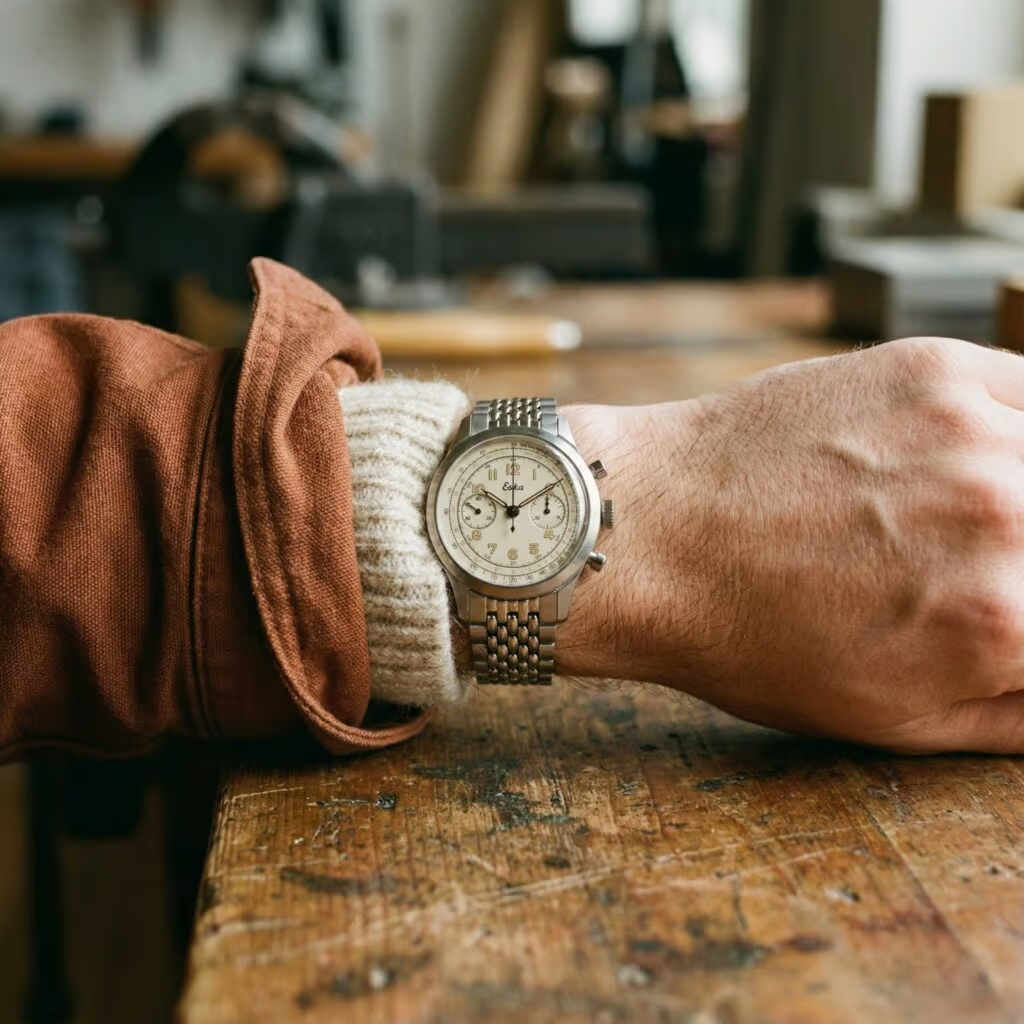
Worn over a rust-colored cotton canvas overshirt, with an ecru sweater underneath and the sleeves rolled up, the Eska finds a surprisingly fitting place. The patinated dial echoes the raw materials and earthy tones of the ensemble. We are far from the pilot’s chronograph or the massive diver, but this vintage discretion ultimately pairs very well with the artisanal spirit of workwear.
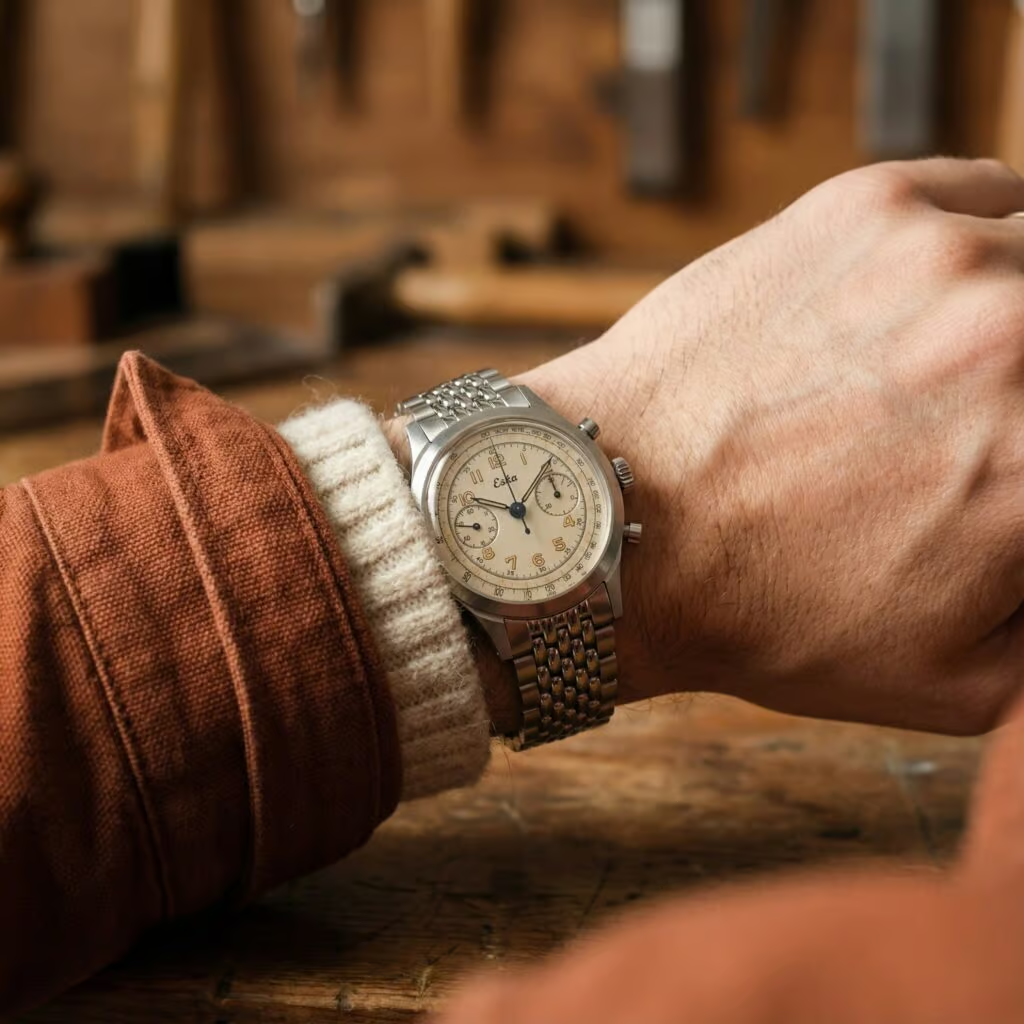
The same goes for a bright orange sherpa jacket with a denim jacket underneath: the watch doesn’t clash. On the contrary, it brings an unexpected touch of refinement to an outdoor look.
The British Classic: Tweed and Oxford
With a brown herringbone tweed jacket and a light blue oxford shirt, we enter the territory of the English gentleman farmer. The SK25 feels perfectly at home there.
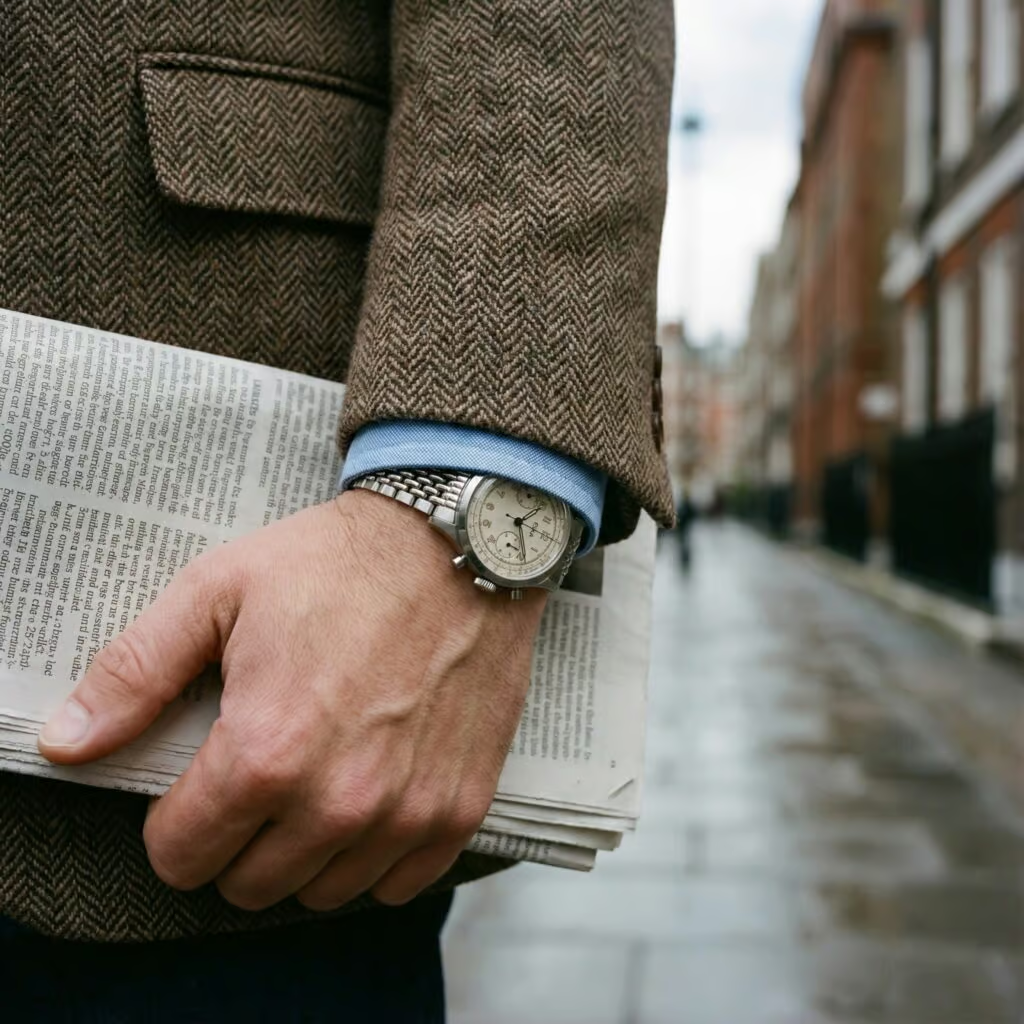
The steel bracelet contrasts pleasantly with the rustic textures of the tweed, while the beige dial dialogues with the autumnal tones of the wool. Newspaper under the arm, on a rainy London street: this is a scene that perfectly illustrates the versatility of this piece.
In summary, the Eska Heritage SK25 Beige proves to be a chameleon watch. Its contained dimensions, its sober dial with vintage accents, and its beads-of-rice bracelet allow it to navigate effortlessly from tuxedo to workwear, through preppy and summer casual.
This is, moreover, quite rare for a chronograph to be able to claim such versatility. And this is probably one of the most convincing arguments in favor of this watch: it will never lock you into a single clothing register.
Conclusion: Should You Go for the Eska SK25 Heritage Beige?
After this review, let’s return to the initial question: does the SK25 Heritage Beige bring real added value, and is its price justified? Our answer is yes, provided you fit the target audience.
This watch is not just a beautiful exercise in nostalgic style. It’s the proposition that in 2025, you can acquire a piece of authentic history, a high-end execution (case, dial), and a purist’s caliber (manual LJP with column wheel) for less than €2,500. In a market saturated with « fake vintage » and more or less opportunistic re-editions, Eska hits the mark by delivering a sincere and well-thought-out product.
Added value: clearly, the SK25 offers it. Compared to competitors, it stands out with its exceptional caliber (no one else uses LJP at this price) and the degree of finish on its dial. This engine-casing duo means it almost punches in the category above. You get what you pay for: no hidden compromises, no large marketing budget to finance, just beautiful niche watchmaking.
Price/quality ratio: as we have seen, it is very good if you value the right things (mechanics, execution). Yes, the SK25 costs more than a Hamilton Chrono H or a Baltic, but the difference is justified by the content (and the more artisanal production). You are primarily paying for the horological substance, not a logo or a hype. For the watch enthusiast, the calculation is clear.
Who to recommend it to? Purchase verdict:
- Buy without hesitation: if you are a discerning enthusiast who appreciates the difference. You know the nuance between a cam and a column-wheel chronograph, and it matters to you. You like the idea of « winding your watch » every morning and « living with it ». You find 38mm ideal. For you, the SK25 Heritage Beige is one of the most endearing and successful neo-vintage chronographs on the market today in this price range. Go for it, it’s a rational favorite.
- Put on your watchlist: if you like the Eska project but are hesitant about the color (beige? black?) or the budget. Follow the brand, read other reviews, possibly wait for an opportunity or the next series. Eska has proven with this Heritage that it can do things well – the brand will certainly continue on this path (perhaps other dials, other models). There is no absolute urgency if you are not ready, but it is clearly a brand to keep an eye on.
- Pass on it: if you need a single do-it-all watch, or if you are not comfortable with the idea of a confidential brand. For example, if you absolutely want to swim with your chronograph, or if you attach importance to the social recognition of the brand, the SK25 is not designed for that. Likewise, if manual winding puts you off, there’s no need to force yourself – a more practical automatic chronograph is a better choice.
In conclusion, the Eska Heritage SK25 Beige is a real success for those who understand its philosophy. It is more than a watch: it is the tangible rebirth of a story, put on your wrist. And if that speaks to you, then it will reward you well.

Pour bien s'habiller, il faut comprendre le vêtement, mais aussi la marque et sa stratégie.