
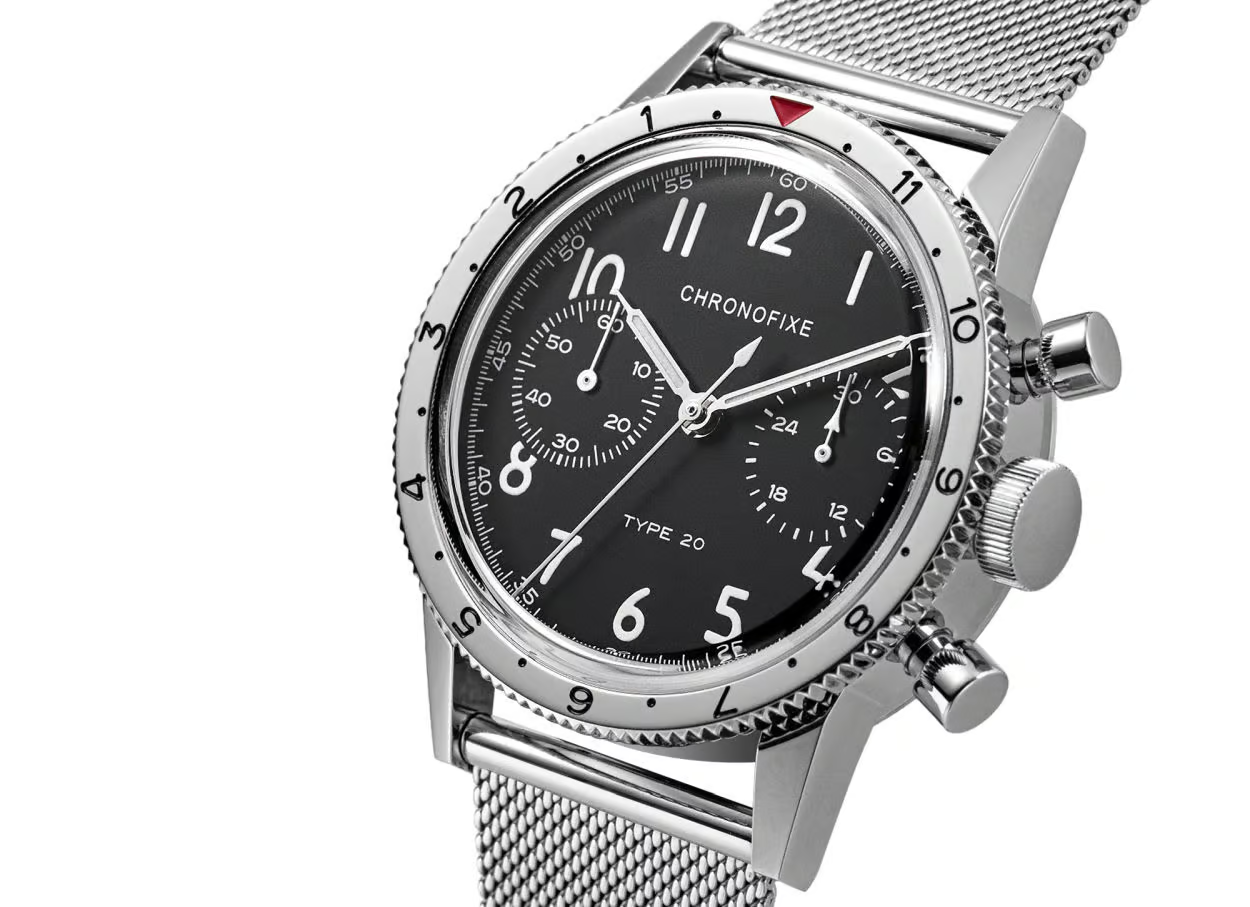

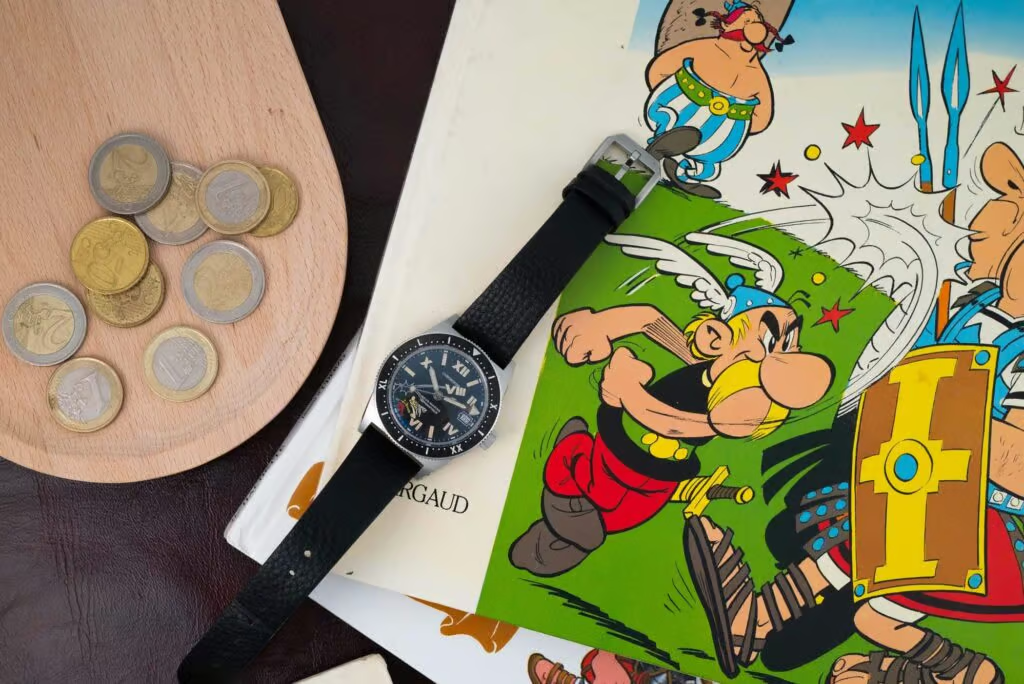
When we talk about French watchmaking, certain names immediately come to mind: Lip, Yema, Dodane… Yet, in the shadow of these pillars, a house with an equally rich heritage but a bewildering contemporary identity persists: Chronofixe. It’s a brand of contrasts. On one hand, an austere military heritage, forged in the cockpits of the Air Force. On the other, a pop revival led by a mustachioed Gaul striking Roman numerals.
Founded in 1857 in La Rasse, in the Doubs gorges, Chronofixe is not just an assembler. It was, historically, the only certified French watchmaking manufacture for the production of altimetric chronographs, a rare technical skill that opened the doors of aviation to it. In the 1950s, it joined the very exclusive club of suppliers to the French state for the legendary military chronograph Type 20.
However, for the watch enthusiast in 2025, the confusion is legitimate. They know Yema for its Superman, Lip for its social history, or Baltic and Serica for their mastery of neo-vintage. Chronofixe, however, remains blurry. The modern buyer, on the other hand, comes across « Sous-Marine » divers featuring Asterix or intriguing « Type 20 Magister » chronographs whose dial is literally cut from a Fouga Magister airplane wing. How does a brand go from certified onboard instruments to pop-culture collaborations?
This article aims to reconstruct the complete history of Chronofixe, from its Franco-Swiss roots to its dormant period, and then to its strategic revival. We will analyze its technical DNA, deeply rooted in aviation, to understand how it unfolds today. Finally, we will position Chronofixe in the bustling ecosystem of independent French brands of 2025, to answer a simple question: what is really hidden behind this fascinating duality?
Sommaire
Historical Roots: La Rasse, the Doubs, and French Aviation
To understand Chronofixe, we must go back to 1857. The story does not begin in Paris, but in La Rasse, a small village nestled deep in the Doubs gorges, on the Swiss border. We are in the beating heart of the Franco-Swiss watchmaking basin, an ecosystem where know-how circulates between Besançon, Morteau, and the Swiss Jura. The manufacture was founded by François-Xavier Joubert. But this name is not isolated. Historical sources specify that a certain Alphonse Dodane founded his own factory the same year, with his father-in-law… François-Xavier Joubert. The Dodane house itself would confirm having produced, over the decades, watches under various brands, including « chronofixe ». Other archives mention a Parisian dealer, Mr. J.-R. Parmentier, who collaborated closely with the Dodane house for the creation and marketing of Chronofixe.
This structure, typical of the era, establishes a crucial fact: Chronofixe was not a simple commission brand (or mushroom brand). It was a production and marketing entity with industrial legitimacy, intimately linked to one of the greatest families in French watchmaking. Quickly, the workshops in La Rasse grew, employing up to 200 people and becoming a key player in national production. But where Chronofixe would distinguish itself was through its specialization.
From the 1930s to the 1950s, as military aviation became a strategic issue, the manufacture developed cutting-edge expertise in onboard instruments. It focused on onboard chronographs and, above all, altimeters. Its know-how became such that Chronofixe became the only certified French manufacture for this type of instrument. This certification is the cornerstone of its heritage. It is not just a marketing argument: it is a state technical recognition, a guarantee of absolute reliability for devices whose failure could cost lives.
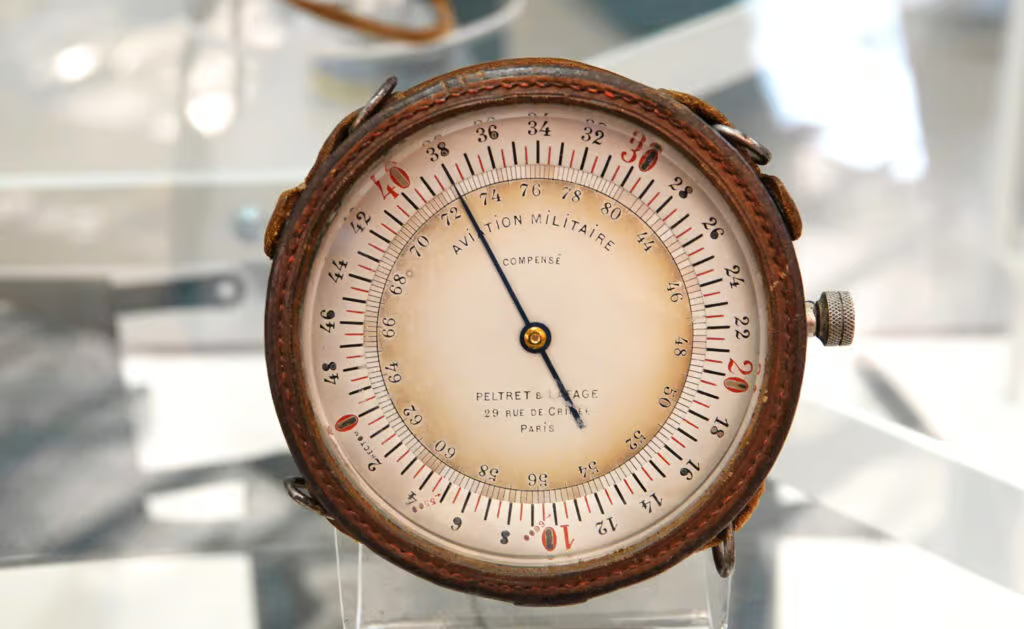
When the French Ministry of Defense launched its famous call for tenders for the Type 20 in the early 1950s, Chronofixe was not just another candidate. It was a strategic supplier, already accustomed to the extreme demands of the Air Force.
Technical & Esthetic DNA: Altimeters, Type 20, and Tool-Watches
Chronofixe’s visual and technical identity was not born from a design office. It was dictated by constraint. The brand’s DNA is based on an obsession with function, inherited directly from its specialization in instrumentation. Three historical pillars can be identified in this DNA:
Aviation Instruments: The legacy of altimeters and onboard chronographs defined everything. The brand itself cites its inspiration from « instruments and cockpit panels« . These instruments require immediate legibility, robustness against vibrations and shocks, and flawless mechanical reliability. Chronofixe was immersed in this for two decades.
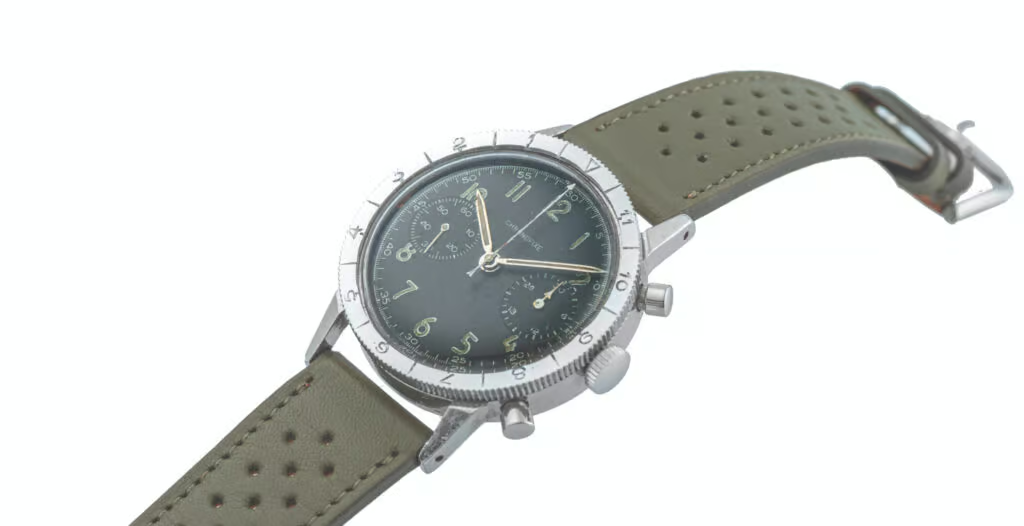
The Type 20 Chronographs: This pillar is the wrist application of the first. Military specifications imposed compact steel cases (typically ~38 mm), bi-compax dials for a clear reading of elapsed time, and large luminescent hands for night visibility.

The Tool-Watch Spirit: More than a style, it’s a philosophy. Chronofixe watches were designed as tools (purpose-driven design), not as adornments. Form follows function: anything superfluous is eliminated. Thus, a Chronofixe altimeter-chronograph had to be reliable before it was pretty.
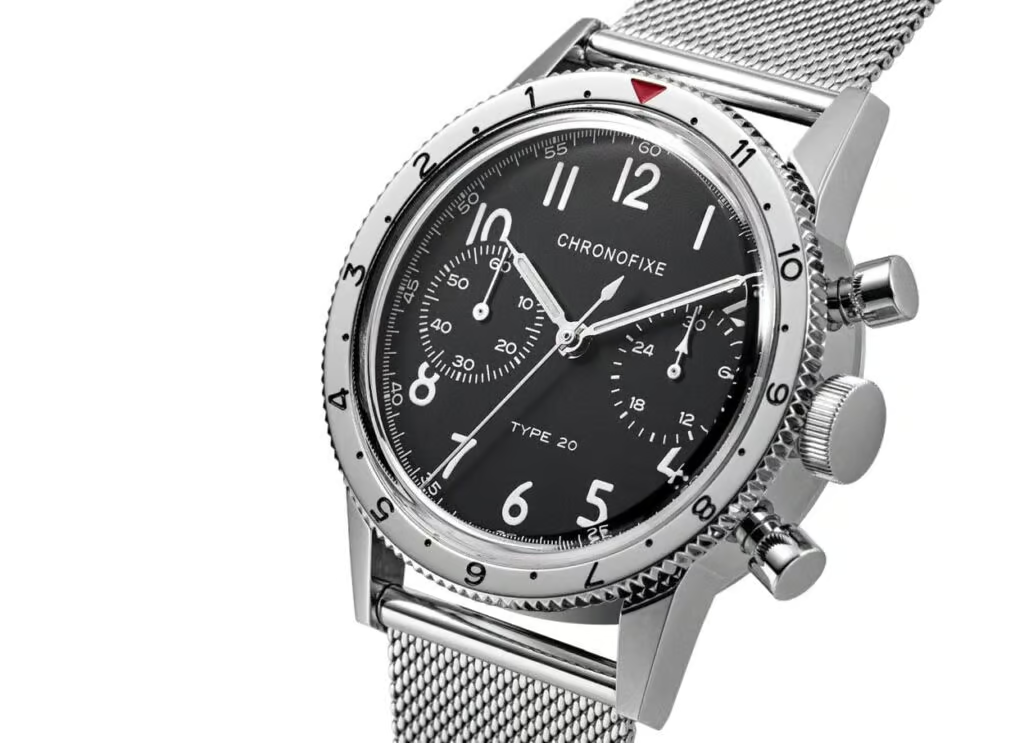
This « instrument panel » philosophy created consistent visual signatures. The dials are almost always matte black to eliminate reflections. The Arabic numerals are painted, not applied, to maximize contrast and luminescent surface. The hands, whether syringe or baton-shaped, are oversized to be read at a glance. The cases are sober, functional, without frills. In short, Chronofixe designed watches as precision instruments, not as jewelry.
This DNA is the common thread that connects the history to the revival. The modern collections, from the Type 20 Magister to the Diver, adopt this contained 37 mm template, this obsession with legibility, and this robust construction (200 m water resistance, for example). Before adding the narrative layer (a piece of an airplane or a comic book character), the Chronofixe tool-watch is already there, faithful to its instrumental origins.
Chronofixe & the Type 20 Saga
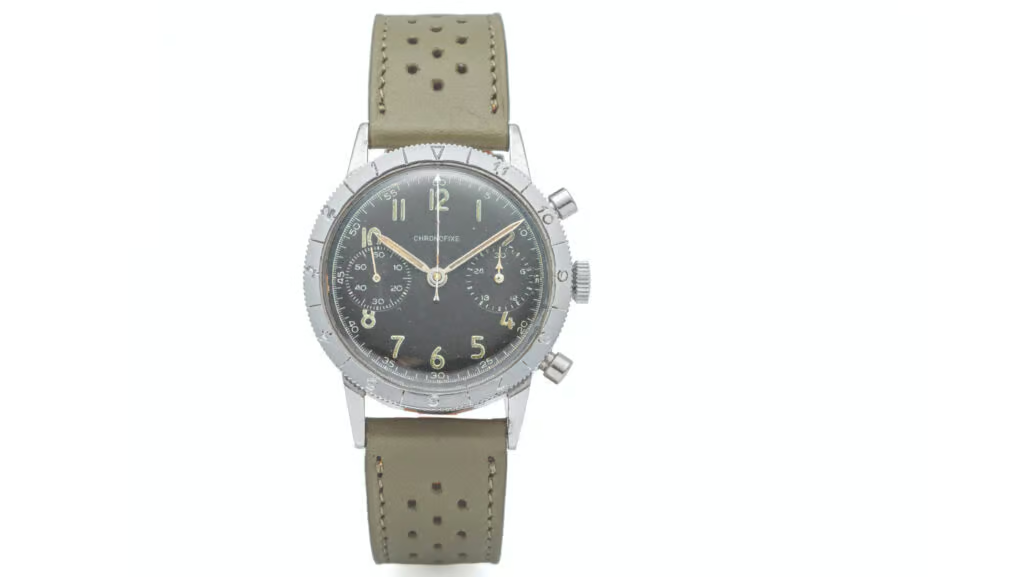
Participation in the Type 20 program is Chronofixe’s most famous achievement. For the enthusiast, this term is almost mythical, but it is essential to understand that it does not designate a model, but a military specification sheet. In the early 1950s, the French Air Force, in full reconstruction, sought to replace its heterogeneous equipment (including American surplus and recovered German Hanharts). It drafted a very strict technical specification sheet for a pilot’s chronograph.
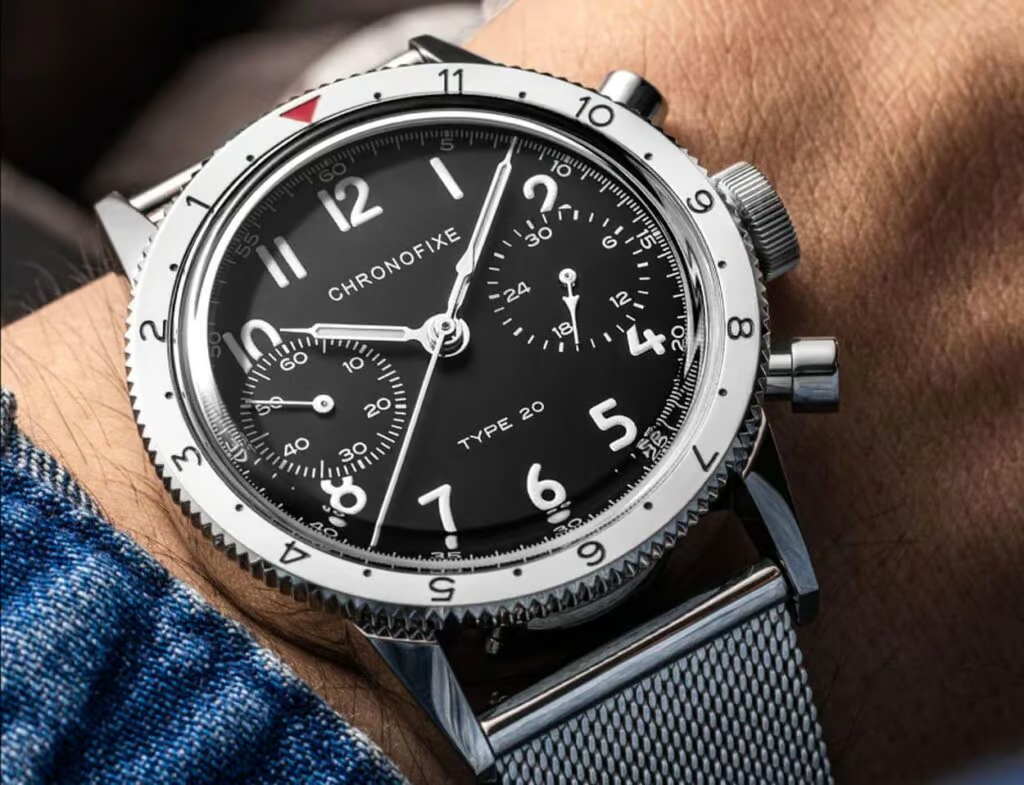
The non-negotiable requirements included:
- A case of about 38 mm (remember that at the time, this was large).
- A black dial with two counters (usually small seconds at 9 o’clock and a 30-minute totalizer at 3 o’clock).
- Perfect night legibility (luminescent indexes and hands).
- A minimum power reserve of 35 hours.
- Rigorous chronometric precision (tolerance of ±8 seconds per day).
- And above all, the king of complications: the flyback function (or retour en vol).
This flyback function allowed the pilot, with a single press of the lower pusher, to stop, reset, and instantly restart the chronograph, an essential maneuver for dead reckoning navigation (the famous « cheminement ») where it was necessary to chain flight time measurements between two headings.
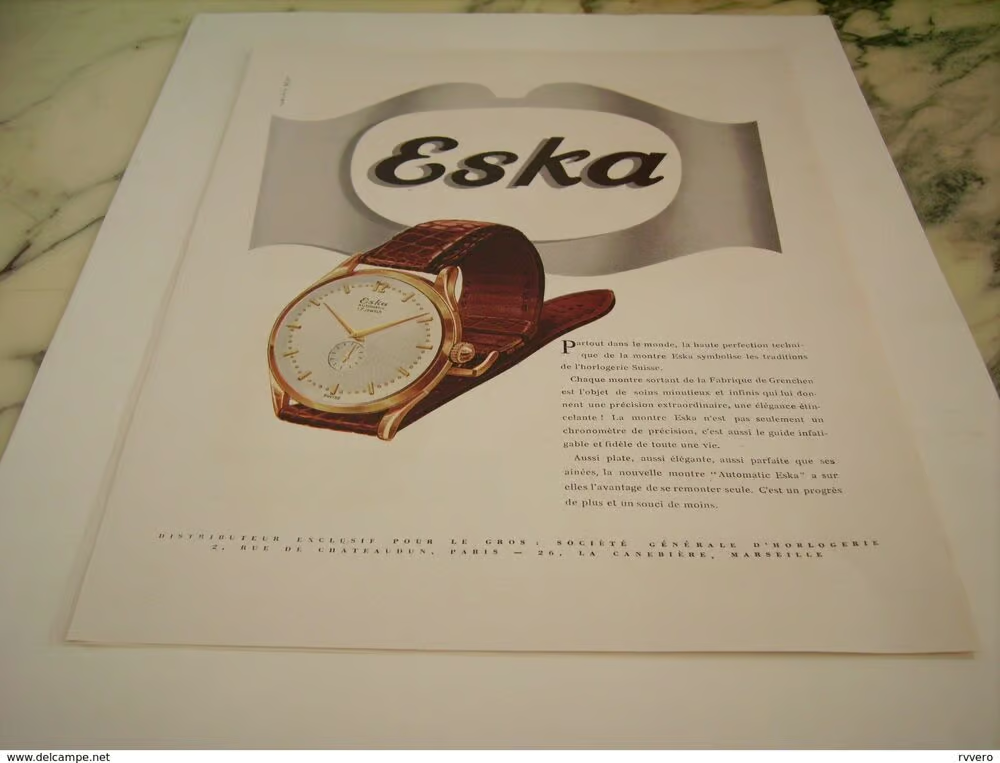
Chronofixe, strong with its aeronautical legitimacy, was part of the small club of houses approved to produce these watches. It joined Breguet, Dodane, Auricoste, and Vixa. The pieces are often signed Seliva Chronofixe (the brand subtleties are a bit beyond us – by the way, it’s an anagram of Alvisé, a nod to Dodane). Their production was intimately linked to Dodane’s industrial apparatus. These watches did not belong to the pilots; they were « property of the State » and bore service markings, such as the famous Fin de Garantie (FG) or the three stars of CETEHOR attesting to their quality.
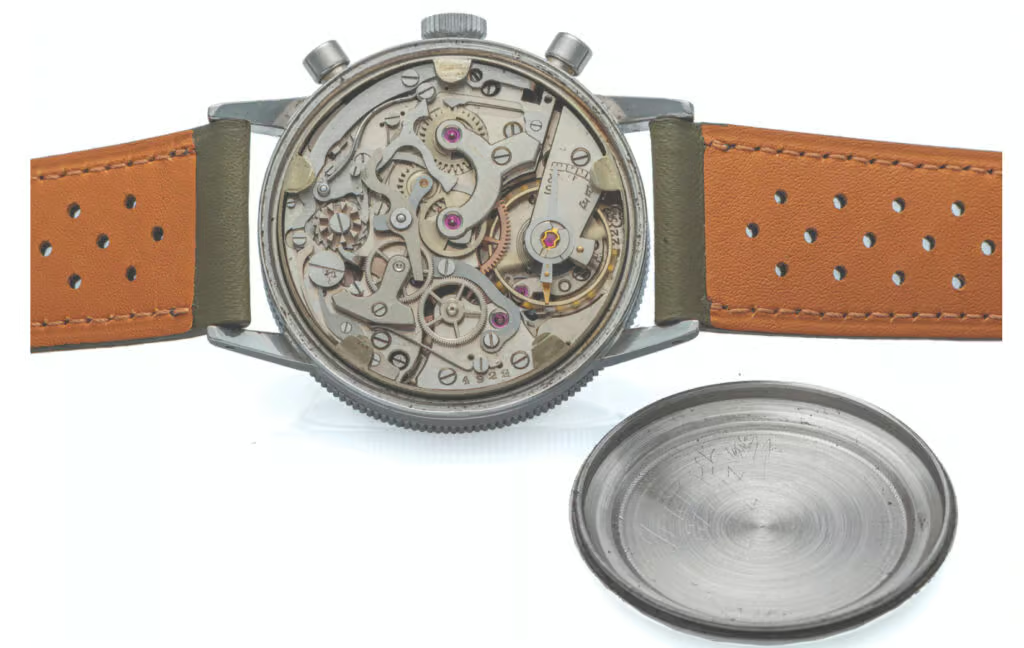
This heritage is now at the heart of the contemporary collection. But the brand has made a fascinating strategic pivot for its revival. The current Type 20 Magister takes up the aesthetics, spirit, and 37 mm size. It is powered by a mechanical chronograph caliber with manual winding, the Peacock SL4617III. This modern and reliable movement (high frequency at 28,800 vph, 45h power reserve) has one major difference, however: it does not have the flyback function.
This is a deliberate – and brilliant – choice. Rather than engaging in a costly technical battle to recreate a flyback (which Airain or Dodane do for prices ranging from €3,000 to over €5,000), Chronofixe has chosen to substitute technical value with narrative value. The brand does not offer the complication; it offers the artifact.
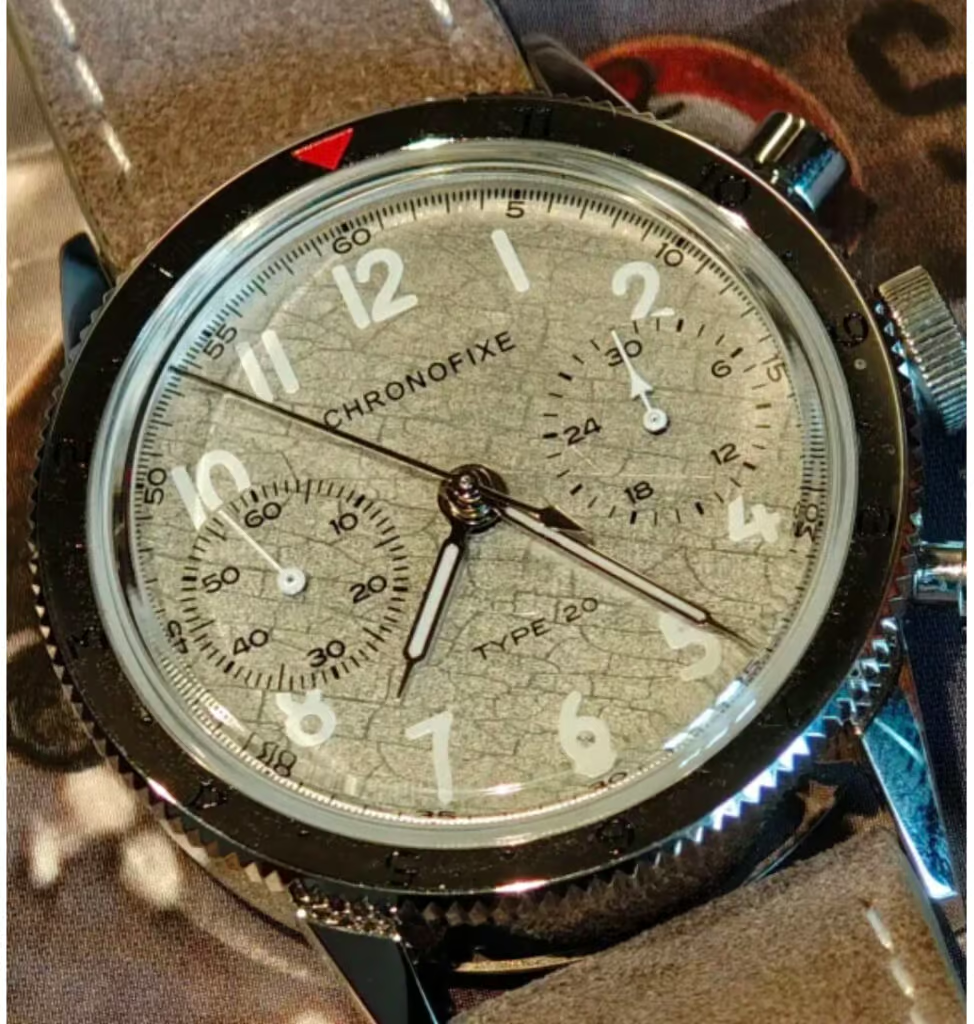
The dial of the Magister is cut from a wing panel of an authentic Fouga Magister, the jet trainer on which generations of French pilots cut their teeth. Chronofixe has decoupled the « Type 20 » from the flyback specification to reconnect it to something more emotional: a tangible piece of French aeronautical history. This substitution allows them to offer their chronograph at a radically different price (only about $515), moving out of a niche of purist collectors to address a much broader audience of enthusiasts. Have we lost out? Not sure, as the proposition is unique.
Disappearance, Relative Obscurity… then Revival
The golden age of mechanical chronographs ends abruptly. In the 1970s and 1980s, the « quartz crisis » devastates the Swiss and French watch industry. Robust houses like Lip and Yema falter; medium-sized companies like Chronofixe and its production partner Dodane are crushed. The Dodane manufacture was liquidated in 1994.
The name « Chronofixe » then falls into disuse. It survives only in the memory of collectors, on specialized forums where the rarity of a Type 20 Seliva or the meaning of the 3 stars of CETEHOR are debated. In short, Chronofixe sinks into oblivion. Then, in the early 2020s, French entrepreneurs decide to reactivate the brand.
This revival is not accidental, but a strategic operation led by industry insiders. The new key players are identified as Jon Cruys, an influential Belgian collector based in New York and founder of events for independent brands (Indies NYC), and Rémi Chabrat, a French entrepreneur at the head of the Montrichard watchmaking group. This duo has valuable experience: Chabrat, in particular, successfully participated in the revival of another sleeping beauty, Nivada Grenchen. They apply a modern revival playbook.
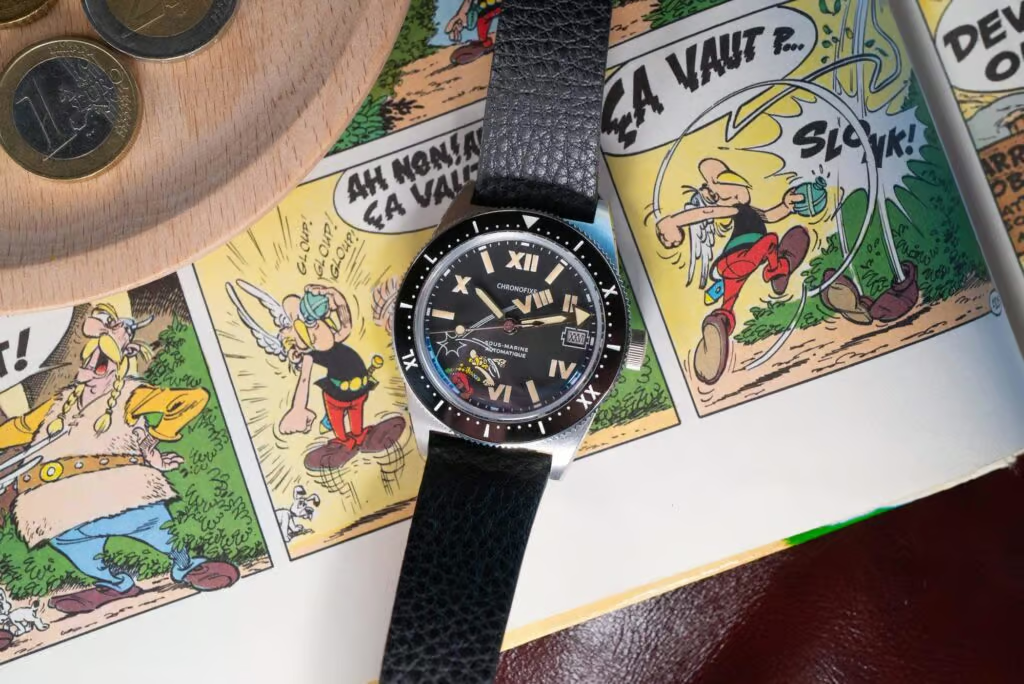
Their strategy is remarkable. The most obvious legacy of Chronofixe is the Type 20. Yet, their first launch will not be a Type 20. They choose to make a big marketing splash. They start with the Sous-Marine Astérix, a reinterpretation of a 1960s Chronofixe skin-diver. To do this, they partner with the most prominent artist-designer on the micro-brand scene, Romaric André (Seconde/Seconde/). This Hype-First, Heritage-Second collaboration is a masterstroke. It generates immediate media buzz, instantly putting Chronofixe on the radar of neo-vintage enthusiasts, an audience that might not have been receptive to yet another Type 20 reissue.
It was only after capturing this new audience (and the associated revenue) that the brand launched, in a second phase, its heritage pillar: the Type 20 Magister. A two-stage revival strategy, using humor and pop-culture as a Trojan horse to reintroduce its serious aeronautical heritage.
Overview of the Contemporary Offer: Three Families, One Common Thread
In 2025, the Chronofixe range is structured around three clear families, which follow a logic of upscaling based on narration and mechanics.
Family 1: TYPE 20 (The Air Heritage)
This is the historical pillar.
- Type 20 « Classic »: The mechanical chronograph with manual winding (Peacock SL4617III caliber) in its purest form, with a matte black dial and two counters. The watch is 37 mm in diameter, features a sapphire crystal and a bidirectional notched bezel. It strongly evokes the Type 20s of the 50s, except for the absence of the flyback function. Its price is around €480 (it targets the premium entry-level).
- Type 20 « Magister »: This is the flagship edition of the family. It shares the same technical specifications (37 mm case, manual caliber) but is distinguished by its unique dial cut from a wing panel of a Fouga Magister. Each dial is unique, bearing the raw marks of the brushed aluminum of the artifact. Offered at around $515, it is the core offer for aviation enthusiasts, reconciling storytelling and vintage style.
Family 2: DIVER / SOUS-MARINE (The Tool / Sea Heritage)
This family reactivates the heritage of the 1960s Chronofixe skin-diver.
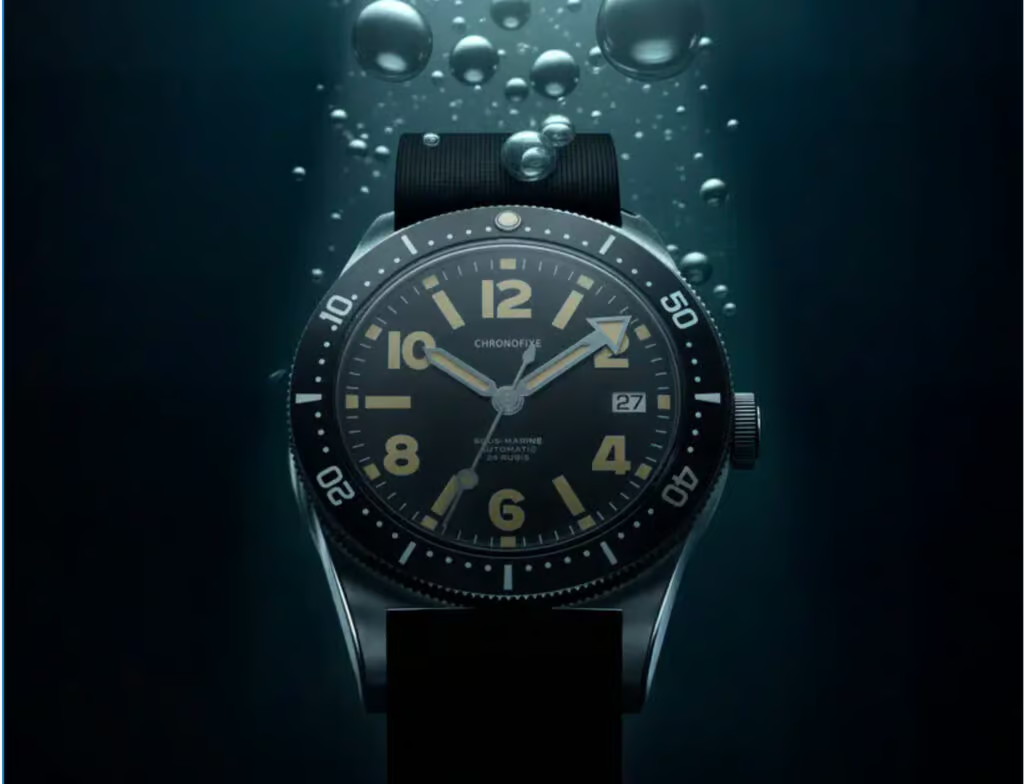
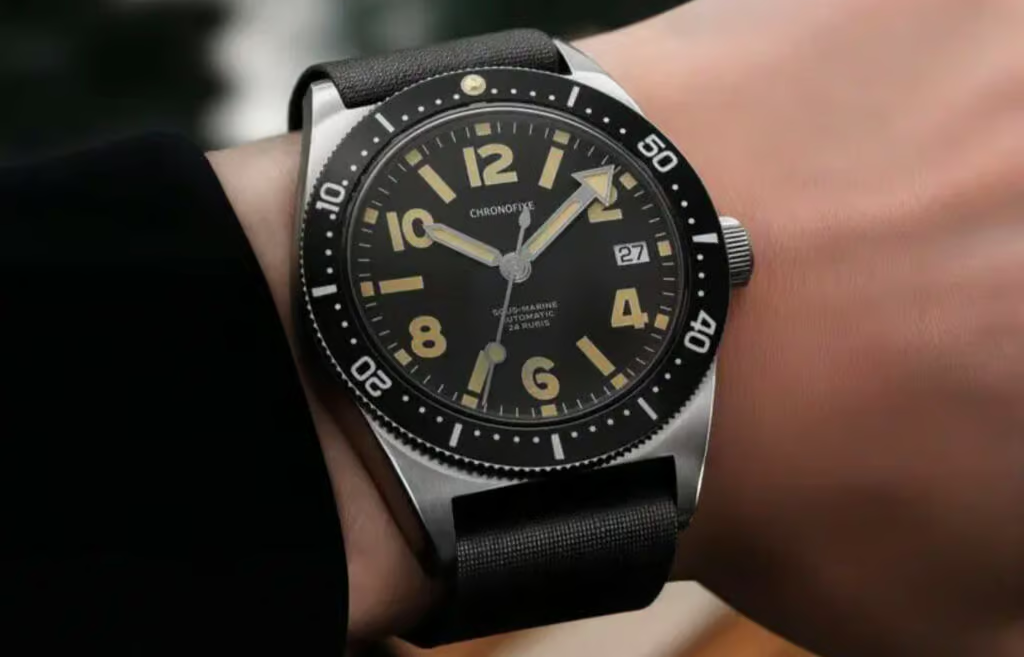
- « Classic » Diver: This is the brand’s tool-watch entry point. A robust diver, with serious specifications: 37 mm case, 200 m (20 ATM) water resistance, and a reliable and proven Japanese automatic movement, the Seiko (TMI) NH35. It is positioned at a very aggressive price of around $380. It clearly targets a clientele eager for affordable « French diver » watches, in a segment historically occupied by Yema in particular.
- Sous-Marine Astérix: The revival model. This is a limited edition (500 pieces) based on the Diver (37 mm, 200 m, NH35). The added value comes from the collaboration with Seconde/Seconde/: Asterix is on the dial, striking the number VIII; the bezel and the date wheel only display Roman numerals; and the crown is engraved with a laurel wreath. Its launch price (around €395) was barely higher than that of the classic Diver, making it an immediate success. We witnessed the excitement on social media during the pre-orders!
Family 3: « Character / Storytelling » (Heritage + Humor + Specs)
This family combines pop-culture storytelling with superior technical specifications.
- Cofrefor: The second Asterix collaboration, marking the 55th anniversary of « Asterix in Switzerland« . The design by Seconde/Seconde/ pushes the concept further: the watch is a « Swiss safe ». The bezel turns like a combination dial, the crown is shaped like a safe handle, and Asterix is on the dial, ear pressed against it, trying to « crack the code ». But the real difference is mechanical: the Cofrefor houses a Swiss Made Sellita SW200 automatic movement. With a price of around €720, it represents the brand’s « narrative premium », while remaining well below the prices of a Type 20 flyback chronograph or a Swiss made diver from a major brand. It was a bold move!

Market Positioning & Competition (France, micro-brands, revivals)
Where does Chronofixe fit in the highly competitive French watchmaking landscape of 2025? The brand has managed to carve out a strategic niche by avoiding direct confrontation.
vs. Yema: Yema is the big name from Besançon, more industrial, more mainstream. Chronofixe is more boutique, more agile, and its communication is entirely focused on storytelling and hype collaborations.
vs. Baltic / Serica: Chronofixe shares with these neo-vintage micro-brand queens a marketing agility and a sense of design. But it has a competitive advantage they don’t: an authentic history. Where Baltic and Serica create an aesthetic universe, Chronofixe reactivates real archives from 1857.
vs. Airain / Dodane (the direct competitors of the Type 20): This is the most enlightening comparison. Airain and Dodane are positioned in the niche of technical fidelity, with corresponding prices (€3,250 to €5,900). Chronofixe has cleverly avoided this segment. The brand has created a niche where it is alone: Heritage + Humor. It has created a bridge between the purist camp and the hype camp. No one else on the market can legitimately claim a past as a supplier to the Air Force while selling an « Asterix in Switzerland » watch. Chronofixe addresses the enthusiast who deeply respects heritage, but who neither wants to spend €5,000, nor take themselves too seriously.

Pedagogy: technical notions & « brand revival » explained
To fully appreciate Chronofixe’s offer, it is useful to master a few key concepts, both in watchmaking and industry. Hold on tight, we’re reviewing our classics!
| Term | Definition | Relevance for Chronofixe |
|---|---|---|
| Type 20 | A French military specification from the 1950s for a pilot’s chronograph. Its requirements included: ~38 mm, black dial, 2 counters, and especially the Flyback function. | It’s the heart of Chronofixe’s military heritage. The modern brand uses the name and aesthetics, but has strategically replaced the flyback function with storytelling on its Type 20 Magister. |
| Altimetric Chronograph | An instrument that combines a stopwatch with an altimeter. It was a vital navigation instrument before modern avionics. | This is Chronofixe’s unique historical intellectual property. It was the only French manufacture certified for this type of instrument, which establishes its aeronautical legitimacy. |
| Diver / Sous-Marine (200 m) | Diving watch. A water resistance of 200 m (or 20 ATM) is the standard for serious recreational diving (ISO 6425). | The « Diver » family from Chronofixe and its derivatives (Asterix, Cofrefor) are true tool-watches with robust diving specifications. |
| Movements (Calibers) | The « engine » of the watch. Chronofixe uses three main calibers: • Seiko NH35: Japanese, reliable, the workhorse of micro-brands. • Peacock SL4617III: Chinese manual-winding chronograph. A pragmatic choice to prioritize storytelling. • Sellita SW200: Swiss automatic movement. Justifies the Swiss Made upscaling. | The selection of calibers is a direct reflection of the brand’s Good, Better, Best strategy. NH35 for access, Peacock for affordable mechanical, Sellita for premium. |
| Revived Brand (Brand Revival) | A historical name, with a documented heritage, put to sleep and then relaunched decades later by a new team. | Chronofixe is the perfect example. The crucial difference with a brand without a past is substance. The new team reinterprets an authentic heritage. |
Verdict
In conclusion, Chronofixe is one of the smartest and most strategic revivals in the current French watchmaking landscape. The brand understood that it could not win the battle of the pure technical sheet (the flyback) against competitors at €5,000. It therefore chose to fight – and win – on the field of narration.
For the purist collector who demands a flyback in their Type 20, the Magister is not the right watch. But that’s not what Chronofixe is selling. The brand is selling the DNA, the spirit, and a real piece of French aviation history. Should we spoil our pleasure on the pretext that a return spring is missing? Frankly, no.
For the enthusiast looking for French aeronautical heritage without the stratospheric price tag, the Type 20 Magister is an almost unrivaled proposition. For the buyer who wants a robust, fun, and history-laden tool-watch, the Divers and the Asterix collaborations are among the most coherent and desirable offers on the market in 2025. Chronofixe has won its bet: to reconcile the altimeter and the Gaul, proving that you can have a serious heritage without taking yourself seriously.
(And if you see me with a Chronofixe on my wrist, don’t forget to ask me the time: I’ll be happy to share a piece of history with you… and to see how many of us have fallen for this cockpit & pop-culture cocktail.)

Pour bien s'habiller, il faut comprendre le vêtement, mais aussi la marque et sa stratégie.