


Sommaire
Eska: Analysis of a Resurrected Watch Brand
Eska. This name, which today sounds like an echo from the past, is re-emerging with new ambition on the independent watchmaking scene. For the collector, it may evoke a discreet vintage dial, a forgotten diver’s watch, or a rare triple calendar chronograph. For the contemporary enthusiast, it is embodied in models like the Amphibian 250 or the Heritage SK25, symbols of a very current « revival ». Founded in 1918 by Silvan Kocher under the name S. Kocher & Co, Eska—the phonetic transcription of its founder’s initials « S » and « K »—was a major Swiss brand. It had a real presence on international markets before disappearing, like so many others, during the quartz crisis of the 1980s.
This article is therefore aimed at a dual audience. On one hand, the collector of vintage pieces, curious to understand the pedigree and value of watches signed « Eska » that they might unearth, whether they be sober dress watches, surprising complications, or precious cloisonné enamel dials. On the other hand, the contemporary watch enthusiast who, seeing the new Eska creations emerge, wonders: does this rebirth have any real legitimacy beyond simple heritage marketing? The central question is this: is Eska just a « recycled label »—what the industry sometimes calls a « zombie brand »—or are we witnessing the coherent relaunch of a watchmaking heritage worthy of interest? What is its DNA worth, both historical and modern, in the face of the current wave of resurrected « sleeping beauties » and independent micro-brands that are redefining the landscape?
Eska chronographs are available here on Catawiki (many rare models and great auction opportunities)
To answer this, we propose an in-depth three-part analysis: a dissection of the history and technical DNA of S. Kocher & Co (1918–1980), a critical analysis of its revival (2010–2025), and a market positioning against its competitors. All this while explaining the key watchmaking and industrial concepts that define the Eska universe. Let’s embark on a journey between past, present, and future prospects!

1. Historical Timeline: From the Kochers to the Quartz Crisis
The story of Eska is that of a typical Swiss family business from the golden age of watchmaking, marked by rapid growth, bold international expansion, and a brutal fall in the face of a technological revolution. Here are the major stages, from its founding in 1918 to its dormancy in the 1980s.
1918–1937: Foundation and Establishment
The adventure begins in 1918. S. Kocher & Co is founded by Silvan Kocher Sr. and his son Erwin in their native village of Selzach, in the heart of German-speaking Switzerland. Very quickly, the trade name « Eska » is adopted. The company then specializes in a growing segment: small wristwatches, often beautifully decorated and equipped with small, well-made calibers. At that time, Eska’s production favored pocket watches converted into wristwatches, then gradually models specifically designed for the wrist, with an emphasis on readability and elegance. The first Eska watches were modest in size but already well-finished. They played on the card of discreet reliability.
1937–1950: International Expansion
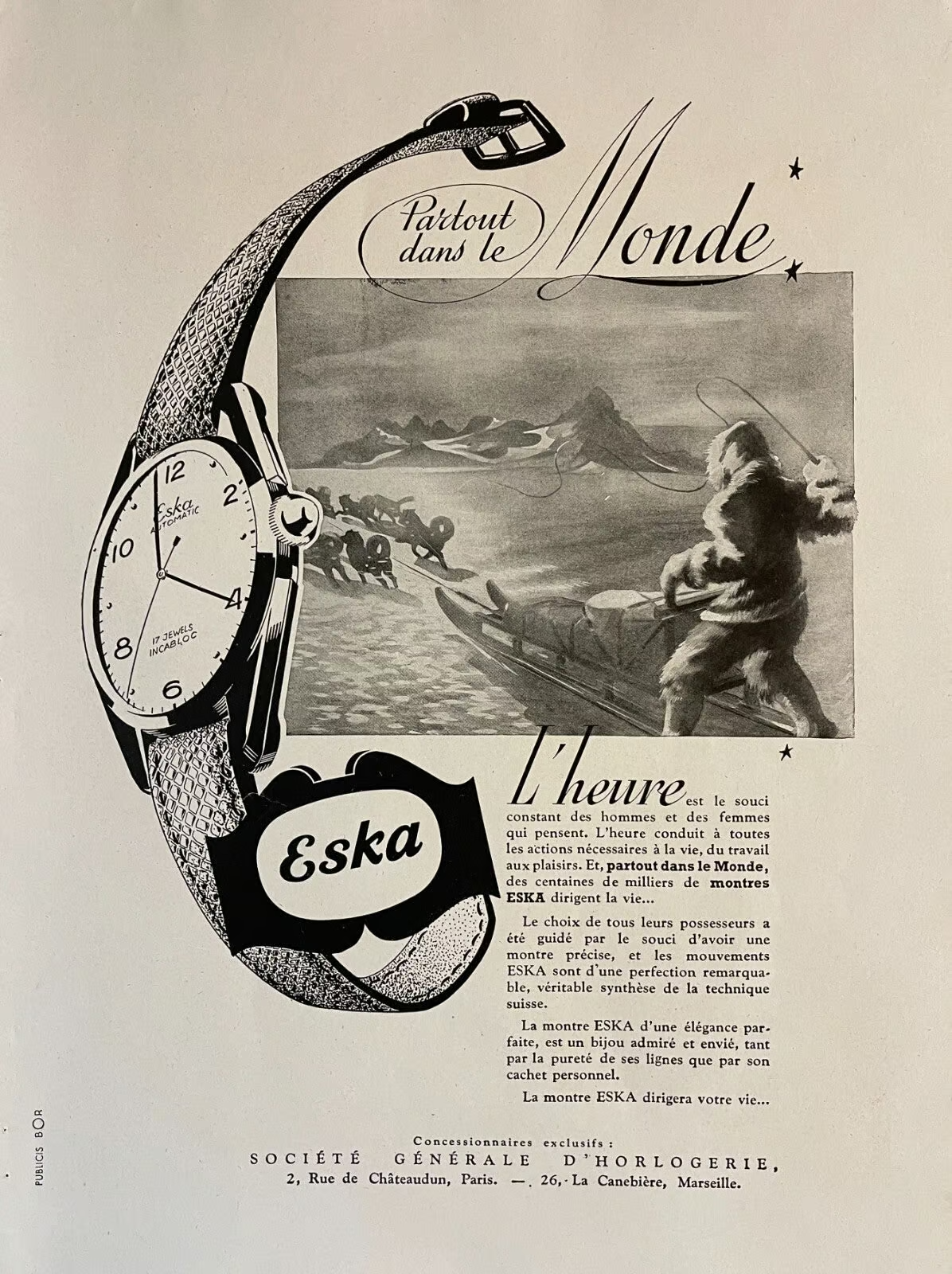
In 1937, the company took a major strategic step by moving to Grenchen. This was not just a change of address: Eska left the confines of the village workshop to set up in one of the largest industrial hubs of Swiss watchmaking. This move signaled an increase in volume and a clear ambition for export. This ambition was embodied by Silvan Kocher’s other sons. The family structure expanded internationally: Walter Kocher established a subsidiary in New York for the North American market, while Edgar Kocher did the same in São Paulo, Brazil. Eska achieved notable success in North and South America, but its presence also extended to Asia and Australia. « All over the world, hundreds of thousands of Eska watches direct life… » as an advertisement from the era proclaimed. The establishment in Brazil was particularly strong, including, according to some sources, a local production unit to meet growing demand.
1950–1970: The Golden Age
The period of the Trente Glorieuses (the thirty glorious years after WWII) was Eska’s golden age. The brand reached full maturity and had a global distribution network. Its production diversified to cover all market segments:
- Classic Watches: The core of production remained reliable and elegant three-hand dress watches, often in gold or gold-plated, with a contained diameter (34–36 mm) and a clean design.
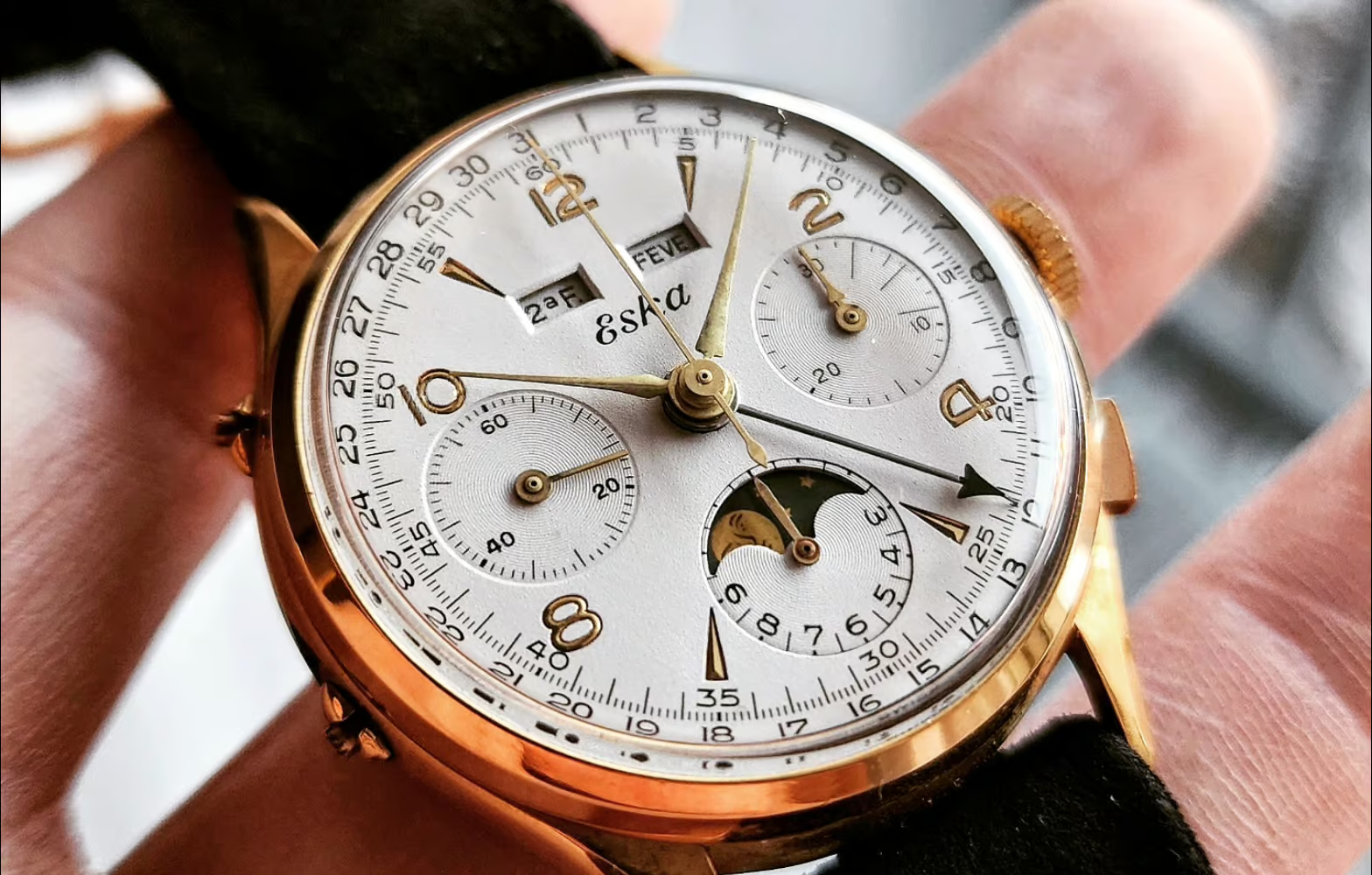
- Complicated Watches: The brand demonstrated true technical mastery by offering chronographs, as well as sophisticated pieces including complete calendars (day, date, month) and moon phases. An Eska triple calendar moon phase chronograph, powered by a Valjoux 88 caliber, placed the house—technically speaking—on the same level as other icons of the era.

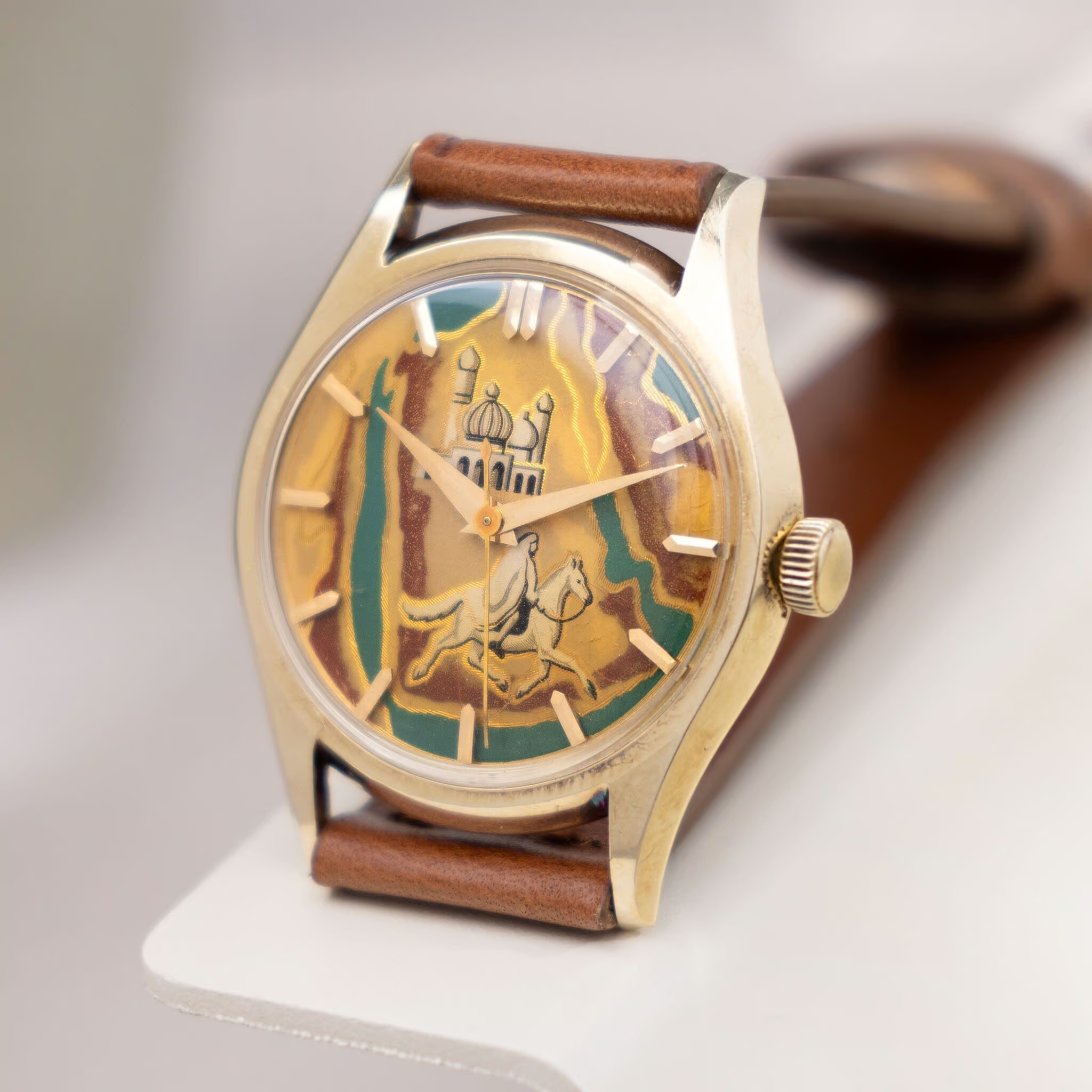
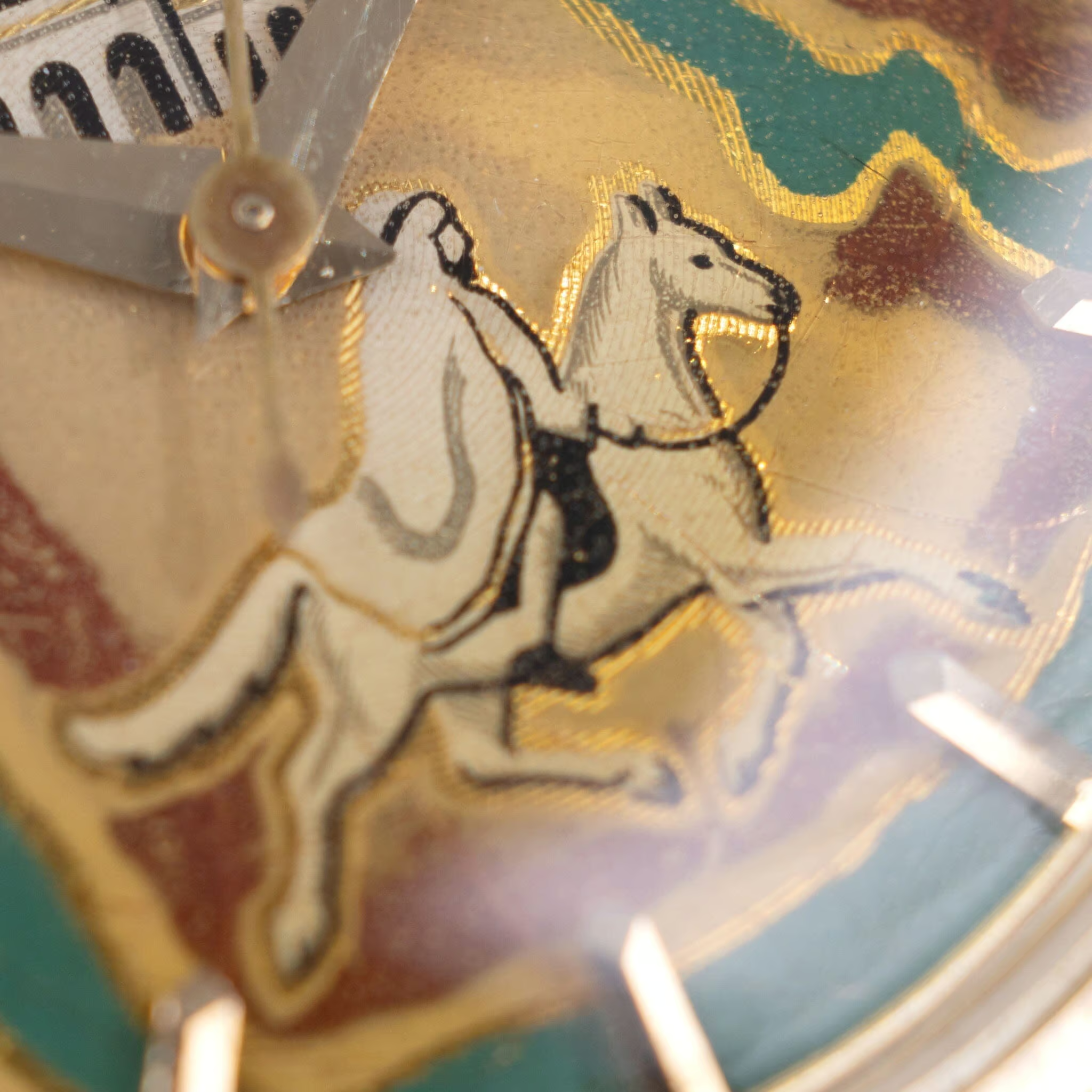
- Artistic Crafts: Notably, Eska produced exceptional pieces with remarkably high-quality cloisonné enamel dials, depicting maps, mythological figures, or exotic scenes. Today, these enamel dial watches are highly sought after by collectors.
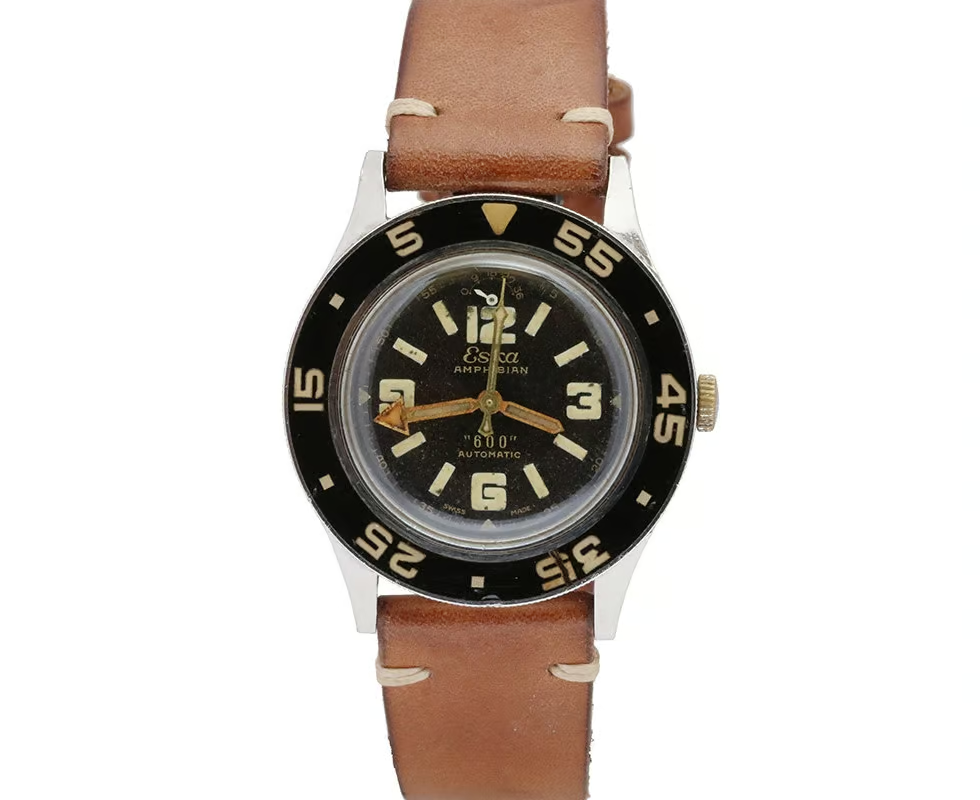
- Tool Watches: In 1959, Eska joined the emerging trend of professional diving watches by launching its flagship model, the legendary Amphibian 600. This was a true diver’s watch (rated for 600 feet of water resistance), featuring a wide Bakelite bezel and an original power reserve indicator at noon. According to legend, only four examples of this Amphibian 600 survive, making it an absolute « unicorn » for discerning collectors.
During this period, Eska positioned itself as a serious brand in the mid-tier segment, offering excellent finishing quality for its price, without trying to compete with Haute Horlogerie houses. It was what one might call a discreet good student of Swiss watchmaking: far from the limelight, but producing solid and charming pieces.
1970–1980: Crisis and Dormancy
Like countless other medium-sized players, S. Kocher & Co (which also produced under the sister brand Royce) was hit hard by the quartz revolution. The company was described as being slow to adopt electronic movements. The cheap and precise Asian competition, as well as the restructuring of the Swiss industry around a few large groups, proved fatal. Unable to compete on this new technological and economic ground, the company gradually abandoned manufacturing to focus for a time on license management. The brand finally ceased its activities in 1987, slipping into a long slumber and becoming what collectors call a « sleeping beauty. » In short, the Eska chapter seemed closed, the sleeping beauty awaiting a hypothetical watchmaking Prince Charming to awaken her. (We’ll come back to that…)
It should be noted that Eska’s history is that of an agile finisher-marketer. Its historical strength lay not in verticalized manufacturing but in its assembly flexibility (using excellent third-party ébauches) and its brilliant global distribution network (managed by the Kocher family). The quartz crisis did not kill an old-fashioned manufacture; it rendered obsolete a business model that had made Eska’s fortune since the interwar period. It was the same industrial tragedy that swept away so many other names in the late 1970s.
2. Eska’s Historical Aesthetic and Technical DNA
To understand the interest in Eska today, one must analyze what it produced yesterday. Its historical DNA reveals a surprising duality that delights knowledgeable collectors. Eska’s visual identity oscillated between great wisdom and flashes of watchmaking audacity. Technically, the brand behaved like a « good Swiss student, » making the most of the know-how of its time. Let’s look at this in detail.
Visual Signatures: Classic Wisdom and Mastered Audacity
The wise side: The core of commercial production, especially for export, consisted of soberly executed dress watches. These were classic pieces, with contained proportions (often 34–37 mm), featuring guilloché or brushed dials, applied indexes, and round or shaped cases in steel, gold-plated, or solid gold. These Eska watches from the 50s and 60s display a restrained, almost austere elegance that served the taste of post-war Western markets well.
The audacious side: This is where the real heritage interest lies. Eska was not just a volume brand! It was capable of producing exceptional pieces demonstrating top-tier craftsmanship:
- Artistry: The cloisonné enamel dials are a perfect example. These pieces, of great complexity in execution, were artistically on par with those of much more prestigious brands. Each Eska cloisonné dial was like a small miniature painting made of gold wires and fired glass powder.
To acquire a rare Eska with a cloisonné enamel dial, explore the auctions on Catawiki.
- High Complication: The brand mastered watchmaking complications. It notably offered chronographs with complete calendars and moon phases, powered by noble calibers (Valjoux 72C, Valjoux 88…). Finding a vintage Eska equipped with a Valjoux 72C (the basis of the triple calendar chronograph) or a Valjoux 88 (moon phase version) places it, on a purely mechanical level, at the technical level of some Patek Philippe watches of the era!
- Tool-watch: The Amphibian 600 from 1959 deserves a second mention. It was not just a simple waterproof watch: it was a true professional diver’s watch, often compared to the Blancpain Fifty Fathoms for its inspiration. It was distinguished by a wide black bezel, maximum legibility, and a robust design (it was even rumored to have been tested by the French Navy). An extraordinary piece, almost impossible to find today.
Technical Choices: The « Good Student » of Swiss Watchmaking
Eska was not a manufacture in the modern sense of the term (it did not produce its own ébauches). Like most brands of its time, it operated as a premier assembler, relying on the best suppliers in the Swiss industry. The archives and vintage pieces that have survived show the use of reputable calibers, supplied by pillars such as Adolph Schild (AS), ETA, Felsa, or Valjoux. In other words, under the hood of an old Eska, you often find the same engine as in many other Swiss houses—and that’s a good thing. This pooling of resources allowed for easy maintenance and proven performance. A telling example: several Eska chronographs use the Landeron 48, a robust and precise movement that proved its worth in thousands of watches in the 50s. The same goes for simple watches, often powered by reliable AS or Peseux calibers, without unnecessary extravagance.
The interest for the vintage collector: This bifurcated historical DNA is a boon. On one side, reliable mass production for export; on the other, niche, almost confidential production of high-flying pieces. The real appeal of Eska on the vintage market thus lies in its unbeatable charm-to-price ratio. As the brand’s fame remained confidential, it is still possible to acquire an Eska watch complication (a triple calendar, a moon phase…) or a piece of craftsmanship (an enameled dial) for a fraction of the price of an equivalent Universal Genève, Longines, or Movado, whose prices have soared. In other words, Eska is the perfect embodiment of the « sleeper brand »: a dormant brand whose intrinsic quality far exceeds its current recognition. Want to play the smart collector? Don’t overlook this discreet signature. We ourselves, at a watch fair, found a complete calendar moon phase Eska for a few hundred euros—the mellow sound of its Valjoux 72C seduced us as much as its ridiculously low price. Incredible.

3. Eska in Yesterday’s Watchmaking Landscape: Groups, Markets, Competition
To grasp the importance of Eska at its peak, it must be placed within its industrial ecosystem. Its brief membership in a prestigious group and its sophisticated commercial strategy say a lot about its status at the time.
The Heuroplan Group Episode (1959–1962)
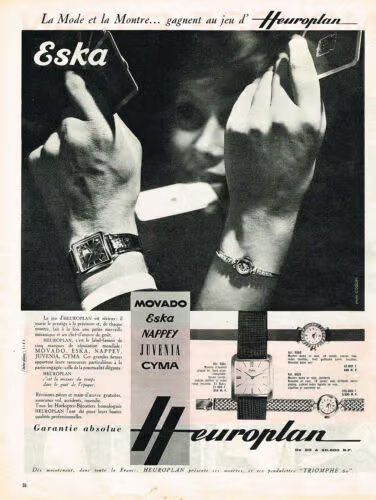
In 1959, Eska joined the Heuroplan group. This was a Franco-Swiss commercial alliance comprising five brands: four Swiss (Movado, Cyma, Eska, Juvenia) and one French (Nappey). Be careful not to imagine Heuroplan as a modern industrial holding company (like Swatch Group or LVMH). Its purpose was not to merge production or share calibers, but to pool marketing and distribution costs in certain countries, notably France. In other words, Movado, Cyma, Eska, and their associates presented their watches together under a common banner at trade shows and in some advertisements, in order to benefit from a reassuring « group » image for retailers and economies of scale in promotion.
Although the Heuroplan alliance was short-lived (roughly 1959 to 1962), it is a status marker. The simple fact that Eska was sitting at the same table as giants like Movado and Cyma validates its position at the time: it was not a small local player, but a serious, internationally established volume brand. In Heuroplan advertisements, the name Eska appears proudly alongside the others, with the slogan « La Mode et la Montre… gagnent au jeu d’Heuroplan » (« Fashion and the Watch… win at the Heuroplan game »). Proof that the association between houses aimed to give an aura of modernity and reliability.
However, on the industrial front, Eska maintained its technical independence. No Movado calibers in Eska watches, nor vice versa—each brand in the group kept its specificity. This ephemeral union primarily illustrates the need for medium-sized brands at the end of the 1950s to group together in the face of rising costs and increased competition in rapidly expanding markets (USA, Europe, Asia). And Eska was prominent enough to be invited into this select club. Once the Heuroplan parenthesis closed, Eska would resume its solo path until the quartz crisis.
Key Historical Markets: A Globetrotting Brand
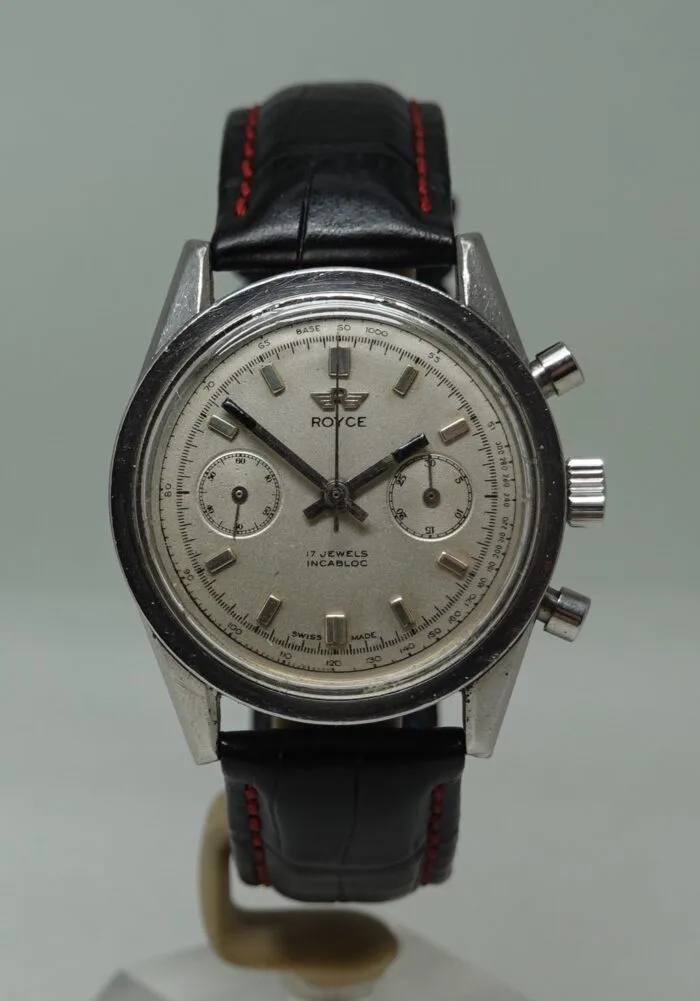
As mentioned, Eska’s strength lay in its global deployment, with a particularly strong presence in the United States and Brazil. In the 1940s–60s, Eska exported more than 80% of its production. To manage these distant markets, S. Kocher & Co demonstrated notable commercial sophistication by employing a multi-brand strategy. Eska was positioned as the main brand, focusing on fine watches, high-end models, « classic » pieces, and prestigious creations. In parallel, the company used the « Royce » brand as a sister brand, dedicated to more sporty or entry-level models, specifically for export markets. This approach shows a mature corporate structure, capable of segmenting its offer to maximize market penetration.
Does the name Royce ring a bell? It was indeed a brand distributed in the USA and England, whose watches were manufactured by Eska. For example, the Amphibian 600 was also offered under the Royce name in some markets. Similarly, there are 1960s chronographs signed Royce whose case interior bears the inscription S. Kocher & Co. (I myself own a Royce Valjoux 7730 chronograph with an applied « R » on the dial. It actually hides a shy Eska, whose name is stamped on the case back—amusing!). This subtle play of dual-branding testifies to Eska’s desire to conquer market share abroad by adapting its image.
Competition and Period Positioning
How does Eska fit in with other players of the mid-20th century? It can be classified among the « discreet good students » of the Swiss mid-tier. That is to say, of higher quality than a small local brand without much scope, a notch below the big established names (Omega, Longines, etc.), but sometimes with just as much horological interest. Eska played in the same league as brands like Juvenia, Certina, Cyma, or Enicar: serious houses, innovative on their own scale, whose products have aged well. Thus, an Eska triple-date from 1950 has nothing to be ashamed of compared to an equivalent Movado Calendograph—except that it will be worth ten times less on the current market. We always come back to this unbeatable value for money in vintage.
In the 1970s, however, this positioning eroded. The brand slipped into anonymity, competed by emerging large groups (Seiko on the quartz side, SSIH and ASUAG on the Swiss side). Let’s not be mistaken: Eska was never « ultra-luxury. » It was in the medium/accessible segment, with a real quality of manufacture for the time, but without seeking wild complications or maniacal finishing. And that’s perfectly fine. Moreover, even today, this technical-aesthetic humility is what makes a vintage Eska charming without pretense—you feel like an insider when you wear one, not pretentious.
4. Disappearance and then Contemporary Renaissance
After being put to sleep in 1987, Eska became a ghost brand, surviving only in collectors’ drawers and watchmaking archives. Nearly four decades later, however, the sleeping beauty has awakened. Let’s recount this recent rebirth, from its modest beginnings to its latest ambitions.
The Dormant Period (1980s–2000s)
As seen previously, the quartz crisis brought Eska to its knees. Between 1980 and 2000, the brand virtually existed only on the second-hand market. No new models were produced. The stock of spare parts and movements would be sold off during the 80s through other channels (some new Eska watches would still linger in retailers’ showcases until the 90s). But officially, Eska was dormant. The S. Kocher & Co company had closed its doors, the brand name belonged to a registry but was no longer used. It joined the cemetery of Swiss brands swallowed by the electronic wave. The only way to « encounter » it: to hunt for vintage pieces or stumble upon a period ad at a flea market.
The Rebirth (2024)
In 2024, a dramatic turn of events: the Eska brand is officially revived, not by a large group, but by two French entrepreneurs and enthusiasts: Christophe Chevreton and Sinicha Knezevic. These buyers, based in Franche-Comté, decide to bring Eska back to life by purchasing the brand and launching new models inspired by its rich past. Let’s be honest: the announcement makes little noise at first. Just another one, one might think, in the wave of neo-vintage revivals. As a reminder, in the 2010s–2020s, we saw a whole host of forgotten names reborn: Nivada Grenchen, Aquastar, Lip, Wolbrook, etc. Why not Eska, then…
The narrative of this rebirth is crucial to assessing its legitimacy. The brand’s official discourse (on its website and in its press releases) is marked by a form of honesty: it claims no direct family or industrial continuity with the Kochers. It is an assumed resurrection by external enthusiasts, whose vision is to « honor the soul of the historical models » and « awaken the sleeping beauty. » A detail, or rather a happy narrative coincidence, creates a powerful symbolic bridge between the past and the present: Eska, founded by Silvan Kocher, is taken over by a team one of whose members is Sinicha Knezevic. As the communication mischievously points out, the initials S.K. are found in both the founder and the new owner, offering a storytelling that is almost too perfect to be coincidental! Thus, without a blood tie but with a wink, the circle is complete.
In practical terms, the new Eska entity starts humbly. No brand-new manufacture or « in-house » calibers. The first product sketches are drawn in 2023, validated with the help of vintage design consultants, and financing is partially secured through crowdfunding. And yes: what better way than a Kickstarter to test the market’s appetite? The new owners know that the legitimacy of a resurrected brand is not decreed, it is earned. They will have to convince the purists.
The Pillars of the Relaunch: Amphibian 250 and Heritage SK25
The relaunch strategy was articulated in two phases, centered around two key models:
- Amphibian 250: The first launch was via the Kickstarter crowdfunding platform at the end of 2024. It is a modern reinterpretation of the extremely rare Amphibian 600 from 1959. The « 250 » adopts the aesthetic codes of its elder (wide bezel, ultra-legible dial, old-school tool-watch look), adapting them to a 40 mm case waterproof to 250 m. At the end of 2024, a Kickstarter campaign helps finance the production of this neo-retro diver. A moderate but sufficient success: the community of vintage diver enthusiasts responds, and the early birds snap up the first examples.
- Heritage Chronograph SK25: Announced in 2025, this 38 mm neo-vintage bi-compax chronograph signals the second phase of the relaunch: a technical upgrade and the desire to establish itself as a credible brand in a higher price segment. The Heritage SK25 (SK for Silvan Kocher, 25 for the launch year) is a manual-winding mechanical chronograph, equipped with a La Joux-Perret column-wheel caliber, which we will discuss later. With this more ambitious model, Eska version 21st century brings out the heavy artillery to seduce enlightened lovers of vintage chronographs.
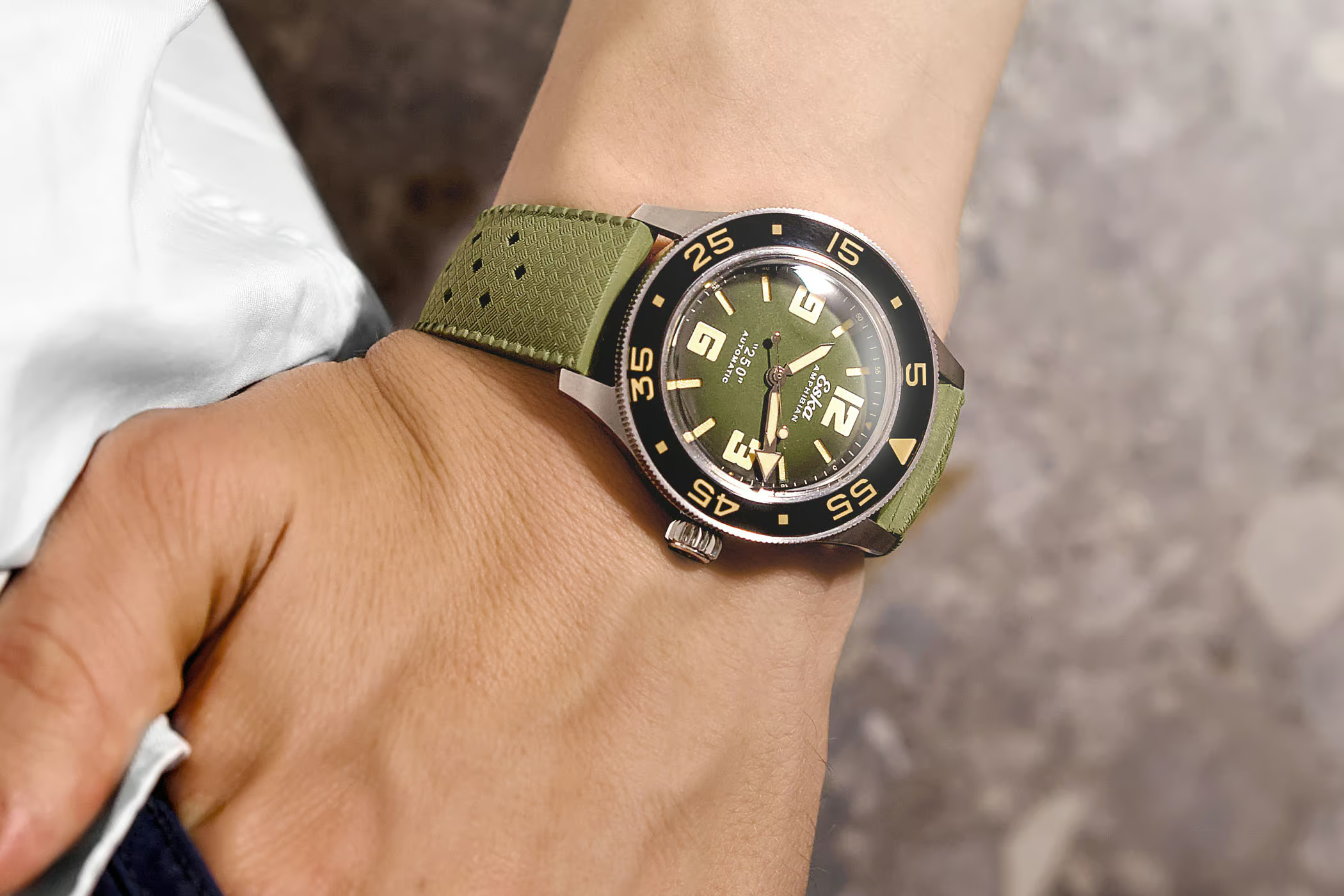
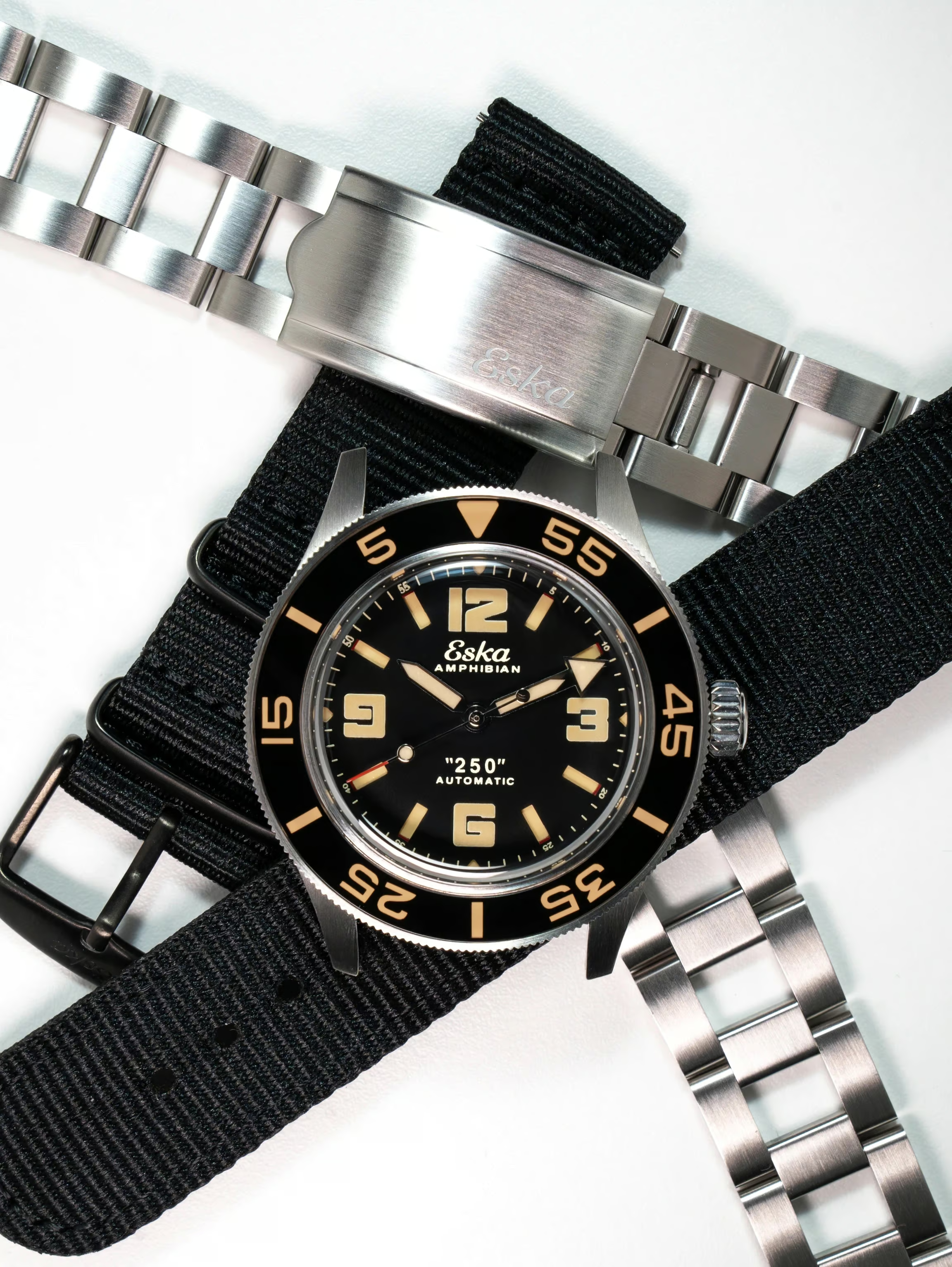
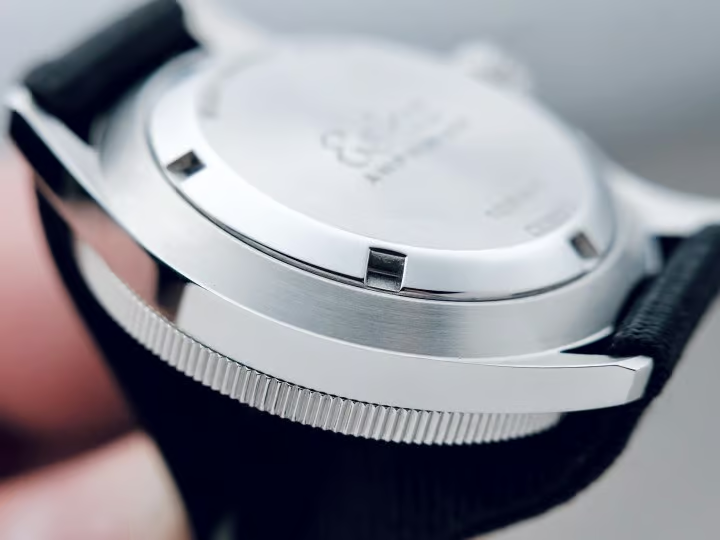
Coherence of the relaunch: The choice of the Amphibian 600 as the launch model is strategically brilliant. The 1959 original is a true collector’s Grail, a unicorn of which only a few known examples are said to exist. By choosing to resurrect this specific piece—and not a generic dress watch—the new owners sent a strong signal to the enthusiast community: « We’ve done our homework, we know Eska’s hidden history, and we’re talking to you. » This rebirth establishes a clear stylistic continuity (diver, chronograph) while acknowledging an industrial discontinuity. The historically Swiss brand becomes Franco-Swiss in its execution: the new models indeed claim to be assembled in Besançon, France, the historic cradle of French watchmaking.
Furthermore, the two-step progression (accessible diver first, high-end chronograph second) allows to target two audiences: vintage sports watch lovers on one hand, and chronograph aficionados on the other. We are dealing with an intelligently managed rebirth, without haste. We have watched it step by step, a little skeptical at first, I admit—and we have been pleasantly surprised by the overall coherence of the approach.
5. Positioning of the Contemporary Eska in the Current Market
The new Eska entity is not content with just reviving a name; it must fight for its place in an ever-more competitive market of independent and micro-brands. Let’s see where it stands in terms of segment, competition, and brand discourse.
Price Segment and Products
The analysis of the first two launches reveals a very clear upscaling strategy:
- Amphibian 250: Initially launched on Kickstarter at a very aggressive introductory price (~€700 for early backers), it is now positioned in the « accessible mid-tier » segment, around €990 (or ~$1,125). Crucially, the brand made a notable technical upgrade between the initial project and the final series: the first versions (Kickstarter) were equipped with a Seiko NH38 movement (a reliable but affordable Japanese automatic), while the current production models have switched to the Swiss Sellita SW200. This switch from a Japanese to a benchmark Swiss caliber is a significant investment, signaling a commitment to not compromise on perceived quality. Furthermore, the Amphibian 250 is assembled in France with demanding quality control—this is far from a simple marketing ploy, the product has been refined.
- Heritage SK25: Here, Eska changes category and targets the « premium micro-brand » niche. With a public price around €2,450, this chronograph is justified by radically different mechanical choices: a manual-winding chronograph caliber with a column wheel, the La Joux-Perret L113. The latter offers a 60-hour power reserve and a neat finish, positioning the Heritage SK25 against pieces like the Longines Heritage Classic or some high-end Hamilton Intra-Matics. We are no longer in the realm of the likable €1,000 diver, we are in the territory of a chronograph for connoisseurs ready to invest a few thousand euros. That takes guts!
The price gap between the two models is therefore significant, and one might wonder if there isn’t a risk of stretching too far. The Amphibian 250 targets a broad audience (like the Baltic Aquascaphe or the Yema Superman Heritage, to name references). The Heritage SK25 clearly targets a more niche audience of purists, who are potentially more engaged. That said, this duality can also be a strength: Eska covers two segments and can graduate a customer from the €1,000 diver to the €2,500 chrono if they were convinced by the initial quality.
Competition: Micro-brands vs. Revived Brands
Eska faces two types of competitors:
- Vs. « from scratch » micro-brands (Baltic, Serica, etc.): Compared to highly respected houses like Baltic or Serica, which had to build their legitimacy from the ground up in the 2010s, Eska has a major narrative advantage: a real, century-old heritage (1918). It can tell a story, show archives, play on nostalgia—something new startups lack. However, these established micro-brands have an image of consistency and modernity that Eska still has to prove.
- Vs. other heritage revivals (Nivada, Aquastar, Wolbrook…): This is the most relevant peer group. Brands like Nivada (with its Chronomaster), Aquastar (Deepstar), or Vulcain (the Cricket) are fighting a similar battle. The strategy is often shared: resurrect a strong historical design (often a tool-watch), target the enthusiast community via social media, and justify a premium price with the use of quality Swiss movements. Eska does this in two stages, where others have done it all at once. It first validated the market and built a community with the Amphibian 250, a product with a strong identity and a competitive price. Then, it uses the acquired legitimacy to launch a more expensive « halo product, » the Heritage SK25, which serves to reposition the entire brand upwards. It’s very clever.
As of late 2025, how is Eska perceived in the community? As a « revival » micro-brand to watch. It doesn’t yet have the distribution of a Nivada or the fan base of a Baltic, but it has made a successful entry. Customer feedback is good, delivery times are met, and the online community is starting to grow. What sets it apart is this mix of sincere heritage and French touch (assembly in Besançon, communication in French on social media) which particularly appeals to the French audience. In short: Eska is playing the credible independent card, not the marketing gimmick. Part of the bet has been won.
Brand Discourse: Transparency and Assumed Storytelling
Let’s take a look at the marketing positioning of Eska 2.0’s discourse. We find all the ingredients of a well-executed revival:
- The pride of being founded in 1918 is highlighted on the website and packaging. This allows them to claim « over a century of watchmaking audacity, » even if there was a big time gap. It’s true that Eska is older than, say, Rolex or Patek (yes, 1905 and 1839 respectively!). But well, they are playing with dates 😊.
- A dual Swiss-French culture: historical roots in Grenchen (the Solothurn region is mentioned), but manufacturing and after-sales service in France. This dual DNA is pretty cool because it breaks away from the perpetual Swiss Made, while also being reassuring about its seriousness (Besançon has a chronometry label, etc.). The website proudly displays « Assembled in France » and explains why this transparency is a qualitative choice.
- An emphasis on community: Eska regularly communicates via Instagram, responds to comments, highlights press reviews (Monochrome, etc.), and seeks to educate about its history. This is a winning strategy, as the new generation of buyers likes to feel involved and informed. It’s far from a cold and distant brand.
- No technological over-promising: Eska does not claim to have « done everything in-house. » On the contrary, it plays the card of transparency (Swiss suppliers, French casing workshop) and the choice of the best available components. For example, for the Heritage SK25, the brand explains its choice of the La Joux-Perret caliber over a Sellita, admitting that it is more expensive but more exclusive.
Intermediate verdict: Eska is now playing in the league of credible independents. Not yet at the level of a « major » house, but no longer in the background either. It ticks many of the boxes that we, as enthusiasts, expect: a real heritage used with respect, watches with a coherent style and a solid technical sheet, and a humble discourse. Is everything perfect? No (we’ll talk about that later). But compared to other opportunistic revivals, Eska version 2025 comes across as a good student. The brand is moving step by step, without rushing, and we quite like that.
6. Stylistic DNA of Modern Collections
Judging the coherence of a revival is about its ability to translate a historical DNA into a desirable contemporary product. Let’s see how the new wave of Eska fares in this regard, with its two watch families: Amphibian and Heritage Chronograph. Are the aesthetic codes faithful to the spirit of yesteryear while being attractive today? Let’s dive into the details.
Codes of the Amphibian 250: An Assertive Neo-Vintage Diver
The Amphibian 250 manages to evoke its ancestor without being a carbon copy. In a 40mm brushed steel case, its identity is forged on two key elements:
- The « sandwich » dial: A sophisticated construction where the luminescent material (Super-LumiNova « Old Radium ») is applied on a lower plate, visible through cut-out indexes in the upper dial. This type of dial, popularized by Panerai, gives depth and allows for a vintage look (the « faux radium » hue mimics the patina of aged tritium). The sandwich dial of the Amphibian 250, with its four oversized cardinal points, is a real visual success that echoes the giant numerals of the 1959 version.
- The bezel and the lume: The unidirectional rotating bezel features a sapphire insert, ensuring scratch resistance (unlike the Bakelite or aluminum of the past). The scale is a « countdown bezel » (60→0) rather than a classic 0→60, a nod to the diving watches of the 1950s intended for Navy divers. The graduations are generously filled with cream Super-LumiNova, as are the « broad arrow » hands. The result: in the dark, the Amphibian 250 shines like a Christmas tree 😅 (we’re barely exaggerating).
To this are added welcome details: drilled lugs (practical for changing straps and very vintage-correct), the historic Eska Amphibian inscription on the dial, a font inspired by that of 1959, a double-domed sapphire crystal that recalls the domed plexiglass of yesteryear… Thus, the design of the Amphibian 250 ticks all the boxes of a successful neo-retro. You can feel that the new owners have spent hours on the original Amphibian 600 dial (even borrowing the small red arrow at 12 o’clock on the bezel). The result is frankly very nice on the wrist. We’ve tried it: well-proportioned 40mm, a brilliant sapphire insert to great effect, and that crazy charm of wearing « the diver’s watch we could never afford in vintage ».
Codes of the Heritage Chronograph SK25: A Bi-compax for Purists
With the Heritage SK25, Eska directly targets the connoisseur. The diameter is a contained 38mm, a size favored by purists as it is close to 60s chronographs. The bi-compax design (two symmetrical counters) is enhanced by a multitude of collector-oriented details:
- The « step dial »: The dial is not flat; it is built on several levels, with a raised peripheral flange and recessed sub-dials. This « double enamel dial » gives a visual depth and a subtle play of light. In addition, two colorways are offered: matte black with a white railway track and beige numerals (for a « Gallet » look, very military), or grained beige with a black scale and sepia-toned numerals (for a warm « sector » feel). In both cases, the overall aesthetic pays homage to the racing chronographs of the 1960s.
- Case details: The lugs are drilled (a functional detail adored by collectors). The pushers are « mushroom » type and the crown is wide and flat, signed Eska. The thickness of 13.9mm (including glass) is a tad more than the old Valjoux 72s, but remains contained thanks to the flat sapphire caseback. Through this caseback, one can admire the La Joux-Perret L113 movement decorated with anthracite Côtes de Genève – a beautiful effect!
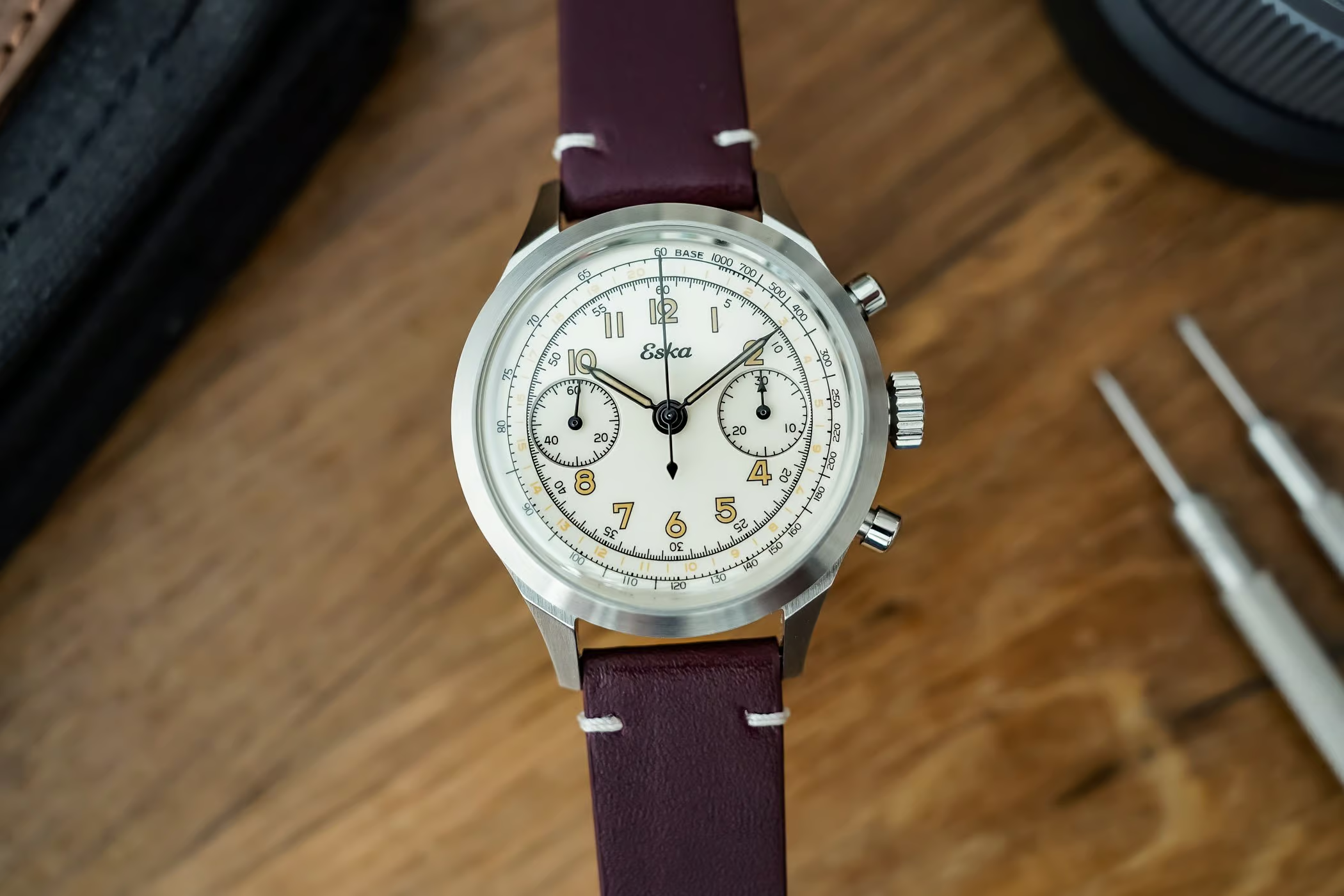


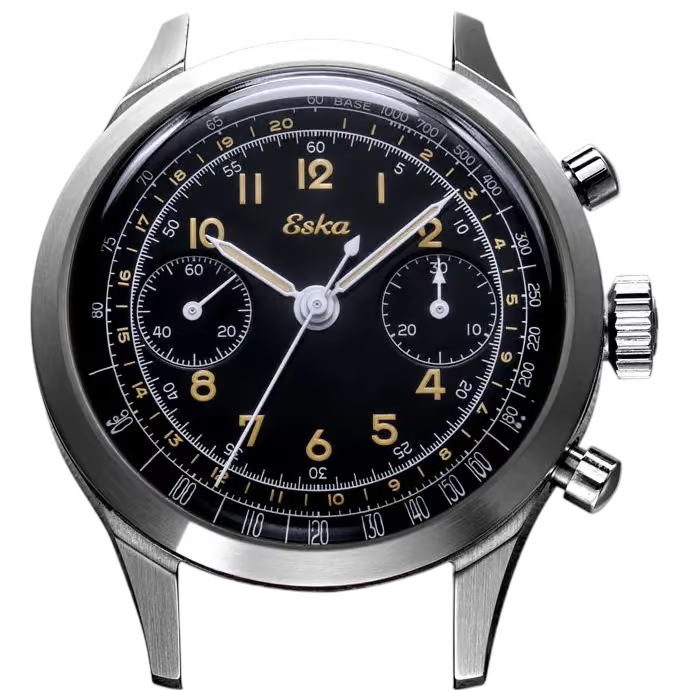
Eska’s modern DNA: it’s not just any « neo-vintage, » it’s enthusiast-centric. Every design choice—sandwich dial, step-dial, drilled lugs, « patinated » lume—acts as a wink to the collector community. This proves that the brand « speaks their language. » At the same time, these watches remain perfectly wearable and desirable for a wider audience thanks to balanced dimensions and impeccable manufacturing quality. It’s a reinterpretation aligned with current market demand: a vintage look with modern comfort.
7. Pedagogy: Watchmaking & Brand Concepts Explained (Eska)
The world of Eska, at the crossroads of vintage and revival, mobilizes key industry concepts. Explaining them helps to better judge the brand’s relevance. Let’s take a few important notions:
What is a group like Heuroplan?
Heuroplan (1959) was a commercial alliance typical of its time. It should not be imagined as an integrated holding company like Swatch Group. Its purpose was not to merge production, but to pool marketing and distribution. Concretely, Movado, Cyma, Eska, Juvenia, and Nappey shared booths and catalogs in France to reduce costs. For Eska, its membership means that at its peak, it was a commercially relevant player, considered a peer by these brands. This gives an idea of its aura at the time. Today, this kind of alliance no longer really exists (one is either independent or absorbed into a real group like Richemont). Heuroplan thus represents an old form of cooperation, reflecting a certain post-EEC watchmaking effervescence.
What is a « revived » brand?
This is exactly the case with Eska in 2024. The industry distinguishes between a brand in continuity and a revived brand:
- A « zombie brand » is the pejorative term for an entity that only buys a famous name and affixes it to generic products with no connection to the heritage.
- A « sleeping beauty », like Eska, is a defunct brand whose name, rights, and ideally archives (technical files, designs) are bought by a new team. The legitimacy of a revival therefore comes not from a continuous historical lineage (there is no industrial or capitalistic continuity between S. Kocher & Co and the new Eska), but from the quality of the revival’s execution.
The question of legitimacy: does the new entity respect the DNA (e.g., reviving the Amphibian 600)? Does it make coherent technical choices? Does it offer real customer service? It is by this standard that its credibility must be judged. We are the first to criticize « cover-up revivals, » so believe us when we say we have scrutinized Eska. And overall, it fares very well on these criteria—which saves it from the thankless status of a zombie brand. We all know them, those vaguely revived brands without a soul… We don’t get that impression here. Phew.
The notion of « Assembled in France » vs. « Swiss Made »
The new Eska is very transparent about its positioning: its watches are « Assembled in France ». A little explanation:
- « Swiss Made »: This is a protected legal label. Since 2017, it requires that at least 60% of the production costs (not 60% of the parts) be generated in Switzerland, that the movement be Swiss, and that the final assembly and quality control take place in Switzerland. It is a commercially strong label, but sometimes criticized for its laxity (the remaining 40% can come from Asia without any problem).
- « Assembled in France »: This mention, used by Eska, indicates that the assembly, casing, regulating, and final control are carried out in France, in Besançon. The components, however, can come from all over the world (here, many from Switzerland: Sellita, La Joux-Perret, etc.). It is an argument for transparency, for valuing local know-how (Besançon has a long watchmaking tradition), and for proximity to the European market. By choosing this honest mention rather than trying to stick a Swiss Made label on at all costs, Eska has prioritized sincerity. We applaud—tired of the « 60% » Swiss Made that is sold to us as an absolute guarantee when the remaining 40% sometimes comes from nowhere… There, I said it 🙂.
The Upgrade: The Importance of the La Joux-Perret L113 Caliber
The choice of the LJP L113 caliber for the Heritage SK25 is not insignificant. It is the heart of the justification for the high price of this chronograph. La Joux-Perret is a renowned manufacturer of high-end movements, based in La Chaux-de-Fonds and part of the Citizen group. The L113 is a manual-winding chronograph movement (a purist’s choice, more traditional and thinner). But its major asset is its column wheel. As a reminder, most modern automatic chronographs (Valjoux 7750, Sellita SW500) use a cam/lever system for the chronograph’s engagement. It is robust and economical to produce. The column wheel is the older and nobler system, more complex to machine, which offers an unparalleled pusher feel (soft, smooth, crisp). In short, it is the Rolls-Royce of the traditional chronograph.
By choosing a column-wheel LJP rather than a cam-lever Sellita (which would have been cheaper), Eska makes a costly choice to signal its ambition and offer a superior mechanical experience to the enthusiast. Moreover, the L113 movement is superbly decorated on the Heritage SK25 (striped anthracite bridges, blued screws, visible purple column). It is a feast for the eyes through the transparent case back. We are in the realm of fine watchmaking, a cut above the direct competitors. This caliber also provides 60 hours of power reserve and is very accurate. Suffice it to say that Eska has not skimped on giving its chronograph real horological content—it needed to be explained, because some did not understand why the price was higher. Well, there you have it: it’s in the glove box 🤓.
8. Risks and Rewards: Eska for the Collector and for the Modern Buyer
So, should you be interested in Eska, whether old or new? An objective analysis requires a nuanced assessment of the risks and rewards. In the form of a mental table, here is our « Risks / Rewards » block:
Risks / Limitations
On the vintage side:
- Blurred image: Outside of insider circles, the Eska brand does not have the recognition of an Omega or a Longines. The resale liquidity is therefore potentially lower. If you buy an old Eska, don’t count on reselling it quickly at a profit (unless its value suddenly rises, which is always possible). This lack of mainstream notoriety remains a hindrance today.
- Scattered documentation: As production was vast and diversified, and the official archives disappeared with the company, it can be difficult to definitively identify the originality of a model or caliber without specialized documentation. For example, distinguishing an Eska triple calendar Valjoux 72C from a competing Movado may require having the period catalogs on hand—not always easy.
On the modern side:
- Uncertain longevity: The revived brand is young (2024). As with any new independent structure, the question of its long-term viability is legitimate. If Eska does not achieve enough commercial success, what will happen to after-sales service in 5 or 10 years? This is a small risk to keep in mind when spending over €2000 on a SK25 chronograph, for example. We are far from Omega or Zenith in terms of financial certainties.
- Ambitious pricing: While the Amphibian 250 is very well positioned (honestly, at €990 it’s a top quality/pleasure ratio), the price of the Heritage SK25 (~€2,450) places it in direct competition with more established brands (Longines, Frédérique Constant Highlife chrono, even second-hand Tudor). Eska’s legitimacy in this >€2k segment remains to be consolidated. One might find it expensive to pay this amount for « a revived brand » despite its objective qualities.
Rewards / Advantages
On the vintage side:
- Favorable charm/price ratio: This is the master asset. The possibility of acquiring pieces of Artistic Crafts (cloisonné enamel, semi-precious stone) or High Complication (triple calendar chronograph) for budgets that are incomparable with more bankable brands. For example, a moon phase Eska in good condition can be found for under €1500, whereas any equivalent piece signed « Universal Genève » is worth 5 to 10 times more. The smart collector immediately sees the potential 😉.
- « Sleeper » potential: It is the ideal playground for those who love to hunt. Finding an undervalued piece whose watchmaking quality (Valjoux calibers, thick gold-plated case, double dial) is undeniable provides a unique satisfaction. With Eska, one dreams that one day the brand will emerge from the shadows and that our finds will increase in value. Should we fear a bubble? No, we are still at rock-bottom prices—the pleasure of wearing a top complication for cheap is already a sufficient reward in itself.
On the modern side:
- Coherence and passion: The revival is conducted with intelligence and a manifest respect for heritage. The choice of models (Amphibian, Heritage) is relevant and targets the heart of watchmaking passion. You can feel that it’s made by enthusiasts for enthusiasts. Continuity is assumed on certain designs (Amphibian bezel, bi-compax chronographs), while bringing novelty. Moreover, the brand’s discourse is clear and honest about its lineage (no fanciful myth of the « founder’s grandson » pulled out of a hat).
- Transparency and technical quality: As mentioned, the brand lays its cards on the table (assembled in France, Swiss components, etc.). Far from overplaying high watchmaking, it prefers to prove itself through facts. Example: the upgrade of the Amphibian, switching from Seiko to Sellita following feedback from Kickstarter backers. Or the adoption of the LJP L113 caliber on the Heritage, rather than succumbing to the ease of a more common movement. This proves that the brand is not looking for savings at all costs, but for technical credibility. And that is very reassuring for those who hesitate to take the plunge.
- Proximity and community: The Eska proposition is interesting for the French/European public: local assembly, direct distribution, limited editions where each customer feels a bit like a member of the « Eska club. » We are not dealing with anonymous volume. This creates enthusiasm and a community spirit that is sometimes lacking in mainstream micro-brands. Let’s be honest: owning a modern Eska today is being an insider of something nascent—a bit like those who bought the first Baltics in 2018. It creates a bond 😊.
9. Conclusion: A Serious and Sustainable Revival
The analysis of Eska’s history and revival allows us to clearly answer our central question. No, Eska (2025 version) is not just a « recycled label. » It is, on the contrary, a rather successful case study of an independent watchmaking revival.
For the vintage collector: Eska is a fantastic playground, provided you are educated. It is a brand that produced both reliable volume and exceptional pieces. For the patient collector, who knows how to recognize a quality enamel dial or a noble chronograph caliber, Eska offers one of the best charm-horology/price ratios on the current market. It is a true « sleeper brand » that deserves to be awakened, piece by piece. Take the time to hunt, to authenticate, perhaps to send an email to an expert (even if the response is slow in coming… the archives are not easy). The effort is worth the candle.
For the modern buyer: Eska is a credible and serious alternative in the universe of neo-vintage micro-brands. The revival is conducted with an execution that commands respect. The Amphibian 250 is a characterful, well-positioned diver that has managed to correct its trajectory by adopting a benchmark Swiss movement. The Heritage SK25, although more ambitious in terms of price, is a technically solid and aesthetically accomplished proposition, which proves that the intention of the new owners is not to make a marketing « stunt, » but to sustainably reinstall Eska in the landscape of significant independents.
Ultimately, the legitimacy of a resurrected brand is not inherited, it is earned. And Eska, through the relevance of its storytelling and, above all, the quality of its products, is in the process of earning its own. We were skeptical (legitimately) at first, we are now rather won over. The bet is not yet fully won—it will have to hold up over time—but Eska has clearly passed the threshold of seriousness in 2025.
Vintage Eska: to hunt or to avoid? Clearly to hunt, if you like characterful watches at a gentle price. We particularly recommend keeping an eye out for Eska triple calendars (once restored, they are marvels) or the « St. Moritz » models with stone dials that are very fun to wear for a few hundred euros. You won’t make a capital gain tomorrow morning, but you will have the pleasure of a true insider’s watch, which might just pique the curiosity of your circle of connoisseurs.
Modern Eska: a serious alternative or just an insider’s curiosity? We lean towards a serious alternative. The proposed watches hold up, the brand has undeniable historical legitimacy, and the current team seems committed for the long haul. Of course, it remains a modest structure—don’t expect to see Eska boutiques everywhere or a plethora of collections. But that is also its charm: to be one of the happy few to sport an Amphibian 250 on the wrist is more rewarding (in our geeky eyes) than having the same Submariner as everyone else. Thus, the revived Eska is gradually establishing itself as a quality « insider tip ». To be followed closely. As for us, we can’t wait to see their next creations (a reissue of a 1940s dress model, perhaps? or a tricompax chronograph? – We’re just throwing the idea out there, you never know…).

Pour bien s'habiller, il faut comprendre le vêtement, mais aussi la marque et sa stratégie.